$53,000 Profit In 90 Days. Claude Became My Entire Shopify Team

Miami, 3:08 AM
Ethan is asleep
A Shopify notification lights up his phone:
New order — Berlin — $118.40
Five minutes later: another one
Then another
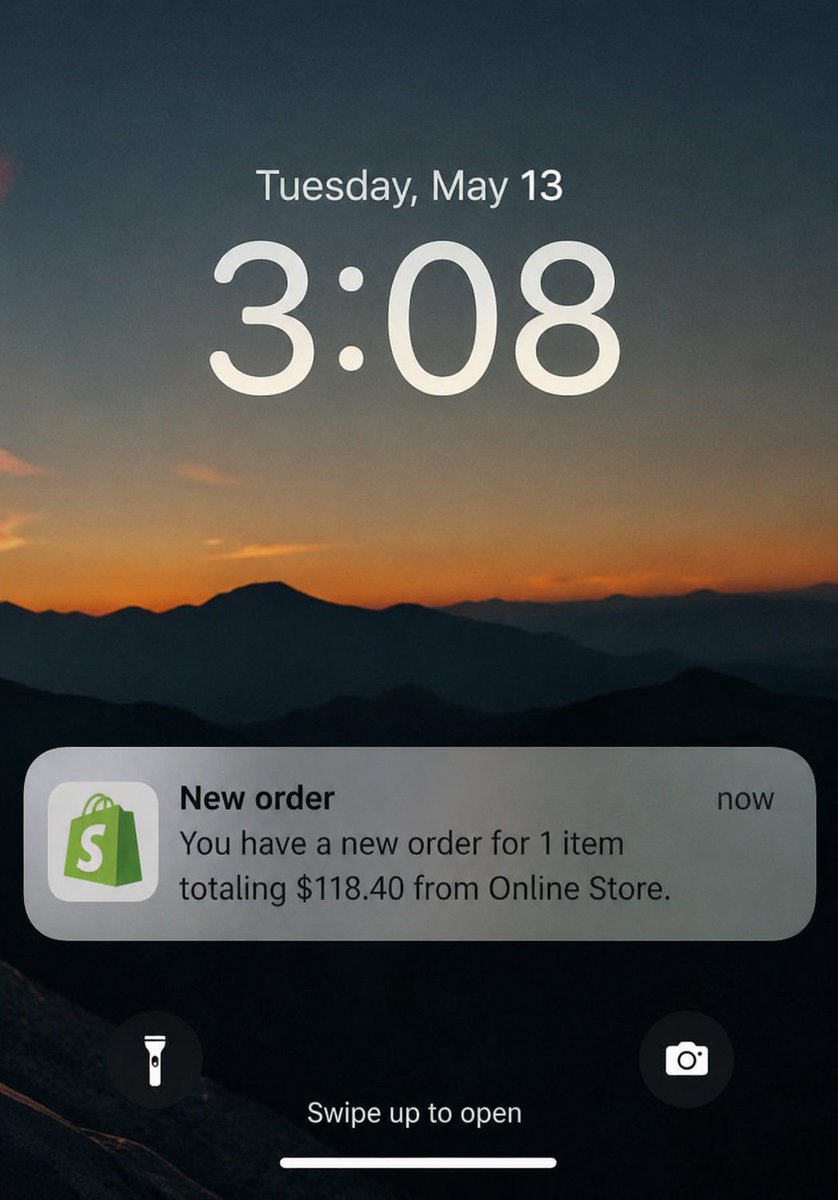
By the time he wakes up:
- the supplier already received every order
- tracking numbers were sent automatically
- support replied to six customers
- three new ad hooks were ready for testing
- yesterday’s analytics already had a breakdown waiting for him
Ethan didn’t touch any of it
His store did $91,340 in revenue last month
After product costs, fees and ads, he kept $53,180
Tool cost:
Claude Pro — $20/month
Shopify — $39/month
That’s it
- No agency
- No VA
- No copywriter
- No media buyer
Just Shopify and Claude
But here’s the part nobody sees:
This was Ethan’s third store
The first two completely failed
The graveyard
October 2025
First store
Portable desk gadgets niche
Burned $1,700 in five weeks
The product looked cool in videos but solved nothing important
Conversion rate: 0.6%
Almost zero repeat visitors

December 2025
Second store
Pet niche
This one actually started working
Ads converted
Customers bought
Reviews came in positive
Then the supplier destroyed everything
Orders started arriving 18–26 days late
Refund requests exploded
Stripe froze payouts for 45 days
The product wasn’t the problem
Logistics killed the store
Total damage: almost $5,000 gone in under three months
Most people quit here
Ethan didn’t
He changed one thing
The thing that was broken in both stores
Claude was already there
- Open tab
- Random question
- Random answer
- Close tab
That was the entire problem
Most people use Claude like a smarter Google search
Every conversation starts from zero
Nothing compounds
On the third store, Ethan stopped treating Claude like a chatbot and started treating it like employees he hired once

Each workflow got:
- one role
- one permanent system
- one repeatable prompt
After that, Claude stopped being “AI”
It became the backend of the business
That shift changed everything
Six prompts. Two groups
ONE-TIME DECISIONS (run once)
> product_find.prompt > > supplier_audit.prompt > > listing_builder.prompt
SYSTEMS THAT RUN DAILY
> ads.prompt > > support.prompt > > weekly_diagnostic.prompt
Each one handles a different part of the store
Together, they replaced most of the operational work
1. product_find.prompt — finds products before they become saturated
Most beginners search TikTok for “winning products”
That guarantees:
- oversaturated markets
- copied ads
- weak margins
- endless competition
This prompt goes the opposite direction
You are a product analyst with 7 years of experience in US and EU dropshipping.
Find me 4 Shopify products with a real shot at working right now.

Hard filters:
- Solves a recurring everyday pain (not seasonal, not gift, not novelty)
- Retail $24–$68 (impulse-buy threshold without long deliberation)
- The pain shows up in Reddit complaints within the last 90 days
- Top 3 Amazon listings are under different brands (no dominant player)
- Ships from Spocket or a verified AliExpress US warehouse in under 14 days
- The product's effect can be shown in one continuous camera shot

For each product:
1. Specific product name (not "kitchen gadget", not "pet accessory")
2. Wholesale price vs retail price, exact margin %
3. Customer avatar: age, situation, the moment of the day they Google for a fix
4. Why this product works in 2026 specifically, not 2024
5. The angle no competitor is currently using
6. One specific Reddit post that proves the pain is real

Generic categories are banned. "Pet accessories" is not an answer.
If your answer could be applied to any other niche, start over.
Instead of trends, it searches for recurring frustrations people complain about online
The prompt forces Claude to identify:
- the exact customer
- the emotional trigger
- why competitors are weak
- why the product works specifically right now
- why the problem keeps happening
The important part:
- The product must show its value in under 10 seconds of video
- That alone filters out most bad products immediately
- Four ideas in under a minute
A beginner researcher would spend days doing the same thing manually
2. supplier_audit.prompt — prevents store-killing suppliers
Most Shopify stores don’t die because ads fail
They die because suppliers destroy customer trust
Late shipping
Bad quality
Fake tracking updates
Refund chaos
That’s what killed Ethan’s second store
Now every supplier gets audited before launch
I'm vetting an AliExpress supplier before launching a store.
Your job is to find everything that's off in their profile.

What I'll give you:
- Store profile: name, rating, years on platform, country
- Shipping times listed in the product cards
- 15 most recent reviews, full text
- 6 reviews at 1-3 stars, full text
- If I requested a sample: screenshot of the chat and response times
- If I found the same supplier on Alibaba: link and their product range there

Analyze for these signals:
- Review velocity anomalies (10+ five-stars in 48 hours indicates bots)
- Gap between listed shipping time and what real customers report
- A repeating defect in negative reviews (bad stitching, broken seal, wrong color)
- Signs of a rebrand (an older store name appearing in older reviews)
- Mismatch between the AliExpress and Alibaba range (likely a reseller, not a factory)
- DM response speed: under 12 hours is good, over 36 hours is bad

Verdict: GO / SAMPLE / SKIP
GO means take it now.
SAMPLE means $15-30 on a test order before committing.
SKIP means don't even start.
Reasoning: 4 sentences max.

If SAMPLE or SKIP, give me 2 alternatives with the search terms to find them.
Claude analyzes:
- shipping estimates
- review history
- negative complaints
- response speed
- suspicious rating spikes
It catches patterns humans usually miss
One bad supplier can destroy months of momentum
This prompt exists to stop that before money gets burned
3. listing_builder.prompt — writes pages that sound human
Most Shopify product descriptions feel fake instantly
“Premium quality”
“Innovative design”
“Revolutionary technology”
Nobody speaks like that
The line that changed everything was this:
“Write like someone texting a friend after using the product for two weeks”
That single instruction completely changed the tone
Rewrite a product description for a Shopify product page.

What I'll give you:
- Name and the gist in one line
- The raw AliExpress text (as-is, don't edit it)
- 5 reviews: 3 enthusiastic, 2 with reservations
- Customer avatar: age, situation, the specific moment they decide to buy
- Retail price

Voice: like a friend in a Telegram chat who bought this thing two weeks ago
and is messaging you in DM about why it turned out better than expected.
Not "introducing our exclusive new product." Not "premium quality."

Structure:
- Opening line: the one pain this product addresses. No fluff.
- Context: one specific moment in the customer's day when that pain is sharpest.
- 3 outcome bullets, not feature bullets.
  Wrong: "adjustable height, 8 settings"
  Right: "no more leaning toward the screen, back doesn't kill by 6 PM"
- One paragraph: what this product does NOT do. What not to expect.
  This builds trust harder than any "100% guarantee" line.
- Social proof: 1-2 real quotes from the reviews, no invention.
- CTA: one sentence. No timer, no all-caps, no emojis.

Word limit 220. If it reads like a product page, rewrite from scratch.
Now the descriptions sound:
- casual
- believable
- human
Not corporate
The highest-converting section ended up being:
“What this product does NOT do”
Most stores hide limitations
This section names them directly
Trust increased almost immediately after adding it
4. ads.prompt — writes TikToks that don’t feel like ads
The best-performing ads in 2026 barely look professional
Phone camera
Messy room
Natural lighting
Real frustration
The more polished the ad feels, the faster people scroll
Write a 40-second vertical video script for TikTok, Reels, and Shorts.

Given:
- The product and its single core promise (1 line)
- The target viewer in one phrase

Style: UGC, home-shot. Phone camera. No tripod, no lighting setup, no scripted pause.
Background should have stray household items (mug, phone, cables).
This grounds the video in reality.

Structure:
0–4s:   Hook. Direct to camera. A specific pain-statement.
        By second 3, the viewer should think "that's me."
5–12s:  Demonstrate the pain. No product in frame yet. Show the moment
        when the annoyance hits. Make it rough, real, uncomfortable.
13–22s: "I tried X and Y, neither worked." Name two real alternatives.
        This builds credibility. Don't lie about those alternatives.
23–32s: The product. One function only. Demo in one shot, no cuts.
33–40s: The outcome. One specific result. CTA in one sentence, no pressure.

After the main script, give 5 alternative openers.
Each 2-4 seconds. Each starts with a specific action or situation,
not a question.

Banned openers:
- "Are you tired of..."
- "Did you know that..."
- "Introducing..."
- "I found the secret to..."
- "This changed my life..."
- Any dramatic zoom-toward-camera with a whisper
Claude generates:
- hooks
- emotional pacing
- visual actions
- opening scenes
- alternative intros for testing
Then Ethan films 4–5 versions in one evening
No overthinking
No three-week editing process
Just fast iteration
The winning ad usually becomes obvious within 48 hours
5. support.prompt — handles customer support automatically
Once the store scaled, support volume exploded
40 messages
70 messages
Sometimes over 100 in a day
> Same questions repeatedly: > > Where’s my order? > > Can I change my address? > > Why is shipping delayed? > > Can I get a refund?
Claude now drafts almost every reply automatically
import Anthropic from "@anthropic-ai/sdk";
import express from "express";

const app = express();
app.use(express.json());
const client = new Anthropic();

const POLICY = `
You are customer support for [Store Name].
Tone: calm, concrete, human. Not saccharine.

Hard store policies (do not improvise outside these):
- Shipping: 9-15 business days from dispatch
- Tracking number: sent within 36 hours of dispatch
- Returns: 21 days from delivery, no questions asked
- Refunds: processed within 4 business days of receiving the return
- Address changes: only within the first 90 minutes after order

Reply rules:
- Maximum 70 words
- Customer's first name once, at the very start
- If delay is 16+ days: short apology, explain international customs
  in one sentence, offer code SORRY15 (15% off next order)
- If refund request: confirm eligibility, give return warehouse address,
  state the refund timeline
- Never use the phrases:
  "please be patient", "we apologize for the inconvenience", "sorry for the wait"
- Never name competitors
- If the customer is aggressive, threatening chargebacks, or hostile:
  reply with exactly one word, no period: HANDOFF

If the request is not covered by the policies above: HANDOFF.
Never promise anything outside these policies.
`;

app.post("/inbox-hook", async (req, res) => {
  const { from, name, message, orderId } = req.body;

  const response = await client.messages.create({
    model: "claude-sonnet-4-20250514",
    max_tokens: 250,
    system: POLICY,
    messages: [{
      role: "user",
      content: `Customer: ${name}
Order: ${orderId}
Message: ${message}

Draft a reply. If outside policy, return exactly: HANDOFF`
    }]
  });

  const draft = response.content[0].text;
  const needsAgent = draft.trim() === "HANDOFF";

  res.json({
    draft: needsAgent ? null : draft,
    needsAgent,
    from,
    orderId
  });
});

app.listen(3000);
Current approval rate: around 82%
Most replies only need tiny edits before sending
No customer waits half a day anymore
That alone improved trust massively
6. weekly_diagnostic.prompt — fixes the business every Sunday
Every Sunday Ethan exports Shopify analytics and pastes the numbers into Claude
Then Claude breaks down:
- funnel leaks
- weak products
- traffic quality
- conversion bottlenecks
- scaling opportunities
You are a former CMO with 8 years in e-commerce. I'm handing you my budget for the week.
Your job: find what I'm doing wrong and say it bluntly.

Past 7 days of data:

Unique visitors: [X]
Conversion to checkout: [X%]
Average order value: $[X]
Cart abandonment: [X%]
Returning visitors: [X%]
Top 3 products by revenue: [name, revenue, orders, for each]
Top 1 product by returns: [name, orders, return %]
Traffic sources: [TikTok / Meta / organic / email, % breakdown]
Ad spend this week: $[X]
Revenue from paid traffic: $[X]
ROAS: [X]

Answer 7 questions. One full paragraph each.

1. The single biggest funnel bottleneck right now. Specific number, specific step.
2. Which product I scale this week and why exactly.
3. Which product I pause this week and why exactly.
4. I have 4 hours of changes I can make this week. What do I spend them on?
5. Paid traffic quality: am I paying for the right audience or burning money on the curious?
6. What does my returning visitor % say about product-market fit right now?
7. If I keep this same stack for the next 14 days, what 2 risks become real?

Banned: complimenting, reassuring, saying "this is normal for early stage."
If I'm doing something stupid, call it stupid.
No bullet points. Full paragraphs only.
The most important instruction:
“Do not be polite”
Otherwise AI defaults to motivational garbage
The business improved much faster once the feedback became brutally direct
Five minutes every Sunday replaced hours of guessing
The real math
Monthly revenue: $91,340
Expenses:
Cost of goods: −$29,400
Ad spend: −$13,100
Shopify + fees: −$4,660
Net profit: ~$53,180
- Month 1: barely profitable.
- Month 2: $16K revenue.
- Month 3: $41K revenue.
- Month 4: $91K revenue.
The store didn’t suddenly become magical
The systems compounded
That’s the real advantage
The takeaway
Four months ago Ethan had:
- two failed stores
- frozen payouts
- almost $5K lost
- no working system
Last month: $53,180 net profit
Same apartment
Same phone camera
Same person
One thing changed:
Instead of opening Claude from scratch every day,
he built six permanent systems once
Those six systems became the store.
Follow me if you want to learn more about AI systems, Shopify, and modern online business strategies

@insomnia_vip
Related articles

Claude + Shopify = $10,478 in profit. Here is what my "desktop" looks like:
A quick note on the prompts below: they're long on purpose. Every line either stops Claude from inventing numbers or pins down the exact shape of the answer. A short prompt gives you a pretty, useles…
One Shopify store hit $91,340/month by using Claude as the operator, not the writer.
Shopify + Claude is not about product descriptions.

How to Earn $15,000 from Browser Games: Claude Fable 5 + Claude Code + Poki/CrazyGames
On Poki and CrazyGames you earn not by selling the game, but from the ads that players see. The platform runs ads around and inside the game and shares the revenue. With Poki it's 50/50 when the play…