Financial freedom from mobile apps.

I scaled my iOS app to $10k/m.
• It took me less than ~2 months.
• I'm doing ~$1k per day.
• On track to hit $30k/m.
 — "$11k in actual revenue per month, not MRR."
There are 3 things you should know before we begin.
-
This strategy can cost anywhere from $50 to a few thousand $.
-
Success is not guaranteed but this is about as close as it gets.
> We're not relying on luck, snake oil or virality. This is not really a guide on mobile apps. It's a guide on leveraging the most powerful algorithms ever created.
- You are likely to see ~30% profit margins (if solely using paid ads).
Part One: The App.
If you're an appmaxxer skip this section: you'll know most of this.
But, if you're new to the app space this is crucial knowledge.
> The app ain't special, but it's important.
1. Sell to a core human desire.
• If you take nothing else, take this.
• Your app should be a painkiller, serving a deep human need.
• Status, wealth, money, religion/meaning, beauty, intimacy, addiction.
• This is where most founders go wrong.
• The app positioning is crucial to enable our marketing.
• Everything is symbiotic.
2. At first: build for iOS only.
• 70% of app purchases happen on iOS.
• The US makes up ~35% of this.
• This marketing strategy is optimised for iOS.
• If the app does well, then absolutely build it for android, it's free $$$.
• But just starting out? Increase your surface area for luck and focus on iOS.
• Build native SwiftUI.
> The apple design ecosystem is the easiest way to get a premium & beautiful design fast. Liquid glass comes as standard, and OpenAI models in particular, work extremely well with iOS.
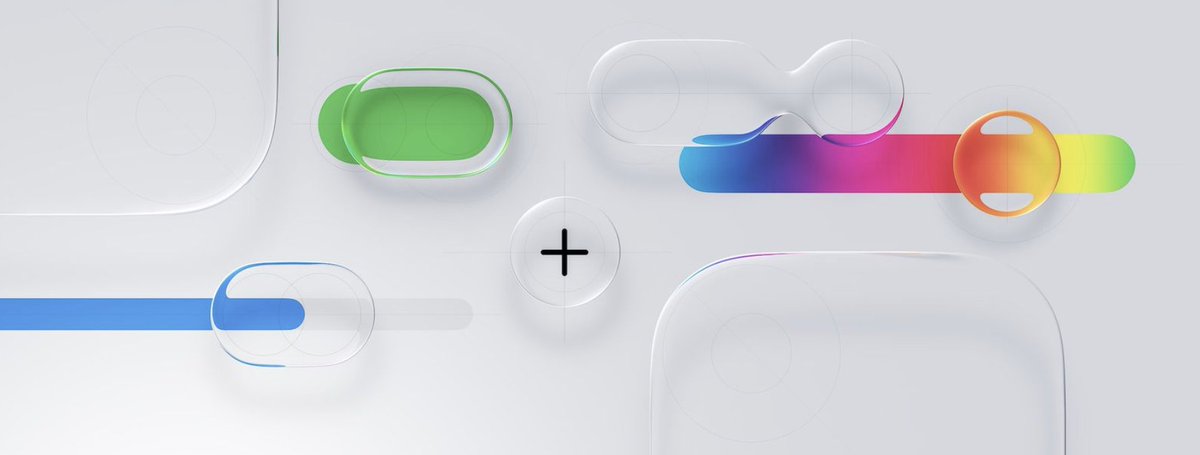 — "iOS liquid glass"
3. Follow proven model, but do not copy 1:1.
• You'll just get your app removed, and it's a bad look.
• Whatever you make, make it beautiful.
• If you care about longevity, deliver a good UX.
> Iterate and improve. I realised a big app was missing a huge and obvious feature. I made my design unique, better, and centered my app around this feature. You'll be surprised how easy this is!
4. Ship the MVP then iterate.
• iOS reviews can take weeks.
• Submit the first build early on, the absolute MVP.
• Then, continue to iterate and improve.
• Don't do any risky things in a first build.
5. App Mechanics: Paywall.
• I only ship apps with hard paywalls.
• Getting downloads is hard enough.
• I would not waste attention on trials.
• But it can absolutely work.
• Use a remote paywall. All payment providers now give this.
• This allows you to run AB tests, and update it remotely.
• Ensure you stay compliant with Apple.
This is the anatomy of a high converting paywall 👇
TLDR:
-
Social proof.
-
Sell impact not product.
-
Explain key features.
-
Clear compliant pricing.
-
Motivational CTA.
Embedded post:
Author: Frederick James (@frederickjames) Post ID: 2085709435498807593 Source: https://x.com/frederickjames/status/2085709435498807593 Posted: 2026-08-07T12:47:34.000Z Reply to: none
Text:
> This paywall structure made me $10,578 in 62 days.
>
> • Average ~10% conversion.
>
> • Studied 100+ paywalls making it.
>
> These are the 5 sections of a high-converting paywall.
>
> This is the one for His 75 #shipaton
>
> 
Media:
6. App Mechanics: Pricing.
• At first, set pricing to what your competitors use.
• Later, run AB tests using your payment provider.
• It will feel odd at first, but charge "high" prices.
• Generally: 7.99/w, 14.99/m and 49.99/y.
• Generally: don't push yearly above $50.
• There's good data that this increases refunds.
7. App mechanics: Onboarding.
• Spend a good amount of time on the onboarding.
• The goal here is twofold:
  1. Remind the user they have an issue.

  2. Explain that your app can solve it.
• Mechanics are highly dependent on niche.
• So do some research, and see what others do.
• Take the core ideas, do not copy it 1:1.
• Around 12 screens is directionaly good.
• Longer onboarding can:
  1. Increase drop off.

  2. Increase conversion.
• Aim to reduce friction wherever possible.
• Use social proof, scientific stats, etc.
• Use images over text: people prefer it.
• Quizzes can be good: 4 options max.
• Explore permission access within the app.
• Ensure you measure the funnel.
• Mixpanel, PostHog, any will do.
> In onboarding, every screen must fight for it's place. There must be a reason for it being there. Always the outcome and not the product.
Some excellent onboardings to study:
-
CalAI: Data driven setup.
-
Feeld & Hinge: Necessary friction done well.
-
Trading212 & Monzo: Very complex apps.
8. App Mechanics: Extra Conversions.
First: Try an abandon checkout offers.
-
They are allowed, but it's up to the reviewer.
-
It must be VERY CLEAR and explicitly approved.
-
Generally: if your app is tasteful and premium.
-
I'd avoid adding one in your first submission.
Second: Use App Store retention offers.
-
Apple will let us show offers to users within the app store.
-
It's currently in beta, you can request access.
Third: Use exit offers.
-
This is a flow within your app.
-
User taps cancel sub button.
-
You show them an offer before taking to app store.
-
Generally heavily discounted offering.
-
You can use remote paywalls for this.
-
Again, keep this compliant with Apple!

9. App Mechanics: Numbers.
-
Aim for onboarding completion of 75%+
-
Download to paid: 4% is a start, aim for 8%+.
-
I don't look at paywall conversion: D2P.
App Store Approvals [Bonus Tips].
-
Add a demo video of submission.
-
If it's taking a while, request a call from apple.
-
Be very bold about what the app does.
-
Under no circumstances mislead your users.
-
Don't fight or disagree, unless it's legit.
-
Request an expedited review if it's legit.
I have a full guide on getting an app approved 👇
Embedded post:
Author: Frederick James (@frederickjames) Post ID: 2086419927548809285 Source: https://x.com/frederickjames/status/2086419927548809285 Posted: 2026-08-09T11:50:49.000Z Reply to: none
Text:
> How to get your iOS app approved in under 48 hours. http://x.com/i/article/2086172795398967296
> Apple only wants the user to be happy. > > If the app tricks them, it'll be rejected. > > All the ToS revolve around that; it's simple.
10. App Store Page
• Title should contain good keywords.
• Astro is a good way to find these.
• Do not repeat words between:
- Title, subtitle & keywords.
• Reviews don't matter, unless they're bad.
• If you have a low rating, reset in an update.
• This only applies to the numeric ratings.
• Text reviews stay between updates.
• If you have an unfair one, report it to Apple.
• Ask your agent to write an official complaint, use data examples where possible.
I have a full guide on generating good screenshots 👇
Embedded post:
Author: Frederick James (@frederickjames) Post ID: 2073727713928446362 Source: https://x.com/frederickjames/status/2073727713928446362 Posted: 2026-07-05T11:16:29.000Z Reply to: none
Text:
> http://x.com/i/article/2073301702023741440
These are some I created for Clavicular's lookmaxxing app.

Part Two: The Algorithms
In 2007 Facebook Ads was born.
This changed marketing forever (and, arguably, the global economy).
> Businesses could now show their ads to: single 34 year old men in London earning over £68,000 who are interested in motorbikes and technology. > > Not just: whoever sees an ad in a newspaper.
You need to understand that this is how every social media platform makes most of their revenue. Every second, dollars are being spent on timeline ad space, bidding for our attention.
 — "98% of Meta's revenue is advertising."
The platforms have trillions of terabytes of consumer behaviour data. They pay thousands of extremely intelligent people to build ML systems beyond our wildest imaginations.
All we need to do, is plug our app into the system. And watch it print $$$.
The method I used was TikT0k ads. But the principles can (and should) be abstracted across platforms, i.e Meta, Snapchat, etc.
> Meta is the OG in the space, but I'd argue, today, the TikT0k algorithm is the most sophisticated. If your target user is on TikT0k, I would try this first.
1: Technical Setup.
You'll need to connect an MMP to your app.
Think of this like a middleman.
Sitting between your app and the ad platform.
 — "The flow of data."
Some good MMPs: Appsflyer & Appstack.
I'd personally recommend Appsflyer (not sponsored 🥀)
Small apps that use it: TikT0k, Netflix, Pepsi, Barclays.
It's free for the first year & then 7 cents per conversion.
Appsflyer Setup:
- Ask your agent to install the SDK with latest docs. Use the SDK integration test to see events as they come in live. You'll want app open and subscribe. You can use server to server: so your app sends data to your payment provider and then postback to the MMP. I didn't do this, but it can be good later on for direct attribution.
- Once you're seeing sub events in the MMP, connect MMP to the ad platform. You'll want to ensure the events are mapped properly.
- Now, test the integration by sending events to TikT0k. Once you see a subscribe or app isntall event in your "Events Manager" tab we're good to go.
- This is specifically for TT, but all platforms behave similarly.
 — "In app events mapped to TT."
2: Campaign Settings.
- App Promotion -> App install -> iOS dedicated campaign.
- Campaign budget -> at least $50/day. I start at $70/day.
- Goal Based Budget Increase. This setting is what gave me financial freedom. All it does, is increase your daily budget, if the platform gets conversions at your target CPA. Think of this like the snowball effect. If the campaign is doing amazing, you don't want it to stop right? I set it to 20% increase up to 20 times. On $70 of spend this scales to $350/day. I'd recommend keeping it around 20% to 30%.
- Optimisation Goal: In-app event -> Subscribe OR Install.
- Campaign Type: There are two choices here. Maximum Results: Will try and spend all of your money, regardless of your target CPA (Cost Per Acquisition). Good for brute force approach. Target Cost Per Result: Will spend slower and maybe not at all, but will try much harder to get you conversions at the CPA you set.
- Audience Targeting: Switch to "Manual Targeting". Huge thing people miss. If you use automatic, your suggestions are just that: suggestions. US only: US spends the most on iOS, and you don't pay VAT. Many don't realise a subscribe in Europe is like 35% of the actual cost: if a user pays $10 you only get $6.5. Add gender demographics if it matters, and then English speaking: tends to have higher income. Also set age to at least adult ages. Conversion can be higher but so are refunds, personally I wouldn't mess around with this. You can play around with tighter targeting: income, phone type, occupation. Generally I've found it best to let the algorithm decide.
- Placements: Manual -> TikT0k only.
- I only use one ad group. And then have ~6 ads within each group. Post the videos on your page first, and then select them within the manager panel. Turn of auto recommendations, choose manually. CTA: Install now, Download now etc - only use ones that make sense. Selling Points: Remove all of these, looks weird. Automatic Enhancements: Turn all these off other than CTA. Destination: I go straight to the app store. Sharing: I allow comments, sharing etc.
3: The Creatives.
- Don't overthink the actual creatives. You need to think like the ideal user, easiest way is to embed yourself in their world, curate your feed to theirs, scroll and learn the jargon and memes. Save organically viral posts as you go. You'll can tell organic viral because the comment to view ratio will be fairly high. A post with millions of views and only ~10 comments has been paid.
- Recreate the posts. Seedance is easily the most powerful model available right now. But, what I prefer to do is simply film the video with friends. Takes a bit more effort but generally these convert a bit better I think. Also, platforms are cracking down on AI UGC.
- Filter comments on your TT account. This is a huge one, you can filter out comments by keywords: paid, cost, money, bad, fake, scam, etc. These comments will definitely have a bad effect on your ROAS. So filter them within your TT account settings. I have maybe 50 words now.
- Find at least 5 different formats. So, slideshows are one format, UGC hook then app demo is another format. On your first campaign, you want to test out at least 5 different formats.
4: Running Ads & Spending $$$
- When I started, I ran 5 formats, with one post each. Five videos total. Looking back, it's better to experiment with more, as while I had a good idea what would work, you really never quite know.
- TT will try and spend where it thinks it'll get the best returns. Give each post at least $50 of spend, this should be enough to test the creative. In the beginning, the only thing that matters is CPA < LTV: Cost of acquiring the user is less than their lifetime value. At first, you probably won't know your LTV. If you're following all of the above, your LTV will likely be in the $20-$30 region. Conservatively set it to $20.
- The Learning Phase. If you make a small loss, keep running it. This is crucial for what's called the "Learning Phase". There's a common misconception that this only applies at campaign level. This is incorrect. Your account also has a learning phase. Getting rid of all the specifics, your only job when running paid ads, is to send the ad platform as much signal as possible; signal about what kind of user is most likely to spend money in your app. This creates a feedback loop for the platform. As you spend more money, the targeting becomes more accurate. Eventually, the platform can filter the millions of users scrolling, and show your app to the ones that are extremely likely to buy.
- If you make a huge loss, stop running the ad. After $50 no conversions at all, stop the ad and reallocate spend. If you get no conversions on any of the formats / posts. They try again from the start. You're taking $50 bets each time. When you hit a winner, you can ride it for weeks, and if you're lucky, months.
- Once you have a winner (profitable ROAS) scale it. If you're using GBBI, this will be handled for you. If you're using max results, only increase spend by MAX 30% each few days. The platforms themselves recommend this. This is because your campaign has been specifically set up in order to deliver you customers at the variables you set. Change one variable drastically can take days to recover.
Part Three: Apple Admaxxing
I hit $1k/m in 25 days using just apple ads.
You get $100 credit FREE from Apple.
So, it's a no brainer to try.

A few words on Apple Ad Maxxing:
• I saw a much higher ROAS on Apple Ads than TT.
• Apple Ads rely (mostly) search intent.
• So, there was a ceiling for scale.
• If no one searches for your app, you can't get users.
This method will not work for niches where:
-
Ad spend is non viable for indies (i.e finance).
-
Saturated, you'll likely need to loss lead to acquire customers.
I have a full guide breaking down the approach 👇
Embedded post:
Author: Frederick James (@frederickjames) Post ID: 2071187278286733629 Source: https://x.com/frederickjames/status/2071187278286733629 Posted: 2026-06-28T11:01:42.000Z Reply to: none
Text:
> http://x.com/i/article/2070159995958702080
The TLDR:
• Get attribution running
- Apple Ads & payment provider.
• Ensure you have a great app store page (screenshots, etc).
• Split campaigns into tiers:
- [US], [AU, UK, JP], [TH, DE...]
• Bid strategy: Manage Bids.
• Search Match: OFF.
• Specific keywords on [competitor name].
• Use apple's recommended bid.
• Budget doesn't matter: can start $20/day.
• More budget = data faster.
• If it doesn't spend after 48hrs, scale it 20%.
• Export data sets, give to your agent.
• Identify winners and add budget.
Part Four: The Disclaimers
1. Money & profit.
Paid ads for mobile apps generally have low margins because we have to account for:
• 20% ish Local VAT (if outside US).
• 15% Apple store fee.
• 1% to RC, Superwall, etc.
• That's before your business tax!
If you hit ~30% profit margin, I'd call it a success. If you're really cracked you can push this to 40%. The ceiling caps at around 50%, and this is usually reserved for big companies who have fine tuned their funnel on a massive scale. I'd be very skeptical of anyone claiming more than this.
There are few things in life that reliably generate a 30% return. And remember, we're we're working 10hrs a week. We put money into the machine and it generates more money. Think of this entire strategy less as a product, and more of an investment. If there was a stock that almost guaranteed 30% profit, you'd buy it right?
> Personally, my ~$11k/m, nets me roughly $3,300 in profit each month. While not life changing money, this is financial freedom in a lot of the world. Including SEA where I'm going! > > I'm also on track for $9,000/m profit as I scale. CPA generally rises with higher budgets, so we'll see how this next step goes. Notable mention is that I've run out of money, so my ads are on pause. I get paid by Apple soon, and that'll get the ball rolling again! This is important because you need cash reserves in order to make this work.
2. App Acquisition
If you ever want to sell your app, relying only on paid user acquisition will almost always lower your multiple unless you have many months / years of reliable profit. If you're aiming at a mutli six figure exit, you will want to reduce your exposure to paid marketing.
3. My approach to success.
A lot of what I've said is high level and includes a lot of caveats. For example, only building on iOS. Obviously, there are examples of people succeeding only building Android. But I'm not interested in the outliers. My time (and, arguably, yours) should be spent on the highest chance for ROI at any given time.
> If you're starting out, I'd advise you to adopt this mindset. If there's good data that x works, try that first, before deviating to y.
4. Absolutist Claims.
This is what worked for me (and a lot of other successful appmaxxers). While I've joked on the timeline about paid ads being like day trading, it is a fairly reliable method for growth. But obviously this remains anecdotal for me personally. I strongly believe this pattern is reproducible, and will be trying myself again with another app. That being said, there are infinite ways to win. You should always try anything and everything. Take advice as directional, and test it yourself. It was only through experimenting with the GBBI that I found explosive success.
This is a guide on $10k/m. There are levels to this game. $10k/m is an incredible achievement, but I'm sure when I look back at $100k/m I'll change a lot of these views. Try anything and everything.
You'll see years of silence, and days of noise
Make something beautiful.
Related articles

How to turn attention into consumer-app customers who don’t churn
That playbook worked when building the product was hard and distribution was cheap, but the opposite is true in 2026.

HOW TO ONE-SHOT A HIGH CVR ONBOARDING FOR YOUR APP
Appkittie has data of all apps, their revenues & downloads

The ULTIMATE Organic Marketing Guide for App Founders...
the founders doing $100k to $400k mrr on organic are not smarter than you, they are just running a system thats working, which is NOT outdated.