How GTA 6 and Claude Code Will Make You a Millionaire in 2026

GTA 6 comes out on November 19, 2026, and it's shaping up to be the biggest release in history.
To grasp the scale, just look at its predecessor. Back in 2013, GTA 5 pulled in 800 million dollars and sold 11 million copies in the first 24 hours. Within three days revenue crossed a billion, making it the fastest entertainment product ever to hit that mark. In the first five days, 16 million copies moved for 1.15 billion dollars.
And over thirteen years GTA 5 has sold nearly 230 million copies and brought in around 10 billion dollars, making it the second best-selling game of all time after Minecraft.
Here's the important part: most of that money didn't come from one-time sales of the game, but from the living economy around it, GTA Online, where players spent money inside the world for years. One game built an entire industry around itself.
GTA 6 will be bigger on every front. And this time, according to media personality HipHopGamer, who claims to have talked with Rockstar, a full-blown creator economy is being built around the game. In his words: "This game will produce millionaires.
We're living in a time where UGC is a major thing." Rockstar hasn't confirmed it officially, but the company's moves speak for themselves: for years now it's been laying the groundwork so that its creators aren't the only ones who can earn inside the series.
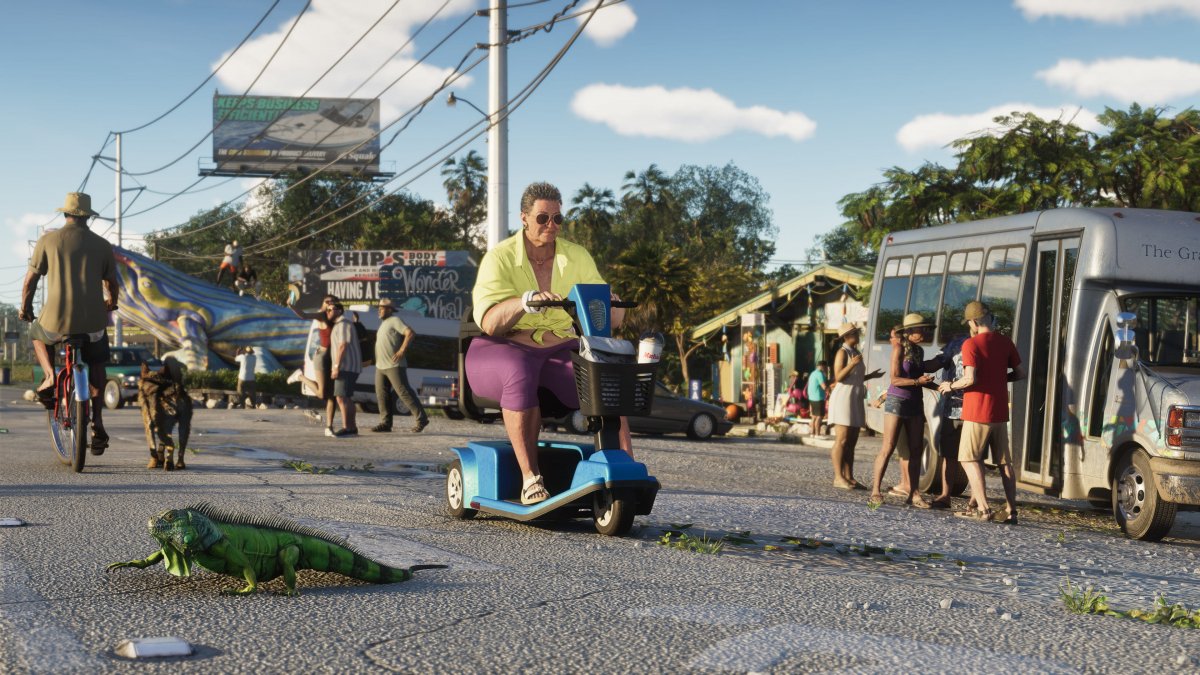
But the real shift isn't even that. In 2013, building something around GTA took a whole team: programmers, designers, editors. In 2026, all it takes is Claude Code and a couple of other AI tools.
There are countless ways to earn here, so everyone can find their place, from making content to selling your own in-game products and entire servers.
Below we'll break down the main ones.
1. Building Your Own Server
To see where the money is, let's start with the platform everything revolves around.
Since 2014 there's been FiveM, a platform that lets you run your own GTA 5 servers with your own rules. This isn't the standard GTA Online from Rockstar, it's a parallel universe: people build roleplay worlds there where you can be a cop, a doctor, a business owner or a gang leader, with a real in-game economy and its own laws. Even years later, FiveM pulls in over a hundred thousand players online at once.
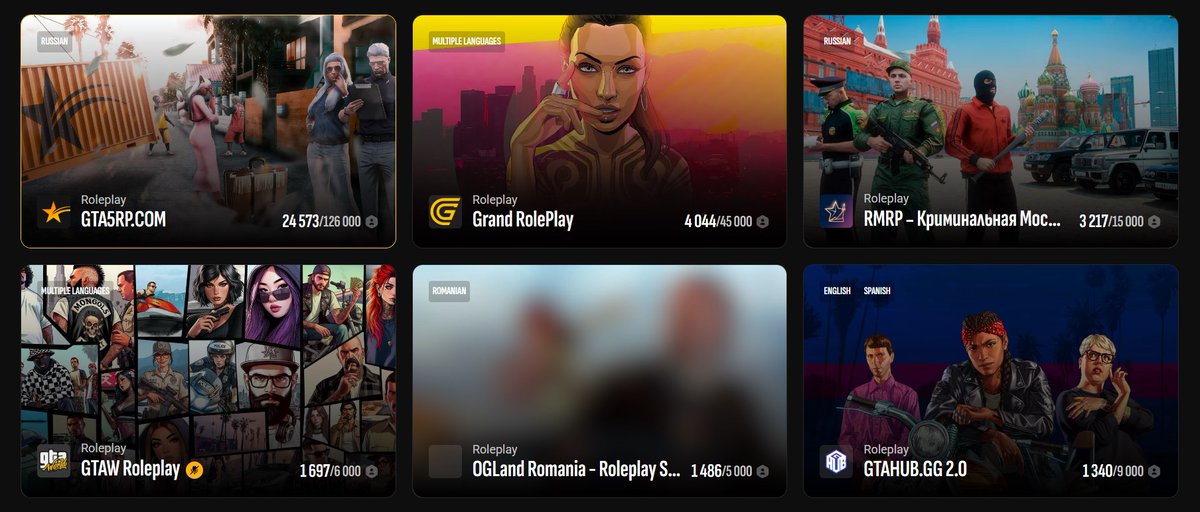 — "GTA V servers"
For a long time Rockstar looked the other way, and in 2023 it simply bought the whole platform. Then in January 2026 it launched the Cfx Marketplace on top of it, an official store built right into the game, where creators sell everything these servers need:
- ready-made systems
- add-ons
- vehicles
- interiors
For the first time in the series' history, Rockstar isn't fighting mods, it's letting people earn from them legally.
And this is where the first big opportunity appears, running your own server
The model is simple. You launch a roleplay server that players join by application, and you charge them a monthly fee for access to your world. The numbers are very real: mid-sized servers with 50 to 200 players bring in anywhere from 500 to 10,000 dollars a month, while the biggest projects like NoPixel add content sales and merch on top of subscriptions, pushing income to a whole different level. Top servers even build up waitlists, where people wait weeks for the chance to start paying.
The reason this works is scarcity. Quality servers are rare: putting together a living world with an economy, jobs, housing, police and businesses is months of work for an entire team. Technically, a server like this is built from a ready-made frame, a framework like QBCore or ESX, to which all the content is added in the Lua language. Knowing Lua was always the main barrier: without it you couldn't build a server or tune it to your liking.
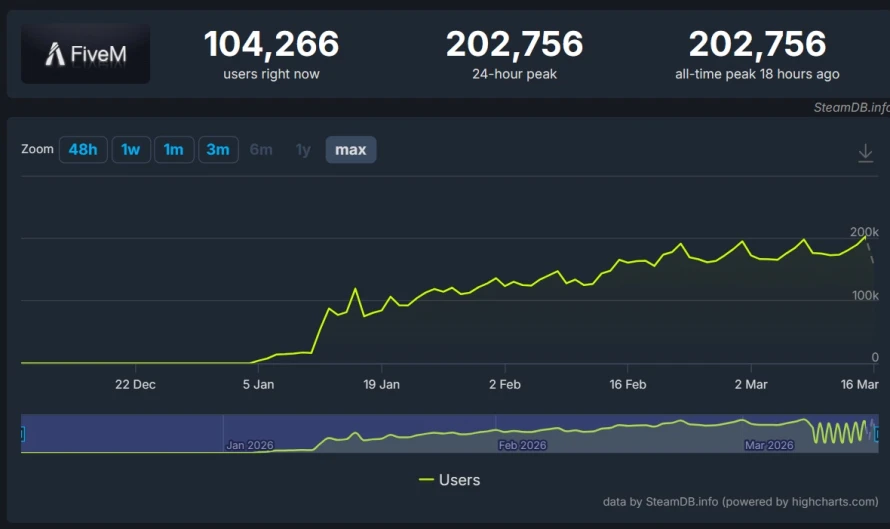 — "GTA servers metrics"
Or rather, that's how it used to be. Now Claude Code handles all of that code, and what once took a team months becomes doable for one person with no programming experience.
Setting up and launching the server
I want to launch my own FiveM roleplay server from scratch and earn
recurring income from paid subscription access. I have no coding experience.

Walk me through the whole thing, start to finish, in plain language:
- what I need on day one (hosting, base framework, tools) and the rough cost
- setting up 24/7 hosting and installing the framework ([QBCore or ESX])
- the core config files I'll touch and what each one does
- the exact order to build everything so I don't get lost
- how to test the server locally, then get it listed so players find it

Flag the classic beginner mistakes and anything I might not know
but definitely need to account for.
Server concept
Help me design a concept for a GTA roleplay server that people
will want to join and stay on for months.

Give me:
- three different setting ideas, each with a distinct atmosphere,
  not just "a city"
- for each one: what makes it hook players and who it's aimed at
- the factions and roles that would bring the world to life
- the conflict or ongoing drama that makes players log back in daily

Avoid the generic templates every second server already uses.
Accepting and screening players
2. Selling Mods and Scripts on the Cfx Marketplace
Building a server is a long game. It takes a hosting budget, time for the community, and the willingness to grow your world over years. It's not for everyone, and it's not where you should start.
There's a far simpler path, much closer to a solo format, supplying other people's servers with their content. While some build worlds, others sell them the bricks those worlds are made of. And this second path often turns out more profitable, because you don't have to keep a server online, moderate players, or answer for stability. You just make a product and sell it over and over.
The product here is scripts. Essentially ready-made pieces of mechanics that make a server work: earning systems, banks and economy, renting and buying housing, faction turf wars, inventory, interfaces.
Server owners buy them constantly, because writing all of this from scratch is hard, and you can't assemble a server without it. The demand never dries up: there are thousands of servers, new ones appear every day, and with GTA 6 on the way there will only be more.
This business used to be closed off. To make scripts you had to know Lua, and that shut out almost anyone without a technical background. This is exactly where everything changes. Now Claude Code writes the code for you: you describe in plain words what mechanic you need, and out comes a finished, working script. No programming required at all.
Here's what a simple earning-system script built this way looks like:
-- ============================================
--  Courier Job System | ESX Framework
--  Multi-grade payout with cooldown + config
-- ============================================

local ESX = exports['es_extended']:getSharedObject()
local activeDeliveries = {}

-- Config: grades, pay rates and cooldown
local Config = {
    jobName    = 'courier',
    cooldown   = 180, -- seconds between deliveries
    grades = {
        [0] = { label = 'Trainee', pay = 500  },
        [1] = { label = 'Driver',  pay = 850  },
        [2] = { label = 'Senior',  pay = 1200 },
        [3] = { label = 'Manager', pay = 1800 }
    }
}

-- Server: handle a completed delivery
RegisterNetEvent('courier:completeDelivery')
AddEventHandler('courier:completeDelivery', function()
    local src     = source
    local xPlayer = ESX.GetPlayerFromId(src)
    if not xPlayer then return end

    -- must actually hold the courier job
    if xPlayer.job.name ~= Config.jobName then
        return TriggerClientEvent('esx:showNotification', src,
            'You are not on the courier job.')
    end

    -- cooldown check
    local now = os.time()
    if activeDeliveries[src] and now < activeDeliveries[src] then
        local wait = activeDeliveries[src] - now
        return TriggerClientEvent('esx:showNotification', src,
            ('Wait %s seconds before the next delivery.'):format(wait))
    end

    -- pay based on the player's grade
    local grade    = xPlayer.job.grade
    local gradeCfg = Config.grades[grade]
    if not gradeCfg then return end

    xPlayer.addMoney(gradeCfg.pay)
    activeDeliveries[src] = now + Config.cooldown

    TriggerClientEvent('esx:showNotification', src,
        ('Delivery complete. Earned $%s (%s)'):format(gradeCfg.pay, gradeCfg.label))
end)

-- Admin command: promote a player one grade up
ESX.RegisterCommand('promote', 'admin', function(xPlayer, args)
    local target = ESX.GetPlayerFromId(args.playerId)
    if not target then return end

    local newGrade = target.job.grade + 1
    if not Config.grades[newGrade] then
        return xPlayer.showNotification('Player is already at max grade.')
    end

    target.setJob(Config.jobName, newGrade)
    target.showNotification(('You were promoted to %s.')
        :format(Config.grades[newGrade].label))
end, true, {
    help = 'Promote a courier one grade up',
    arguments = {
        { name = 'playerId', help = 'Target player server ID', type = 'player' }
    }
})
It's just a fragment, but the idea is clear: Claude Code writes blocks like this in full, with pay grades, cooldowns between tasks, notifications and admin commands, in a matter of minutes. All that's left for you is to test the result on a server and package it into a finished product.
The money math here is simple. A script is made once and sold to dozens and hundreds of server owners. It's a catalog that earns even while you sleep. Prices depend on type and complexity:
- earning systems: around $200 - $300
- economy and banking: $300 - $600
- housing and property: $200 - $400
- faction systems: $100 - $300
Build a catalog of a dozen or so scripts in the six months before release, and you walk into the peak of demand with a ready storefront, while everyone else is just starting out.
The path from idea to first sale comes down to a few steps, and Claude Code helps you at every one.
First, we find what people actually want to buy.
I want to find FiveM script ideas that server owners are actively
looking for but can't find good versions of.

Help me:
- list the systems server owners complain about most often
- for each, tell me whether the market already has a solid paid option
  or whether it's wide open
- rank them by demand against how much competition already exists
- give me the three best openings for a solo creator selling
  on the Cfx Marketplace

I want to build what people are already trying to buy, not guess.
Then we describe the mechanic and get a finished script
I want to build a complete, sellable FiveM script with no coding
experience. The mechanic I want is [describe it: job system / economy /
housing / faction system].

Write the full working script for me:
- built for the [QBCore or ESX] framework
- split into clean modules with clear comments
- with a config file so buyers can customize it without touching code
- tell me exactly where each file goes

Make it stable and easy to install for someone who isn't a developer.
Next we package the script into something worth listing
I've built a FiveM script that does [describe what it does].
Help me turn it into a finished product ready to sell.

Give me:
- a clean install-and-setup guide a non-coder can follow
- a marketplace listing: title, description, feature list and short FAQ
  written to actually convert buyers
- a sensible price for this type of script based on the market
- ideas for a premium version I could charge more for

Keep it clear and honest, no hype-filled fluff.
And finally we prepare the launch on the storefront
3. Creating and Selling Asset Packs
The last chapter was about scripts, the content that makes a server work. But a world has a second side too, how it looks. And that's a separate product with its own market.
Assets are the visual side of a server. Not logic, but objects that don't exist in regular GTA and that make each server recognizable. Server owners hunt for them constantly, because the same standard locations get old, and a unique look is exactly what players will pay for and stick around for.
The most in-demand categories:
- MLO interiors: walk-in custom spaces, police stations, hospitals, nightclubs, car dealerships, mansions, gang bases
- custom vehicles: models of cars, motorcycles and planes that aren't in the base game
- clothing and character looks: outfit packs, custom appearances
- design pieces: loading screens, interior decor, props
There's serious money moving here, because visuals are valued higher than code. Ready-made MLO interiors on specialized marketplaces go from 15 dollars for a simple base to 80 and up for premium with installation, while full custom builds made to order run from 50 for a small interior to 200 and well beyond for multi-story buildings.
Entire custom districts reach 800 to 2,000 dollars. All of this sells on the official Cfx Marketplace and on dozens of third-party storefronts like FiveM Market, where top designers have hundreds of completed orders.
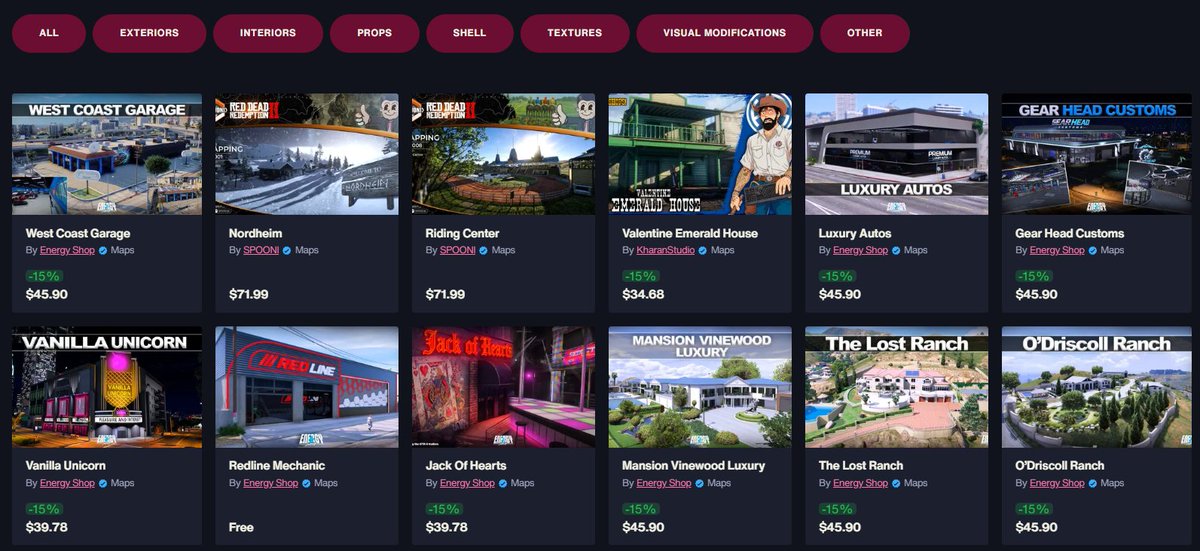 — "Asset Packs"
This niche used to be closed to newcomers. To create an MLO or a vehicle you had to learn 3D editors like Blender, and that's a craft, not something you pick up overnight. That's exactly why most scripters don't even touch assets, and exactly why the category is still underserved: demand is huge, and quality supply is scarce.
And this is where it all changes. There are several ways to create the product you need yourself.
Generating through AI tools like Meshy directly:
The easiest way. Meshy is an AI that turns a text description into a ready 3D model, on the principle of describe it, get the object. From there you refine it and export it into a format FiveM understands. No modeling skills needed at all. For simpler things, furniture, props, basic vehicles, decor, this is already enough, and it's a great entry point to build your first assets to sell without a single skill.
Claude controls Blender directly:
When you need something beyond a simple object, Blender comes into play, a free professional 3D editor where most assets are made. It used to scare off newcomers with its complexity, but now it can be controlled with words instead of hands, and Claude does it.
This works through a bridge called Blender MCP. It connects Claude directly to the editor, and Claude carries out the actions inside the program itself: builds geometry, places objects, applies materials, sets up lighting and the camera. Essentially you dictate the task, and Claude takes on all the manual work in Blender. For someone who's never opened 3D software, this turns weeks of learning into an ordinary conversation, you describe what you want, and the model comes together before your eyes.
It's worth being honest, this isn't one-button magic. Claude carries all the technical and routine work, but you're the one directing it: you specify color, size, position, review the result and make corrections. It's a dialogue where you're the director and Claude is the performer.
Remote control through OpenClaw:
Now, on top of all this, you can add OpenClaw, and this is where a whole new level of convenience opens up. OpenClaw is an AI agent that lives on your computer, but you give it commands straight from a messenger. You write in Telegram what needs to be done, OpenClaw passes it to Claude, who carries out the task in Blender on your PC, and a screenshot of the result comes back to you.
It literally looks like this: you download a model, type into the chat make the body bright red, remove the logo, slap on this sticker, change the text, get a finished asset and export it into a game-ready format.
All by messaging, lying on the couch, without a single click in the program itself. Blender runs on its own, and you just steer the process from your phone.
From here the path to your first sale is the same as with scripts, and AI helps at every step.
First we figure out which assets the market is missing
I want to find FiveM asset ideas that server owners are hunting for
but can't easily find good versions of.

Help me:
- list the interior (MLO), vehicle and clothing types that are
  in constant demand across RP servers
- for each, tell me whether the market is saturated or wide open
- point out which ones are overpriced right now, leaving room
  for a cheaper competitor
- give me the three best asset openings for a solo creator

I want to build what buyers are already searching for.
If you need a quick simple object, we generate it from text
I want to create a 3D asset for a FiveM server with no modeling
experience, using a text-to-3D AI generator.

Walk me through:
- how to describe the asset so the generated model is actually usable
- what to clean up or fix after generation
- how to export it into a FiveM-ready format with correct collision
- the common mistakes that make an asset break in-game

Keep it beginner-friendly, step by step.
For something serious, we hand the work to Claude controlling Blender
I want to build a custom 3D asset for FiveM inside Blender, but I don't
know Blender and I don't want to touch it manually. You'll control
Blender directly and do the work, I'll direct you by describing what
I want.

The asset: [describe it in detail].

- build or import the base, then shape it step by step
- keep the mesh clean and optimized for a game engine
- set correct scale and collision for FiveM
- after each major step, describe what changed so I can approve or adjust

Treat me as someone who has never opened Blender before.
And finally we package the asset into a finished product
4. Living AI Characters (Next-Gen NPC)
NPCs are non-player characters: shop clerks, bartenders, mechanics, drug dealers, cops. The problem is that almost everywhere they don't feel alive. They stand in one spot, hand out the same quest, say a single memorized line and take your money. On every other server you run into literally the same lifeless dummies. Players have long gotten used to it, but that's exactly why a living character makes such a strong impression.
 — "Next gen NPCs"
Now picture an NPC with a neural network hooked up to it. It doesn't repeat a script, it actually talks, remembers you and behaves differently depending on what happened before:
- a trader who raises or drops the price depending on your reputation
- a cop who interrogates you based on your criminal history
- a bartender who gossips about what other players recently pulled off
- a drug dealer with a name and personality who remembers whether you were reliable, and gets nervous if you were late
This is no longer set dressing, but a living participant in the world. And here's what matters: almost no one has this. Not a single major server has launched smart NPCs at scale yet, which means the niche is essentially empty. That's why packs like these command high prices, from 200 to 500 dollars for a per-server license. One product sold to a hundred servers is tens of thousands of dollars.
There are two ways to build a character like this.
The first way, no code, through Convai. It's a platform where an NPC is assembled in a visual editor: you set its name, personality, backstory, knowledge base and conversation boundaries, all with the mouse, no programming.
What you get is a unique API key, the thread that will link your character to the server. From there you just need to connect it to FiveM, and this is where Claude Code helps: it writes the bridge through which the server reaches your NPC every time it talks to a player.
The second way, more flexible, directly through the Claude API. Here Claude itself becomes the character's brain: the server sends it the role, personality and player history, and gets back a living line. This gives you full control over behavior. Here's what the core of such an NPC looks like:
import anthropic

client = anthropic.Anthropic(api_key="YOUR_KEY")

def npc_reply(npc_role, personality, player_history, player_message):
    system_prompt = f"""You are {npc_role} in a GTA roleplay server.
    Personality: {personality}
    Stay fully in character. Never break immersion.
    Keep replies under 3 sentences.

    What you remember about this player:
    - reputation: {player_history.get('reputation', 0)}
    - known crimes: {player_history.get('crimes', [])}
    - past encounters: {player_history.get('history', [])}

    React based on this history. If the player wronged you before,
    be cold. If they've been reliable, be warmer."""

    response = client.messages.create(
        model="claude-sonnet-4-6",
        max_tokens=150,
        system=system_prompt,
        messages=[{"role": "user", "content": player_message}]
    )

    return response.content[0].text

# Example: a shady arms dealer meeting a low-reputation player
reply = npc_reply(
    npc_role="a nervous black-market arms dealer",
    personality="paranoid, talks fast, trusts no one",
    player_history={
        "reputation": -220,
        "crimes": ["armed robbery", "snitching"],
        "history": ["sold you a pistol last week", "you were late on payment"]
    },
    player_message="Hey, I need something bigger this time."
)

print(reply)
The logic is simple: in comes the character's role, its personality and everything it remembers about a specific player, out comes a living line in character. The same engine serves the bartender, the cop and the trader alike, only the role and the memory change.
From there, as usual, AI walks you from idea to finished product.
First we come up with characters people will want to buy
I want to design a pack of AI-driven NPCs for GTA roleplay servers.
These NPCs talk naturally, remember players and react to their history.

Help me:
- come up with 5 NPC types that would add the most life to a server
- for each, define personality, what they remember, and how they
  react differently based on the player's reputation and past actions
- explain what makes each one worth paying for
- point out which types no server currently offers well

I want characters that feel alive, not scripted vendors.
Then we build the technical link to the server
I want to connect an AI-powered NPC to my FiveM server so it holds
real conversations with players and remembers them.

Walk me through, step by step:
- how the server sends the player's message and history to the AI
- how to pass the NPC's role, personality and memory each time
- how to store what the NPC learns about a player between sessions
- how to keep responses fast and short enough for live gameplay

Assume I can follow instructions but I'm not an experienced coder.
And finally we package the pack into a product
I've built a pack of AI-driven NPCs for FiveM: [describe them].
Help me turn it into a product server owners will buy.

Give me:
- a clean setup guide that a non-technical server owner can follow
- a marketplace listing: title, description, feature list and a short
  demo-dialogue example that shows the NPCs feeling alive
- a fair price for a per-server license based on how rare this is
- ideas for tiers: a basic pack versus a premium one with more characters

Make buyers instantly get why this beats standard scripted NPCs.
Conclusion
Just a couple of years ago, everything this article talked about took a whole team. To build a server, you needed a programmer. To make a script, you had to learn the Lua language. To sculpt an asset, years of mastering 3D editors like Blender. To bring characters to life, separate specialists. The barrier to entry shut out almost everyone, and earning from this stayed the domain of a narrow circle of techies.
That wall is gone now. You don't need to learn Lua, Claude Code writes the code for you. You don't need to figure out Blender, an AI runs the program while you simply say what you want to get. You don't need to be an artist, an engineer and a writer all at once either, AI covers each of those roles. One person today does what used to take an entire team months.
And this is where the real opportunity appears. GTA 6 will be the biggest launch in the industry's history, and a whole economy is already forming around it: your own servers, scripts, assets, living characters. There's plenty of room in this economy, and there's a spot for every temperament, some prefer running their own world, some quietly supplying other worlds with content, some sculpting the visuals.

The winners won't be the most talented. The winners will be the earliest. While most people just wait for release and play, a small group is already building catalogs, sharpening their skills and claiming niches while they're still empty.
The tools are in your hands. Everything else comes down to just one thing, whether you start today or watch someone else tell this story
Related articles
$8,600,000,000 Was Spent in GTA Online. I Found My Share Before Launch
Now → Month 2: FiveM basics, Claude setup, 3–5 scripts, Tebex launch


How to Build an AI-Native Company: Hiring, Standards, and Cadence
*We spent a year running hackathons, AI trainings, and office hours. But nothing changed until we made AI capability a requirement.*