The $15K/Month AI Content Stack Nobody Is Talking About Yet
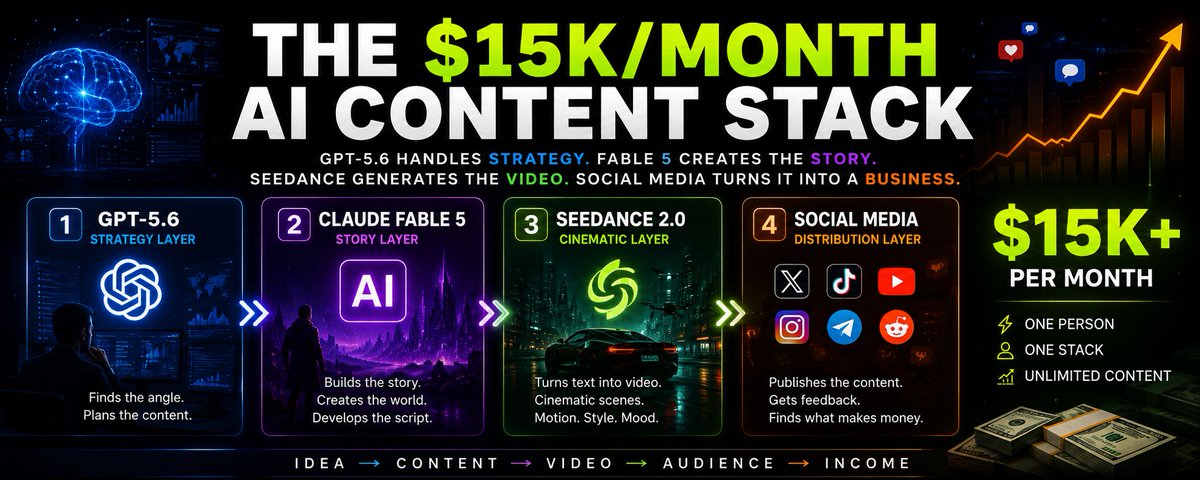
AI videos are already turning into $5K–$15K/month solo businesses. Most people still post random clips and hope. The smart ones build a stack that finds early trends, creates fast, tests attention, and turns the winners into products, clients, and income
GPT-5.5 is already enough to run this stack. GPT-5.6 Sol is where it gets scary — the same loop, but with a stronger brain behind every trend, story, video, and offer
You can already see the shift on Reddit.
People are no longer only asking which AI video tool made the clip.
They are asking for the workflow.
The settings.
The model chain.
The repeatable process.
That is the signal.
The market is moving from “cool AI video” to “how do I build the system behind it?”
And that is where the $5K–$15K/month opportunity starts.
Not from one clip.
From the stack behind it.

The Old Content Game Is Collapsing
A few years ago, testing one serious content idea meant building a small production chain.
A researcher had to find the trend.
A writer had to shape the angle.
A designer had to make the visual.
An editor had to cut the video.
A social person had to post it, track it, and guess what worked.
By the time the idea reached the market, time was already spent.
Money was already spent.
And nobody knew if people even cared.
That was the old content game.
Slow first.
Expensive first.
Feedback last.
AI video flips that order.
Now one person can test the market before building a whole production around it.
Find the trend.
Shape the angle.
Build the story.
Generate the scene.
Post it.
Read the reaction.
Turn the winner into something bigger.
A single AI video might get views.
But a repeatable system can do something more valuable:
find what people want,
create around it fast,
test it in public,
and turn winning signals into offers, products, pages, or client work.
This is where the $5K–$15K/month path starts to make sense.
Not from one lucky viral post.
From a system that keeps finding demand, creating proof, testing attention, and monetizing the winners faster than the old production chain can react.

The Loop Is the Business
This is where creators get AI content wrong.
They think the video is the product.
It is not.
The video is one test inside the loop.
A creator finds a weak signal.
Turns it into an angle.
Builds a story around it.
Generates the scene.
Posts it.
Reads the reaction.
Then makes the next version sharper.
That is the whole game.
Not one perfect prompt.
Not one lucky viral post.
A loop.
Every post tells you something the market would never say in a survey.
What people stop for.
What they ignore.
What they argue with.
What they save.
What they send to someone else.
What makes them click the profile.
That feedback is the asset.
This is why Reddit matters.
Reddit is where weak signals show up early.
People complain before markets form.
They ask workflow questions before products exist.
They argue about tools before the mainstream notices the category.
That is exactly the kind of signal a solo creator needs.
Not because Reddit is magic.
Because it shows demand before demand looks clean.
The first version gives you attention data.
The second version uses that data.
The third version starts looking less like content and more like a product direction.
This is why AI video is dangerous for slow creators.
It gives one person more attempts.
More hooks.
More angles.
More visual tests.
More chances to find what actually moves.
The system does not work because it generates pretty clips.
It works because it helps you learn faster than people still building content the old way.
And in social media, the person who learns faster usually wins first.

The Stack Gives Every Step a Job
This is the part most creators skip.
They hear about a new model and immediately ask:
“Can it make me content?”
Wrong question.
A model by itself is not a business.
A model chain is.
Each layer needs a job.
One layer watches the market.
One layer finds the angle.
One layer turns the angle into a story.
One layer creates the visual proof.
One layer tests if anyone actually cares.
That is when AI stops feeling random.
GPT-5.6 is not there to “write posts.”
It is there to read the room.
What are people starting to talk about?
Where is the tension?
What feels early?
What would make someone stop scrolling?
Fable 5 is not there to make things sound dramatic.
It is there to turn the angle into a format people can follow.
A character.
A conflict.
A scene.
A reason to watch the next version.
Seedance is not there to make a pretty clip.
It is there to create proof fast enough to test the idea while it is still hot.
Social media is not there to “post content.”
It is there to show you what the market rewards.
Views are not the only signal.
Replies matter.
Saves matter.
Profile clicks matter.
Reposts matter.
People stealing your angle matters too.
That means the system is working.
The creator who wins is not the one with the most tools.
It is the one who knows exactly what each tool is supposed to do.
That is how the stack becomes monetizable.
GPT-5.6 is not the business.
Fable 5 is not the business.
Seedance is not the business.
Social media is not the business.
The business is the chain between them.
Research becomes angles.
Angles become videos.
Videos become signals.
Signals become offers.
That is the part most creators skip.
The Money Comes After the Signal
This is the part people usually get backwards.
They try to monetize before they know what the market wants.
So they launch a product nobody asked for.
Build a newsletter nobody opens.
Offer a service nobody understands.
Post videos that get views but lead nowhere.
The stack works because it starts with attention first.
Not fake attention.
Real signals.
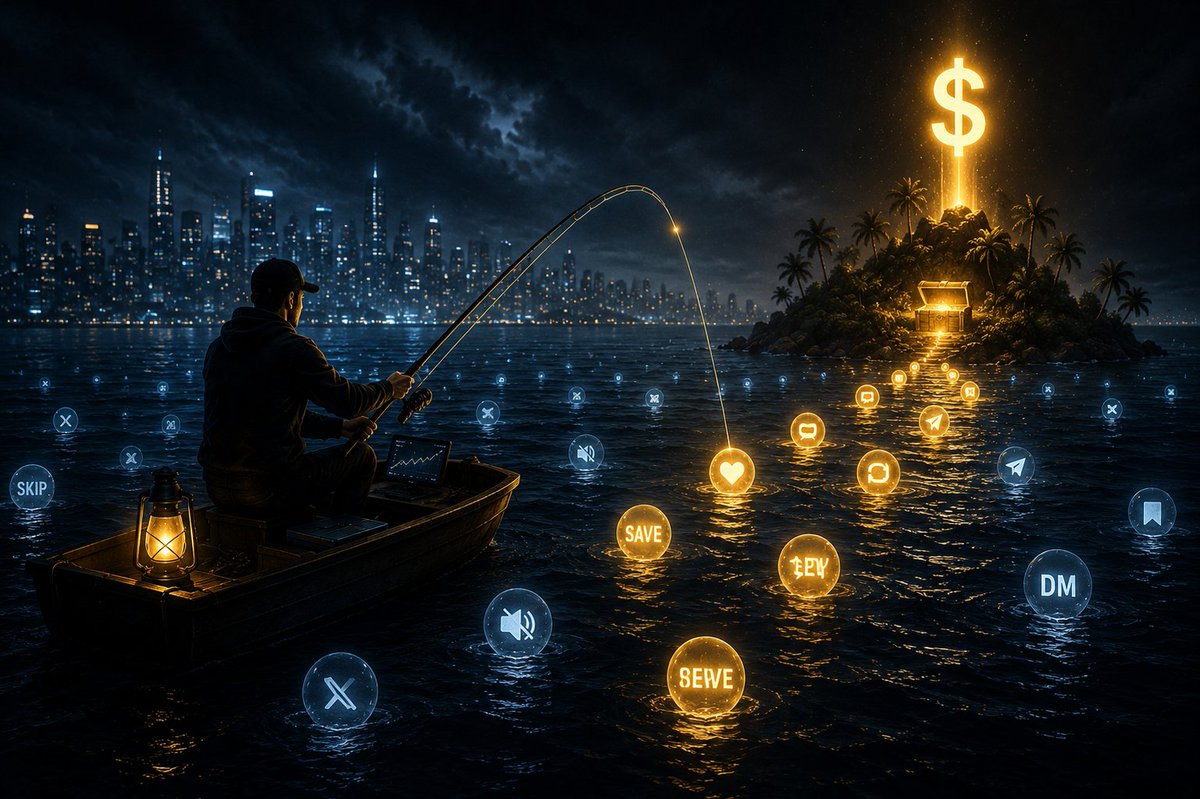
A comment that asks how it was made.
A save because someone wants the workflow later.
A DM from a founder asking if you can do it for their brand.
A repost from someone in the niche.
A reply that gives you the next angle for free.
That is where monetization starts.
Not at checkout.
In the reaction.
A winning AI video can become a breakdown.
A breakdown can become a prompt pack.
A prompt pack can become a paid template.
A paid template can become a client offer.
A client offer can become a monthly content system.
This is why the $15K/month number is not about one viral post.
One post does not build a business.
A signal does.
And when you know how to turn signals into offers, every good piece of content becomes more than content.
It becomes market proof.
This is how the $5K–$15K/month path becomes real.
Not overnight.
Not from one post.
But from stacking small monetization paths around proven demand.
A few paid breakdowns.
A few prompt packs.
A client content system.
A niche page with sponsors.
A product built from repeated questions.
A service built from one workflow people keep asking about.
The signal comes first.
The money follows the signal.

The Window Is Open Before It Looks Obvious
The best opportunities never look clean at the start.
They look messy.
Too early.
Too weird.
Too small.
Too easy to laugh at.
That is exactly why they work.
By the time everyone agrees something is the future, the cheap attention is already gone.
AI video is still in that strange middle stage.
Some people call it slop.
Some people use it for memes.
Some people test random clips and quit after three posts.
But underneath the noise, a new creator economy is forming.
Not around prettier videos.
Around faster proof.
A solo creator can now test a niche before building a product.
Test a story before making a channel.
Test an offer before building a business.
Test a visual world before hiring a team.
That used to be backwards.
People built first, then hoped the market cared.
Now the market can answer before the business is fully built.
That is the open window.
The tools are already public.
The workflows are still private.
That gap will not stay open forever.
Once every creator understands the same stack, the easy attention disappears.
The hooks get copied.
The formats get cloned.
The prompts get packaged.
The niches get crowded.
The edge is not waiting until the playbook is obvious.
The edge is building the system while people are still laughing at the early version.

The Winner Is Not the Best Clip
This is the trap.
Creators think the best-looking video wins.
Cleanest shot.
Biggest scene.
Most cinematic frame.
Most expensive-looking output.
Sometimes it helps.
But it is not the reason people come back.
The real winner is the idea that can turn into more than one post.
A format.
A series.
A product.
A service.
A reason to follow.
A reason to buy.
That is why one viral clip is not enough.
A viral clip gives you a spike.
A repeatable angle gives you a business.
When a video gets attention, the question is not:
“How do I make another cool video?”
The better question is:
“What did the market just tell me?”
Did people ask for the prompt?
Did they want the workflow?
Did they argue about the business model?
Did they ask how to use it for their niche?
Did founders see it as an ad format?
Did creators see it as a content system?
That reaction tells you where the money is hiding.
The clip is only the doorway.
The real asset is what happens after people walk through it.
That is why the best clip is not always the most profitable clip.
The most profitable clip is the one that reveals demand.
A pretty video with no next step is just attention.
But a video that makes people ask for the workflow, the prompt, the template, the service, or the niche version gives you something better.
A direction.
And direction is what turns content into income.

Build the Path Before You Need the Crowd
Most creators wait for attention before they build anything around it.
That is a mistake.
Attention moves too fast.
By the time a post starts working, you should already know where the next step leads.
Not a complicated funnel.
Just a clear path.
If people ask for the prompt, give them the prompt system.
If they ask how it was made, turn it into a breakdown.
If they want the same result for their niche, offer the service.
If they keep saving the workflow, package it.
If they argue about the idea, write the next post from that argument.
This is how content stops being random.
Every reaction should have somewhere to go.
A reply becomes the next angle.
A save becomes a product clue.
A DM becomes an offer.
A repost becomes distribution proof.
A repeated question becomes a paid asset.
That is the difference between creators who get views and creators who build income.
Views disappear.
Paths compound.
The smart move is not waiting until you are big.
It is building the path while the audience is still small, so every signal has somewhere useful to land.
This is where small creators lose money without noticing it.
They get attention, but they have no path.
No offer.
No breakdown.
No product.
No service.
No reason for the viewer to come back.
The stack fixes that.
It makes every strong reaction useful.
That is how a small audience can still become a $5K/month business before it becomes a big audience.

The Stack Compounds When You Stop Starting Over
The biggest mistake is treating every post like a fresh beginning.
New idea.
New angle.
New format.
New prompt.
New hope.
That burns people out fast.
A real content engine does the opposite.
It keeps the parts that worked and only changes what needs testing.
One winning hook becomes five angles.
One strong scene becomes a series.
One format becomes a niche page.
One repeated question becomes a product.
One client result becomes a case study.
That is where the compounding starts.
You are no longer creating from zero.
You are building from proof.
This is why small creators can suddenly look much bigger than they are.
They are not making more content by force.
They are reusing signal.
The market shows them where the light is, and the stack helps them build the next path around it.
That is the real advantage of AI content.
Not infinite output.
Better reuse.
Reuse is what makes the economics work.
You do not need to create 100 separate ideas.
You need one signal that can become 10 assets.
One AI video becomes a post.
The post becomes a breakdown.
The breakdown becomes a prompt pack.
The prompt pack becomes a client offer.
The client offer becomes a case study.
The case study becomes the next viral proof.
That is compounding.
Not more output.
More value from every winner.
A smart creator does not need to win every post.
They need to notice the few posts that open a door, then keep walking through it before everyone else sees the entrance.

The Real Product Is the System
At some point, the content stops being the whole business.
It becomes the front door.
People see the video first.
But what they are really buying into is the system behind it.
The way you find ideas.
The way you shape them.
The way you turn them into scenes.
The way you test them.
The way you keep improving without starting from zero.
That system can become anything.
A service.
A paid breakdown.
A client package.
A niche page.
A prompt product.
A content engine for a brand.
A private workflow people pay to copy.
This is why the system matters more than the output.
Outputs get old fast.
Systems keep producing.
One video can die in the feed after a day.
But the process that made it can create the next hundred.
That is the shift.
The creator is not just making AI content anymore.
They are building an operating system for attention.
And once that system works in one niche, it can be moved, rebuilt, and sold in another.
This is why the system is more valuable than the content.
Content proves the market cares.
The system shows how to repeat it.
That is what clients pay for.
That is what creators buy.
That is what brands do not know how to build internally.
They do not just want an AI video.
They want the machine that keeps finding what works.
The $5K–$15K/Month Stack Is Not About Posting More
The $5K–$15K/month opportunity is not about flooding the internet with AI videos.
That is the cheap version.
The real version is building a system that turns attention into proof, and proof into income.
One video can find demand.
One demand signal can become a breakdown.
One breakdown can become a product.
One product can become a client offer.
One client offer can become a monthly content system.
One working system can move into another niche.
That is how the stack starts to compound.
Not because every post wins.
Because every winning post gives you something to build from.
Most creators will keep asking:
“What tool made this video?”
The better question is:
“What system found the idea, built the story, created the video, tested the market, and turned the reaction into money?”
That is the difference.
AI content by itself is getting crowded.
AI content systems are still early.
The people who understand the stack now will have an advantage before the playbook becomes obvious.
GPT-5.6 finds the angle.
Fable 5 builds the story.
Seedance creates the proof.
Social media shows what people actually want.
Then the creator turns the signal into assets.
Products.
Services.
Client systems.
Niche pages.
Paid breakdowns.
Prompt packs.
Sponsorships.
Content engines.
That is the real $5K–$15K/month path.
Not a magic prompt.
A repeatable loop.
I break down the hidden AI workflows behind solo content businesses, AI video systems, production stacks, and one-person media machines.
Follow Cipgerx if you want to see the systems behind the next wave of AI creators before they become obvious.
Related articles
How to design an AI agent
Who the fuck wants to pay for your platform when $200 already buys Claude Max or Codex?

How I Use Claude Fable 5 to Build $10k/Mo Faceless AI Story Channels
Six months ago, every AI-generated YouTube script I produced needed 2+ hours of manual rewriting before it was usable. Characters changed names between chapters. Documentary scripts cited events from…

The Production AI Stack for Solo Builders
*One-person companies now ship like ten-person teams. The ones that survive run a system: a build loop the model cannot lie to, a defense layer attackers cannot walk through, and operations that run…