the dark psychology behind getting the "YES" in B2B sales

B2B buyers don't make logical decisions.
They make emotional decisions and then write a business case to justify them to their team.
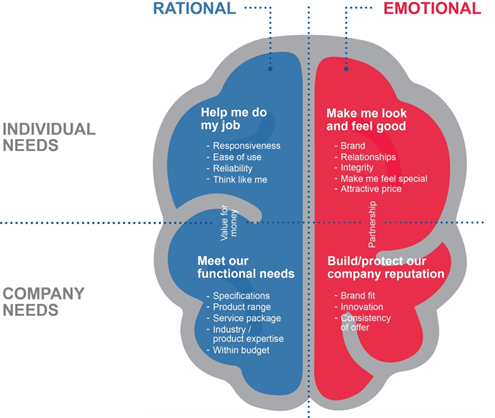
The ROI deck doesn't close the deal. The feeling the buyer has about the person on the other end of the call closes the deal. The ROI deck is the artifact they produce afterward so their CFO signs off on what they already decided in the first 25 minutes.
The reason most B2B pitches fail: the emotional sequence never completed. The rational brain saw a solid offer. The emotional brain never felt safe enough, certain enough, or compelled enough to act.
The Emotional Sequence Every B2B Buyer Runs
There are four emotional gates a prospect must pass through before they say yes. Skip any one, and the rational brain builds a case against buying rather than for it.
Gate 1: "Do i trust this person?"
Not "do i trust the company." Do i trust the specific human on this call. Trust isn't built through credentials or case studies. It's built through the quality of the questions you ask and the accuracy of what you reflect back.
"What challenges are you facing" is an intake form. "You mentioned your close rate has been stuck for a few months. What have you actually tried to fix it?" is a conversation with someone who has been in the room before.
Gate 2: "Will this work for me specifically?"
Even a prospect who trusts you will not close if they don't believe the outcome is achievable for them. You break this by naming their specific concern from discovery and mapping their situation onto the case study before you tell it.
"You mentioned you've tried hiring closers before and they didn't perform. The reason was the system they walked into. The closer we placed for a client at your exact revenue range was the same caliber. The difference was the infrastructure. Close rate went from 14% to 29% in six weeks."
Gate 3: "Do i feel the cost of waiting?"
Fake deadlines repel B2B buyers. Real urgency comes from making the cost of inaction vivid using numbers the prospect generated themselves. When the cost of waiting becomes more emotionally real than the cost of the investment, urgency is built from data the prospect said out loud.
Gate 4: "Am i the kind of person who moves on this?"
At premium prices, the decision is an identity statement. "The people we work with are operators who take this seriously. They're not looking for someone to do it cheap. They're looking for someone to do it right." The right prospect aligns and closes. The wrong one self-selects out. Both outcomes are good.
The Power Dynamic Nobody Talks About
Every B2B sales call has a power dynamic. Whoever holds the frame wins.
Frame surrender sounds like: "Does that make sense?", "I know it's a lot to think about", "If you want, i can send you more information."
Frame retention sounds like: "Based on what you told me, here's what i'd recommend", "What would need to be true for you to move forward this week?"
A closer who sounds grounded and unrattled when the price comes up communicates one thing: i've done this before and i know what this is worth.
If you want us to audit your sales calls and show you exactly where the psychological sequence is breaking, DM me "SCRIPT" and we'll take a look.
Social Proof in B2B
"Great to work with" is satisfaction. "A coaching business at $40k/month, 13% close rate, no structured discovery. We rebuilt discovery, added the cost quantification question. Close rate to 36% in 90 days, cash collected crossed $180k/month" is proof that stops comparison and starts conversion.
Structure: starting state that mirrors the prospect's situation, the specific mechanism applied, and the outcome with numbers and timeframe.
The Emotional Close
The most effective closes don't reference deliverables. They reference the gap.
"You came on this call because something about where you are right now isn't working. You know your close rate should be higher. You know the problem is fixable. The only question is whether you're going to fix it now or six months from now, and what that six months costs you."
That's not a pitch. That's a mirror. And when a prospect looks in a mirror and sees the truth, the close is inevitable.
If you want us to audit your coaching business or agency and show you how we'd rebuild the psychological architecture of your sales call to close at 30%+ in 90 days (or we work for free until you do), DM me "SCRIPT" and we'll make it happen
(Clients averaging $110k in revenue and $80k in cash collected in their first 45 days through our custom sales infrastructure, fully done-for-you)
satyam
Related articles

11 braindead B2B sales mistakes YOU constantly make
I've audited over 50 B2B sales operations and placed 170+ closers across coaching businesses and agencies.

Set up 10 female accounts: print $14,000 in 28 days (b2b)
a message from a female account gets opened before the brain even decides to open it in cold outreach

how to use GPT-6 Astra with Grok Bot to create a $3M/yr GTM team
A cold email campaign is a chain of artifacts. a verified lead list. a hypothesis about what to test. a sequence of copy. a campaign built inside a sending tool. a daily read on sending health. each…