You Built a Mobile Game This Weekend. Here's Why - and How to Fix It in One File.

The game is done. The wall isn't the code. It's everything that comes after.

1. The real wall nobody talks about
You finish the game. You go to submit it. Then you hit this:
> "Developer entity required." > > "In-app payments require a registered business." > > "Tax information needed before payouts." > > "EIN required for US App Store Connect." > > "Support email must be a domain address." > > "Privacy policy URL required."
Each item is individually solvable. Together they're a week of forms, a lawyer, a bank visit, and three different government websites - before a single user downloads your game.
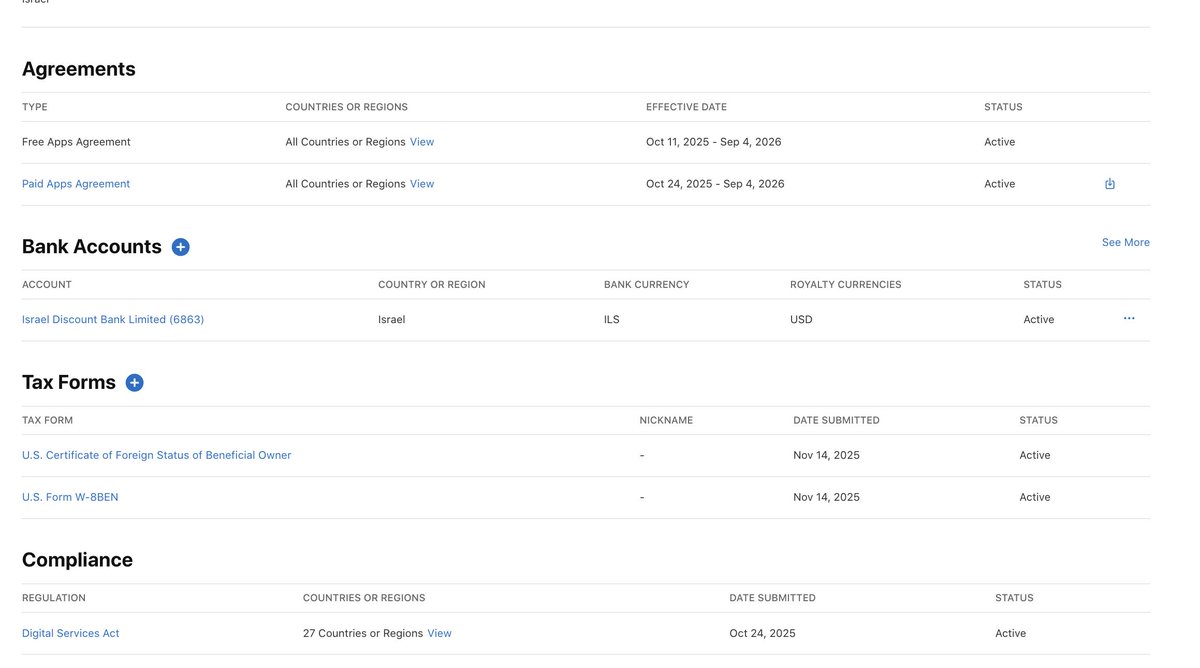
This is why a thousand finished games sit on hard drives. The build isn't the wall anymore. The business layer is.
2. What Claude Code does - and where it stops
Claude Code is genuinely exceptional at building mobile games now. Vibe-coding a working prototype over a weekend is real. The output is production-quality.
The gap: Claude Code builds software. It can't form your LLC. It can't provision a bank account. It can't issue a card, set up a domain inbox, or file for an EIN.
These aren't technical problems. They're real-world infrastructure - legal entities, financial accounts, registered addresses, verified identities.
Until now that layer required a human, a lawyer, and a week.
3. What naïve actually does
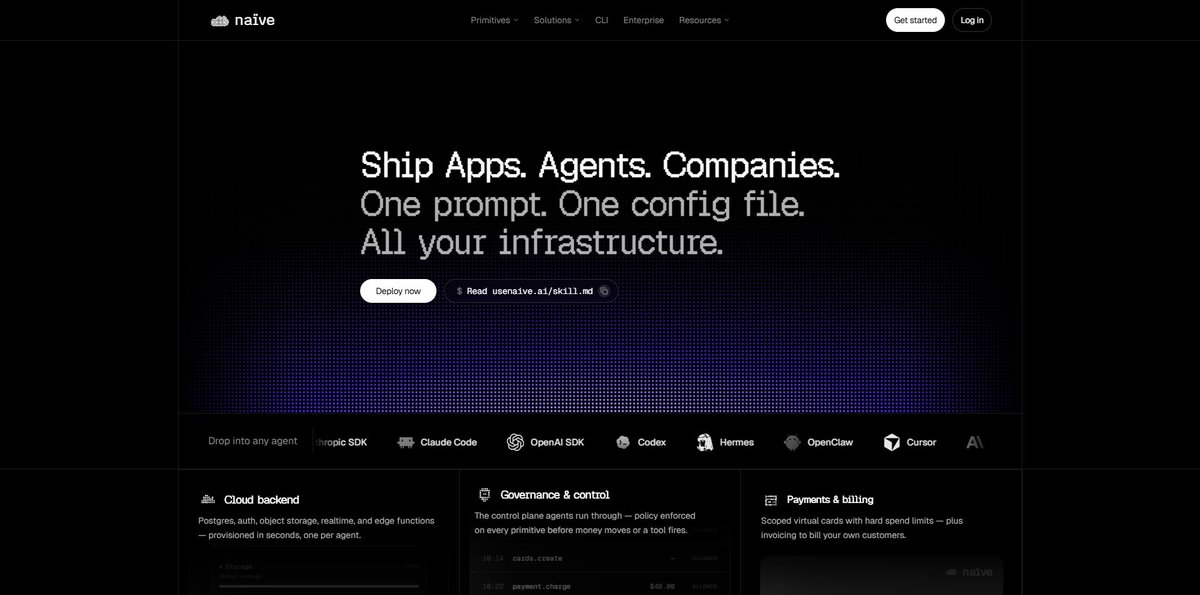
Naïve is an infrastructure layer that gives AI agents a governed real-world identity - declared as code, provisioned on demand.
One naive.config.ts file describes what your studio needs:
import { defineConfig, cloud, agentTemplate, policy } from "@usenaive-sdk/iac";

export default defineConfig({
  project: "my-mobile-studio",

  infrastructure: {
    web: cloud.web({ framework: "nextjs", dir: "." }),
    database: cloud.postgres({ name: "studio-db", size: "serverless" }),
  },

  agentProfiles: {
    studio: agentTemplate({
      identity: {
        kind: "business",
        verify: "kyb",
        form: "llc"              // real US LLC formation
      },
      comms: {
        email: { domain: "per-tenant" },   // custom domain inbox
        phone: { sms: true }               // US number for 2FA, support
      },
      policy: policy({
        allow: [
          "email",
          "llm",
          "search",
          "phone",
          "formation",           // LLC + EIN filing
          "cards"                // virtual spend card for ad spend, tools
        ],
        budget: {
          cap: "$200/mo",
          alertAt: 0.8,
          hard: true
        },
        approvals: [
          { when: "formation.submit", via: "email" },
          { when: "cards.create", via: "email" }
        ],
      }),
    }),
  },
});
Then:
npm install -g @usenaive-sdk/cli
naive register --name "Your Name" --email "you@email.com" --password "..."
naive status
naive init
naive up
naive up runs the plan. You approve the real-world actions - LLC formation, EIN filing, card provisioning - via email confirmation. Naïve executes them.

What gets provisioned:
> LLC formed and filed (Wyoming or your state of choice) > > EIN obtained from the IRS > > Business bank-ready structure > > Virtual spend card with hard monthly cap > > Custom domain inbox (support@yourstudio.com) > > US phone number for 2FA and support > > Audit log of every action
The part that used to need a lawyer and a week of forms is now a file your agent writes and a terminal command you run.
4. The full pipeline - from weekend build to live on the App Store

Step 1 - Build the game
Claude Code handles this. Prompt your game concept, iterate on mechanics, generate assets. A working prototype in a weekend is realistic now for simple game types - puzzles, runners, idle games, word games.
# In Claude Code terminal
claude "build a mobile-ready endless runner game in React Native.
Player taps to jump over obstacles. Increasing speed.
Score counter. Game over screen with restart.
Optimized for 60fps on mobile."
Step 2 - Provision the studio
naive register --name "Studio Name" --email "founder@gmail.com" --password "..."
naive init
# Edit naive.config.ts with your studio configuration
naive up
Approve the formation and card actions when naïve emails you for confirmation. Takes 1-3 business days for LLC and EIN to process - you can continue building while it runs.
Step 3 - Set up App Store Connect and Google Play
Once your EIN arrives and your business entity is confirmed:
- App Store Connect: register as organization with your LLC name and EIN
- Google Play Console: $25 one-time fee, register with business details
- Add your naïve-provisioned domain inbox as the support address
- Add your naïve card as the payment method for developer fees
Step 4 - Configure in-app payments
Both stores require a verified business and bank connection before in-app purchases go live. Your LLC gives you the legal entity. Your naïve card handles the tooling spend. For payouts, connect a business bank account (Mercury, Relay, or any US business bank) to your App Store and Play Console accounts.
Step 5 - Ship
Build your release binary. Submit for review. The review process is the same as always - 24-48 hours for Google, 1-3 days for Apple.
The difference: you're no longer blocked at step 2.
5. What this changes for indie developers
Before this stack:
Weekend build complete
  ↓
Research LLC formation → 2 days
  ↓
File with state → 1-2 weeks
  ↓
Wait for EIN → 2-4 weeks
  ↓
Open business bank → 1 week
  ↓
Set up domain + email → 1 day
  ↓
Submit to stores → finally
Total: 6-8 weeks of friction between finished game and live product. Most developers give up somewhere in that window.
After this stack:
Weekend build complete
  ↓
naive up → approve via email
  ↓
LLC + EIN processing in background (1-3 days)
  ↓
Store submission → live
The build and the business layer run in parallel. You don't stop coding to do paperwork. The agent handles the paperwork while you iterate on the game.
6. The business model this unlocks
One LLC. Multiple games.
Once the studio entity exists, every subsequent game ships under the same umbrella. No repeat formation. No repeat EIN. No repeat bank setup.
The economics of an indie mobile studio shift completely when the marginal cost of shipping game #2, #3, and #4 drops to near zero on the business side.
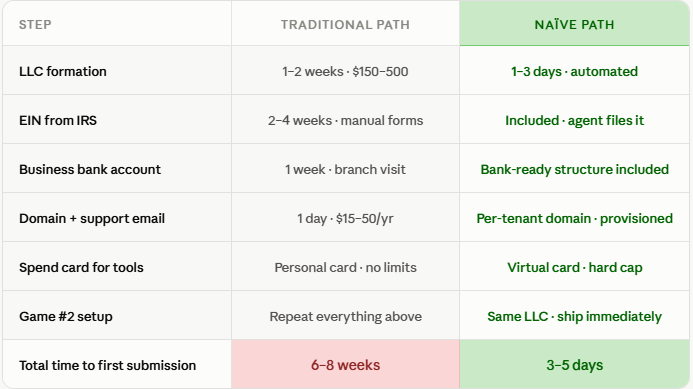
With naïve's spend-capped card you also get:
- Ad spend for user acquisition with a hard monthly ceiling - the agent can't overspend
- Tool subscriptions (analytics, crash reporting, ASO tools) on a controlled card
- Per-game budget isolation if you run multiple titles
7. Getting started tonight
# Install naïve CLI
npm install -g @usenaive-sdk/cli

# Register (includes 20 free credits)
naive register --name "Your Name" \
               --email "you@email.com" \
               --password "yourpassword"

# Verify connectivity
naive status

# Scaffold your config
naive init

# Edit naive.config.ts for your studio needs
# Then provision everything
naive up
Full documentation: usenaive.ai/docs
Quickstart: usenaive.ai/docs/getting-started/quickstart
The game is already built. The only thing left is to actually ship it.
This article was written to introduce naïve's capabilities for indie mobile developers. The business formation and banking setup described are real services - confirm current availability and pricing at usenaive.ai before proceeding. Nothing here is legal or financial advice.
Thank you for reading.
Related articles
You Built a Mobile Game This Weekend. Here's Why - and How to Fix It in One File.
The game is done. The wall isn't the code. It's everything that comes after.
how to turn claude + higgsfield MCP into a $10k+/day AI creative MACHINE
the creative production workflow i'm about to break down produces 40+ ad variants per week for my supplement brand.

ChatGPT vs Claude: Which One Actually Makes You Money
$20 a month, either one. The return is nowhere near the same, and it depends entirely on what you're building.