YouTube's biggest channels don't always make good videos..?
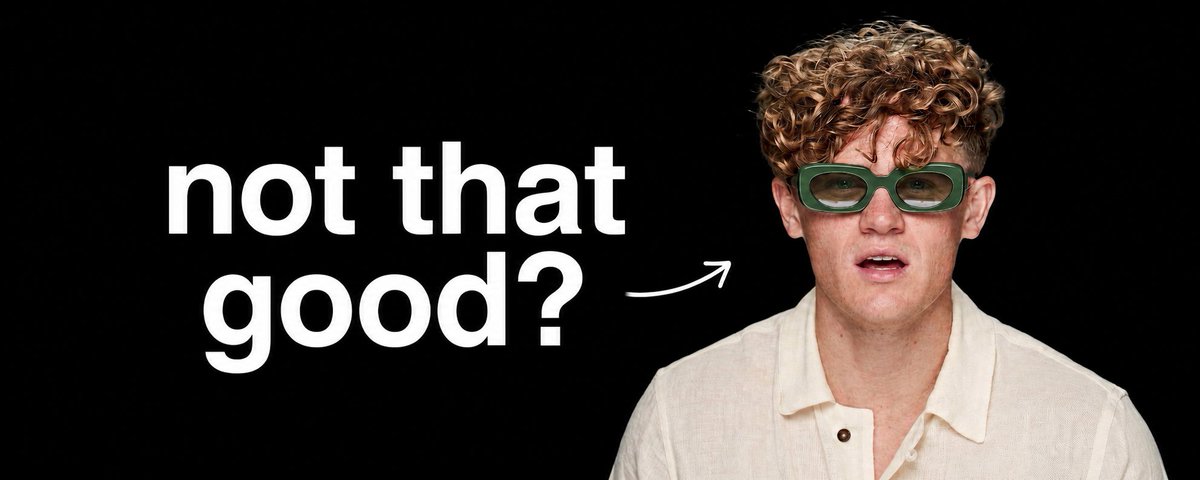
A lot of people assume that YouTube views and subscribers are an indication of how good the videos are.
So I asked @retti_ai to review the last 10 videos from five of the platform’s top creators, to see just how good their videos really are at holding their viewers.
50 videos across Caylus, Alex Hormozi, Bryson DeChambeau, Will Tennyson and Ryan Trahan. Hooks, structure, pacing, retention leaks.

Here's the big thing I found: the best videos win because they're built well. But a huge channel works like a safety net.
Millions of loyal fans keep watching even when a video is built badly, so the mistakes never get punished.
Copy these channels without knowing which parts are the safety net and which parts are the actual skill, and you'll copy the mistakes too.
Here's each channel. What works, what doesn't, and what you can actually use.
- Caylus (gaming)
Short version: he's great at hooks and picking the right games. His weak spots would sink a smaller channel, but his size covers for them.
What he does well:
He says the plan in one sentence. "Guys, today we are working as a TSA agent at an airport." No backstory, no rules explained first. You know what the video is by second 5, and he's already playing by second 15.
He picks games that already have their own progress built in. Levels, upgrades, day counters. The game gives the video its shape, so he doesn't have to build one from nothing.
He adds stakes with one line. "I might go broke today, please leave a like." Cheap and fast, but now there's something to lose.
He jumps on trending games early, often before anyone else big does. That's a real skill, not luck.
Where it falls apart:
Every video opens the exact same way, at the exact same energy. That's comfortable for people who already watch him, but it means nothing ever feels like a big deal. His biggest video and his most normal video sound identical for the first ten seconds.
His 44-minute diss track video has nothing pulling you through it. No scoreboard, no timer, no "who wins in the end." It's just one reaction after another, and he starts by ranking the worst one first, so every entry after that feels like a fine place to stop. For an audience that's mostly kids, 44 minutes with nothing holding it together is asking a lot.
Some of his grind videos (upgrade, collect, repeat) sit in the same loop too long with no twist. Nothing looks wrong on screen, which is exactly why people quietly click away without noticing why.
He tends to close a segment before moving to the next one. "Well, that was crazy," then a cut. Every time a sentence sounds finished, it tells people this is a fine time to leave. Cutting straight into the next thing mid-action works better, and he already does it in his stronger videos.
Steal this: say the plan in one sentence, start moving fast, and give the video one thing that can be lost.
Skip this: going long just because you can. If a video runs long, it needs something pulling people through the whole thing.
- Alex Hormozi (business)
Short version: this is the clearest proof in the whole audit that how you open a video decides how far it goes, even on a channel with millions of subscribers.
What he does well:
He opens on a person or a problem, never on himself. "Poor people stay poor because they want a fast way to get rich" got 556,000 views. "This is Corey. He runs an HVAC business and has $60,000 in debt" pulls you straight into someone else's story in one sentence.
He uses numbered lists as a reason to keep watching. "4 paths to wealth" means you can't really stop at path 2, you came to hear all 4.
He doesn't dump all his proof at once. He drops a personal example next to almost every point, so you keep trusting him instead of trusting him once at the start and forgetting why.
Where it falls apart, and this is the part worth studying:
Some of his videos open by listing his own numbers. "21 million, 393,122 followers across all platforms" got 276,000 views. Another opens with 25 seconds about his own business history and a $106,000 book launch before mentioning a single other person. That one got 81,000 views. Same channel, same time period, and it did roughly a fifth of the views his problem-first videos got. People don't click to hear your résumé. They click to hear about a problem.
His longer videos, 30 to 40 minutes where he sits with someone and works through their business, don't have anything new happening halfway through. Once the best advice has already been said, there's nothing left pulling you forward, so people leave before the video actually ends.
When he moves from one business owner's story to the next, each one feels fully wrapped up. That's the exact moment people close the tab. One line linking the two stories ("this next guy has the opposite problem") would fix it, but it's missing.
His numbered lists don't build. Point 1 and point 4 usually land with the same weight. If you don't tell people the last point is the best one, some of them won't wait around for it.
Steal this: open on someone else's problem, not your own achievements. Spread your credibility across the whole video instead of dumping it at the start.
Skip this: talking about yourself in the first line. It's the clearest thing hurting his numbers, and it's an easy fix.
- Bryson DeChambeau (golf)
Short version: he's built the smartest long-term structure in the whole audit. But almost every video wastes time between the hook and the actual content, which is the exact opposite of what a hook is supposed to do.
What he does well:
He runs two goals at once. A season-long goal ("break 3 course records this year") and a goal for today's video, with a running score he says out loud ("one record, two failures, four attempts left"). A slow hole doesn't kill the video, because you're still invested in how the season ends. This is the smartest thing in the whole audit.
He uses "one chance" a lot. "Can I break the record at this public course? One attempt." One rule turns a normal round of golf into something that can actually fail.
His punishment videos (lose a hole, get punished) hold attention for over an hour because every hole has its own small stakes, not just the ending.
One video opens with 55 seconds about a course's history before he even shows up to play. That one choice makes the whole video feel bigger than "guy plays golf."
He brings on guests like Carlos Alcaraz and Bob Does Sports, which pulls in each guest's own audience.
Where it falls apart:
Almost every video spends its first few minutes on things that have nothing to do with the golf. Getting to the course, checking in, walking around, catching up on last episode. People clicked to watch golf and they're getting logistics instead. In his longest videos this stretch runs past a minute before anything actually happens.
His series videos recap the whole backstory at the top, every time. Subscribers already know it. New viewers don't care yet. Both groups just want to know what today's video is about, and that gets buried under old news.
His longest video, 87 minutes, leans entirely on golf and guest chemistry to hold the whole runtime. Nothing new gets introduced at the halfway point or the three-quarter point to reset people's attention. Energy alone can't carry an hour and a half.
In one video where the stakes are $10,000 for the other players, that prize doesn't get mentioned until well into the video. It should be in the first line.
His most personal video, about missing three cuts in a row, opens with someone else asking him a question instead of him just saying it straight to camera. The honest, direct version would hit harder in the first five seconds.
Steal this: run two goals at once, a big one and a small one, and give people one rule that can be broken.
Skip this: anything between the hook and the actual content. Every second of travel, check-in, or recap is a second someone can leave.
- Will Tennyson (fitness)
Short version: the best-built channel in this whole audit. Around 4 million subscribers, but pulling videos with 8 million and 14 million views. That gap only happens because the videos are built better than almost anything else out there. Even so, one whole format on his channel quietly doesn't work.
What he does well:
He almost never opens a video talking about himself. "The world's fattest city versus the world's skinniest city. One has an obesity rate over 40%. The other, about 4%." That got 8.3 million views. "There's a gym in Japan where a $24,000 membership gets you a fully golden shower" got 4.8 million. You're pulled into a story before you've even decided if you like him.
His biggest video, 14 million views, opens with someone else's voice saying "Don't be fat. Don't be ugly. Don't be poor," before he even shows up. That jump between two different tones in the first ten seconds is one of the strongest tricks for keeping people watching, and he clearly does it on purpose.
He treats his videos like investigations, not vlogs. He obviously knows the ending before he films, but the way it's shot and written makes it feel like he's finding it out live, which is why people stick around for the answer.
Each video gets harder as it goes. His video comparing obesity across countries moves from outdoor gym equipment, to street interviews, to drugs, to an extreme diet. Every new thing is heavier than the last. That climb is written on purpose.
He mixes in real interviews and voiceover over footage, which keeps changing the feel of the video every few minutes so it never goes flat. He also just sits in awkward moments, like forcing down plain egg whites, instead of cutting away, and that discomfort becomes the actual content.
Where it falls apart:
His experiment videos, like a 72-hour fast or building a home gym, don't have anyone or anything working against him. No risk of failing. The only reason to watch is to see how he feels, which is a much weaker pull than "will he pull this off or not." These are clearly his weakest videos.
In the middle of his longer videos, there's usually a stretch of driving or travelling between locations where nothing happens. In one video there's a gap between one interview and the next where the pace just goes flat while he's in the car talking.
The channel doesn't have one clear identity. One week it's fitness, the next it's travel, then food, then a straight-up challenge. That actually helps inside a single video, since it keeps things unpredictable, but it makes the channel harder for new people to find through search, since it's not "about" one clear thing.
Steal this: make the other person, place, or thing the main character of your video, not yourself. Let the story get a little harder to watch as it goes.
Skip this: filming something with no risk of failure. If there's no way it can go wrong, there's no reason to watch it to the end.
- Ryan Trahan (travel)
Short version: the clearest warning in this whole audit about what happens when a series runs out of steam. Episode 1 of his current series got 5.8 million views. By the last episode, that had dropped to 1.7 million. Almost 70% of the audience didn't come back.
What he does well:
Episode 1 does everything right. It sets the rules (10 days, 10 places, one winner), sets up a running scorebook, and gives you a reason to follow the whole thing to the end.
The running ranking is actually a smart idea. One winner across 10 videos gives people a reason to keep watching the whole series, not just one video.
He and his girlfriend have real chemistry on camera. It doesn't feel put on.
Where it falls apart:
Every episode after the first one opens the same way. "Good morning, it's day whatever of the trip," assuming you already watched everything before it. There's no reason given for why today's video specifically is worth watching. That's most likely why the numbers kept dropping episode after episode.
Every episode has a morning routine, brushing teeth, getting dressed, that was charming once and is just filler by episode 6. It has nothing to do with what the video is actually about.
In more than one episode, the main attraction doesn't show up until well past the halfway point. There's a stretch in one video where he's just picking out snacks at a gas station, which has nothing to do with why anyone clicked.
Every episode has three goals for the day, and they're all treated with the same amount of excitement. Nothing is set up as the big moment of the episode, so there's nothing specific to wait for.
The ranking system, probably his best idea, only shows up for a few seconds at the very end of each video. It should be something you're reminded of the whole way through, not a footnote.
Steal this: a running scoreboard across a whole series gives people a reason to watch every episode, not just one.
Skip this: assuming people have seen your last video. Every single video needs its own reason to keep watching, even if it's part of a series.
What all 5 channels have in common
- The hook should be about someone or something else, not you.
The fattest city. The unbeaten course record. Corey and his $60,000 of debt. Not "today I..."
- A series works better with two goals at once, not one.
A big goal for the whole series, and a smaller goal for today's video. That way one boring moment can't kill the whole thing.
- One rule that can be broken creates real stakes.
One chance. No exceptions. Ten days, no extra time. A challenge with a rule attached to it can actually fail, and that's what makes people want to watch it play out.
- Nothing should be flat. Something has to be the biggest moment.
Hormozi's numbered lists don't build. Ryan's three goals all feel equal. Caylus never changes energy. If everything in your video matters the same amount, nothing feels like it matters at all. Pick the best moment and save it.
- Every second between the hook and the actual content is a second someone can leave.
Travel, recaps, backstory, small talk. All of it. The gap between "here's what this video is about" and "here's the video actually happening" is where most people quietly leave.
Want me to send you the full
Related articles
How to fix your entire life in 1 day
Trust only movement. Life happens at the level of events, not of words. Trust movement.
How to Start a 6 Figure Faceless YouTube Channel (Full Breakdown)
I've helped over 400 people start profitable faceless youtube channels. i've ran over 50 channels myself. Generated over $4 MILLION by age 25. Worked with youtubers that have 10 million+ subscribers,…
