11 VIRAL AI UGC formats we abused to engineer 150M+ app downloads
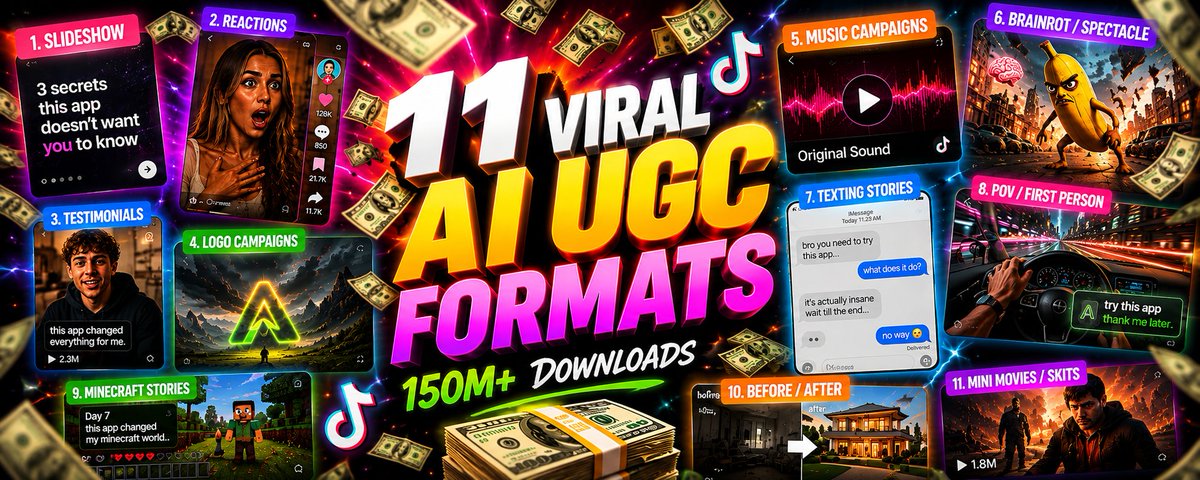
9 out of 10 people think AI UGC is 1 thing: a fake person talking to a camera about a product.
1 format, and far from the best 1.
across the campaigns we've run, 150M+ app downloads came from 11 distinct formats rather than a single 1, each engineered for a different algorithmic trigger and a different psychological weakness in the scroll.
some print raw awareness. some print saves. some print downloads directly. the operators who win stack all 11 so every format covers the blind spot of the last, rather than picking 1.
every format below, ranked roughly by how hard each 1 prints right now, with real examples of who's abusing each 1
1. the AI slideshow (the completion-rate cheat code)
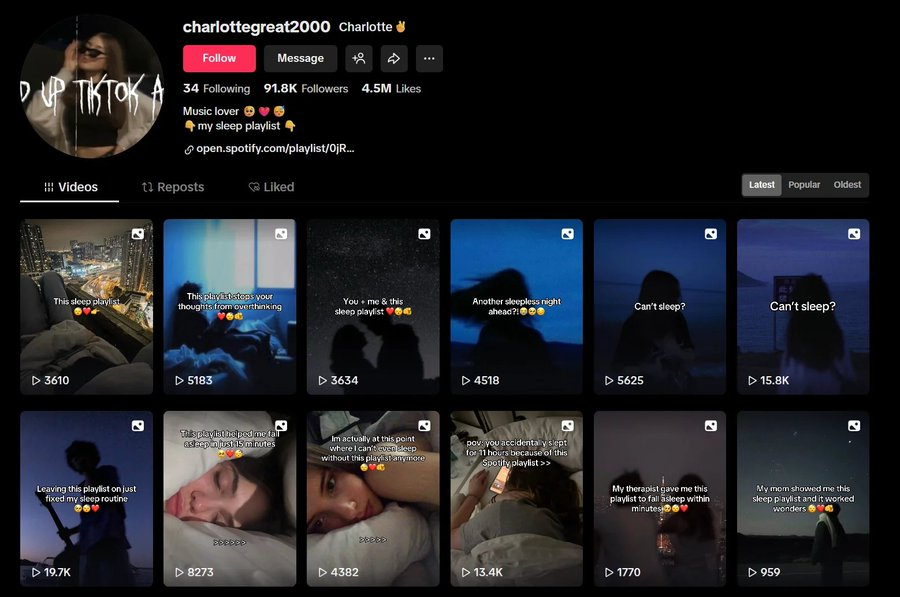
the single most underpriced format on TikTok right now by a wide margin.
a slideshow is 5 to 8 images cycling with text overlays and a trending sound. the viewer swipes through at their own pace, and every swipe is an active engagement signal the algorithm treats as gold.
why the format prints: completion rates run 40 to 60% higher than video because the viewer controls the pace. TikTok's Photo Mode gives these extra reach because the format keeps people ON the post longer.
real example: 2 apps in the utility space, Cardstock and Scanemon, are pulling a combined 6 figures a month driven largely by simple TikTok slideshows. lo-fi, repeatable, dirt cheap to produce. the lesson is a glossy finish LOSES to volume here.
how to build: opus 5 writes the slide-by-slide sequence (hook slide, value escalation, proof, soft CTA), you generate or screenshot the visuals, assemble in a slideshow editor, ship. 100 of them in under 2 hours.
2. AI character reaction videos (the human replacement)
the classic. an AI-generated person reacting to a product demo with genuine-looking surprise.
why the format prints: the reaction format was the highest-performing content type in app marketing across 2025 and 2026. a "person" reacting reads as a friend's recommendation rather than an ad, which slips past the scroll reflex.
real example: the prayer app scaling past $100k/mo built its entire early engine on reaction videos, first filmed by a real person, then cloned at volume with seedance 2.0 through the higgsfield MCP. 1 validated reaction format, 100s of AI variations.
how to build: lock a character in nano banana pro, generate reactions through seedance, feed each 1 a 5-second real demo clip so the product moment is authentic even when the reactor is synthetic.
3. AI talking-head testimonials (the trust manufacturer)
a character speaking directly to camera, telling a first-person story about how the product changed something for them.
why the format prints: direct-to-camera builds parasocial trust faster than any other format. the brain processes a face talking to it as a personal conversation.
how to build: opus 5 writes the script, arcads or seedance renders the talking head. the KEY sits in the anti-AI negative prompt work: you explicitly prompt against the plastic, overly-smooth "AI look" so the character reads as a slightly imperfect real human. imperfection is the credibility.
4. logo campaigns (the subconscious primer)
there's no pitch and no demo , just the brand's logo composited into visually striking AI content performing as pure entertainment.
why the format prints: the algorithm reads it as entertainment because none of the content IS an ad. the viewer absorbs the logo subconsciously while watching a satisfying 15-second clip. after 10 to 15 exposures across different accounts, the brand enters their recognition set and every OTHER format converts better.
how to build: generate cinematic or aesthetic AI scenes, composite the logo naturally into the frame, distribute at volume. the format makes everything else convert rather than converting directly.
5. music campaigns (the audio-algorithm hack)
AI video built around a branded sound or a catchy original audio clip designed to become a trend.
why the format prints: when 100s of accounts post using the same sound, TikTok flags the audio as trending and pushes EVERY video using the sound to wider audiences. you're gaming the audio layer of the algorithm rather than a single video.
how to build: create a 15 to 30 second loop-friendly branded audio, generate 50 to 100 AI clips built for its rhythm, distribute through the network with instructions to use the sound. once real creators start using the audio voluntarily, you get distribution for free.
6. brainrot / spectacle (the retention monster)
the absurd stuff. fruit dramas, claymation mashups, physics simulations, cartoon remixes, satisfying loops. content so visually unpredictable the brain refuses to scroll.
why the format prints: highest average view duration of any format, because the viewer cannot predict the next frame. the algorithm reads the watch time as a quality signal and pushes the content exponentially.
how to build: fully AI-generated visual sequences with your product or logo embedded in the chaos. a logo on a piece of fighting fruit. the app UI flashing in the background of a claymation scene. the exposure gets absorbed and never announced.
7. AI texting-story videos (the narrative loop)
a fake text conversation playing out on screen with AI voiceover, engineered to create a cliffhanger the viewer has to watch to the end.
why the format prints: story-based content creates an open loop the brain needs to close. the viewer stays to find out what happens, and completion is the strongest ranking signal there is.
real example: this exact format ran across over 1,000 creators posting AI-generated texting stories with a dating app featured between each story. the result: billions of views, millions of downloads. 1 of the most widely cited faceless organic case studies in existence.
how to build: opus 5 writes the dramatic text exchange, you generate the screen-recording style visual, drop an AI voiceover on top, and place the product naturally in the story's resolution.
8. product-on-AI-model videos (the ecom killer)
for physical products or app UI: an AI-generated model or avatar using, wearing, or demonstrating the product.
why the format prints: removes the entire cost of shipping samples to creators or booking shoots. you generate 100s of "models" using your product without a single package leaving a warehouse.
how to build: nano banana pro for the model, seedance for the motion, your product or UI composited in. TikTok Shop sellers are flooding feeds with this because the variant testing is nearly free.
9. the "day in the life" overlay (the aspiration format)
an AI character living an aspirational version of the viewer's life, with the product woven in as a natural part of the better existence.
why the format prints: it sells the identity far more than the features. the viewer wants to be the person in the video who has their life together, well past wanting the app itself, and the app is the prop signaling the identity.
how to build: opus 5 scripts the aspirational narrative, seedance renders the character's "life," the product appears as 1 seamless part of the scene, never the focus.
10. the split-screen brain-engager (the dual-stimulus lock)
your content on 1 half, a hypnotic secondary visual (satisfying loops, gameplay, soap cutting) on the other.
why the format prints: the dual-stimulus format locks attention because the brain processes both streams at once, and neither stream alone leaves room to trigger a scroll. keeps people watching content they'd otherwise skip.
how to build: pair your talking-head or slideshow with a royalty-free satisfying-loop bottom half. cheap, fast, and brutally effective for information-dense content.
11. the fake "leaked" or "found footage" format (the authenticity illusion)
content engineered to look accidental and rough, like a real moment someone captured and posted raw.
why the format prints: the more the content looks like an ad, the harder people scroll. the more the content looks like a real person's unscripted moment, the longer they watch. deliberate imperfection outperforms production value on every consumer app test we've seen.
how to build: prompt the AI character work AWAY from any glossy finish. slightly off framing, natural lighting, 0 captions-first template. the content should look posted by accident rather than by a marketing team.
how to use these 11 (the stacking principle)
the part 9 out of 10 people miss: you run a portfolio instead of picking 1 format.
think of it like a biological ecosystem. a monoculture (1 crop, 1 format) is fragile. 1 algorithm change and the whole thing dies. a diverse ecosystem survives anything because when 1 format cools, another is heating up.
the play:
logo + music + brainrot run the top of funnel, printing raw awareness and getting your brand in front of millions who've never heard of you.
slideshow + texting-story + split-screen run the middle, delivering value and trust while people are deciding whether they care.
reaction + talking-head + day-in-life + product-on-model + found-footage run the bottom, driving the download.
a viewer might see your logo in a brainrot clip on monday, a slideshow breakdown on wednesday, and a reaction video friday. by friday they've been exposed 3 times across 3 formats and the download feels inevitable.
that's how 150M+ downloads happen: 11 formats compounding across a creator army, well past any 1 viral video.
the pushback: "isn't this a lot to manage?"
for 1 person doing this manually? yes. running 11 formats across 6 platforms and 100s of accounts by hand is out of reach.
that's the entire point. work like this gets outsourced to a system.
the AI handles the production. opus 5 writes, seedance and nano banana render, the pipeline outputs at volume. the creator network handles the distribution. 100s of accounts, all 6 platforms, performance-based so you only pay for views delivered.
the formats are the ammunition. the network is the weapon. trying to fire all 11 by hand is why 9 out of 10 founders run 1 format badly instead of 11 formats well.
150M+ downloads came from realizing there is no 1 magic format. it's a portfolio, and the operators who print are the ones running the whole portfolio while everyone else argues about whether AI UGC works.
the format works. you're using 1-eleventh of the answer.
if you want us to audit your app and show you how we'd run all 11 of these AI UGC formats through our 200,000+ creator network, DM me "STACK" and we'll make it happen.
(200,000+ creators across TikTok, Instagram, YouTube, X, Snapchat, and Facebook through affiliatenetwork.com + CampaignCX, fully done-for-you)
john
Related articles
how to RAGEBAIT your way into a $100k+/mo app (with viral ai ugc)
a soda company ran an AI-generated ad last year and the internet lost its mind.

The Cal AI Distribution and Scaling Blueprint
But because we out-distributed every major competitor, we shot to the #1 app in Health & Fitness in 18 months and eventually were acquired by MyFitnessPal.
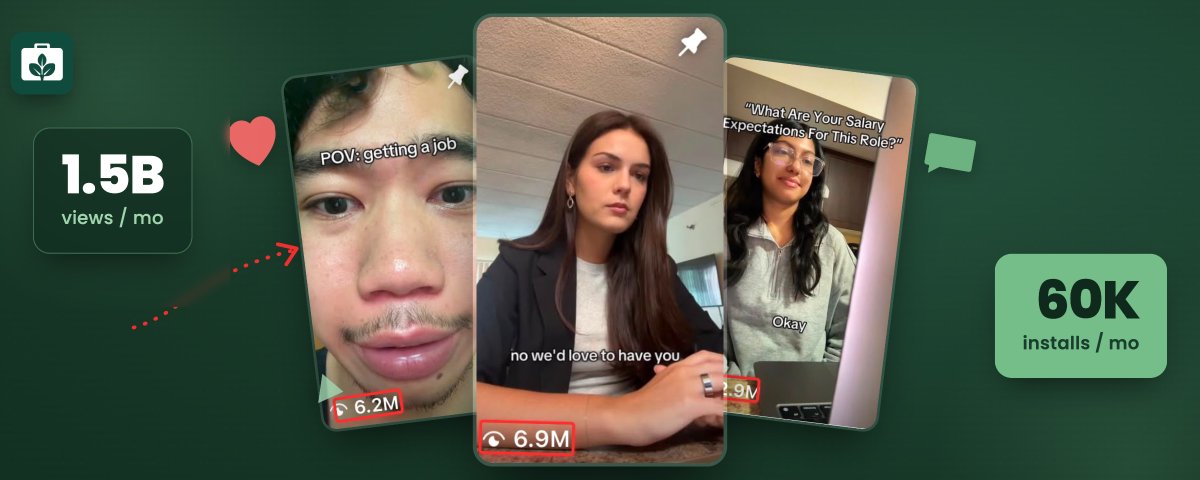
How Sprout Hit $3M ARR in 9 months with Organic UGC
Sprout AI got an entire generation of broke, panicking job-seekers to pull out their credit cards for an app that applies to jobs for them.