The Cal AI Distribution and Scaling Blueprint

I get DMs every week from technical founders with genuinely good apps sitting at a few hundred downloads, asking what's wrong with their product.
(It’s usually nothing, the product was never the problem).
Two years ago, we didn't have the biggest budget or the flashiest features for Cal AI.
> But because we out-distributed every major competitor, we shot to the #1 app in Health & Fitness in 18 months and eventually were acquired by MyFitnessPal.
If you can’t get your app in front of people early and often after you build your MVP, you’re dead in the water.
Understanding distribution seems complicated, but it’s actually fairly simple with enough reps and knowledge of classic marketing principles.
Here’s everything I cover in this article to help you nail distribution for your project:
- Why distribution is the ultimate moat
- How to buy distribution the right way
- How to pick a profitable niche
- The most important metric when signing influencers
- How we built our distribution machine
- How to take big swings for big payoffs
- What distribution can’t fix about your app
- The simple $0-$10k app speed run blueprint
1. Nobody is coming to find your app
The most dangerous, outdated belief in the app space today: "build something great and people will find it."
Three years ago, about 2,000 new subscription apps launched every month.
> Today it's almost 15,000, per RevenueCat's State of Subscription Apps report.
That's a 7x supply explosion, and it means distribution (not features) is the ultimate barrier between your app and consistent revenue.
AI made building easy for everyone, which means building is no longer the game.
Every hour you spend polishing your UI is an hour your competitor spends getting in front of your customers.
The app graveyard is full of great products that lost to okay products with great distribution.
2. How to buy distribution
Every app that scales buys attention in one of these ways:

- UGC or AI UGC - hundreds of cheap creator videos, betting a few go viral
- Paid ads - Meta, TikTok, Apple Search Ads
- Influencers - paying specific creators with real audiences to promote you
- Affiliates
What you need to understand about each of these channels when getting ready to scale:
UGC/AI UGC is the most volatile of the three: it can be your #1 marketing channel or your worst, and the difference is solely dependent on whether you happen to go viral.
- With AI UGC specifically, you can now test out infinite angles and hooks to see what converts, then re-shoot those same concepts with real creators for added authenticity.
PAID ADS are a sleeper marketing channel for consumer apps but you have to maintain consistent cash flow.
- It's hard to get CAC on Meta under $30 for B2C apps, and you pay Meta today while collecting that subscriber's value over months.
INFLUENCERS worked wonders for Cal AI and can for your app too, AND they can be a way to burn through capital if your niche can't support them (more on that later).
AFFILIATES work when your LTV is high and trying to hit $10-20k in revenue.
- In B2B, where a customer is worth thousands of dollars, an affiliate army makes sense.
I wouldn’t recommend affiliates if you’re trying to scale hard and trying to hit millions per month, the juice just isn’t worth the squeeze.
Too many founders dabble in some or all of these, spread their budget thin, and then blame the channel when the money's gone.
Take every factor into consideration before picking your top marketing vertical, then give it enough budget and runway to actually get a signal.
3. How to pick a profitable niche
At Cal AI we didn't win the calorie tracking market.
We won the fitness creator market, and they delivered the calorie tracking market to us.
> Before I'd build ANY consumer app today, the niche has to pass four conditions:
- Cheap creator reach - thousands of small creators your customers already watch
- Native content fit - your app can appear inside content people already want to see
- Viral-by-default formats - transformations, reveals, before/afters built into the niche
- Trusted audiences - followers who actually act on recommendations
Any app I’d build today needs at least 3 of the 4 or I'm out, no matter how good the idea is.
And you don't need expensive tools to validate demand before you commit.
Look at the App Store rankings.
Look at who's building in public and posting their numbers.
Pull up Sensor Tower or Appfigures if you want download and revenue estimates.

> Just know Sensor Tower runs about a month behind, so if an app is growing fast, the real numbers are always ahead of what it shows you.
If it says a hot app is doing $250k a month, that's what they were doing LAST month.
Don’t commit to a “great idea” and then go hunting for distribution.
Pick a niche with distribution built in, then find the winning ideas inside it.
👇🏻👇🏻👇🏻👇🏻👇🏻
If you’ve enjoyed this breakdown so far, I go deeper on AI and building and scaling consumer apps in my free newsletter.
Join 1,500+ weekly readers of the Operator's Notebook at the link in the comments.

4. The ONLY metric that matters
When you start testing distribution, you'll be tempted to celebrate views, but views don't equate to conversions
For influencer posts, the signal is one specific type of comment: "wait, what app is this?"
At Cal AI, one creator video with a comment section full of people asking for the app name was worth more than five videos with big view counts and an empty comment section.
Views mean the content idea worked.
"What app is this" means the PRODUCT worked inside the content and was able to be seamlessly integrated.
And if you go the route of signing influencers, here's how we structured deals and figured out who to cut or keep every month:
- Every creator was signed for 4 videos a month.
- In the early days, we'd cut after ONE bad video.
- When you're small, a single video carries real signal.
- As we grew, one video stopped meaning anything, so we'd let the full month run before deciding.
The benchmark was never views, it was profit tracked through their promo codes.
If they’re profitable? Run it back.
If they’re slightly unprofitable? Keep going - there's usually something to fix.
If they’re really unprofitable? Cut them.
Just do the math and act accordingly.
5. The distribution machine
Now the part nobody believes: we did NOT have the automated systems built from day one that we used to manage over 300 influencers at one point
We were building the plane as we were flying it, and the entire "systematization strategy" was one question, asked over and over:
"What are we spending a lot of time on?"
The first bottleneck.: contract creation. Every contract was basically the same, so we automated it.
The second bottleneck: scheduling creators.
So we stopped negotiating post dates and generated a randomized schedule - if a creator wanted a different day, sure.
The third bottleneck: reviewing creator performance.
So I built a system that quantified it into a renewal score that told us who to re-sign automatically.
Ask, automate, repeat.
6. Always run the test you're sure will never work
The niche that almost got away from us: cringe TikTok dancing girls.
I wish this was a joke.
On paper it made no sense for a calorie tracking app.
But their audiences ride or die like nothing we'd ever seen, and they unlocked a level of scale we couldn't buy anywhere else.

NEVER underestimate the cult following of teenage girls and stay at home moms lol.
Trust your gut, take the shot, and size every bet so that no single one can break the business.
Because if you're one decision away from your app dying, you don't have a business.
Structure your bets so you can be wrong, and the tests you're sure will fail become pure upside.
That's where the asymmetric wins live.
7. What distribution can't fix
Distribution is an amplifier.
If your app doesn't produce an "oh, I need that" moment within 10 seconds of someone seeing it, distribution will inevitably be tougher for you.
There are three numbers you need to know when evaluating PMF:
- Your view-to-download rate - are people who SEE the app compelled to get it? (1000 views to 5 downloads is the floor)
- Your paywall rate - 75% of people should reach your paywall, if not then your onboarding flow is broken
- Your paywall conversion - are people who try it willing to PAY for it? (Anything above 10% is good.)

If these are abysmal and you're genuinely executing well on everything else, the market is answering a question you didn't want to ask.
Sometimes the app doesn't have it, and it’s better to know in month 3 than month 13.
Build something with ONE life-changing feature that’s easy to understand and demonstrate.
Don't overcomplicate it.
8. Steal the blueprint: $0 to your first $10k
This is the exact sequence I'd run with a new app for the first 30 days:
- Sign micro-influencers only (10-100k followers with real engagement). Household names and nano-creators are both overpriced, for different reasons.
- Price every deal on expected views, never follower count.
- Flat rate, paid upfront. That's how you capture the asymmetric upside when a video over performs.
- A great brief = a Google Doc a creator can read in 2 minutes. Then let them cook.
- When something hits, run it again until it stops working. Winning formulas aren't precious.

Notice what's NOT in the sequence:
- optimal posting times
- best days of the week
- story teasers before the video drops.
Brands love majoring in the minors.
They obsess over details they shouldn't be concerning themselves with at all.
Here's why you get to ignore all of it: every creator is already incentivized to get maximum views on everything they post.
A video that flops looks bad on THEIR page, not just yours.
They know their optimal post time better than you ever will.
Worrying about it just slows you down.
TL;DR edition:
- Nobody is coming to find your app - 15,000 new apps are launched every month.
- There are only a few ways to buy quality attention, so make sure you know why you’re picking a certain channel and let it run long enough to get actionable data from it
- Pick the niche with the army before you pick the idea. Validate with the App Store, builders in public, and Sensor Tower (a month behind, remember).
- Scale "what app is this" comments. Cut on promo-code profit, not views.
- Micro-creators, priced on views, flat rate upfront, 2-minute briefs. Post timing is the creator's problem.
- Build the machine one bottleneck at a time
- Run the tests you're sure will fail, hedged so no single bet can kill you.
- If view-to-download AND paywall conversion are both abysmal, the market has spoken.
Related articles
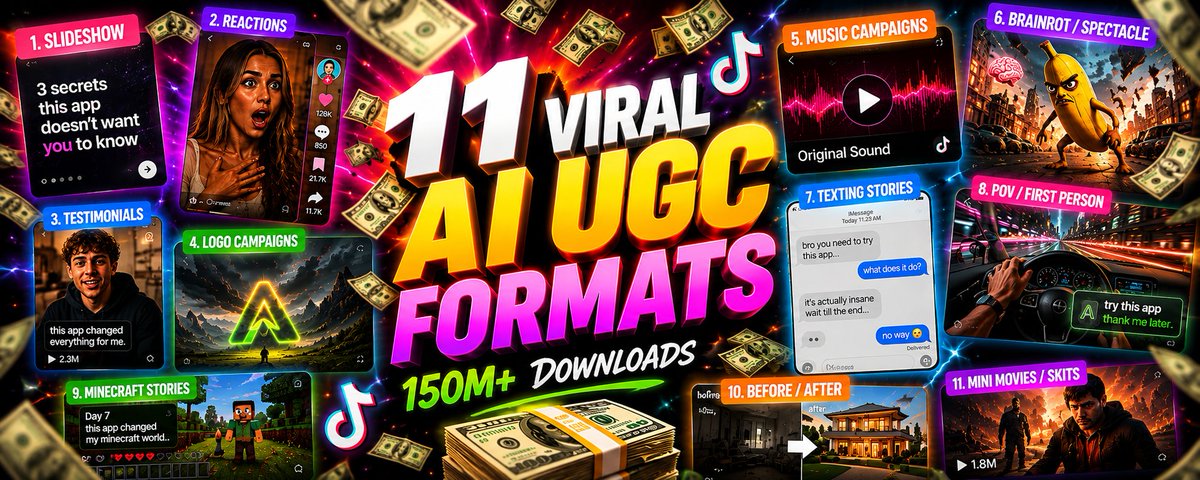
11 VIRAL AI UGC formats we abused to engineer 150M+ app downloads
9 out of 10 people think AI UGC is 1 thing: a fake person talking to a camera about a product.
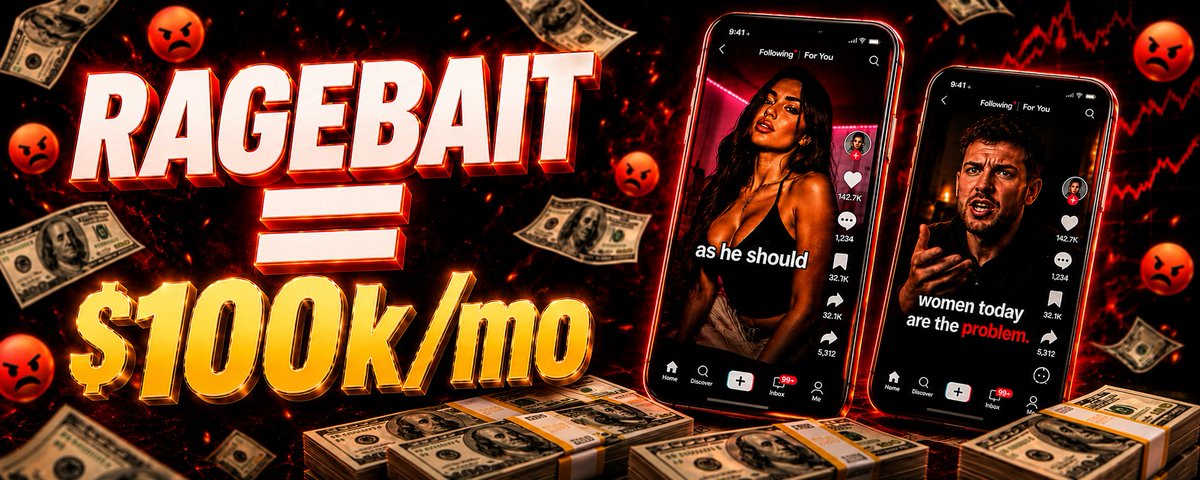
how to RAGEBAIT your way into a $100k+/mo app (with viral ai ugc)
a soda company ran an AI-generated ad last year and the internet lost its mind.
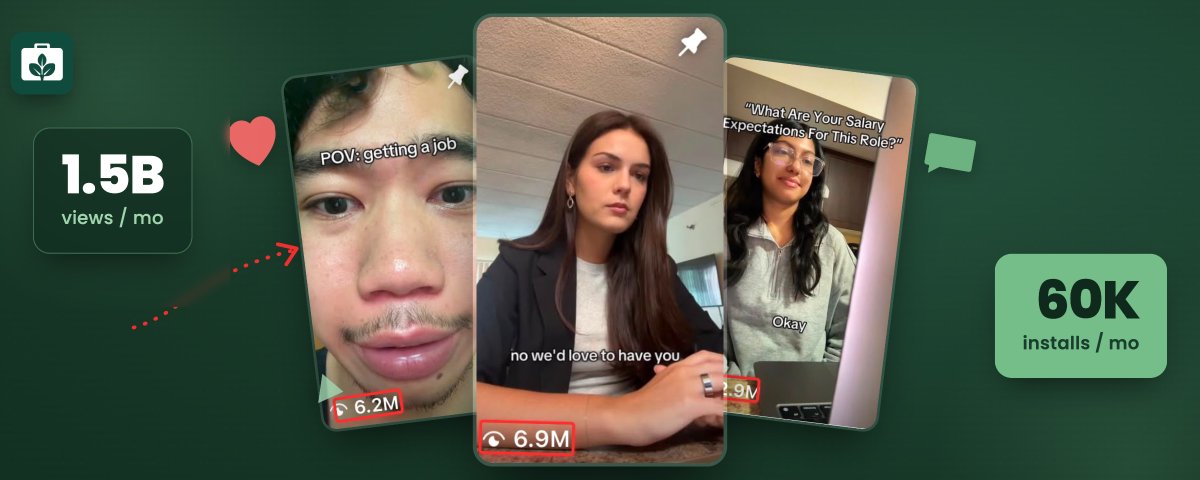
How Sprout Hit $3M ARR in 9 months with Organic UGC
Sprout AI got an entire generation of broke, panicking job-seekers to pull out their credit cards for an app that applies to jobs for them.