GROK ISN’T JUST A CHATBOT ANYMORE.

> Most people who hear “Grok Bot” still think of Elon Musk’s chatbot with an edgy personality. But that’s not really what it has evolved into.
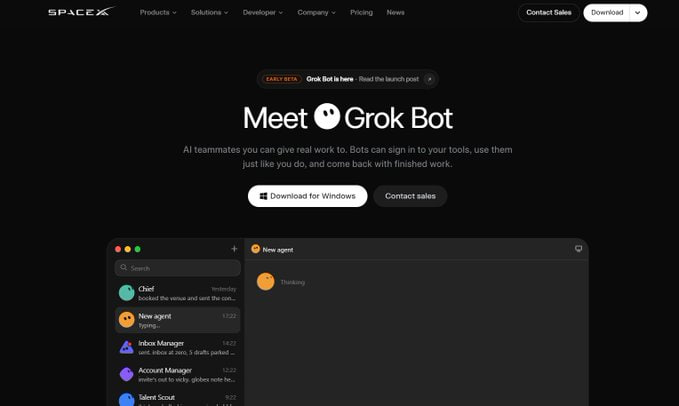
Since its early beta days, xAI has been pushing Grok toward something much closer to a digital coworker than a traditional chat window. It can operate its own computer in the cloud, log into the tools you already use, carry out tasks on your behalf, and return with completed work instead of just giving you a list of suggestions.
Embedded post:
Author: Grok Bot (@bot) Post ID: 2087224798078517251 Source: https://x.com/bot/status/2087224798078517251 Posted: 2026-08-11T17:09:05.000Z Reply to: none
Text:
> Introducing Grok Bot, now in early beta. > > Bots are AI teammates that do real work for you. They sign in to your tools, use them just like you do, and come back with finished work.
Media:
- video: /media/posts/grok-isn-t-just-a-chatbot-anymore/1.mp4
That distinction is what matters most. A regular AI model gives you an answer and leaves you to figure out the next step. Grok Bot can open a browser, navigate real websites, fill out forms, interact with different tools, and continue working even after you close your laptop.
But how useful it actually becomes depends almost entirely on how you configure it.
What You’re Actually Paying For
 — "PRICE"
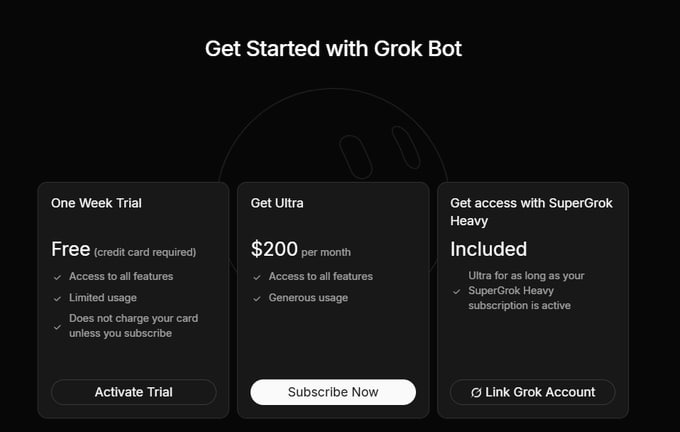
There isn’t a standalone Grok Bot plan. Access comes through one of three subscriptions: SuperGrok Heavy at roughly $300/month directly from xAI, Cursor Ultra at around $200/month, or Cursor Teams Premium at about $120 per seat.
Whichever option you choose, getting started is fairly straightforward. Download the app, sign in, and during setup you’ll be asked which tools you actually use day to day Gmail, Slack, Notion, GitHub, Salesforce, and more.
Connect only the tools you need. These connections are tied to your account, meaning every bot you create can potentially access them. That also means you should think carefully about what you connect, especially while the software is still in early beta.
A Bot Is a Role, Not a Request
 — "Grok Bot "
The mental shift that determines whether this is actually worth the subscription is simple: stop thinking in prompts and start thinking in job descriptions.
A prompt is a one-time request. A bot is a role that persists. It maintains a thread, builds context over time, and becomes better at a specific job the more you use it.
A solid “charter” has three parts, and skipping any of them is usually where things start going wrong:
What it owns the actual job, stated clearly: “Maintain the weekly competitor brief.” Not a vague instruction like “Be a growth ninja.”
What good looks like measurable checks, not adjectives. “Every claim must include a source and publication date” is something a bot can verify. “Be thorough” isn’t.
Where it stops the specific actions it must never take without asking for your approval first.
That third part is what gives you the confidence to actually walk away and let it work.
Hire One Coordinator Before You Hire a Team
The easiest way to break this entire setup is to build five specialist bots on day one.
One generalist bot trying to handle research, outreach, and finance can quickly drown in its own context and become mediocre at all three. But five untested specialists with no shared system simply multiply the number of things that can go wrong.
 — "THE GROK EXECUTION LAYER"
The better approach is to build one bot first and make its entire job coordination.
Give it access to the information that already runs your business documents, inbox, calendar, and other essential tools then ask it to identify the two or three tasks that could actually move things forward.
Get one real task working from start to finish. Review the result yourself. Only after it works consistently should you say, “Now build something that can do this exact task every time.”
Every new hire should be earned by proving the previous one actually works.
Show It Once Instead of Writing It Down
Grok Bot can watch you perform a task and turn the sequence into a repeatable skill.
That matters because the most tedious parts of your week are often the hardest to explain in writing, but incredibly easy to demonstrate.
“Open this dashboard, pull last week’s numbers, and compare them with the previous four weeks” might take a full paragraph to explain, but only 30 seconds to show.
The recording captures what happens on screen, not your audio, so narrate your decisions as you work: why you skipped a particular result, which missing field would make you stop, and what you consider a failure.
Then review the generated skill and add the judgment calls that a silent recording could never capture on its own.
 — " Grok Autonomous Market "
The Rule That Makes or Breaks the Whole Thing
Every serious implementation of this kind of system eventually comes back to the same principle: draw a hard line between reversible and irreversible actions, and never let the bot cross that line without you.
Reading pages, drafting reports, comparing data, and flagging discrepancies can all happen autonomously. The bot can do the work, log what it found, and move on.
Sending a message, spending money, signing a transaction, publishing something publicly, or changing a live record is different. None of those actions should happen without explicit human approval every single time, regardless of how confident the bot appears.
The other non-negotiable is evidence.
If a bot can’t point to the exact source behind a claim, that claim shouldn’t make it into the final output. Put it on a “missing” list instead.
A polished paragraph without supporting sources isn’t a report. It’s a guess wearing a suit.
What People Are Actually Building With It
The use cases that hold up over repeated use tend to be narrow, evidence-heavy, and intentionally boring.
Think of a weekly brief tracking competitor pricing and product pages. A daily risk watchlist built from an account list. An invoice reviewer that checks mismatches against purchase orders but stops before touching a payment. A recruiting researcher that ranks public profiles against a job description without ever contacting a candidate. Or a documentation tracker that drafts changelog entries whenever a source page changes.
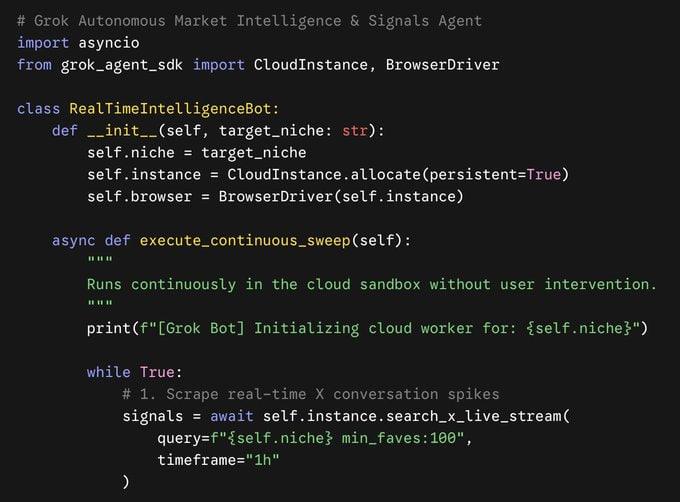
Some people are taking the same architecture into more specialized territory including small teams of bots monitoring crypto markets.
One bot might scan for new listings, another could audit contracts for potential red flags, while a human remains responsible for approving any actual trade.
That’s a legitimate application of the same system, but it’s important to stay realistic about the risks. Markets are volatile and adversarial by design. A bot can misread a signal just as easily as a person can, and automation doesn’t eliminate the underlying financial risk.
If you go down that route, treat every approval as a real financial decision never as a formality.

Past a certain point, a handful of bots can hand work directly to each other - one drafts, another checks the draft against a format spec, a third routes it to you for final sign-off - which starts to look less like a tool and more like a small team. That's genuinely useful, and it's also exactly where accountability gets blurry: if one bot hands a weak claim to another, figuring out who's responsible only gets harder as more bots join the chain. Start with a short sequence, not a network, and give every bot exactly one output location and one named owner.
The honest limits
This is early beta software, and a few things are worth knowing before you connect anything sensitive to it. Every bot on your account currently shares one cloud computer - meaning shared files, shared sessions, shared logins - so a bot is not a security boundary between your business accounts and anything else you connect. There's no full audit log yet. And approvals stop an action going forward, but they don't reverse anything that's already happened.
The practical takeaway: hand it reversible, low-stakes work first. Keep banking and anything genuinely sensitive off it until the product - and your own trust in a specific bot - has actually earned it.
None of this is really about the technology. Writing a good charter, drawing the approval line, demanding evidence - that's the whole skill, and it transfers to whatever agentic tool you're using next year. The question was never really "what can I ask it to do." It's "what am I willing to let run without me watching, and exactly where does its authority end."
Follow for more @0xrux
Related articles


How to Turn Grok Bot Into Your Own Bloomberg Terminal
Grok Bot is the best AI agent right now

How to Build a One-Person AI Hedge Fund Using Grok Bot
Grok Bot is the best AI agent right now