How To Get Your Launch Trending On X (Full Guide)
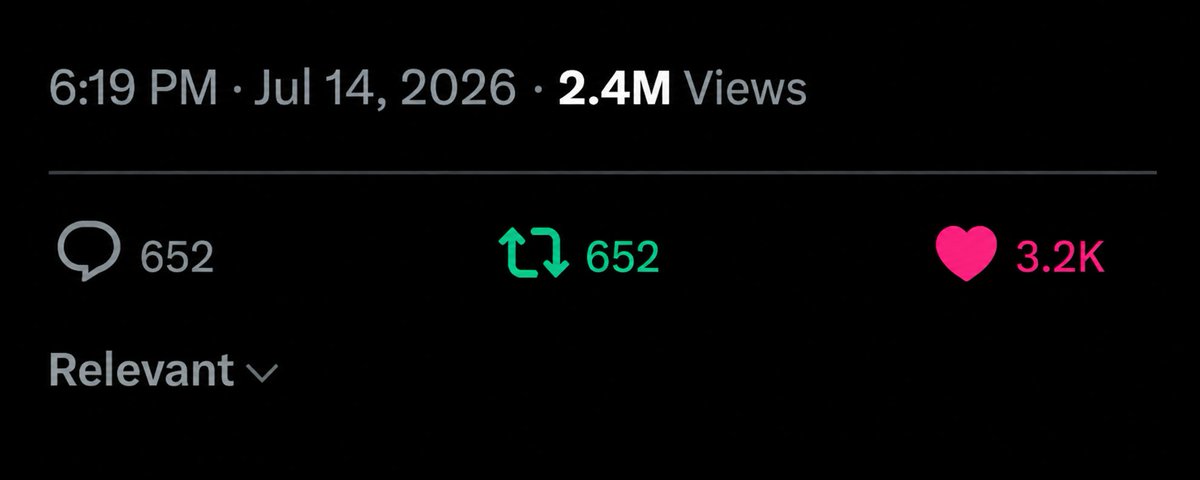
In the last 2 weeks alone I've driven 6m+ impressions to tech companies, and one of them hit 2.4M impressions in its first 24 hours.
None of it was luck. Trending on X is a system with four stages, and this article is the entire thing, written so you can run it without me.
Here's exactly how it works:
(bookmark this now, you'll be coming back to it on launch day)
HOW TRENDING ACTUALLY WORKS
When you hit post, X doesn't show your post to your followers. It shows it to a small sample of them, watches what they do for a short window, and uses that reaction to decide whether anyone else ever sees it.
If the sample engages, your post moves to a bigger circle, and if that circle engages it moves again, out past your followers and into the feeds of strangers. Every post you've written that died at 300 views failed that first round.
Three things decide whether you keep advancing:
- Speed. The algorithm cares less about how much engagement you get than how fast it arrives, because fast engagement is what an event looks like. Fifty real interactions in the first 15 minutes carry a post further than a thousand spread over three days
- What the engagement is made of. A like costs nothing, so it counts for almost nothing. A reply means someone stopped scrolling to talk to you, a repost puts their name on your post, and a bookmark means they plan to come back. The algorithm trusts expensive signals over cheap ones
- Whether the conversation outgrows your post. One post doing big numbers is just a good day. But when many accounts post about the same thing inside the same few hours, X stops seeing a post and starts seeing a subject the platform is talking about
That third one is what trending actually is: the moment the algorithm decides you're a subject, and starts putting the conversation in front of people who follow nobody involved.
Hold onto those three, because all four stages exist to manufacture them on purpose.
STAGE 1: THE RESEARCH
Every failed launch I've studied made the same mistake: copy written around what the founder finds interesting instead of what their market already responds to. Stage 1 removes the guessing, and it takes one afternoon.
You're going to build a Claude system that studies your niche for you.
First, get access to X data. You don't need the official enterprise API; a service like twitterapi.io gives you a key in minutes, costs a fraction of a cent per tweet, and has no approval process.
Second, build your study list of 50 or more accounts that talk to the same audience you're about to sell to:
- Your direct competitors
- The products next door to yours
- Every company in your category that launched in the last six months
Their audiences already voted on thousands of posts, and those votes are sitting there in public.
Third, open Claude Code and hand it the job. Tell it to pull the recent posts from every account on the list, keep only the ones that beat that account's own average views, and study what the winners have in common: how the first line is built, what kind of claim it opens with, whether video or images carried it, and what it asks the reader to do.
Have it write everything into one swipe file, ranked by views, with a note on each post explaining why it worked.
What you get back is a document most marketing teams never have: proof of what your exact market stops scrolling for, ranked by results. When you write your launch copy, you'll be reshaping hooks that already worked on your buyers instead of inventing lines and praying.
One warning so this stage doesn't get misused: the swipe file is for patterns, not sentences. You're studying why things worked, and then writing your own.
STAGE 2: HOOK PEOPLE
Stage 2 is everything a stranger sees in their first ten seconds: the video, the first line above it, and the reason they leave a comment. These three get built together, as one unit.
The video. 60 - 90 seconds, bent around one rule: the most impressive thing your product does has to be on screen within the first five seconds, understandable with the sound off. Not your logo, not a founder introduction. The thing itself.
Your swipe file will show you every format your market has already seen, which tells you what would feel new. The same product shown through a frame nobody in your category has used is what makes someone stop.
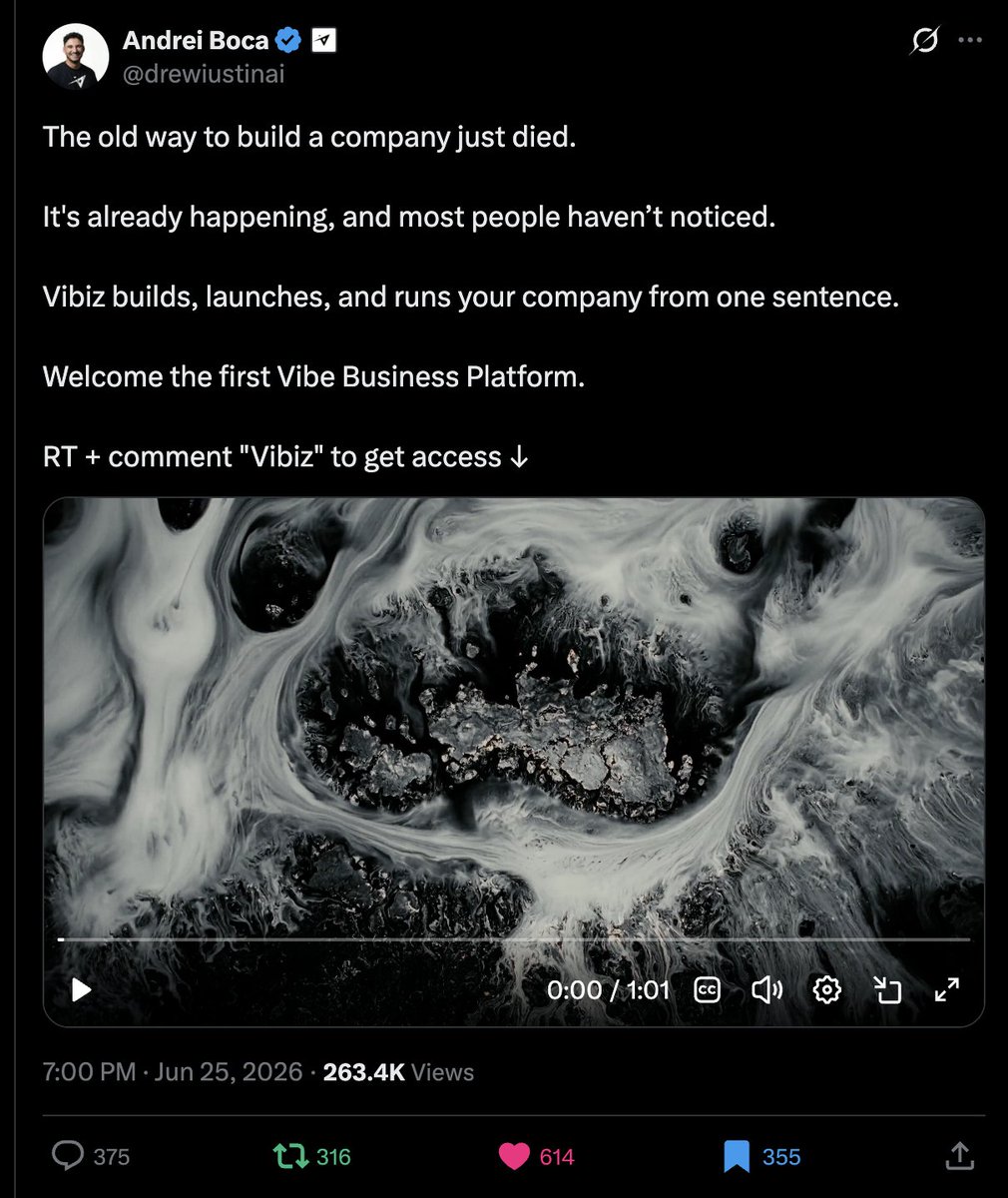 — "here's an example of a video intro and copy"
The first line. It matters more than the video it sits on. It has to be a claim, not a description, because claims start arguments and descriptions end them.
The strongest claims do one of three things: announce that the old way of doing something is finished, plant a flag as the first of something new, or attack a thing your market already resents. Push it right up to the edge of believable, because a line people feel the need to check is a line people click.
Then test it on someone outside tech. If they can hear your line once and say it back over dinner, it will travel, and if they can't, rewrite it until they can.
The lead magnet. In your first reply, not the main post, offer something genuinely worth having in exchange for a comment: a free playbook, a template, a breakdown, early access. When it's something your buyers actually want, this works close to 90% of the time.
The visible job is collecting leads. The hidden job is bigger: comments are among the most expensive signals the algorithm counts, and a good comment gate produces hundreds of them in the exact window where your post is being judged.
‼️ IF YOU HAVE A LAUNCH COMING UP DM ME AND I WILL PERSONALLY SEND YOU A LOOM VIDEO BREAKING DOWN WHAT IT SHOULD LOOK‼️
STAGE 3: GET ATTENTION
Trending only happens when the conversation grows beyond your post. This stage makes that happen on schedule, and it's the part almost every founder skips.
You need creators lined up before launch day, in three kinds with three different jobs:
- Big accounts bring raw reach, putting your launch in front of hundreds of thousands of strangers at once
- Mid-size experts in your niche bring trust, because their followers are your actual buyers, and ten of them convert harder than one giant account whose audience doesn't care about your category
- Small accounts, hundreds of them, make the conversation feel like it's coming from everywhere. The algorithm is counting how many voices a subject has, not just how loud the loudest one is
Every creator gets briefed before the day: the exact minute to post, the link, the claim, and a few different angles to choose from so forty posts don't come out looking like one press release from random accounts.
Then the most important instruction: write it in your own voice. Their audience follows them for how they sound, and a post that sounds like your marketing department is money lit on fire.
Timing is where this stage earns its name. Your big accounts and experts hit within the first hour, inside the window where the algorithm is deciding what your post is. Your small accounts roll out across the next three hours, wave after wave, so the conversation keeps visibly growing instead of spiking once and dying.
Done right, you should see 200 or more posts land across the first four hours. To the algorithm, that pattern doesn't look like a campaign, it looks like the platform discovering something.

STAGE 4: THE CONVERSION
Somewhere in the first several hours, if the first three stages were built properly, the machine tips over: strangers post about you unprompted, DMs arrive from people nobody contacted, and your product gets screenshotted into group chats you'll never see.
Most founders treat this as the finish line and start celebrating, which is how millions of impressions evaporate into nothing. Stage 4 is where trending becomes worth the trouble.
While the fire is burning, the founder replies to everything. Every comment gets a real answer, because every reply restarts the conversation under your post, and every restarted conversation is fresh fuel.
Everyone who shared or quoted you gets a DM the same day, while you're still the most interesting thing on their timeline. Everyone who commented on your lead magnet gets their delivery fast, with one extra line asking what they're building, because that question is what turns a downloader into a conversation.
If you have five people, launch day is one person posting and four people in the DMs
At the same time, keep feeding the timeline:
- Post milestones as plain numbers as they happen: signups, views, waitlist size. Live numbers give people a story to follow
- Reply publicly to the big accounts that show up late
- Cut new pieces from what's already working: clips of the video, screenshots of wild reactions, a founder note on what the day has been like
For 48 hours you are one story, so post nothing that isn't that story.
And when the spike fades, don't vanish. Your buyers mostly don't buy the day they see you trend; they buy weeks later, the day their problem shows up, and they buy from whoever they've seen the most between now and then.
Trending gets you known but staying visible is what gets you paid.
TLDR
Trending on X is a system with four stages, and every one of them is doable in-house:
- Stage 1, the research: set up a Claude system that pulls the top posts from 50+ accounts in your niche and turns them into a swipe file, so your copy is built on proof instead of guesses
- Stage 2, the hook: a 60 to 90 second video with the magic moment in the first 5 seconds, a first line that makes a claim people have to check, and a comment gate in the first reply that farms the algorithm's favorite signal while it builds your lead list
- Stage 3, the creators and the timing: big accounts and niche experts in hour one, waves of small accounts through hour four, everyone briefed to write in their own voice, 200+ quote posts total
- Stage 4, the conversion: reply to every comment, DM everyone who shared, deliver the lead magnet fast with a question attached, post milestones for 48 hours, and then stay on the timeline every day, because buyers buy from whoever they've seen the most
ONE MORE THING
If your company is launching in the next 30 days and you'd rather have this whole system run for you, DM me and tell me what you're building, and if we're a fit I'll show you exactly what your launch would look like completely for FREE.
And if you're running it yourself: bookmark this, build the four stages, and send me your results either way. I wrote this because I want to watch a few founders pull it off, and I mean that.
Related articles

how to build a reddit sales system (FULL GUIDE)
set up a hermes agent for me. here's the hermes site: https://nousresearch.com

What It Actually Takes to Build a $45K/Month YouTube Channel
*The honest version of this guide exists because the dishonest version is easy to write and expensive to believe.*

GTA 6 drops in 117 days. one person with MiniMax M3 can build the entire economy around it
$1,500,000,000 development budget. most expensive game ever made. 30,000,000 day-one sales projected. $2,700,000,000 revenue on launch day alone (analyst estimates). $80 retail price. will be the #1…