I Built an AI Influencer From Scratch. It Hit $12k in 5 Weeks.


INTRO
Pretty is cheap now. Specific is rare.
That single line is the whole reason this experiment worked.
I spent five weeks building a fictional AI influencer from nothing. No real person, no fake proof, no borrowed identity. Just a character, a system, and a question: if AI can manufacture a face in seconds, can it also manufacture attention people will actually pay for.
By the end of the period the project had reached:
50,000+ TikTok followers
14,000,000+ TikTok views
8,000+ Instagram followers
3,500,000+ Instagram views
350+ paid members
$12,842 in total earnings
The interesting part was never that AI could create a face. Everyone knows that part now. The interesting part was that the whole thing turned into a repeatable machine, and that the first real money landed inside the first week.
THESIS BLOCK
The model matters. The character matters more. But the business is the machine around her: story, hooks, distribution, a warm audience layer, paid access, DMs, conversion, retention, and constant testing.
AI content is cheap now. Attention is not. Trust is not. That distance is where the money sits.
ETHICS NOTE (read once, applies to everything below)
The whole project was built on fiction, not deception. The AI nature stayed clear in the public brand. No real person was copied or impersonated. No fake screenshots, no invented revenue, no manufactured scarcity. The edge here is not tricking people. The edge is making a character interesting enough that people engage anyway, knowing exactly what she is.
SECTION 1 - How I Built Mira Velez
I did not want another generic AI beauty page. That is the obvious move, which is usually why it is the weakest one. The feed is already drowning in flawless synthetic faces that look great for one second and vanish from memory the moment you scroll.
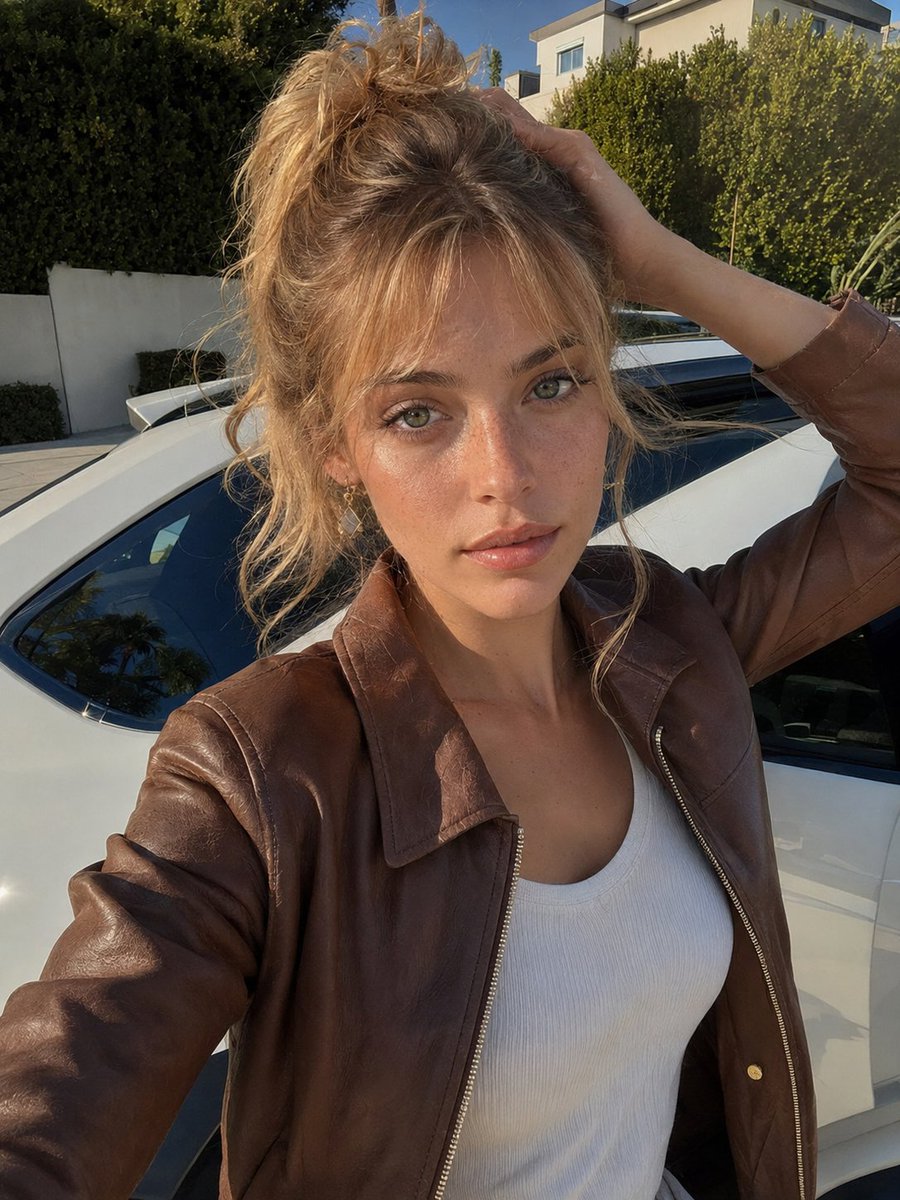
So I built Mira Velez as a fictional persona with an actual identity, not just a face. A clear visual angle, light freckles and curtain bangs, and a backstory about growing up as an outsider before turning that into quiet confidence.
That gave her a hook before a single post went live.
The goal was never to make the most attractive AI girl on the internet. The goal was a character people could recognize, describe, and remember after scrolling past fifty other posts.
Most people start with the question: how do I make her look more real. The better question is: why would anyone care about her.
If the only answer is because she looks good, the project is fragile. AI turned beauty into cheap supply. What still holds value is identity, story, positioning, and repeat attention.
PROMPT 1 - BUILD THE CHARACTER

Create a fictional AI influencer persona for a social media experiment.

Define her niche, personality, visual style, tone of voice, backstory, content pillars, audience psychology, and monetization angle.

Make her consistent, memorable, and marketable. Do not base her on a real person. Keep the AI nature clear in the public brand.

The edge is not deception. The edge is making a fictional character interesting enough that people engage anyway.
SECTION 2 - The First Posts Were Rough
The first batch was not a clean win.
A few posts got traction. A few formats looked promising. But the account was not behaving like a real asset yet. It was producing views without movement. People could see the model, but their behavior was not strong enough.
This is the part most people skip when they talk about this niche. It is not prompt, post, profit. AI lowers production cost, but it does not remove the need to test angles. Some clips looked clean and still did not convert. Some ideas felt obvious and created no intent. Some video workflows broke because backgrounds or nearby objects did not hold up.
The early lesson was simple and a little annoying. Making content is easy. Making people care is still hard.

SECTION 3 - The Breakout Came From Story
The first real breakout did not come from the most polished clip. It came from story.
I posted Mira through a TikTok carousel built around her character arc. The younger version, the reference, the adult version, and the emotional idea of being an outsider before growing into herself.
That piece crossed 900,000 views fast and later pushed past 1,700,000.
That was the moment the account changed. Before it, Mira was an AI model being tested. After it, she became a character people could react to.
The difference was not the format. It was the positioning. There was identity. There was contrast. There was transformation. There was a reason to pause.
Most AI accounts miss this. They optimize for realism, but realism alone does not build a fandom. It only makes the image less suspicious.

PROMPT 2 - TURN A CHARACTER INTO CONTENT

Turn this fictional AI persona into 10 viral content angles.

Each angle should be based on story, curiosity, identity, transformation, or social tension.

For each angle, include the post idea, the hook, the platform, why people would care, and what action it should drive.

Avoid explicit content, fabricated proof, and manipulative pressure.
SECTION 4 - TikTok Was the Reach Engine
TikTok became the scale layer. By the end of week five Mira had 50,000+ followers and 14,000,000+ views.
But the more useful signal came earlier. By day eight she already had around 16,000 followers and around 3,000 people in the warm layer. That told me the attention was not only passive. People were willing to leave the feed.
A view is cheap. A follower is better. Someone who exits the platform and joins a place you own is far more valuable.
TikTok was never the business. TikTok was the top of the machine. It created awareness, tested hooks, and showed which angles had the strongest scroll-stopping power.

SECTION 5 - Instagram Showed Stronger Intent
Instagram played a different role. TikTok gave the bigger numbers, but Instagram gave stronger buyer intent.
One video reached about 1,000,000 views, and the traffic quality was clearly different. People did not just watch. More of them clicked deeper, followed the character, and moved toward the warm layer.
That reframed the whole system. Each platform needed a job.
TikTok was discovery. Instagram was intent. The warm layer was the holding space. The private platform was monetization. DMs were retention and expansion.
Once I saw that, it stopped feeling like random posting and became a repeatable conversion system.

PROMPT 3 - STRATEGY AND CAPTIONS

Build a 7-day content strategy for this fictional AI influencer.

Goal: grow attention, test angles, and move followers into a warm audience layer. Include daily post ideas, platform-specific formats, caption angles, traffic destination, and why each post should exist.

Then run the captions through a second pass:

Write 20 short captions and profile hooks for this persona. Make them curious, human, platform-native, and matched to her character. The goal is profile clicks and warm audience growth. Avoid fake proof, fake scarcity, and generic AI language.
SECTION 6 - The Warm Layer Was the Real Shift
The real shift happened when the audience stopped living only inside algorithmic feeds.
TikTok and Instagram were rented attention. The warm layer gave Mira a space where people could follow the character, get more context, and move toward the paid platform.
This is where most people waste the opportunity. They chase viral posts without building a path for that attention to go anywhere. A viral post with no next step is entertainment. A viral post with a warm layer becomes an asset.
By day eight around 3,000 people had already joined. The experiment was no longer about whether AI content could get views. It was about whether those views could become owned attention.
SECTION 7 - The First Paid Push, in Week One
I did not wait until the account was big to test demand. The first paid offer went out in week one, while the warm layer was still forming.
That was the real test. Views are nice. Followers are nice. But paid conversion is where the market tells you if any of it is worth something.
The first monetization post brought around 190 purchases at around $10, roughly $1,900 from a single push, inside the first seven days. That moment changed the experiment. It stopped feeling like content testing and started feeling like proof of demand.
People were not only buying media. They were buying access, response, proximity, and the feeling that the character might notice them.
Over the full period, private platform revenue reached around $11,000. Paid chat and upsells added around $1,842, bringing the total to $12,842.
Costs stayed low. Generation spend was around $200. Other operating costs were around $260. That left most of the revenue as simplified profit before fees, labor, taxes, payment costs, and refunds.

SECTION 8 - The Real Product Was Access
The private platform made the actual product clear. It was not only the content. It was access.
People paid because they wanted interaction, response, and proximity to the character. That is why the DM layer became such a large part of the business.
The project crossed 350+ paid members, but the revenue came with workload. There were 70+ paid conversations in a single week. Several users paid extra for extended access. One person paid around $60 just to move the conversation to another platform.
That is a strong monetization signal. It is also a warning. DMs are not just messages. They are support, retention, trust, boundary setting, and conversion. Once people pay, expectations rise.
This is where the lazy version of the niche falls apart. It is not passive income. The system can turn attention into revenue, but the operator still has to run the experience.

SECTION 9 - The Bigger Play
The private platform was the clearest revenue path, but not the only one.
A fictional character can also become a UGC asset, a short-form ad character, a music-promo account, a synthetic micro-influencer, a product demo character, a repeatable media brand.
That is the bigger play. People who only think about AI models as images are missing the real opportunity. The opportunity is media inventory. Characters that can be reused, tested, positioned, and distributed across multiple monetization paths.
SECTION 10 - What I Would Repeat and Change
What I would repeat: the character-first approach. Mira worked because she was not generic. And the platform structure. TikTok for scale, Instagram for intent, a warm layer to hold the audience, a private platform for revenue, DMs for retention. That structure is the blueprint, not the exact character and not the exact posts.
What I would change: track the funnel seriously from day one. At the start it is tempting to obsess over views because they are public and exciting. But the numbers that matter show movement through the system. Profile visits, warm-layer joins, click-through, paid conversion, refunds, reply rate, revenue per paid user, and churn.
Once content becomes cheap, the bottleneck moves. First to distribution, then conversion, then retention, then operations.
PROMPT 4 - THE OPERATING STACK

Conversion plan:
Analyze this warm audience and create a conversion plan. Move warm followers to a paid private platform without pressure, deception, or fake urgency. Include offer positioning, post sequence, soft CTA ideas, objections to address, trust signals, and metrics to track.

DM flow:
Create a safe DM flow for this fictional persona. Keep users engaged, understand what they want, and guide them toward a paid offer without manipulation or false claims. Include openers, follow-ups, boundaries, AI-disclosure handling, refund-friendly language, and conversion points.

Funnel diagnosis (run every few days):
Analyze this funnel: traffic source, profile, content, warm layer, DMs, paid offer, pricing, conversion rate. Find the biggest bottleneck, what to test next, what to track daily, and what to stop doing. Separate confirmed numbers from assumptions. Do not invent missing data.
CLOSING / TAKEAWAY - The Real Takeaway
The AI model is the character. The system is the business.
The model gives the project a face. The story gives people a reason to care. TikTok creates scale, Instagram shows intent, the warm layer holds the audience, the private platform captures demand, and the DMs reveal the real workload behind the money.
But here is the part worth sitting with. The hard parts of this never got automated. Attention, trust, conversion, retention. The exact things that make a real creator valuable are the exact things AI still cannot manufacture on its own. The face is free. Everything that turns the face into a business is still earned.
Most people are staring at the images. The money is in the machine behind them.
Follow for more.
Related articles

How to Run AI Slideshows Profitably on TikTok
the algorithm re-serves a slideshow to people who scrolled past it.

How To Cook 100+ VIRAL Slideshows In 10s With Opus 5
slideshows are the format TikTok's algorithm rewards the most right now and almost nobody is producing them at volume.