Meta's ad delivery system explained (and how to exploit it)

On almost every call with a brand doing $100K+/month, the owner says some version of the same thing. "Media buying feels like clicking buttons now." They're closer to right than they know, and the reason is buried in how Meta's delivery system actually works.
Meta's system has two stages, and your media buyer only touches one of them.
Stage 1 happens before the auction

Before any bidding happens, a retrieval system called Andromeda scans billions of ads and cuts them down to roughly 1,000 candidates in under 300 milliseconds. It uses computer vision, NLP and audio analysis to assign every ad an entity ID, a fingerprint based on what the ad actually looks and sounds like. Ads that look similar get clustered into the same entity ID.
Stage 2 is the auction everyone knows. Bids, budgets, placements. The part your media buyer lives in.
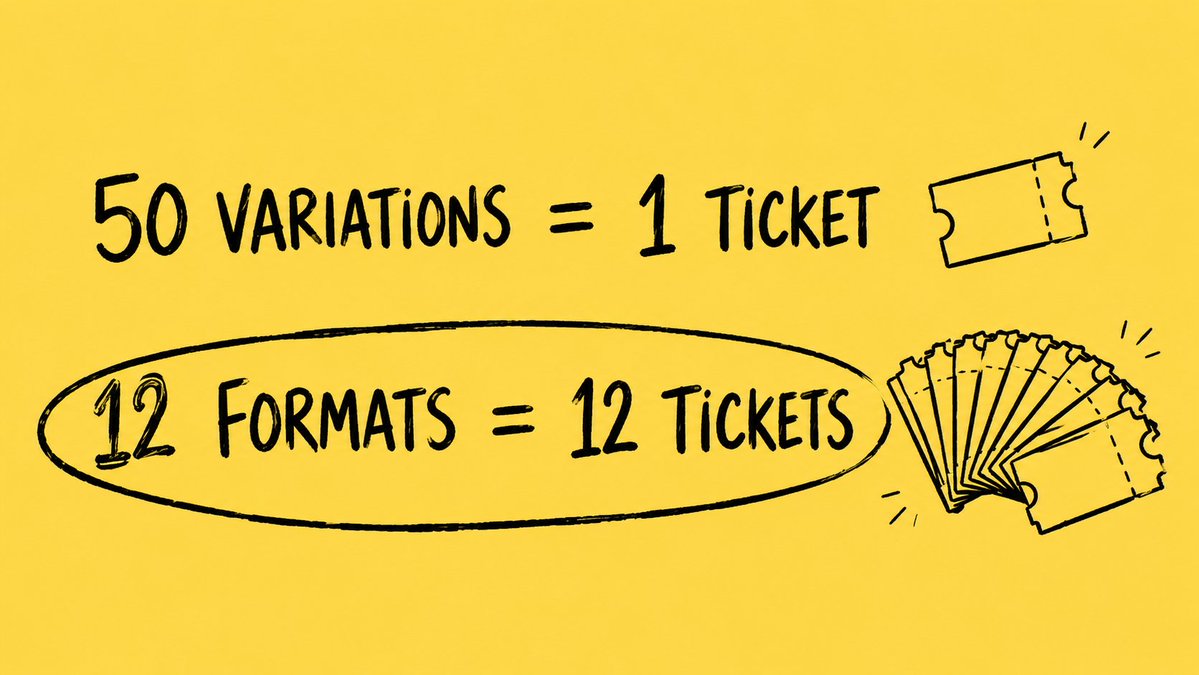
The catch is that stage 2 only runs on ads that survived stage 1. If your 50 ads share an entity ID, they get one ticket to the auction. One. You did 50x the work for 1x the opportunity, and no bidding strategy on earth can recover what was lost before bidding started.
Why your buyer's hands are tied
The old playbook was to find a winner, cut 100 minor variations, flood the account and let the algorithm pick. In the Andromeda era those 100 variations collapse into 2 or 3 entity IDs. The campaign fragments, performance drops, and the response is usually more variations of the same thing, which deepens the cluster instead of escaping it.
Targeting went the same way.
Andromeda builds its own understanding of who an ad is for from the creative itself.
Manual interest stacks and lookalikes now mostly restrict how many auctions you're eligible for without improving a single impression.
Broad targeting plus creative-led audience finding is the correct setup, which removes another lever the media buyer used to own.
What's left for media buying is real but narrow. Budget structure, testing discipline, clean measurement. Necessary, and nowhere near sufficient. We manage $107M+ on Meta and the pattern is consistent across accounts, the ceiling is set by how many genuinely different creatives exist, not by how they're bought.

What "genuinely different" means
This is the part that gets misunderstood. A new hook on the same video is the same entity ID.
Same face, same room, same framing, Andromeda's computer vision sees through the re-script.
A new entity ID requires visual difference.
A podcast-style ad, a street interview, a whiteboard breakdown and a one-shot founder video have different visual DNA, different audio, different scene structure.
Each earns its own fingerprint and competes in a different part of the tree. That's why 12 structurally diverse ads can outperform 100 variations, 12 tickets against 1-3.
So run the audit your media buyer can't run for you. Strip away the hooks, the copy and the music, and count how many of your active ads are actually different.
Different format, different person on camera, different environment, different core benefit.
That count is your real entity ID number, and it's how many tickets you hold.
If the count is low, no button in Ads Manager fixes it.
In a quick call I can go over what that count looks like for your account and whether it actually makes sense to raise it.
Link in my bio.
Talk soon, Lorenzo.
Related articles

Mars men's full meta ads playbook (4,512 ads)
Mars Men has 4,512 ads live on Meta right now, on a Facebook page that only exists since December 2023.
How to Start a 6 Figure Faceless YouTube Channel (Full Breakdown)
I've helped over 400 people start profitable faceless youtube channels. i've ran over 50 channels myself. Generated over $4 MILLION by age 25. Worked with youtubers that have 10 million+ subscribers,…
Build a Marketing Intelligence System With Grok Bot
I want one Grok Bot whose entire job is to know what's happening in my market before I do.