the full distribution roadmap.

from zero to a system that delivers customers while you sleep, while you're building the next thing, and on the days you don't open your laptop.
nothing held back. every stage. every mechanism. every mistake that costs people six months they didn't need to lose.
here's the complete picture:
before the roadmap starts there's a question that determines whether everything that follows works or wastes six months of consistent effort.
the question is not what product to build.
the question is not which platform to use.
the question is not what price point converts best.
the question is: who is the specific person who has this problem and where do they go when the problem is bothering them most.
not in general.
at the moment of acute pain.
the answer to that question is the foundation every distribution channel gets built on.
get it wrong and the channels reach the wrong people at the wrong moment and the conversion rate makes the whole system feel broken when the system is actually fine and the targeting is what's wrong.
get it right and every channel that gets built on top of that answer works better than it should because it's reaching the right person at the exact moment they're most likely to do something about their situation.
most builders skip this question entirely.
they know who their customer is in a general sense.
founders. marketers. small business owners. content creators.
that's not specific enough to build distribution around.
the specific answer looks like this.
not founders.
b2b founders doing $200k to $800k a year who are personally handling their content because they can't justify a full hire yet and are watching their competitors show up consistently online while they publish sporadically and feel the gap widening every month.
that level of specificity tells you exactly which communities to enter, exactly what search terms to target, exactly what free resource to build, exactly what the email sequence should say, exactly who to reach out to for partnerships.
everything downstream of this question gets easier when the answer is specific enough.
sit with it until it's specific enough.
then build.
the roadmap has five stages.
each stage builds on the previous one.
skipping stages is possible but every stage that gets skipped creates a gap that eventually has to be filled anyway, usually at a moment when filling it is more expensive than it would have been if it had been built in sequence.
the stages are:
foundation. the work done before any distribution begins that determines how well everything that follows converts.
community. the first active distribution channel that builds trust in the places the customer already lives.
owned audience. the email list and direct communication channel that removes platform dependency from the revenue.
search. the passive distribution infrastructure that delivers customers without ongoing effort after the initial work is done.
multiplication. the referral, partnership, and compounding mechanisms that take the existing channels and make each one produce more without requiring proportionally more effort.
each stage gets its own section.
each section covers what to build, how to build it, how long it takes to work, and the mistake most people make that slows it down or breaks it entirely.
- stage one. foundation.
the foundation stage is the work done before the first piece of distribution content gets published.
most people skip it because it doesn't feel like distribution.
it feels like preparation.
and preparation feels like procrastination when there's a product ready to sell and a dashboard sitting at zero.
it isn't procrastination.
it's the difference between distribution that compounds and distribution that flatlines after the initial burst.
here's what foundation actually consists of.
the positioning statement.
one sentence that says exactly who the product is for, exactly what problem it solves, and exactly why it solves it better than whatever the person is currently doing to manage the problem.
not a tagline. not a mission statement. not a value proposition written for an investor deck.
the sentence that makes the specific person with the specific problem read it and think: this is exactly what i need right now.
that sentence becomes the through-line for every piece of distribution content that follows.
every community post. every email. every search article. every partnership pitch.
they all say different things in different formats for different contexts but they all say the same thing underneath.
without the positioning statement the distribution content says different things to different people in different places and none of it accumulates into a coherent signal that builds trust and recognition over time.
the proof document.
before distribution begins, collect every piece of evidence that the product works.
testimonials from early users. screenshots of results. case studies written in the language of before and after. specific numbers wherever they exist.
not polished marketing copy.
raw evidence.
the person who encounters the distribution content and then looks for proof that the product actually works needs to find that proof immediately and find it credible.
proof that takes three clicks to find doesn't get found. proof that sounds like marketing copy doesn't get believed.
raw specific evidence placed one click from wherever the customer lands converts.
the free resource.
built before the distribution begins.
the specific thing that solves one version of the problem completely and delivers a result the customer can feel in one sitting.
not a lead magnet that promises value and delivers vague advice.
something that works.
a checklist that actually catches the gaps it promises to catch. a template that actually does the thing it claims to do. a mini guide that actually produces the result it describes.
the free resource is the first thing most customers experience.
if the free resource delivers a real result the product sells itself.
if the free resource disappoints the product never gets a fair chance regardless of how good it actually is.
foundation complete.
now distribution begins.
- stage two. community.
community is the first active distribution channel and the one that builds the kind of trust that every other channel takes months to produce.
the mechanism is straightforward.
find the five specific places online where the specific person with the specific problem spends time when the problem is bothering them.
not general communities. not communities adjacent to the niche.
the specific places where the specific conversation is already happening.
for the b2b founder managing their own content: the linkedin comment sections of accounts they follow, the slack communities for founders at their revenue stage, the subreddits where founders discuss marketing and growth, the twitter threads where content strategy is debated.
for the small landlord with compliance anxiety: r/landlord, local real estate investor facebook groups, the forums attached to state landlord associations, the comment sections of real estate attorneys who post educational content.
for the e-commerce founder managing their own email marketing: the klaviyo community forums, the ecommerce subreddits, the facebook groups for shopify store owners, the twitter accounts of email marketing educators.
go to those five places.
for the first four weeks do nothing except contribute.
answer the question that has been sitting unanswered for three days. add the specific detail the original post was missing. write the reply that moves the conversation from frustrated to informed.
not every day in every community.
the two or three communities where the conversation is most active and the audience is most precisely matched to the product.
show up there consistently.
what accumulates during those four weeks is invisible but real.
people start recognizing the name. start associating it with useful specific answers. start clicking through to the profile when a particularly good response appears.
by week five something has been built in those communities that cannot be bought with an ad budget.
a reputation for being the person who actually helps.
the product introduction in week five lands in that context.
not as a promotion. as a recommendation from someone the community has already decided to trust.
the conversion rate from a community that has been warmed this way compared to a community that receives a cold promotional post is not a marginal difference.
it's the difference between three sales and thirty.
the community channel maintained consistently — two or three meaningful contributions per day across two or three targeted communities — produces a stream of customers that grows slowly and then doesn't stop growing.
month one: a trickle. month three: consistent. month six: the channel is self-sustaining because the reputation does the work.
the mistake that kills community distribution.
showing up with the product before the reputation exists.
the promotional post in a community where the name means nothing gets ignored at best and banned at worst.
the same post in a community where the name means useful and trustworthy gets shared by the moderators.
sequence matters more than tactics in community distribution.
reputation first. product second. always.
- stage three. owned audience.
the community channel builds trust in someone else's house.
the email list builds trust in a house that belongs entirely to the builder.
this distinction matters more than most people realize until the day a platform changes its algorithm, a community bans promotional content, or a subreddit decides to restrict outside links.
everything built on someone else's platform is rented.
the email list is owned.
and owned distribution compounds in ways that rented distribution never can.
because the email list remembers.
every subscriber on the list has a history. what they downloaded. what emails they opened. what links they clicked. what they replied to.
that history makes every subsequent communication more targeted and more relevant than any social media post aimed at a general audience.
the email list gets built through the free resource.
the free resource is offered consistently across every other distribution channel.
in the community contributions: "i put together a checklist covering this exact issue. happy to share it if anyone wants it."
in the search content: "download the full template here."
in the social media posts: "the complete guide is in the link in bio."
every distribution channel points toward the free resource. the free resource captures the email. the email sequence builds the relationship that produces the sale.
the email sequence that works is not a sales sequence.
it's a trust sequence that ends with a sale feeling like the natural next step.
email one arrives immediately with the free resource and a single sentence about what to expect next.
email two arrives two days later with something useful that builds on the free resource. no pitch. just value.
email three arrives four days later with a specific case study showing what the full product produces for someone in the same situation as the subscriber.
email four arrives six days later with the thing that addresses the most common reason people in this situation don't take action. not a pitch. an honest conversation about the obstacle.
email five arrives eight days later with the offer. framed not as a promotion but as the logical next step for someone who found the free resource useful and wants to go further.
that sequence converts at rates that make social media selling feel like an inefficient way to reach people who were already interested.
because it is.
the email subscriber chose to receive this. the social media follower is being interrupted by it.
chosen communication converts. interrupted communication hopes.
the mistake that kills email distribution.
building the list and not mailing it.
the list that receives one email per month from someone who feels guilty about emailing too often is not an asset.
it's a collection of people who have forgotten why they subscribed.
the list needs to hear from the builder often enough that the name in the inbox is familiar and trusted.
not daily. but not monthly either.
two to three times per week with something genuinely worth reading is the frequency that keeps a list warm enough to convert when the offer arrives.
- stage four. search.
search is the distribution channel most people underestimate because the results take longer to arrive than any other channel.
and in a world where most people measure distribution success in days and weeks, a channel that takes two to four months to produce results feels like it isn't working.
it's working.
it's just working on a different timeline than the channels that produce immediate feedback.
and the payoff for that patience is a distribution channel that runs independently of anything else, produces customers without ongoing effort, and compounds in value every month that passes.
the mechanism is simple.
find the specific question the ideal customer types into google when the pain is acute enough to search.
not a general question about the category.
the specific question.
the one they type at 11pm when the problem has been bothering them all day and they've finally decided to do something about it.
write the most complete and specific answer to that question that exists on the internet.
not the longest. not the most comprehensive for its own sake.
the most useful.
the answer that makes the person who finds it feel like someone finally explained this in a way that actually helps.
publish it on a page google can index.
and then do the same thing for the next most common question.
and the next.
twelve pieces of search content covering the twelve most common questions the ideal customer asks when the pain is loudest produces search distribution infrastructure that delivers customers for years.
the math of search distribution over time makes the initial investment look almost irrationally cheap in retrospect.
four hours to write one piece of content.
that piece ranks for a search term with 3,000 monthly searches.
delivers 90 visitors per month at a 3% conversion rate.
three customers per month from one piece of content written once.
twelve pieces: thirty-six customers per month.
from work done in month one.
still running in month twenty-four.
the mistake that kills search distribution.
writing for search engines instead of for the person searching.
content optimized for keywords but not for usefulness ranks briefly and then loses its position to content that actually helps people.
the search engine's job is to find the most useful answer to the question being asked.
write the most useful answer.
the ranking follows usefulness.
usefulness doesn't follow rankings.
- stage five. multiplication.
the first four stages build four channels that each deliver a stream of customers.
stage five takes those streams and multiplies each one without requiring proportional additional effort.
the multiplication mechanisms are three.
referrals. partnerships. content compounding.
referrals first.
after the first thirty customers have been in the product long enough to experience a result —
identify the ten who expressed the most satisfaction.
the ones who left reviews. the ones who replied to emails. the ones who mentioned it somewhere publicly.
send each of them a direct personal message.
not automated. not a referral program notification. a direct message from one person to another.
"you mentioned this changed how you approach X. that genuinely means a lot. i wanted to ask — do you know one or two other people dealing with the same situation? i'd love to take care of them at a discount if you want to pass my name along."
most people never send that message because asking feels uncomfortable.
the ones who send it discover something that changes how they think about customer acquisition permanently.
the referred customer arrives with a level of trust that no channel produces organically.
they were told about the product by someone they trust who has already experienced the result.
they're not evaluating whether the product works.
they're deciding when to start.
that's a completely different sales conversation.
partnerships second.
identify ten accounts, newsletters, podcasts, or communities that already reach the exact audience the product was built for.
not adjacent audiences. not similar audiences. the exact audience.
reach out to each one with an offer that makes the introduction worth their while.
free access to the product so they can form an honest opinion. a revenue share that makes the introduction genuinely valuable to them financially. a co-created resource that gives their audience something exclusive and gives the product visibility in a context that feels native rather than promotional.
one partnership with an account that reaches 10,000 of the right people produces more customers than six months of organic social media growth.
because the audience already trusts the account making the introduction.
that trust transfers.
and transferred trust converts at rates that cold distribution never approaches.
content compounding third.
every piece of content that has been published across every channel contains information that can be recombined, reframed, and redistributed in new formats without creating anything new from scratch.
the community post that got saved 200 times becomes the email that gets forwarded to colleagues.
the email that gets the highest open rate becomes the search article that answers the question it addressed.
the search article becomes the framework that anchors the partnership pitch.
the partnership pitch becomes the community post written from the partner's perspective.
nothing gets created once and used once.
everything gets created once and used until it stops producing.
the builder who treats every piece of content as a single-use asset is doing ten times the work of the builder who treats every piece of content as raw material for five more pieces.
same thinking. five times the distribution surface area.
the full roadmap compressed into a timeline.
week one through two.
build the foundation. write the positioning statement. collect the proof. build the free resource. identify the five communities where the ideal customer lives when the problem is acute.
week three through six.
enter the communities. contribute without promoting. build reputation before introducing the product. simultaneously begin the search content. write the first three pieces answering the three most common questions the ideal customer searches.
week seven through ten.
introduce the free resource in the communities where reputation has been built. begin collecting emails. launch the email sequence. publish three more pieces of search content. identify ten potential partnership accounts and begin outreach.
week eleven through sixteen.
the community channel is producing consistent customers. the email list is growing from the free resource. the first search content is beginning to rank. the first partnership conversation has moved to active. send the referral message to the first wave of customers who got results.
month four through six.
all five channels are active simultaneously. the referral channel is producing customers from the first wave of happy buyers. the first partnership has gone live and produced a spike in new subscribers and customers. the search content is ranking and delivering passive traffic. the email list has grown to a size where it produces meaningful revenue from every send. the community channel is self-sustaining because the reputation does the work that manual contribution used to do.
month six and beyond.
the system is running.
not on autopilot in the fantasy sense.
but with enough momentum that the ongoing effort required to maintain it is a fraction of what was required to build it.
the builder is no longer building distribution.
they're managing a distribution system that builds itself.
the thing about distribution that took the longest to understand and produced the biggest shift in how to think about building anything.
distribution is not what happens after you build something worth distributing.
distribution is what determines whether something worth distributing ever reaches the person it was built for.
the best product in a niche with no distribution is a solution that never found its problem.
and a solution that never found its problem is indistinguishable from a product that didn't work.
the builder who treats distribution as an afterthought is making the most expensive decision in their business and making it before they've built a single thing.
because every hour spent building a product that has no distribution plan is an hour building something that may never be found by the person who needs it most.
build the distribution before you need it.
build it while the product is being built.
build it like it matters more than the product.
because in every market that has ever existed the product that won was not always the best product.
it was the product that the most people who needed it actually found.
distribution is not the reward for building something good.
it is the mechanism that makes building something good worth it.
conquer it first.
let everything else follow.

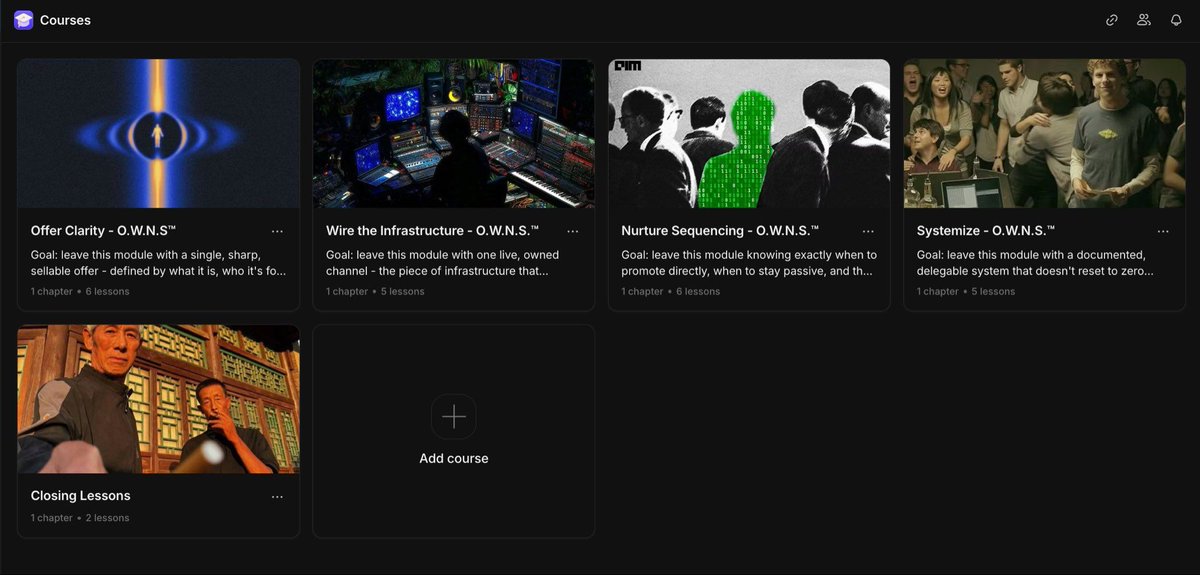
if you wanna:
• build offers that make you 6-figures a year with no prior required experience
• expand your potential network to maximize profit
• own distribution channels like pablo escobar
• eat your competitors for breakfast while remaining faceless
DM “DISTRO” to get access to my private program
Related articles

how to build an agent that finds you customers:
does anyone know a good site to order floral shiffon dresses from

how to build a reddit sales system (FULL GUIDE)
set up a hermes agent for me. here's the hermes site: https://nousresearch.com

How We Generated Millions Of Organic Clicks With Programmatic SEO
most SEO looks like this: