The science behind ads that don't look like ads.

When an ad looks like an ad from frame one, the viewer's guard is up before you've said a single word.
So they scroll.
Everything you spent on the script, the offer and the edit gets judged in half a second by a brain that already decided to leave.
Our whole agency is built around one move against that reflex.
We call them stealth creatives, ads that don't look like ads.
This is the full breakdown, since I reference it constantly and have never written it down in one place.
The problem with "authentic"
UGC was the answer to ad blindness, for a while.
A real-looking person, a phone camera, natural light.
Then every brand on Meta shipped the same thing, and audiences learned the pattern.
Your customers now know a UGC testimonial as an ad within the first second, which means the format built to look authentic stopped reading as authentic.
Because we aren't in 2021 anymore.
Stealth creatives go a step further.
They look like content the viewer already watches and trusts.
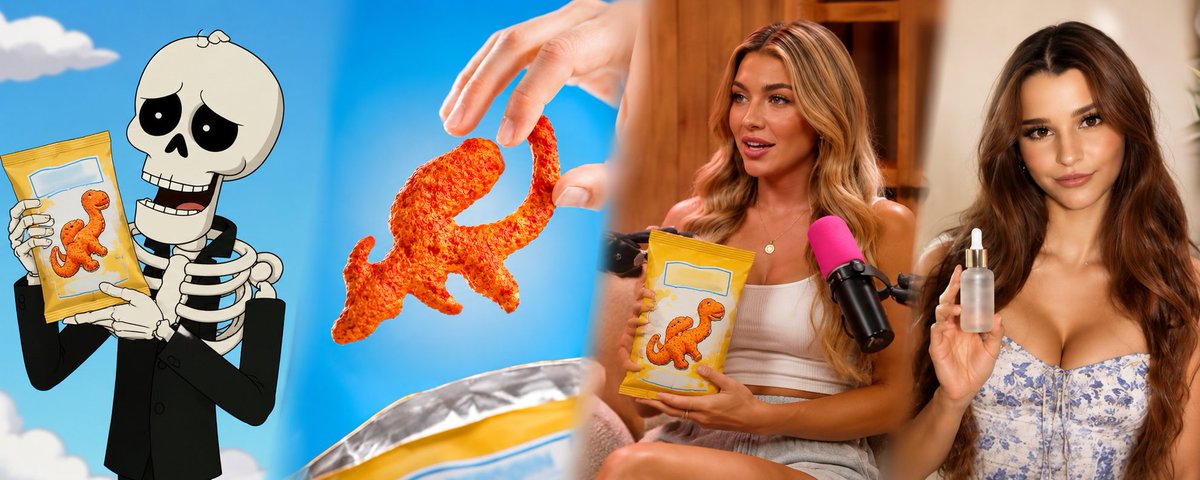
A podcast clip. A street interview. A documentary snippet. A pharmacist explaining something at a counter.
For the first 20 seconds, nothing about the frame says "you are being sold to."

What actually happens when the guard stays down
Two things, and the second one matters more.
First, people don't scroll, because they don't immediately know you're selling to them.
That alone is worth a lot, our formats run 40-45% hook rates, and the two-person dynamic does much of the work.
One asks, the other explains. The conversation creates natural energy without needing a shock moment.
Second, and this is where scale lives, you get to speak to unaware audiences.
People who don't know your product exists and don't even fully understand their problem yet.
You cannot reach them with a product pitch, they have no reason to care.
You can reach them with education and entertainment, and then earn the sell.
The brands stuck at a spend ceiling are almost always maxed out on solution-aware traffic, fighting every competitor for the same.
The unaware pool is the audience most brands never touch.

Why this can't be copied at the copy level
Making a podcast ad actually read as a podcast clip takes a studio, real actors, a sourcing process, and editing that holds the illusion for 20 seconds.
We built all of that in-house, and the production quality is high enough that people regularly assume we use AI (I take that as a compliment at this point).
There's a second-order effect that showed up when Meta rolled out Andromeda.
A podcast ad, a street interview and a documentary snippet have different visual DNA, so Meta assigns them different entity IDs and each one competes in its own part of the auction.
Stealth creatives were built to get past the human filter, and it turns out they get past the algorithmic one too.
An account running 50 variations of the same kitchen UGC is testing one thing 50 times.

The best ad is one the viewer doesn't realise is an ad until they're already convinced. That sentence is the agency.
Want a free audit for your brand? DM me "Audit" or click the link in my bio.
Talk soon, Lorenzo.
Related articles

Seedance 2.5 for AI UGC Ads: the real model, the real pipeline
Most people trying Seedance 2.5 type one prompt, get one 30-second clip, and judge the whole model off it

ranking every AI video model for creating AI UGC...
most model rankings are built on which one makes the prettiest 5 second demo.