9 biggest Startup Opportunities in the AI Boom
Built on real numbers. Validated against real companies. Pulled straight from the conversation.
Most startup idea lists give you the category and stop there. This one gives you the niche, the proof, and the actual move.
I sit down with Jonathan Courtney on a Sunday and went through our favorite startup opportunities. We covered nine in depth. Each one came with a specific company already winning, a stat you can verify, or a personal experiment one of them is running right now.
Here they are.
Idea 01: Live, Unscripted Shows for Tech
The Twitch model applied to grown-up money.
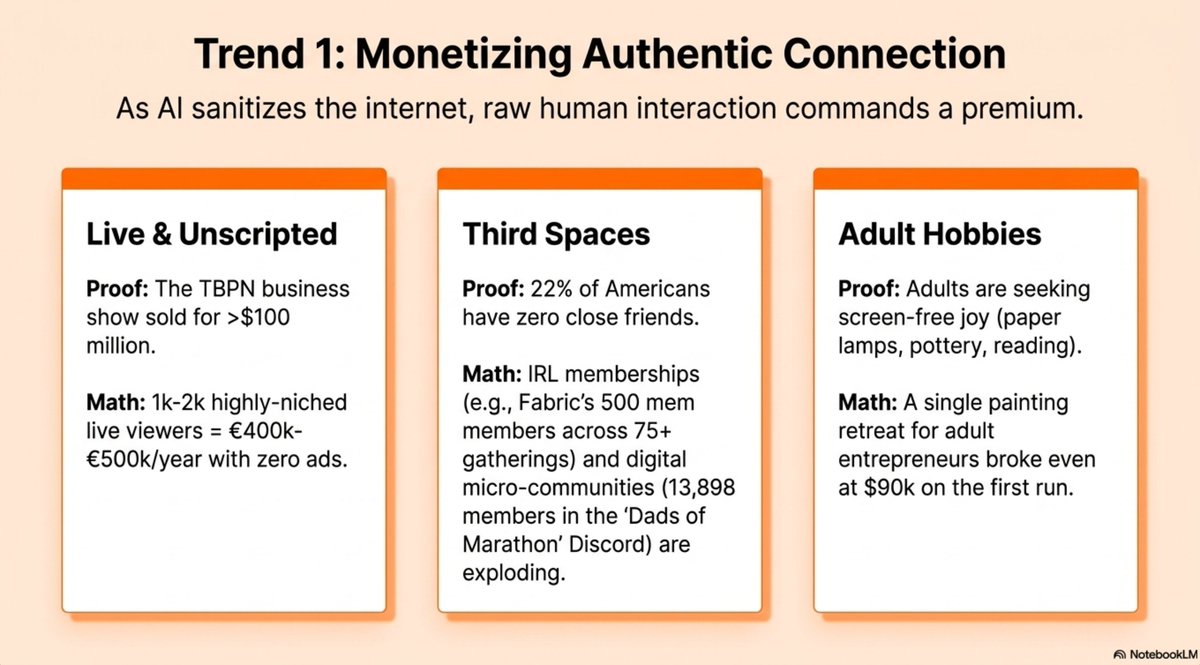
The proof: TBPN sold for over $100 million. It was a business show on X with a small but very high-value viewership.
The setup is simple. Gaming has lived on live, off-the-cuff content for a decade. Business is just starting. Diary of a CEO is polished interviews. This is the messy version of that.
How to play it:
- Pick a high-value niche audience (founders, finance, ops)
- Stream long-form. Talk while you work
- Sell directly into the audience through Patreon, events, or merch
The guest on the episode runs 1,000 to 2,000 viewers every Tuesday. That alone can earn €400,000 to €500,000 a year with zero ads.
The right thousand viewers beats a million strangers.
Idea 02: Action Apps (Agent-First Mobile)

Apps that take action for you instead of asking you to take action.
Today's mobile apps feed you a list and wait for you to tap. AI lets you build apps that do the work. Clear the inbox. Book the calendar. File the expenses.
The framework: pick a job people hate doing. Pick a vertical. Build the agent-first version of that workflow.
The Instagram-to-Facebook parallel matters. Facebook had a painful jump to mobile. Big incumbents will have the same painful jump to agent-first. That gap is the opening.
Build with the Claude Agent SDK or similar. Layer on top. Pick a niche with a real pain point and willingness to pay.
The clearest example: an email app where 80% of replies happen via agents, and you only see the two messages each day that need a human.
Idea 03: Loneliness as a Business Category
Third spaces. Community apps. In-person events.
Almost 22% of Americans have zero close friends. That's roughly one in five.
Two companies already winning here:
- 222. Takes a personality test, matches you with 5 to 7 people, sends you all out together for a dinner, a cocktail bar, a salsa night, or a basketball game.
- Fabric. 500 members across New York and Chicago. 75+ gatherings per month. 5,000 to 10,000 square foot spaces converted from empty commercial real estate.
Then the Discord example. A group called "Dads of Marathon" has 13,898 members built around one cooperative video game. The community has more active members than the game has concurrent players.
The lesson: pick a real pain point, attach it to a niche, run a membership model. Recurring revenue. Real impact.
Idea 04: Elder Tech
Products for 65+ that respect the customer.
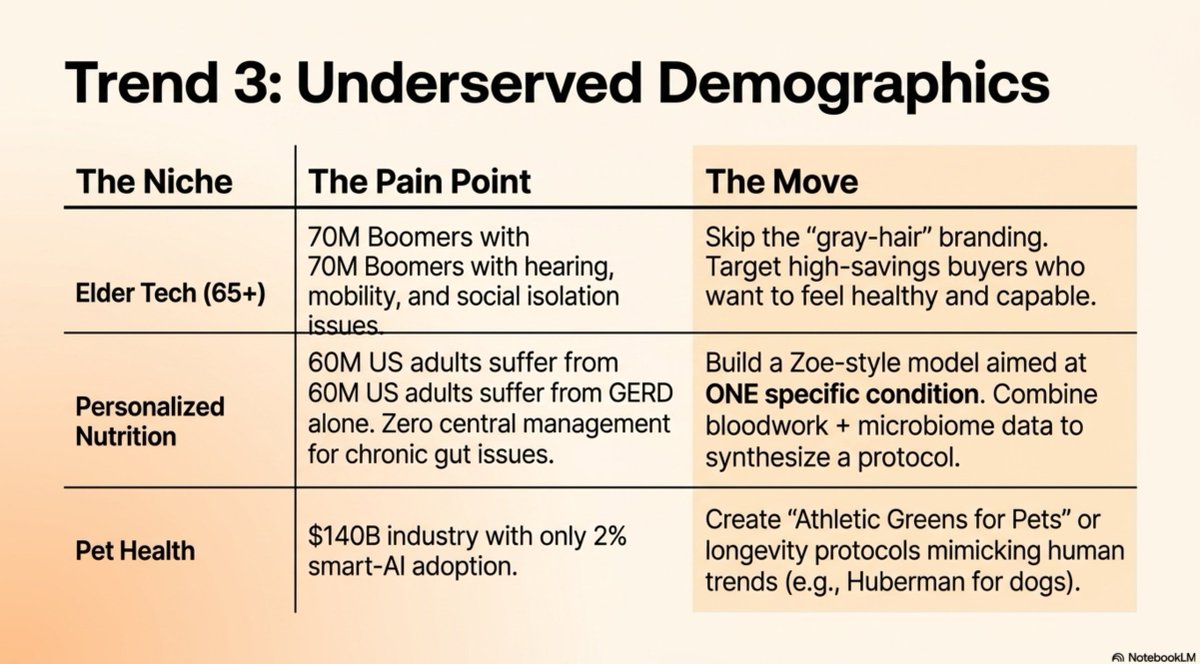
70 million boomers in the US. Most apps target Gen Z and millennials.
Hearing. Mobility. Social. Memory. Vision. Each is an AI-shaped opening. Each is underserved.
The branding trap: skip the gray-hair and walking-cane imagery on the landing page. These customers see themselves as the person they want to be. Sell that.
The economics work better than the obvious play too. The guest's main business (facilitator.com) found that customers over 45 are their most valuable buyers. Higher savings. Longer attention. Facebook ads still reach them on the same day they buy.
Fish where the fish are.
Idea 05: Adult Hobbies
Painting. Pottery. Woodworking. Gardening. Book clubs.
Most people in their 30s, 40s, and 50s come out of the kid-and-career tunnel with no hobbies. They want to do something with their hands. They want to be off their phones.
The proof from the episode:
- A painting retreat for adult entrepreneurs broke even at $90,000 on the first run.
- A follow-up virtual event runs $60,000 for two days, three hours per day.
- A Berlin book club draws 85 paying members every Sunday.
- A space called Dr. Tyler Lemko's Creative Club hosts paper lamp workshops. People show up on first dates instead of going to bars.
The move: pick the activity. Pick the audience. Charge for it. Build a small community around it.
Idea 06: AI Employees, Verticalized
Junior digital workers built for one specific job title.
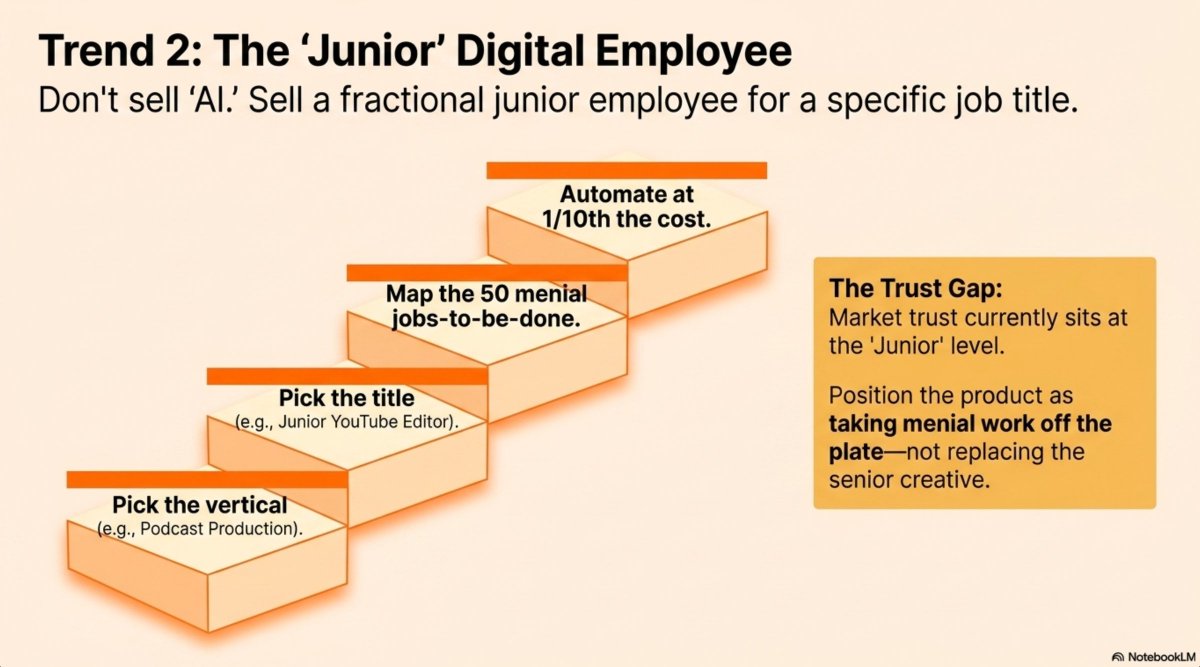
The market trust right now sits at "junior." Founders are willing to pay for an agent that costs a fraction of a junior and does the boring work. Senior-level trust comes later.
How to build it:
- Pick the vertical (law firms, accounting, podcast production)
- Pick the job title (junior YouTube editor, junior bookkeeper, junior ops)
- Use AI to list the 50 jobs to be done for that title
- Build agents that do each one at one-tenth the cost
- Add jobs over time until you have a true digital employee
The brand suggestion from the episode: call the company "Juniors." Position it as the team that takes menial work off your plate, not the thing that replaces creative work. (JuniorEmployees.ai was available the day they recorded.)
Idea 07: Personalized Nutrition, Vertically
Zoe for one specific health condition.
Zoe ships a microbiome test kit and pairs it with an AI nutrition app. CalAI does $50 million in ARR on AI food tracking.
The opening: take that model and aim it at one condition.
The example from the episode is GERD. 60 million Americans have it. That's 20% of US adults. Walk into any CVS and the antacid aisle is the proof.
The pitch the guest said he would pay almost anything for:
- One central app that pulls in blood work, microbiome data, and gastro notes
- One AI that synthesizes it all and recommends a protocol
- Optional layer: ship the food. Recommend a chef. Run point as the project manager.
The same pattern works for migraines, autoimmune issues, sleep, hormone health. Walk the CVS aisles and pick a row.
Idea 08: Pet Health
$140 billion industry. Roughly 2% smart-AI adoption.
Owners treat pets like family now. They buy supplements. They buy beds. They will buy a smart collar that tracks heart rate, steps, and sleep.
A few products exist (Whistle, PetPace). A few have added AI recently. The category is wide open.
The fastest ideation shortcut: look at what people buy for themselves around health and longevity. Add the prefix "pet." Athletic Greens for pets is already a real company doing hundreds of thousands per month in revenue.
Look at who sponsors Huberman. Build the pet version. Repeat for the next sponsor.
Idea 09: AI-Native Media Companies
High-quality social audiences built with AI as the production engine.
This is the opposite bet from Idea 01. Use AI to build attention. Then sell to that attention.
The example from the episode: Rowan Chung grew from zero to almost 400,000 followers in 18 to 24 months using an AI avatar and a tight news beat. From that audience, he can launch apps and sell directly.
The rule: AI slop already stopped working. Top 1% production using AI as the engine is what scales.
The cleanest entry: pick a niche where research is the bottleneck (health conditions, regulatory updates, niche finance). Build a faceless YouTube or short-form channel. Use AI to compress research. Use a human in the loop on quality. Grow the audience. Sell into it later.
The Principle Underneath All Nine

The host's one line near the end of the episode: Date the product.
Marry the niche.
Most founders pick a product first and search for buyers second. Flip it. Pick a niche you understand, that has disposable income, and that has a real pain point. The product will shift as you learn. The niche should hold.
The guest's parallel move: pick the niche-of-niches. He runs unscripted live shows for entrepreneurs. He runs creative retreats for entrepreneurs. The same painting retreat run for the general public makes about $5,000. He made roughly $100,000 on the first one because he picked the right buyer.
Live show → audience → retreat. The stack only works because the niche is locked.
Action Checklist
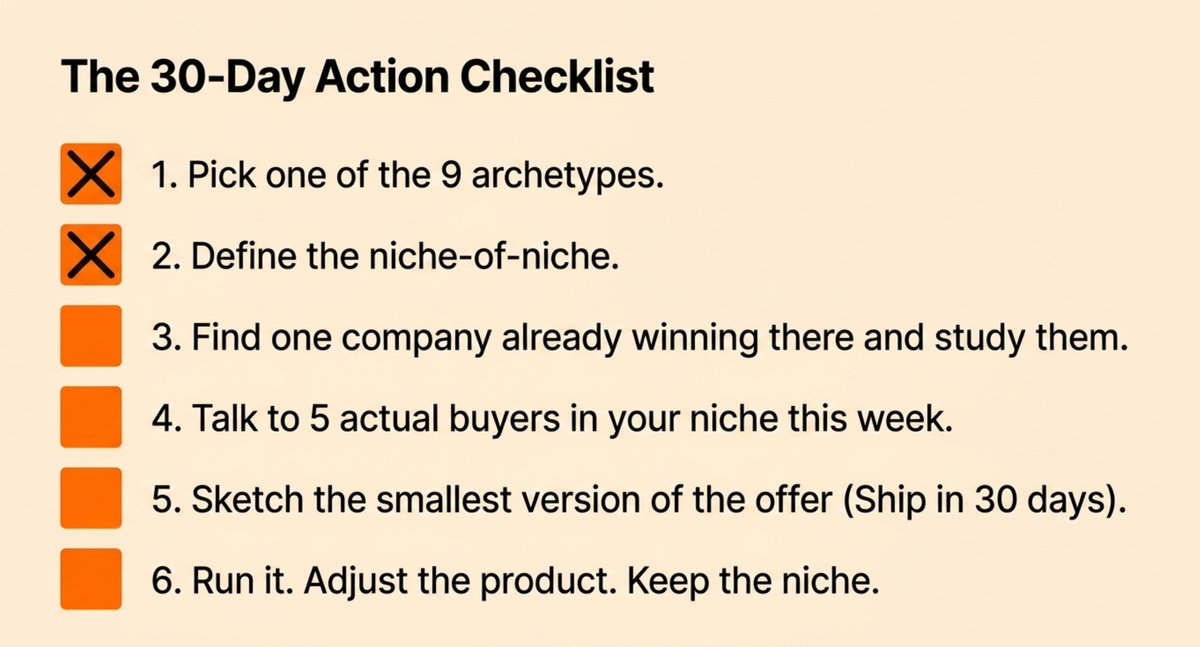
- Pick one of the 9 ideas above
- Write down the niche-of-niche (not "founders," try "fintech founders in Germany")
- Find one company already winning in that space and study them
- Talk to 5 buyers in your niche this week
- Sketch the smallest version of the offer you could ship in 30 days
- Run it. Adjust the product. Keep the niche.
Final Thoughts

The episode is full of specific numbers because specific numbers separate a hunch from an opportunity.
60 million people with one condition is a market. "People who care about their health" is a category.
13,898 dads in one Discord is a community. "Gamers" is a demographic.
$100 million for a business show is a comp. "Media is changing" is a tweet.
Pick the number. Pick the niche. Build the thing.
> "You want to pick a niche that you love a lot, that you have some unfair advantage in, and that you believe have some disposable income." - Greg
Related articles

How we scaled Cal AI to $50M ARR with influencers
PLUS links to a bunch more articles and threads I've written on this subject so you can run this same playbook to scale your own consumer app.
How to Start a 6 Figure Faceless YouTube Channel (Full Breakdown)
I've helped over 400 people start profitable faceless youtube channels. i've ran over 50 channels myself. Generated over $4 MILLION by age 25. Worked with youtubers that have 10 million+ subscribers,…
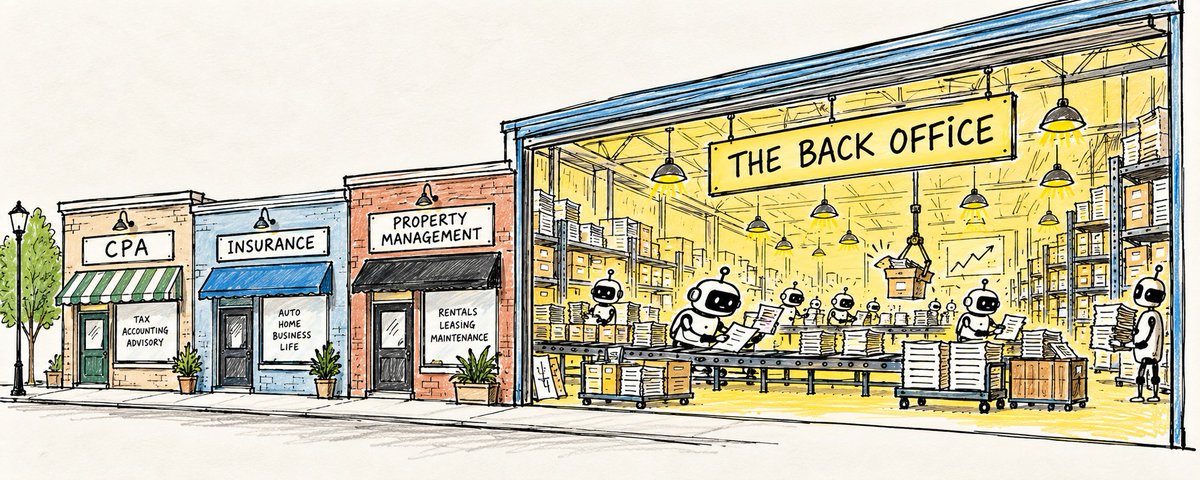
$5T opportunity: AI Roll Ups
You are a sourcing analyst for a holding company buying [industry] firms in [region]. Using the attached list of licensed firms, identify businesses that likely match these criteria: 5 to 50 employee…