A Reels blocker hit $90k mrr with 70 videos (and why your app will never do that)

One Instagram account. 70 videos. $90k mrr in 7 months.
We have produced 22,504 videos across 62 campaigns, and most of those apps will never touch that number. the difference was never the content.
sociallite blocks reels and shorts and leaves the rest of Instagram alone. dms work. posts work. the feed you doomscroll disappears.
Launched on iOS in January, Android in March. last month: 300k downloads and $90k mrr on ios, 100k downloads and $20k mrr on android. Top 100 productivity in 59 countries.

for the first 7 months, the entire content operation was one Instagram account. 70 videos, 27.8m views, 68k followers.
two videos did most of it.
on April 8 a reel opened with a 15-second countdown and the line "this video is only 15 seconds (and will change your life)". The 15 seconds were spent showing Instagram with the reels tab gone. 14m views, 63k shares, 40k bookmarks.
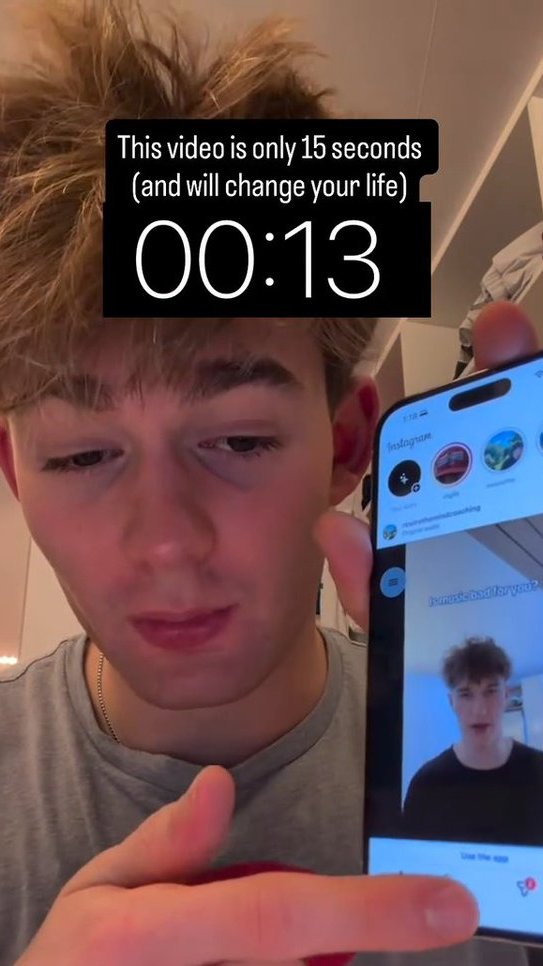
on July 17 another one hit 7m views. the hook was "delete reels from instagram", shouted into the camera, then a cut to the app.
that is the whole strategy. one account, one idea, two breakouts.
what actually happened there
read the hooks again.
"delete reels from instagram" is not a marketing message wrapped around a product. it is the product, said out loud. the demo and the hook are the same 4 seconds of video.
nobody had to be convinced of the value. you either want your reels tab gone or you do not, and you know which one you are before the video ends.
that is not a content advantage. that is a product that arrives pre-explained.
Have you heard about demo debt?
demo debt is the distance between what your product does and what a stranger understands from 15 seconds of screen recording.
every app carries some. you pay it down in one of two currencies: product design, or video volume.
sociallite carries almost none, so it paid almost nothing. 70 videos from one account.
the apps we run 2,000 video campaigns for are not worse products. they are products whose value shows up on day 9 of use, and no amount of creator talent compresses day 9 into 3 seconds. so you buy your way across the gap with volume, and volume is the interest payment.
There is an app called Zenit, a wellness and habits app, live for about 5 months.
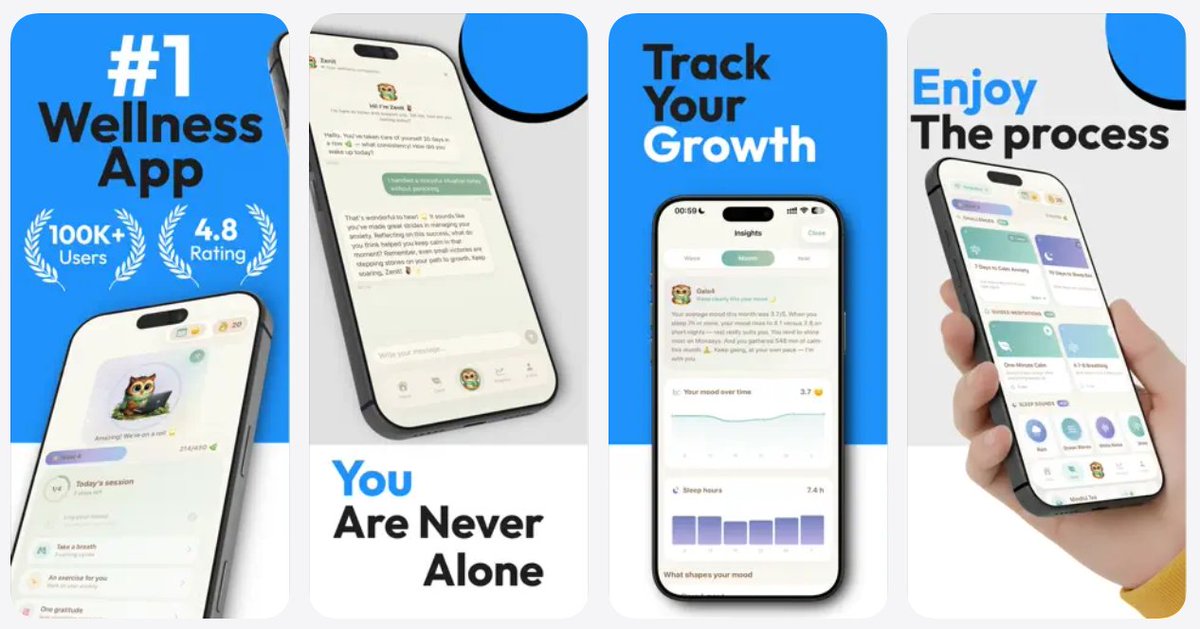
it is running slideshow accounts built on relationship drama. a woman crying under the Eiffel Tower, "he proposed in Paris last night. this morning his mom sent me this". posts landing between 250k and 620k views.
the app is not in any of it. it shows up at the end, as a fake iPhone notification: "your heart's been racing, I'm here whenever you need me".

620k views on a single post. still under 5k downloads.

that is what maximum demo debt looks like. the views are real, and they are aimed at the story, not the app. the notification at the end is a sticker on someone else's video.
two that pay it down properly
Coursicle (An all-in-one academic planner) put its schedule planner inside the exact moment a student needs one. "me looking at the schedule i set up when i felt like a prodigy". 1.1m views on Instagram, 964k on TikTok, and the planner is on screen while the joke lands.
Pingo AI went further and made the product the joke. the ai tutor voice reads a tongue twister back to the user, and the tutor is the app. 6.2m views on a format the same creator had already run several times.

neither of those is a clever caption. in both, the thing being sold is the thing being watched.
our own numbers say the same
From our tracked export: an interview prep app we ran did 47.6m views off 726 videos with 2 creators. 65,569 views per video.
A planner app in the same book did 1,960 videos for 7.5m views. 3,866 views per video.
17x, same agency, same process, same year. The interview app is a screen recording of a mock interview, which is the product. The planner is a planner.
this is not an argument against volume, and i am not going to pretend it is a controlled test. I have outcomes, not experiments, and products differ in 40 ways besides how well they demo.
volume is still how you find a format when you do not have one. 43 of our 62 campaigns never put a single video in the top 100, and the ones that broke through mostly did it by searching.
Sociallite is proof of the ceiling, not proof that volume is dumb. On August 27 a creator outside the brand account posted the same idea and hit 200k views in days. they spent 7 months proving the hook on one page, and now they are handing it to other people. That is the correct order.
what I am arguing is narrower: measure the debt before you finance it.
If your product needs a paragraph, you are not buying 2,000 videos to grow. you are buying them to explain, and explaining at scale is the most expensive thing in this business.
Related articles

I Made $13,000 On My First Mobile App. Here is everything I learned
A lot of people think you need months of coding, a huge team, or venture capital to make money with apps.

how to speedrun your consumer app to $1M+ with organic UGC
i've added $8,500,000+ ARR added to client topline revenue through end-to-end organic UGC marketing.

The ULTIMATE Organic Marketing Guide For App Founders
I’m going into calorie deficit, fat loss, high protein meals, gym meals, restaurant calories, what I eat in a day, meal prep, macro tracking, cutting, bulking, low calorie snacks and whatever else st…