How to Build a Google Ads Machine That Generates $435K/Month for Your Brand

🔍 The Starting Point
When we onboarded this brand, their Google Ads account had no active campaigns and zero ad infrastructure in place. Our mission was clear:
🎯 Achieve a 2x ROAS to unlock unlimited budget for aggressive scaling.
In May, with just initial testing and structure setup, the account generated:
- Revenue: $721.73
- Ad Spend: $337.35
- ROAS: 2.14x
- Conversions: 11📷

✈️ Scaling to $435K/month: Month-by-Month Performance Breakdown

Total Revenue (6 months): $1,218,435.90
Total Ad Spend (6 months): $515,895.46
Blended ROAS: 2.36x

🔧 Strategy & Execution
✅ Phase 1: Foundation Setup (May - Early June)
- We manually updated and standardized Product Types within the Google Merchant Center feed, assigning consistent product type values to products belonging to the same category.
While this was a time-intensive process, it served as a critical investment for long-term efficiency. With clearly defined product types in place, we unlocked the ability to:
- Filter and isolate product categories with precision
- Easily launch category-specific campaigns
Enable more structured testing and scaling based on real-time category performance

This groundwork now allows us to seamlessly roll out dedicated campaigns (e.g. Performance Max or Shopping) for any winning category without needing further manual sorting, setting the stage for faster execution and higher relevance.
- Created a full Google Ads structure from scratch
- Launched Performance Max Feed-only + Standard Shopping campaigns
- Ensured Google Merchant Center was clean, synced, and optimized
⚡️ Phase 2: Campaign & Creative Diversification
- Launched search campaigns with high-intent converting keywords
- Built custom manual product feeds using competitor-style keywords in titles/descriptions
- Introduced Performance Max Full Build with asset groups segmented by:
- Product category
- Audience signal
- Funnel stage (TOF/BOF)

- Added fresh creatives and headlines inspired by product pages and social proof elements, which helped us achieve a strong 2% CTR in a highly competitive market during the initial phase📷

🌍 Phase 3: Scale with Structure
After running broad catch-all Performance Max (Feed-only) and Standard Shopping campaigns for the first few weeks, we gathered valuable performance data that revealed which product categories were delivering the highest ROAS, lowest CPA, and strongest CVR.
Armed with this insight, we developed a structured approach to double down on top-performing categories using segmentation tactics designed to enhance targeting and creative relevance. Here's how we executed this strategy:
🧠 Example: iPhone Cases Category
Once we identified “iPhone Cases” as a high-performing category, we implemented a refined structure:
- Dedicated PMax Feed-Only Campaign
- Focused exclusively on iPhone cases to isolate performance and budget.
- Two Tailored PMax Full Build Campaigns
- Women’s iPhone Cases: Featuring gender-specific creative assets and messaging to appeal to female shoppers.
- Men’s iPhone Cases: Designed with masculine-oriented visuals and language to resonate with the male audience.📷
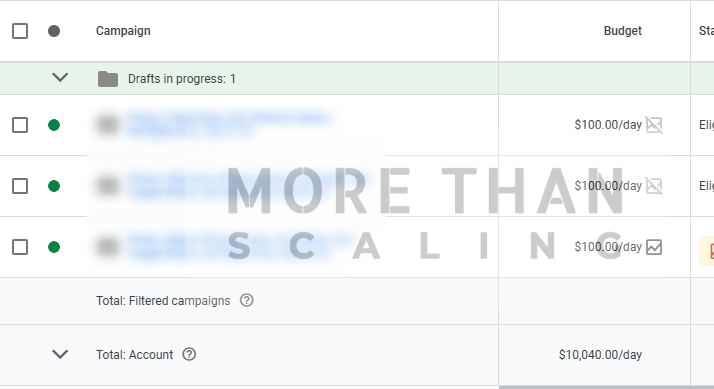
This approach allowed us to serve tailored creatives and audience signals, improving engagement and boosting conversion rates by aligning ad experiences with user intent and identity.
- Introduced non-brand search and DSA campaigns
- Segmented PMax asset groups by audience intent (e.g., In-Market, Remarketing)
- Enabled Demand Gen campaigns for YouTube, Discovery, and Display networks
📊 Data-Driven Optimization
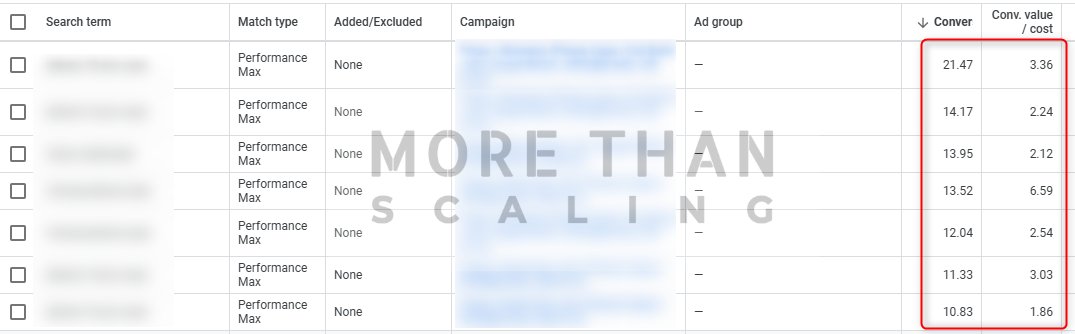
- Search Term Mining: We closely monitored the search terms report, identifying high-intent keywords that contributed significantly to conversions. These keywords were extracted, tested in manual search, and used to enhance shopping feed copy📷
Asset Group Optimization: Paused underperforming asset groups within PMax campaigns after evaluating ROAS and conversion volume📷

- Product Pruning: Paused products with 200+ clicks and no conversions to minimize wasted spend
- ROAS-Based Segmentation: Identified products with conversions but ROAS below 1x and moved them into a separate campaign with higher target ROAS for improved efficiency
- Audience Signal Refinement: Monitored performance of audience segments and added high-performing ones as observation audiences in search and shopping campaigns, then increased their bids by 20% to maximize return
These actions were taken iteratively throughout the scaling journey to drive continuous improvement and spend efficiency.
📈 Results & Outcomes
- 🌟 From zero to $435K/month revenue in just 6 months
- 📈 5,000+ monthly conversions by October 2025
- 📊 Maintained a ROAS above 2x throughout scaling
- ⚡️ Approved for unlimited ad budget by client post-June
🔹 Key Takeaways
- A strong foundation (feed + structure) is critical for scale
- Creative segmentation inside PMax unlocks performance
- Search term mining + custom feeds = shopping dominance
- ROAS goals can be hit without sacrificing scale if structure and testing is rigorous
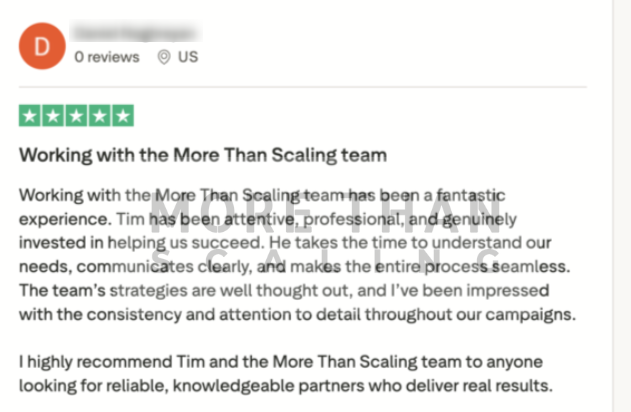
🏆 Testimonial from The Client
If you want to work with us you can get in contact here:
https://calendly.com/d/cqq7-nw9-jhm?el=1m_case_study&htrafficsource=twitter
Related articles

the new way to blitzscale google ads (at 21x ROAS)
i'm watching brands spend $10k, $20k, $50k/month on google ads and send every single click to a product page.
How to Start a 6 Figure Faceless YouTube Channel (Full Breakdown)
I've helped over 400 people start profitable faceless youtube channels. i've ran over 50 channels myself. Generated over $4 MILLION by age 25. Worked with youtubers that have 10 million+ subscribers,…

How to Build a Faceless YouTube Affiliate Business From $0 - $40k in 2026
How to make money on your faceless youtube channel with affiliate before ever getting monetized