How to Get Started When You Feel Lost

A lot of people want to be successful
They want to make money, have freedom, build something, become really good at a skill, and create a life they're proud of
But there's a problem: they have no idea where to start
They don't know what to learn, which skill to pick, what career to pursue, or what they should be doing right now
So instead of taking action, they keep looking for answers
They consume more information, save more videos, read more books, think about their options again, and wait for the moment when everything finally becomes clear. But that moment usually never comes
If you're lost right now, same as most people, this article is for you
It's a simple path to follow when you don't know what to learn, what skill to build, or where to start
You don't need a perfect plan. You just need a direction, and then you need to start moving
So let's get into it:
1. Pick a direction
One of the biggest mistakes you can make is thinking you need to know exactly where you're going before you start. But you don't have to know that
You just need a rough direction to guide your next few decisions

Ask yourself:
- what kind of life do I want?
- what do I want to be good at?
- what problems would I like to solve?
- what kind of work would I actually enjoy doing?
- what skills could help me get there?
You don't need perfect answers. You're just pointing yourself somewhere to start
Choose a direction that seems interesting, useful and worth exploring, and know you can always change it later
You usually get clarity by doing things and seeing what happens, rather than thinking about every possible future
As Walt Disney once said, "the way to get started is to quit talking and begin doing"
2. Choose one valuable skill
Once you have a direction, pick one skill to develop
This is where a lot of people go wrong
They try to learn copywriting, coding, design, marketing, sales, AI, investing and five other things at once, and six months later they know a little about everything but aren't good at any of it
When Bill Gates and Warren Buffett were once asked, separately, for the single biggest reason behind their success, they gave the same one word answer, "focus"
So pick just ONE
A good skill to pick usually has three things:
- people actually value it
- you can start practicing it on your own, without needing a job or client first
- getting better at it can lead to opportunities
Some examples:
- sales
- design
- video editing
- marketing
- research
- data analysis
- AI automation
You don't need the "perfect" skill. Just focus on a good one and get really good at it. That's a much easier goal than searching for the perfect one
Getting great at one thing means saying no to everything else. As Steve Jobs said, "focusing is about saying no"
3. Learn just enough to start doing
Learning feels productive because you're always taking in new information
But information alone doesn't make you good. At some point, you have to use what you've learned
- if you're learning writing - write
- if you're learning design - design
- if you're learning programming - build
- if you're learning sales - sell
Don't spend six months preparing to start. Learn the fundamentals, find examples of good work, then start practicing
The process is simple:
- learn something
- try it
- see what went wrong
- learn what you were missing
- try again
James Dyson ran exactly this loop for years. He built 5,126 failed prototypes of his vacuum before the 5,127th one finally worked
This is better than endlessly collecting courses, books, videos and notes
Your goal isn't to know everything, it's to actually be able to do the work
4. Create proof
Once you start practicing, create things that demonstrate the skill
This matters because knowledge is hard for other people to judge, but proof is easy
- if you want to be a designer, post your designs
- if you want to be a writer, publish your writing
- if you want to be a developer, put your projects online
- if you want to be a marketer, run experiments and share what you learn
You can create your own proof before anyone hires you
Imagine you want to become a copywriter. Instead of saying "I'm learning copywriting," you could rewrite five landing pages, explain why you changed them, and publish the work. Now you have something people can actually judge, which puts you in a very different position
The work itself starts teaching you too. You find out what you're good at, what you enjoy, what you're bad at, and what you need to learn next
5. Use feedback to choose your next step
Once you start putting real work out, you stop guessing what to do next
The work starts showing you
Every time you share something, you get a response:
- a post gets saved or ignored
- someone tells you it helped them, or you hear nothing back
- someone reaches out because they want you to do that type of work for them
- one type of work keeps getting attention while another falls flat
That's not your opinion of yourself. It's what actually happened when your work met the real world, and it's often more useful than any plan you could make in your head
For example, you post ten designs, and the two that get the most attention are both logos. Then someone reaches out asking if you can design a logo for their business
That's the world giving you a signal about what people respond to. Use it
Do more of what's working, drop what isn't, and pay attention to what people keep coming to you for
You still decide where you're going. You're just making those decisions with real information now instead of guessing in the dark
6. Build systems that make it easier to take action
Motivation is unreliable
As the book Atomic Habits says, "you do not rise to the level of your goals, you fall to the level of your systems"
If your plan depends on feeling inspired every morning, you'll have a hard time
Make the behavior clear and repeatable
Decide when you'll learn, when you'll practice, what you'll work on, and what counts as finished
For example:
- learn for 60 minutes
- practice for 90 minutes
- publish one piece of work
- review what worked
- repeat tomorrow
You can make this stronger with simple if-then rules:
- if it's 9am, I start learning
- if I finish the lesson, I practice it right away
- if I get stuck, I write down the exact problem before looking for the answer
The less you have to think about starting, the easier it is to keep going
7. Stay with something long enough to get good
This may be the hardest part
People keep starting over. They start learning something, then three weeks later they see someone making money doing something else, so they switch. Then they see another opportunity and switch again
Eventually they have five unfinished skills and aren't really good at any of them
Give things enough time to work
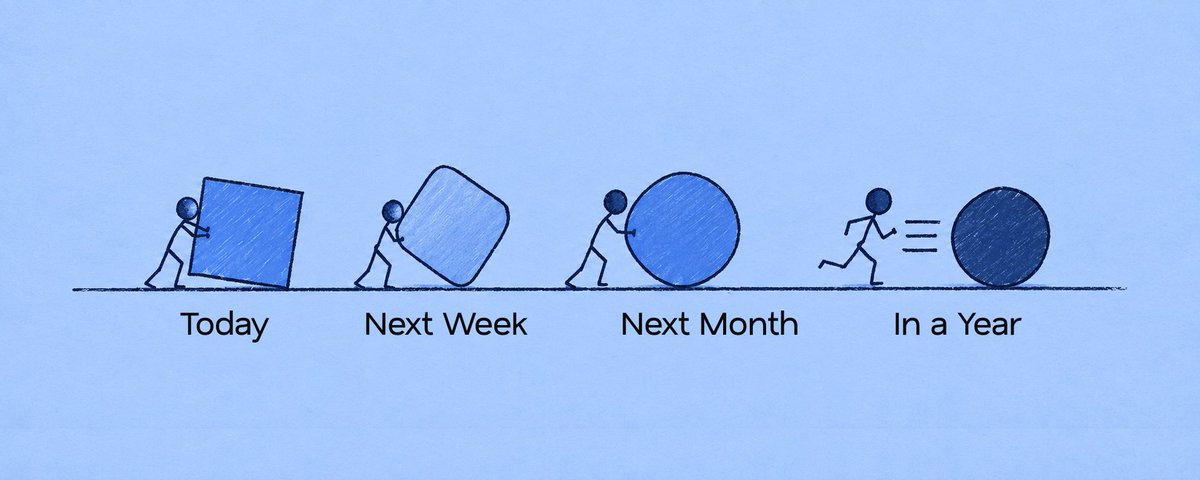
You don't need to commit to one skill forever, but you should commit long enough to get past the beginner stage, because the valuable part comes later
Once you understand the basics, you get better at the skill. You start seeing things you didn't notice before, solving harder problems and figuring out what works for you
That's when opportunities become easier to notice
8. Let opportunities change the plan
Your first plan doesn't have to last. It may need to change
YouTube didn't start as YouTube. It launched as a dating site called "Tune In Hook Up," where people uploaded videos to describe their ideal match. Almost nobody used it that way, so the founders let people upload any kind of video, and it became one of the biggest platforms in the world
Maybe you start learning design to freelance, then discover you enjoy building brands more than making single graphics. Maybe you start writing and find out you love research. Maybe you learn programming for a job and end up wanting to build your own product
That's progress
The original plan gave you somewhere to start, and experience gave you better information, so now you can make a better one
This is why action matters so much when you're lost. Every real attempt teaches you something that thinking alone can't.
That's it, all 8 steps done
Put them together, and it's really one simple loop:
- choose a direction
- pick one valuable skill
- learn the fundamentals
- practice by doing real work
- create proof
- get feedback
- adjust your direction
- repeat
Keep going, and things start to build. You begin with no idea what to do, and slowly you have real skills. Then proof, then experience, then relationships and opportunities. Eventually you have enough to make bigger decisions, and the path gets clearer because you've actually walked it
You don't need to see the entire road before taking the first step, you just need to take enough steps to see what's ahead
So if you're sitting there thinking "I have no idea where to start," start with something useful
Learn it, practice it, build something, and share it
See what happens, then take the next step
You can figure out the rest along the way
Related articles

How I Make $20k/Month With Pixar Animations (and how you can too)
Every time I've made the most money in my life it came down to right time, right skill. AI Animations are exactly this to me right now
How to launch a one-person product (without destroying your life)
Over the last 5 years, I’ve helped launch products that went on to make multiple 7 figures in revenue per year.

the whop partner business model explained in 5 minutes...
every online business model is a trade between 3 things.