How to Make $300K with AI avatars in 90 days

I’ve made more than $300K selling digital products through YouTube and managing AI avatars.
This is exactly how you can do the same…
I – The honest math
$300K is the ceiling case, not the average case. Here’s what the three tiers take. These are planning assumptions, not promises.
Tier 1: $30K. About 10,000 email subscribers earning ~$3 each during Q4. Or 640 sales of a $47 product. A new channel can get here with consistent work.
Tier 2: $100K. About 30,000 subscribers at ~$3.30 each. Or 2,100 sales at $47. This takes a channel that gets traction early, plus a strong Black Friday.
Tier 3: $300K. A stacked offer and roughly 100K people in your world:
- 3,000 front-end buyers at $37 = $111,000
- 35% take a $17 order bump = ~$17,850
- 15% take a $97 upsell = ~$43,650
- 300 buy a $297 flagship = ~$89,100
- Total: ~$261,600, plus membership and a Q1 tail
At 3% conversion, 3,000 buyers means about 100K people entering your funnel. That’s a channel doing 300K to 1M+ views a month, or a channel that already has an audience, or paid traffic on top.
What this tells you:
- One $47 product won’t get you to $300K. A price ladder will.
- Volume of the right traffic decides everything.
- Start early. Black Friday is November 27, and everything before it is list building.
II – Why AI avatars work (and why most people use them wrong)
Faceless channels have one weakness: no one to trust. A stock-footage video with a robotic voice gets clicks but rarely sales.
A realistic AI avatar gives you:
- A host viewers recognize and come back to
- A face that builds parasocial trust, which is what sells products
- Scalable production without you filming
- A brand that isn’t tied to your real identity
The market moved fast. HeyGen crossed $200M ARR. Synthesia sits in the same stratosphere. Tools like Hedra, Kling, D-ID, and ElevenLabs for voice turned what used to require a studio, actor, and editor into a one-person system. Creators are shipping consistent presenters that never get tired, never cancel, and never break character.
Where people go wrong: they let the avatar talk for 10 minutes straight, use generic scripts, and post 3 identical videos a day. That’s the slop pattern. It looks fake, gets low retention, and gets flagged. YouTube tightened rules on mass-produced, repetitive AI content. Channels that treat the avatar as a cheap host while the real value lives in research, visuals, and original insight keep monetizing. Channels that spam the same template do not.
The winning formula: avatar as host + real value + real visuals + tight editing.
III – Pick the niche (health, food, laundry, household, fitness)
These niches work for the same reasons:
- Search-driven. People type problems into YouTube (“remove oil stain,” “high protein dinner,” “home workout no equipment”). Videos rank for years.
- Broad audience. Everyone eats, cleans, and wants to feel better.
- Easy product fit. Planners, systems, programs, and checklists are natural digital products.
- Q4 tailwinds: holiday cooking, hosting and deep cleaning, gift and buying mode, New Year resolutions starting in early December.
Don’t pick “fitness.” Pick a sub-niche with a specific buyer:
- Fitness: “30-minute home workouts for busy moms,” “strength training after 40”
- Food: “high-protein meal prep on a budget,” “15-minute family dinners”
- Household: “the 20-minute daily home reset,” “small apartment organization”
- Laundry: “stain removal and fabric care” (great for search)
- Health: “sleep routines,” “morning routines,” “habit systems.” Think routines, not medical treatment.
The 4-question niche test:
- Can I make 50 video ideas in 10 minutes?
- Do people already pay for a product here? (Search Etsy, Gumroad, Amazon.)
- Is there one clear result I can promise (“meal prep in 2 hours”)?
- Can I build the product in a weekend?
If any answer is no, pick another sub-niche.
IV – Build the avatar (the pipeline)
Tools change monthly, so test 2–3 on your own script before you pay for a year. Names people commonly use: HeyGen, Synthesia, Hedra, Kling, D-ID, plus ElevenLabs for voice. Whichever you pick, the pipeline is the same.
Step 1: Design the character. Decide age, style, clothes, and setting. Make it match your audience: a friendly 30-something in a bright kitchen for a food channel, a fit coach in a clean gym for fitness. Generate a reference sheet (front, side, and a few expressions) so the face stays consistent across videos.
Step 2: Lock the voice. Pick or clone one voice and use it for every video. Consistency builds recognition. Write for the ear: short sentences, contractions, pauses.
Step 3: Script for speech, not for reading. Read your script out loud. If you stumble, the avatar will sound stiff.
Step 4: Generate in short clips. Generate 10–20 second segments instead of one long take. It’s more stable, and you can regenerate a bad line without redoing everything.
Step 5: Don’t keep the avatar on screen 100% of the time. This is the biggest realism trick. Cut to b-roll, screen recordings, product shots, text overlays, or diagrams every 3–6 seconds. The avatar delivers the hook, transitions, and key points, while visuals carry the rest. It hides small glitches and keeps retention high.
Step 6: Finish like a real creator. Captions, sound effects, light background music, punchy cuts. Editing is what separates “AI slop” from “professional.”
Step 7: Use YouTube’s disclosure tool. When content is realistic and synthetic, turn on the AI disclosure in YouTube Studio. It protects you and it’s the standing rule.
V – The video system
You need two engines running at once.
Engine 1: Long-form search videos (8–12 min). These are your evergreen traffic and your trust builders.
Engine 2: Shorts (20–45 sec). These grow your channel and feed the long-form.
A weekly rhythm you can actually keep:
- 2 long-form videos
- 5–7 Shorts cut from those long-forms
- 1 community post or poll
Quality over quantity. Don’t publish near-identical videos in bulk.
The long-form structure:
- Hook (0–15 sec). State the problem and the payoff: “If you’re wasting Sunday on meal prep, this 2-hour system fixes it. Here’s the exact plan.”
- Proof/credibility (15–30 sec). A specific reason to trust: results, method, or a demo.
- Value block 1, 2, 3. Real steps with real visuals.
- The soft CTA at the value peak (around 60–70%). “I put the full 4-week plan with grocery lists in a free download. Link’s in the description.”
- Close with a next step. Point to a related video to keep them on the channel.
Title formulas that work in these niches:
- “How to [result] in [short time] (without [pain])”
- “[Number] [problem] mistakes you’re making with [thing]”
- “The [time]-minute [routine/system] that [result]”
- “I tried [popular method] so you don’t have to”
Examples: “Get red wine out of any fabric (3 methods that work),” “High-protein meal prep for the week in 90 minutes,” “The 20-minute evening reset that keeps your house clean.”
Thumbnail rule: one clear subject, big text (3–4 words max), high contrast. Test 2 versions on your first ten videos.
Comment strategy: reply to every comment in the first 2 hours. Pin your own comment with the free download link. Ask a question (“What’s your hardest meal to prep?”) because the replies tell you what to sell.
VI – The product (this is where the money is)
Rules for a product that sells:
- It solves one specific problem.
- It promises one clear result.
- It’s easy to consume (PDF, Notion, or a short video course).
- You can build it in 48–72 hours.
Product ideas by niche:
- Food: “4-Week High-Protein Meal Prep System,” with recipes, grocery lists, and a batch-cooking schedule
- Fitness: “12-Week Home Strength Plan,” a training PDF plus tracker plus form videos
- Household: “The 20-Minute Daily Home Reset,” with checklists, a weekly schedule, and printable planners
- Laundry: “The Stain and Fabric Care Bible,” a quick-reference for hundreds of stain and fabric combos
- Health/lifestyle: “30-Day Morning Routine Reset,” a habit tracker plus daily prompts
The price ladder:
- Free lead magnet: a 1–2 page checklist or mini plan (this builds your list)
- Front-end: $27–$47. The core product.
- Order bump: $12–$19. A small add-on at checkout (extra recipes, printable pack).
- Upsell: $67–$97. The advanced version or bonus module.
- Flagship: $197–$297. The full system with coaching, templates, or a community.
- Optional recurring: $9–$19/month. A membership for new plans and updates.
Build it fast:
- Outline the transformation: “Day 1 → Day 30, what changes?”
- Fill each section with your best answers to the questions your comments and searches show.
- Use AI to draft, then add real, tested details. Don’t just paste AI output. Buyers can tell.
- Design it clean in Canva or Notion.
- Host it on Stan Store, Gumroad, or Shopify.
Positioning warning: sell systems, routines, and plans, not medical treatment. In health and fitness, avoid promising to cure, treat, or fix conditions.
VII – The funnel
Video → link → lead magnet → email → offer.
- The link. Description link plus pinned comment. Don’t send people straight to a $47 sales page cold. Send them to a free lead magnet.
- The lead magnet. Specific beats generic. “The 7-Day High-Protein Meal Prep Plan (with grocery list)” beats “Free Health Guide.” Match each lead magnet to the video topic it’s promoted under.
- The landing page. One headline, three bullets, one email field. Nothing else.
- The email sequence. This is your real sales engine. Here’s a 7-email skeleton:Email 1 (instant): Deliver the freebie. Subject: “Your [thing] is inside.” Give them the download and one quick win to try today. Email 2 (day 1): Story. Why you built this system. Relatable problem, then the turning point. Email 3 (day 2): Value. Teach one useful thing. Subject: “The mistake that ruins [result].” Email 4 (day 3): Soft pitch. Introduce the product as the complete version of what they just got. Email 5 (day 5): Proof. Results, screenshots, or a walkthrough of what’s inside. Email 6 (day 6): Objection handling. “Not sure it’ll work for you? Here’s who it’s for and who it’s not for.” Email 7 (day 7): Deadline. A real reason to buy now (launch price, bonus, or bundle ending).
- The sales page structure:Headline with the result and timeframe The problem (in their words, pulled from your comments) The solution and what’s inside Who it’s for and who it’s not for Proof (results, testimonials only if real) Price and what they get Guarantee (a clear refund policy) FAQ Final CTA
Planning assumptions (yours will differ, so measure them):
- Video viewers who click your link: 0.5–1.5%
- Landing page opt-in with a specific lead magnet: 25–45%
- Subscribers who buy a low-ticket product during a launch: 1–3%
- Sales page conversion on warm email traffic: 3–8%
VIII – The Q4 calendar
Weeks 1–2 (now through mid-October): Build.
- Lock the sub-niche and avatar
- Build the lead magnet and the front-end product
- Set up the landing page, email tool, and checkout
- Publish your first 4–6 videos
Weeks 3–6 (mid-October to early November): Publish and grow the list.
- 2 long-form and 5+ Shorts per week
- Double down on whichever topics get the best retention and clicks
- Get 300–500 subscribers early to test your emails
- Write your Black Friday emails now
Weeks 7–10 (early November to early December): Launch.
- Warm the list with value emails before the offer
- Black Friday (Nov 27) to Cyber Monday (Nov 30): launch the bundle or discount, 5–7 emails over the window, plus a video announcing it
- Add the order bump and upsell for the sale
Weeks 11–14 (December to early January): Extend and close.
- Gift angle for the holidays
- The New Year offer: “Start January with a plan”
- A last-chance sequence before the year ends
- Email everyone who didn’t buy with a different angle
IX – The dashboard (check weekly)
- Click-through rate: if it’s low, fix thumbnails and titles
- Average view duration: if it’s low, fix hooks and cut faster
- Link clicks per 1,000 views: if it’s low, fix your CTA placement and wording
- Opt-in rate: if it’s low, fix the lead magnet or the landing page
- Email open rate: if it’s low, fix subject lines
- Email → sale: if it’s low, fix the offer, the proof, or the price
Change one variable at a time. Fix the earliest broken step first.
X – Guardrails (this keeps you in business)
- Don’t build income on AdSense alone. YouTube tightened its rules on mass-produced and repetitive AI content. Products plus email mean a demonetization doesn’t kill you.
- Don’t post templated, near-identical videos. Every video needs its own angle and real information.
- Disclose realistic AI content using YouTube’s toggle.
- Don’t pose as a real doctor, nutritionist, or expert. Your avatar is a host, not a licensed professional.
- No medical claims. No promises to cure, treat, or reverse anything.
- Never fake testimonials or income screenshots. Use real results or none at all.
- Don’t clone a real person’s face or voice without their permission.
- Give refunds cleanly. Chargebacks kill payment accounts.
The bottom line
The people who make real money with this don’t have the best avatar. They have:
- A specific sub-niche
- Videos that actually help
- A product that solves one problem
- An email list they treat like an asset
- The discipline to launch on Black Friday instead of “getting ready”
$300K is possible, but only when the traffic, the offer, and the timing all line up. Start with the first $10K, then scale what works.
Im teaching you all this inside AI Avatar Academy for 50% OFF for the next 16 hours then price will increase.
❯❯❯❯❯ CLAIM OFFER
❯❯❯❯❯CLAIM OFFER
❯❯❯❯❯ CLAIM OFFER


Related articles

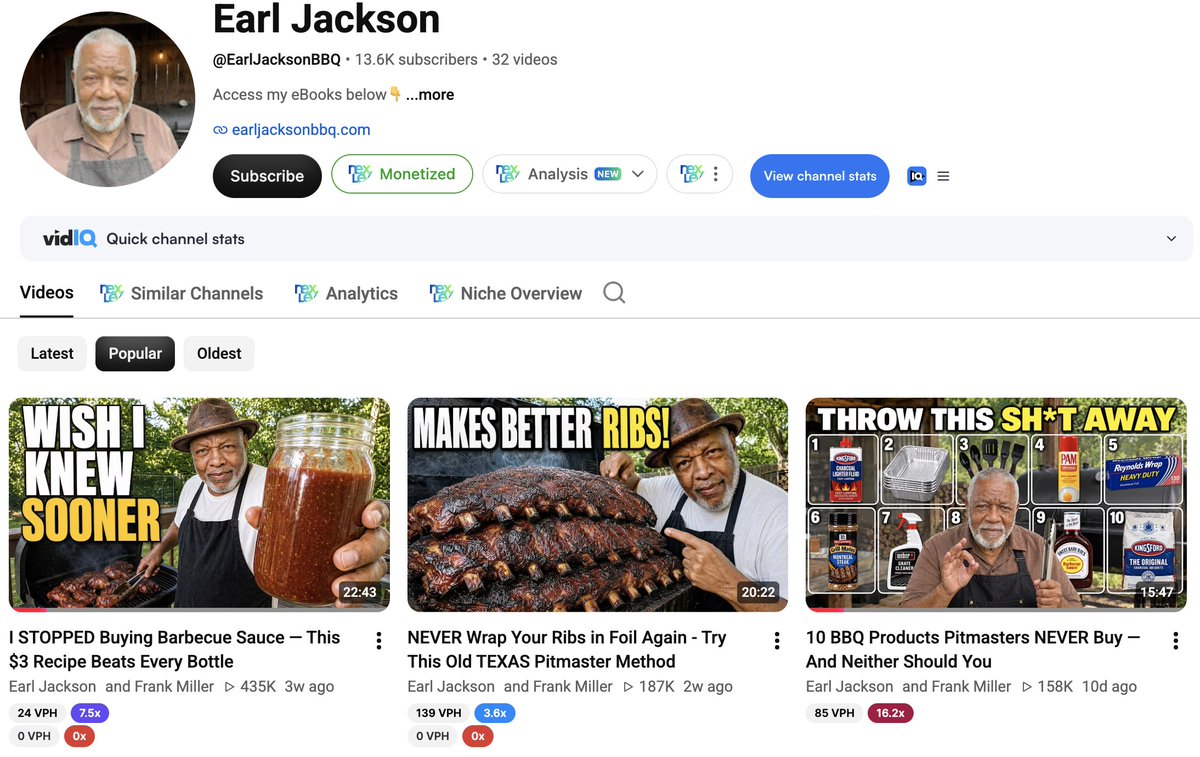
How we scaled Cal AI to $50M ARR with influencers
PLUS links to a bunch more articles and threads I've written on this subject so you can run this same playbook to scale your own consumer app.
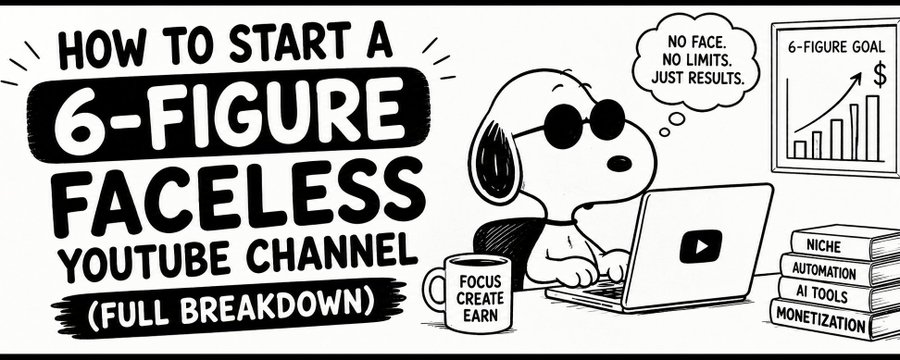
How to Start a 6 Figure Faceless YouTube Channel (Full Breakdown)
I've helped over 400 people start profitable faceless youtube channels. i've ran over 50 channels myself. Generated over $4 MILLION by age 25. Worked with youtubers that have 10 million+ subscribers,…
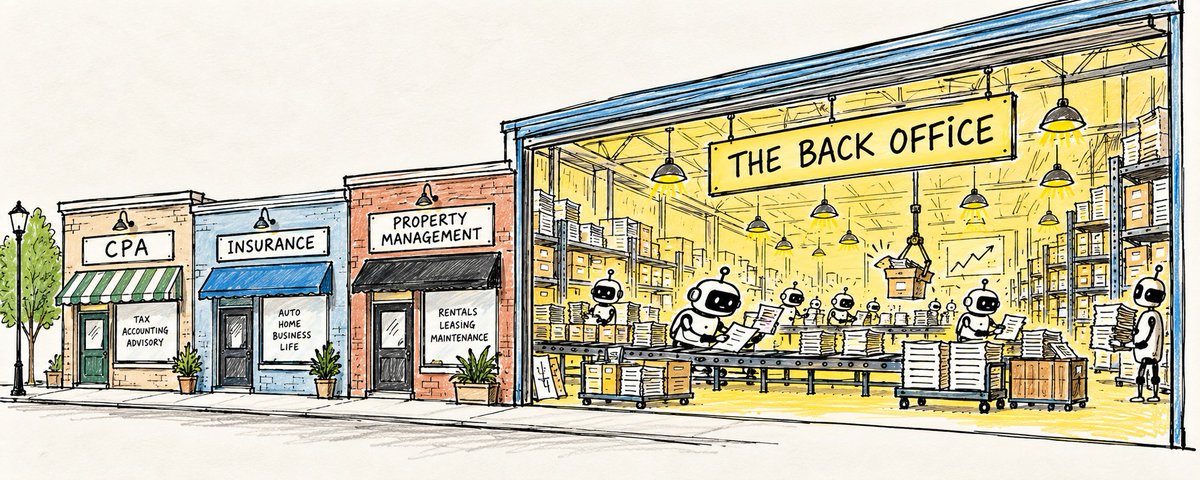
$5T opportunity: AI Roll Ups
You are a sourcing analyst for a holding company buying [industry] firms in [region]. Using the attached list of licensed firms, identify businesses that likely match these criteria: 5 to 50 employee…