How to Unrot Your Brain
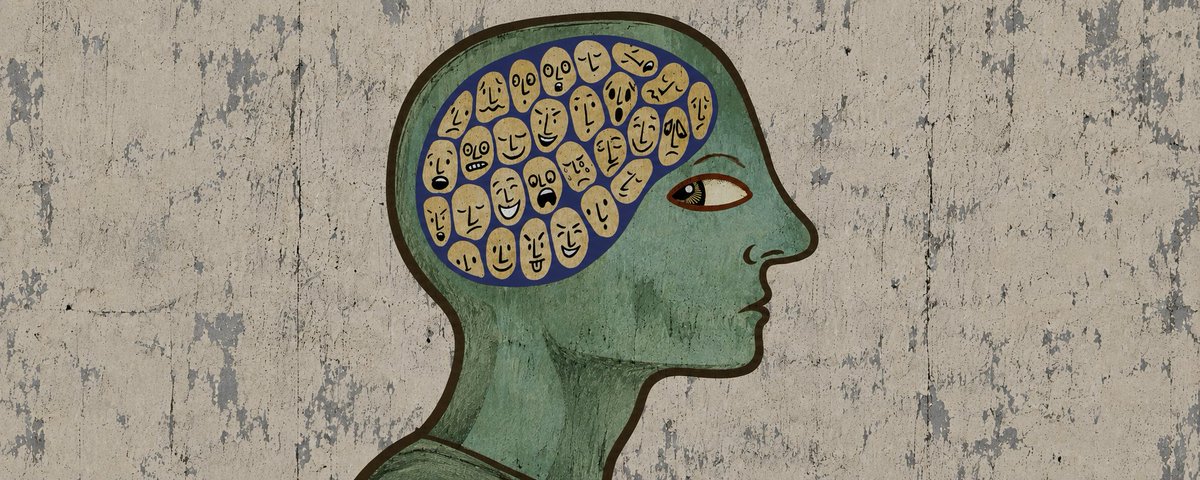
Picture this: you're eleven years old, and you've just found out octopuses have neurons in their arms, not just their heads. Which means an octopus arm can basically think for itself, react to something, solve a small problem, before the message even reaches the brain.
You'd tell everyone. You'd bring it up at dinner unprompted. You'd want to know what else has a secret brain hiding somewhere it shouldn't. You'd probably spend the next hour going down some completely unrelated rabbit hole about octopuses, the ocean, or whatever strange fact you stumbled across next.
Now picture the same fact showing up in your feed today. You'd scroll past it in under a second, onto the next thing, and forget it by lunch.
Maybe you'd think, "huh, that's interesting."
Then you'd scroll.
Same fact. Same brain, mostly. Completely different reaction.
Something in between eleven and now stopped letting things land.
it's not one habit, it's your whole nervous system
Everyone blames the phone, and the phone's part of it, but it's bigger than that. Your attention, your patience, your ability to sit with boredom, your memory, your willingness to do something slow and effortful, they're all downstream of the kind of stimulation you give your brain all day.
Think about what a normal day can look like.
You wake up and check your notifications. You scroll while eating breakfast. You watch short videos between classes or work. You open Instagram while waiting for something. You watch YouTube while eating. You check your phone while brushing your teeth. Then you lie in bed at night scrolling until you're tired enough to sleep.
None of these moments seems particularly harmful on its own.
The problem is the accumulation.

Your brain gets used to a world where something new, funny, shocking, useful, or interesting appears every few seconds. Then you sit down with a book and suddenly three pages feel exhausting. You try to study and your brain wants to check something. You go for a walk and feel like you should be listening to a podcast. You sit alone for five minutes and immediately reach for your phone.
The moment there isn't enough stimulation, your brain starts looking for more.
That's the part people miss.
Fixing the input can change a lot of what follows, but it takes more than swapping scrolling for reading. The rot isn't just cognitive. It's physical, social, and sensory too, and most people only ever attack the mental piece.
So you have to give your brain different things to experience again.
move your body without a screen in front of you
Walking, stretching, anything, but with nothing playing.
Go for a walk without music. Walk to the store without checking your phone every few minutes. Sit somewhere outside after your walk instead of immediately opening Instagram.
Movement without input does something scrolling can't: it gives your brain a task that's slow enough to think during.
You'll probably notice random thoughts showing up. Something you forgot. An idea for a project. A problem you've been avoiding. A conversation from three days ago that suddenly makes sense.
A lot of your best, clearest thoughts are going to show up here, not at your desk.
let your senses do something other than stare at a rectangle
Cook something and actually smell it. Sit outside and notice the temperature, sound, wind, and sunlight. Walk barefoot on grass. Feel the texture of something instead of looking at a video of it.
Basically, touch some grass.
Eat without watching something. Take a shower without playing a video. Sit outside and listen to what's actually around you.
You don't need to turn these things into some spiritual ritual. Just experience them without constantly adding another layer of stimulation.
Your senses have been narrowed down to a screen's worth of stimulation for so long that using the rest of them can feel almost foreign. That's exactly why it's worth doing.
The world itself is still interesting. You just have to start paying attention to it again.
have one real conversation a week that isn't texting
Not a group chat. Not sending memes back and forth. Not replying "real" to someone's story.
An actual conversation where you have to track what someone's saying in real time, remember what they said five minutes ago, notice their tone, think about your response, and stay present.
Have a deep conversation with a friend. Call a family member and actually talk instead of exchanging the usual "how are you?" "fine." Ask someone why they think the way they do. Talk about something you genuinely care about. Tell someone something you've been keeping to yourself.
You might notice how difficult it feels at first to stay completely present.
That's fine.
This is a rep for attention too. Most people just don't count it as one.
do something with your hands that can go wrong
Cooking without a recipe. Fixing something. Drawing. Building something. Gardening. Cleaning something properly. Trying to assemble something without immediately watching a tutorial.
Your brain needs friction.
Something with real stakes and real mistakes, not the frictionless world of infinite undo and infinite scroll.
When you're scrolling, everything is frictionless. If you don't like something, swipe. If you make a mistake, undo it. If you're bored, there's another video waiting.
Real life doesn't work like that.
You burn the food. You mess up the drawing. The shelf doesn't fit. The first attempt looks terrible.
Good.
You're giving your brain something it can't instantly escape from.
sit and do nothing, on purpose, before you're desperate enough to need it
Not as a last resort when you're overwhelmed. As a normal, boring part of your day.
Ten minutes. No phone. No music. No podcast. No YouTube. No "productive" activity disguised as relaxation.
Just sit there.
At first, you'll probably feel an almost physical urge to grab your phone.
That's the point.
You need boredom. A lot of it.
We've become so uncomfortable with boredom that the second there's nothing happening, we manufacture something.
Waiting for your food? Phone. Waiting for a friend? Phone. In an elevator? Phone. Sitting on your bed for two minutes? Phone.
Try leaving those moments empty.
Let your brain wander.
Boredom isn't wasted time. Sometimes it's the space where your brain finally gets to process everything you've been feeding it.
follow a thought all the way to the end without outsourcing it
Before you ask an app or a search bar, sit with the question a little longer than feels comfortable.
What do you think?
Try to answer before searching. Write something before asking AI to write it for you. Try solving the problem before looking up the answer. Form an opinion before reading ten other people's opinions.
You already know more than you think you do.
And almost every thought you have has been influenced by something you saw somewhere a video, a post, a friend, a teacher, an article.
That's not inherently bad. That's how humans learn.
But if every thought is immediately replaced by someone else's answer, eventually you stop noticing what you think.
Sit with your mind.
Open a blank page and write whatever comes to mind. It doesn't have to be smart. It doesn't have to be profound. It doesn't even have to make sense.
The point is to hear your own thoughts again.
get curious about something with zero payoff
Not a skill for your career. Not something you can monetize. Not something you're going to post about.
Something you'd only chase because you actually want to know.
Learn why the moon has phases. Read about ancient civilizations. Figure out how a camera actually works. Learn the history of a random city. Find out why some animals sleep standing up.
Follow the rabbit hole.
Don't turn it into a productivity project.
This is the part of your brain that atrophies first and comes back last: genuine curiosity without an immediate reward.
You don't need every interest to become useful.
Some things can just be interesting.
memorize something, just because
A poem. A route. A recipe. A phone number. A few lines from a book.
It doesn't matter.
We've outsourced so much memory that we barely notice it happening.
Need to remember something? Screenshot it.
Need directions? Maps.
Need a fact? Search it.
Need to write something? Ask AI.
Again, none of these tools are inherently bad. They're incredibly useful.
But your brain still needs practice holding things.
Try memorizing something and recalling it later without looking.
Rote memory is unfashionable, but it's also one of the simplest ways to prove to yourself that your brain can still hold onto something without a screenshot.
none of this fixes anything in one sitting
This isn't a one-week reset.
You won't spend three days without your phone and suddenly wake up with the attention span of an eleven-year-old.
It's more like physical therapy for something that's been sitting still for a long time.
The first few tries are going to feel bad and slow and a little pointless. You'll sit down to read and want your phone. You'll go for a walk and feel bored. You'll try to think and realize you don't even know what you're thinking about.
You'll probably fail and scroll anyway.
That feeling isn't proof it's not working.
It's proof you're finally noticing the problem.
You didn't lose whatever version of you used to get completely absorbed in things.
The kid who could spend three hours learning about dinosaurs, drawing random things, building something stupid, reading about space, or asking "why?" twenty times in a row is still in there.
You just trained your brain to expect something new every few seconds.
And now you have to train it back.
Not perfectly. Not all at once.
Just by giving it more moments where nothing happens, something takes effort, a thought has to finish, a conversation has to be followed, a question has to be explored, and boredom doesn't have to be escaped.
The goal isn't to go back to being eleven.
It's to become someone who can still let things land.
Related articles

How I Make $20k/Month With Pixar Animations (and how you can too)
Every time I've made the most money in my life it came down to right time, right skill. AI Animations are exactly this to me right now
How to launch a one-person product (without destroying your life)
Over the last 5 years, I’ve helped launch products that went on to make multiple 7 figures in revenue per year.

the whop partner business model explained in 5 minutes...
every online business model is a trade between 3 things.