How to win search in 2026 (Google, AI & everywhere else)
I've spent 10 years working in SEO.
And I think we're thinking about what's happening to search in completely the wrong way.
Everywhere I look it's:
- "Google is dying"
- "ChatGPT is replacing search"
- "SEO is dead"
- "You need a separate GEO strategy"
- "Everything has changed"
But I don't think that's what's happening.
My view is much simpler:
SEO itself hasn't changed as dramatically as people make out.
But everything around SEO has.
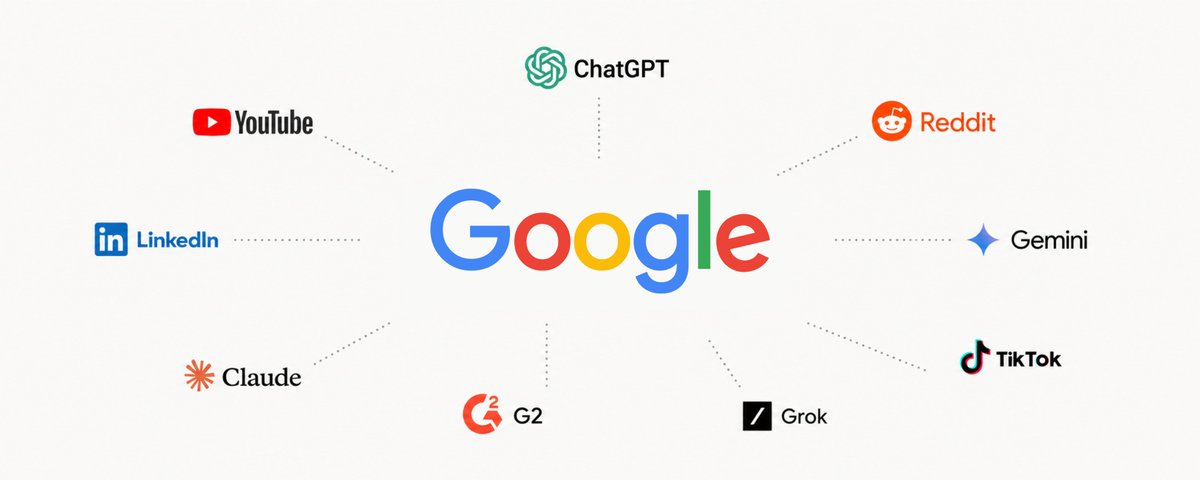
People haven't stopped searching, they've just started searching in more places.
- They Google something
- Then ask ChatGPT
- Then check Reddit
- Then watch a YouTube review
- Then see what people are saying on LinkedIn
- Then Google your brand
- Then buy
At the same time, another ‘audience’ is now sitting between your company and that buyer.
Machines.
Crawlers, retrieval systems, search engines and language models are constantly discovering information about your company, interpreting it and deciding whether you belong in the answer.
So the goal of organic marketing in 2026 isn't simply “rank higher on Google”, it's to become the company buyers find wherever they search.
And that requires a different organic growth playbook.
Here's exactly how I'd build it today:
Inside this article
- Why Google still matters more than people think
- Why search is fragmenting rather than dying
- The second audience most companies ignore
- Mapping your ENTIRE search market
- The 2 places you actually need to win
- How third-party sources influence Google and AI
- How I'd approach AI search visibility
- The 4-step organic growth system I'd build today
Google still matters (A LOT)
Let's start with something unfashionable:
Google is still by far the biggest search opportunity in the world.

The exact methodology matters here because ChatGPT obviously does much more than search.
But directionally, the point is pretty hard to miss.
Google is enormous.
So if your response to AI search is to abandon traditional SEO and move all your resources into ChatGPT optimisation, I think you're making a massive mistake.
Especially because Google itself is becoming an AI search engine.
AI Overviews are now appearing across a huge percentage of searches.
Google has AI Mode and owns Gemini.

That's around 29x larger than the major standalone AI search platforms combined.
Which is why I think the ‘Google to AI’ framing is wrong.
The actual transition looks more like traditional search to AI-assisted search.
And Google is sitting right in the middle.
Search isn't dying, it's fragmenting
This is the bigger shift.
Imagine you're looking for a CRM for a 50-person SaaS company.
- You might search Google for: "best CRM for SaaS"
- Then ask ChatGPT: "What CRM would you recommend for a 50-person SaaS company?"
- Then Google: "HubSpot vs Salesforce"
- Then watch: "Best CRM software 2026 walkthrough"
- Then search Reddit for real opinions
- Then notice a LinkedIn post from an operator you trust
- Then check G2
Same buyer, same underlying problem, but 7 completely different discovery environments.
Each interaction contributes to the eventual decision.
Historically, we'd call organic visibility “where do we rank on Google?”
This thinking is outdated.
The better definition is “how discoverable are we wherever buyers search?”
And again, Google remains a massive part of that.
But it now sits alongside:
- AI Overviews
- ChatGPT
- Gemini
- Claude
- YouTube
- Review sites
- Comparison content
- Industry publications
- Communities
This is why I don't think “AEO” or "GEO" should be treated as a completely separate marketing discipline sitting next to SEO.
It's one search market, but the market itself just expanded.
You now have 2 audiences
This might be the most important mental model in the entire article.
Historically, we optimised primarily around one audience: Humans. They search, compare, decide, and eventually buy.
But now there's another audience involved: Machines. They crawl, retrieve, understand, and recommend.
And when I say "machines", I'm using it to encompass all the systems sitting between your brand and the buyer. Googlebot, AI crawlers, search systems, retrieval mechanisms, language models, recommendation systems…
These systems are constantly discovering information about your company and trying to answer basic questions:
- What category are you in?
- Who are you for?
- What problems do you solve?
- What features do you have?
- How are you different?
- Are your claims supported?
- Do independent sources agree?
- Should you be included as a recommendation?
Your website therefore has to do 2 important jobs.
It needs to persuade humans.
And it needs to be incredibly easy for machines to understand.
But these AREN’T opposing goals.
Good content for humans looks a lot like good content for machines:
- Clear answers
- Explicit facts
- Strong structure
- Real examples
- Consistent terminology
- Evidence
- Differentiation
- Accessible information
The same high-quality online presence serves both audiences.
Most companies are defining their search market wrong
Here's how SEO research has traditionally worked:
- Put a few seed keywords into Ahrefs or Semrush
- Export hundreds or thousands of keywords
- Maybe group them into topics
- Add search volume
- Calculate the opportunity

Still useful, but it only captures one part of modern search behaviour.
The real search market is much bigger than this now.
I've called this the Total Addressable Search Market for a while, but my definition has expanded…
Total Addressable Search Market
Every commercially relevant search or question your company could realistically win or influence.
The words "commercially relevant" matter.
I'm not trying to generate the biggest possible keyword list. I don't care if we can find 100,000 vaguely relevant informational keywords.
I care about the searches where visibility could materially influence someone becoming a customer.
And in 2026, I'd map that market across 3 buckets:
1. Google
Things like:
- High-intent searches
- Category searches
- Comparisons
- Alternatives
- Problems
- Use cases
- AI Overview queries
2. AI search
Things like:
- Recommendations
- Product comparisons
- Category questions
- Problem-solving prompts
- Competitor questions
- Follow-up conversations
Across platforms like:
- ChatGPT
- Gemini
- Claude
- Perplexity
3. Influence
Third-party sources that influence the visibility of both.
Things like:
- YouTube
- Review sites
- Publications
- Directories
- Comparison sites
- Communities
Put all 3 together and you have something much more useful than a keyword spreadsheet.
You have a map of the entire search market.

The question I want every CMO to answer
Once you've mapped all of this, you’ll be able to ask a much more interesting question:
What percentage of our search market do we actually own?
Not “how many backlinks did we build this month?” or “how many blog posts did we publish?” or “how much organic traffic did we generate?”
Those are useful metrics, but they're not what you're actually competing for.
You're competing for visibility across your market.
We recently ran this analysis for a B2B SaaS company and found they appeared for just 24 of 2,280 commercially relevant topics.
Roughly 1% search coverage.

That's instantly actionable.
You know the market exists, that competitors are already capturing it, and you can identify exactly where the gaps are.
If you can move from owning 10% of your commercially relevant search market to 20%, then 30%, then 40%, you're increasing the number of opportunities buyers have to discover and consider you.
Now we have the metric a founder or CMO should actually care about.
There are 2 places to win
Once you've mapped the market, execution gets much simpler.
Some things you can control, and some you can’t.
1. What you own
- Website
- Content
- Technical SEO
- Commercial pages
- Documentation
2. What you influence
- YouTube
- Reviews
- Publications
- Directories
- Communities
Traditional SEO has historically been very good at the first half.
- Optimising your website
- Publishing content
- Earning backlinks
- Building landing pages
- Fixing technical issues
And all of that still matters, your website is the foundation.
But the website alone can no longer win the entire search market.
1. Start by winning what you own
The first problem I find on most websites is coverage.
They have:
- A homepage
- A few product pages
- A pricing page
- A blog full of informational articles
But then you map the actual commercial market and discover enormous gaps.

Buyers are searching for:
- Categories
- Comparisons
- Alternatives
- Use cases
- Reviews
- Specific problems
And the company has no page that actually addresses them.
The answer isn't to publish another 500 generic blog posts, it's to match the demand with the right page.
- If someone is searching for a category: Create a category page
- If they're comparing you with a competitor: Create a comparison page
- If they're searching around a use case: Create a use-case page
- If they're asking a specific question: Create the guide or documentation that properly answers it
Every type of demand needs the right page.
A. Start closest to revenue
I use a framework called the SEO Content Pyramid.

Most companies build it upside down.
They spend nearly all of their resources producing awareness content.
Things like:
- Definitions
- Educational guides
- Industry news
- Trends
- Ideas
Then barely touch the searches closest to a purchasing decision.
I recently analysed a new client’s website with more than 2,000 articles.
Over 93% were top-of-funnel.
They had:
- 2,200+ awareness articles
- 138 middle-funnel pieces
- Just 21 bottom-funnel pieces

That's crazy to me.
Because not every search has the same commercial value.
Someone searching "what is email marketing?"
Is in a very different stage from someone searching:
- "Best email marketing platform"
- "Klaviyo alternatives"
- "Klaviyo vs Mailchimp"
So I flip the traditional content funnel upside down.
Start as close to revenue as possible at the top of the pyramid.
Here’s an example:

B. Technical SEO still matters too
This is probably the least exciting section in the article.
But none of this works if Google and AI systems can't reliably access the information you're creating.
Your important pages still need to be:
- Crawlable
- Indexable
- Internally linked
- Properly rendered
- Structured logically
- Fast
- Consistent
We recently audited a website where:
- Only around one in five sitemap URLs were indexed
- They were accidentally serving placeholder Lorem Ipsum copy across hundreds of pages to crawlers
- Their regional homepages were taking 20+ seconds to load
- They were indexing perfectly in the US but barely indexing at all across several other markets

These aren't shiny "AEO hacks”, they're boring technical problems.
But if the machine can't access your page, it can't rank it.
And it definitely can't use it to recommend you.
The fundamentals haven't disappeared because ChatGPT exists.
If anything, they're now supporting even more discovery systems.
2. Your website can't win the entire market
This is where things get more interesting.
Search engines and AI platforms don't simply take your word for everything.
Imagine your website says "we're the best CRM for enterprise SaaS companies."
Great. Of course you would say that.
What does everyone else say?
- Does G2 say the same thing?
- Do customers say it?
- Do Reddit users recommend you?
- Do industry publications include you?
- Do comparison articles position you that way?
- Do YouTube reviews support it?
This matters because your website makes the claim, but the wider internet validates it.
Look at a Google AI Overview for something like "best email marketing software" and the surrounding sources might include:
- YouTube
- Tech publications
- Review sites
- Third-party comparison articles

Ask an AI platform for the best graphic design software and it might use:
- Adobe's own website
- TechRadar
- PCMag
- Other independent sources

The answer isn't being created from one webpage.
It's being synthesised from an ecosystem of evidence.
This is why the most important page you need to influence sometimes isn't yours.
Reverse engineer the sources already influencing the answer
This gives us a pretty simple strategy.
For every commercially relevant search or AI question, ask:
- Which pages are currently cited?
- Which brands does that source recommend?
- Am I mentioned?
Now you have a source map.
Instead of saying "we need more backlinks”, you can say "these 11 Reddit threads, 3 comparison articles, 2 YouTube videos and this G2 category are repeatedly appearing across searches we care about."
 — "Screenshot from Mentions.so"
Much more useful.
Then prioritise those sources using 2 dimensions:
- Commercial visibility: How often does this source appear across valuable searches and AI answers?
- Buyer influence: How meaningfully could this source affect which brands actually get considered?

The best opportunities have both.
But importantly:
Don't create 50 fake Reddit accounts or buy your way into garbage listicles.
Earn your place.
That could mean:
- Publishing original data
- Giving journalists something worth quoting
- Building relationships with publishers
- Strengthening your review profiles
- Creating genuinely useful comparison evidence
- Contributing to relevant communities
- Making expert commentary easy to cite
You don't need to influence the whole internet.
Just the parts of the internet already influencing where you want to show up.
How I'd actually approach AI search
Now we get to ChatGPT, Gemini, Claude and the rest.
Different AI systems work differently, so don't treat the following as one universal technical architecture.
But at a simplified level, an AI answer can combine:
- Information the model already knows
- Information retrieved from external sources via search
- Interpretation of that information
- A generated answer or recommendation
The system is trying to build a picture of your company.
- Your product pages contribute
- Your documentation contributes
- Your reviews contribute
- Reddit contributes
- Publications contribute
- Comparison pages contribute
The clearer and more consistent that picture is, the easier your brand becomes to understand and evaluate.
I think of it as consensus creates confidence.
- If your website says you're built for enterprise teams…
- G2 reviewers say you're strong for enterprise teams…
- Publications describe you as an enterprise solution…
- Customers on Reddit say the same thing...
That's a much stronger signal than the claim existing on your homepage alone.
Again, there's no magic "AEO/GEO button."
It's a strong, well-supported online presence.
Treat prompts like keywords
I also think companies are measuring AI visibility badly.
- They open ChatGPT
- Ask 5 prompts
- See whether their company appears
- Then declare themselves "visible in AI"
That tells you almost nothing.
You should treat prompts more like keywords.
Build a portfolio of commercially relevant questions and track them consistently.
For example:
- Category: "What is the best CRM for SaaS?"
- Use case: "Which CRM is best for a 50-person sales team?"
- Comparison: "HubSpot or Salesforce?"
- Alternative: "What is a cheaper alternative to Salesforce?"
- Validation: "Is HubSpot actually good?"
That becomes your AI search market.
Then measure more than mentions, because being mentioned isn't the same as winning.
I'd track:
- Presence: Are you included?
- Position: Where do you appear?
- Recommendation: Are you actively endorsed?
- Accuracy: Is the description correct?
- Sentiment: How are you framed?
- Citations: Which sources support the answer?
- Competition: Who appears instead?
If you appear last in a list of 6 and the model describes your product incorrectly, I'd struggle to call that a win.
 — "Screenshot from Mentions.so"
More importantly, weak visibility becomes diagnostic.
If a competitor keeps getting recommended above you, ask why.
- Do they have stronger category pages?
- More reviews?
- Better comparison coverage?
- More authoritative third-party mentions?
- Are their features documented more clearly?
- Which sources are supporting their recommendation?
Now AI visibility data isn't just another dashboard, it's telling you what to fix.

The organic growth system I'd build today
Put everything in this article together and the strategy becomes pretty simple.
If I joined a company tomorrow and had to build its organic growth system from scratch, I'd use 4 steps.
1. Map
Define the entire search market.
Map:
- Google keywords
- Commercial queries
- AI prompts
- Competitor visibility
- Third-party sources
- Existing market share
Don't start creating until you understand what you're actually trying to win.
2. Build
Cover the commercially valuable demand you control.
Build and improve:
- Category pages
- Comparison pages
- Alternative pages
- Use-case pages
- Product pages
- Documentation
- High-value informational content
Fix the technical foundation and prioritise proximity to revenue.
3. Influence
Influence the sources you don't own.
Identify the external pages and platforms influencing Google results and AI recommendations.
Then earn visibility across:
- YouTube
- Reviews
- Publications
- Directories
- Communities
- Comparison sites
Focus on sources already influencing commercially relevant decisions.
4. Measure
Track how much of the total market you own.
Not just traffic, rankings, or ChatGPT mentions.
Measure visibility across the entire search market.
Then repeat.
What I'd do in the first 90 days
If I were implementing this inside a company, I'd roughly split the first 90 days like this.
Days 1-30: Map the market
Build:
- Total Addressable Search Market
- Current search-share baseline
- Competitor benchmark
- Google opportunity map
- AI prompt universe
- Citation and source analysis
- Content-gap analysis
- Technical audit
- Commercial prioritisation
- Third-party opportunity map
- 12-month execution roadmap
Days 31-90: Capture the biggest opportunities
Then attack the highest-leverage gaps.
That might mean:
- Rebuilding key money pages
- Creating missing category pages
- Publishing comparisons and alternatives
- Improving high-potential existing content
- Resolving technical constraints
- Strengthening entity and brand signals
- Starting third-party authority work
- Optimising around priority AI prompts
Every company will be different.
Day 90: Measure what changed
Ask:
- Where did we start?
- What did we change?
- What moved?
- Where are competitors still stronger?
- What do we attack next?
The metric I'm now obsessed with
SEO has accumulated 100s of metrics:
- Traffic
- Rankings
- Domain Rating
- Backlinks
- Impressions
- AI mentions
- Citation share
- Share of voice
They're all useful individually.
But I've become interested in one question that’s above all of them:
How are we showing up across the commercially relevant search market?
We're now turning this into a measurement called the Known in Search Score (or KISS).
The idea is to combine things like:
- Google visibility
- AI visibility
- Commercial coverage
- Third-party authority
Into one view of how much of the meaningful search opportunity a company actually owns.
The number itself isn't the goal of course, revenue is.
But if your visibility across commercially relevant searches keeps increasing, you're creating more opportunities for buyers to discover you, evaluate you and eventually buy from you.
That's the point.
Search got bigger
I've spent the last year thinking a lot about whether AI fundamentally changed SEO.
I've landed somewhere slightly different.
SEO didn't suddenly stop working.
Google still matters. Technical, content, links, authority, reviews and third-party mentions still matter.
But the environment around all of those things expanded dramatically.
- Search now happens across more platforms
- AI increasingly is now part of the discovery journey
- Third-party sources influence both Google and AI answers
- Machines are now evaluating your company alongside humans
So I don't think the winning strategy is SEO over here, AEO/GEO over there, Reddit somewhere else, content in another silo.
It's one market, one buyer journey, one online presence, and one organic growth system.
- Map the market
- Build what you own
- Influence what you don't
- Measure how much you're winning
The companies that do that best won't just rank on Google.
They'll become the brands buyers find everywhere they search.
--
PS. If you want me and my team to do this for you, we’re helping companies win more of their search market at Known. You can book a call with us here.
Related articles

How I Make $20k/Month With Pixar Animations (and how you can too)
Every time I've made the most money in my life it came down to right time, right skill. AI Animations are exactly this to me right now

How to launch a one-person product (without destroying your life)
Over the last 5 years, I’ve helped launch products that went on to make multiple 7 figures in revenue per year.
the whop partner business model explained in 5 minutes...
every online business model is a trade between 3 things.