How You Can Break Into Quant Finance From Zero in 16 Weeks

Quants sit at the intersection of mathematics, software, and markets.
They build models that price risk, detect patterns inside enormous datasets, and execute decisions at a speed no human trader could match manually.
That combination is why the best firms pay so much for them.

A strong quant can improve how billions of dollars are priced, traded, or protected. Even a small edge becomes extremely valuable when it is applied across enough capital and enough trades.
But getting into the industry is intentionally difficult.
The information is scattered across university courses, interview books, coding platforms, research papers, Reddit threads, and vague advice from people already inside.
Most candidates spend months learning impressive material without knowing whether it will ever appear in the job or interview they want.
Embedded post:
Author: Sammy (@sammy_capital) Post ID: 2076022908502045151 Source: https://x.com/sammy_capital/status/2076022908502045151 Reply to: none
Text:
> When one young Chicago trader first heard people were making $50,000 to $100,000 in a day > > He told himself he would quit the moment he ever made that kind of money. > > Then he had his first five-figure day. > > He was back in the pit the next morning. > > “After a while, the money becomes just a way of keeping score.” > > By the late 1980s, a seat on the exchange could cost more than $300,000, and the trading floors were said to hold more millionaires per square inch than anywhere else on earth. > > But the footage shows what that money did to people. > > Traders carried live quote machines on dates, practiced screaming so they could be heard above the crowd, wore the same clothes after winning days, and came back even after they had already made enough to leave. > > The technology looks ancient now. > > The psychology does not. > > This rare documentary captures the exact moment trading stops being about money and turns into identity, competition, and addiction to the game. > > Bookmark it and watch as a lesson from the past > > Especially now that markets are once again rewarding speed, hype, and risk-taking.
Media:
- video:
Before you keep reading:
Bookmark this guide so you can return to the 16-week plan.
> And follow @sammy_capital I break down quant finance, market models, and the decision-making systems used by people who trade and manage serious capital.
I spent weeks reverse-engineering this roadmap from conversations with more than 30 quants.
Everything below is the version I wish someone had handed me on day one.
Step 1 - Build the mathematical floor
Most people begin quant prep by opening the hardest book they can find.
That usually wastes time.
Your first goal is to build a mathematical floor strong enough that interview questions stop feeling like tricks.

Start with:
- probability;
- expected value;
- conditional probability;
- variance and covariance;
- combinatorics;
- basic calculus;
- linear algebra;
- statistics.
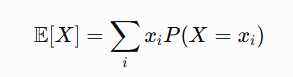
The most important idea is expected value:
If a game pays $120 with probability 0.40.40.4 and loses $50 with probability 0.6:
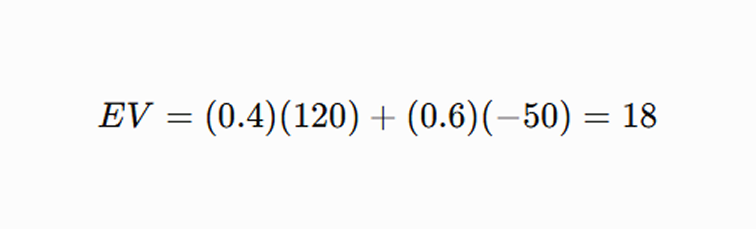
So the game is worth $18 per attempt before costs.
Quant interviews then make it harder by changing the payout, hiding information, or asking how much you should pay to play.
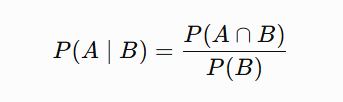
Next comes conditional probability:
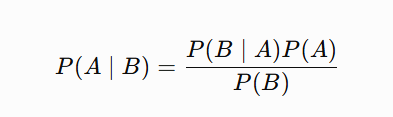
And Bayes’ theorem:
Then variance:
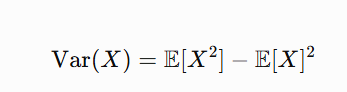
Expected value tells you what happens on average.
Variance tells you how unstable that average is.
For portfolio thinking, learn covariance and correlation:
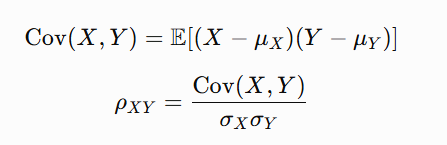
This is where quant thinking starts to look different from retail investing.
The retail question is:
> How many stocks do I own?
The quant question is:
> How many independent risks do I actually own?
What to use
Start with:
The Green Book by Xinfeng Zhou for probability, brainteasers, calculus, and linear algebra.
Then use Heard on the Street for classic trading and research interview problems. These are the first two core books in the guide you shared.
For practice:
- Green Book probability section;
- Jane Street puzzles;
- Jerry Qin’s probability list;
- timed mock interviews;
- Zetamac for mental math.
For traders, begin mental math immediately.
Use:
> Zetamac - aim for 40 first, then 50+ > > Math Trainer — good for rebuilding speed from the ground up > > TraderMaths — closer to real assessment formats > > Wall Street Quants Mental Math — useful for “80 in 8” style drills

Start around 20 on Zetamac and practice every day. A consistent 50–60 is usually a strong enough benchmark for many early trading screens.
The original roadmap suggests getting above 40 on Zetamac first, then pushing toward 50+ before interviews.
> By the end of this stage, you should be able to solve expected-value problems, explain Bayes clearly, calculate basic variance and covariance, and talk through your reasoning under pressure.
That is the real foundation.
Before models, backtests, or stochastic calculus, you need to become comfortable making decisions under uncertainty.
Step 2 - Pick Your Track and Build Proof
This is where quant preparation splits.
You should not keep studying everything at once.
- A Quant Trader is hired for fast reasoning under uncertainty.
- A Quant Researcher is hired to find signals in noisy data.
- A Quant Developer is hired to build the systems that make those ideas usable at scale.
That changes what you should practice.
Quant Trader
Focus on:
- probability and expected value;
- mental math;
- estimation;
- market-making games;
- fast verbal reasoning.

Read or watch:
- Jane Street’s official interview guide
- MIT Introduction to Probability and Statistics
- The Green Book and Heard on the Street
- Jane Street puzzles and timed market-making exercises
Your benchmark is not whether you can solve a problem eventually.
It is whether you can solve it clearly while the assumptions keep changing.
Use Zetamac, TraderMaths, the Green Book, and company-style probability questions.
Quant Researcher
Focus on:
- Python;
- statistics and regression;
- time series;
- machine learning;
- backtesting;
- market microstructure.

Read or watch:
- MIT Analytics of Finance
- MIT Mathematics with Applications in Finance
- Scikit-learn’s PCA guide
- An Introduction to Statistical Learning
- Algorithmic Trading by Ernie Chan
A basic research model often starts here:

Your job is to separate the return explained by common factors from the residual that might contain actual alpha.
But a backtest is only useful after fees, slippage, and out-of-sample testing.
Quant Developer
Focus on:
- C++;
- data structures and algorithms;
- operating systems;
- networking;
- concurrency;
- performance profiling.

Read or watch:
- Building Low Latency Applications with C++
- C++ Core Guidelines
- Computer Systems: A Programmer’s Perspective
- MIT or university lectures on operating systems and networks
- Exchange documentation explaining order types and limit-order books
For low-latency roles, correct code is only the beginning.
You also need to understand where time disappears:

Use the right platform for the right role
MyntBit is the strongest all-in-one option from the guide.
It separates preparation into Developer, Researcher, and Trader tracks, with C++, Python, brainteasers, finance MCQs, trading games, and company-style questions associated with firms such as Jane Street, Citadel, and Two Sigma.

That matters because most candidates waste time solving problems that have nothing to do with the role they are targeting.
QuantQuestion is useful for finance-heavy preparation.
It has a large interview-question bank covering portfolio construction, risk, and market concepts that pure coding platforms often ignore.

Quantable is especially useful for Quant Trader preparation because of its probability problems, company-tagged questions, detailed solutions, and interactive games.
LeetCode remains essential for Quant Developer roles.
Build one serious project
Do not build ten shallow notebooks.
Build one project that makes your target role obvious.

For example:
> Trader - market-making simulator with inventory and risk limits > > Researcher - factor model, options pricer, or stat-arb backtest > > Developer - C++ matching engine or limit-order-book simulator
You should be able to explain every assumption, failure point, and trade-off.
The original guide separates preparation into the same three paths because each one rewards different skills and has a different interview process.
By the end of this level, a recruiter should be able to look at your work and immediately understand which quant seat you are preparing for.
Step 3 - Train for the Interview and Apply at Scale
The final stage is where studying turns into simulation.
You already know the concepts.
Now you need to solve the right problems under time pressure and explain your reasoning clearly.
Quant Trader routine
Daily:
> 15–20 minutes of Zetamac > > 5 probability questions > > 1 market-making or estimation drill > > 1 answer explained out loud
Use:
> Green Book probability section > > Heard on the Street > > Jane Street Puzzles > > QuantQuestion > > Quantable > > TraderMaths > > MyntBit Trader track
Do not only solve for the number.
Practice explaining which assumptions matter and how your answer changes when the interviewer changes the setup.
Quant Research routine
Practice:
> probability and statistics > > Python coding > > regression and time series > > model validation > > backtest critique > > research discussion
Every strategy should be reduced to:

Then ask:
- Does it survive out of sample?
- Does it survive another market regime?
- Does it survive lower liquidity?
- Does it survive realistic transaction costs?
Use MyntBit’s Researcher track, QuantQuestion, Quantopian lectures, MIT OpenCourseWare, and An Introduction to Statistical Learning.
Quant Developer routine
Practice:
> LeetCode daily > > C++ internals > > operating systems > > networking > > concurrency > > system design
For every solution, explain:
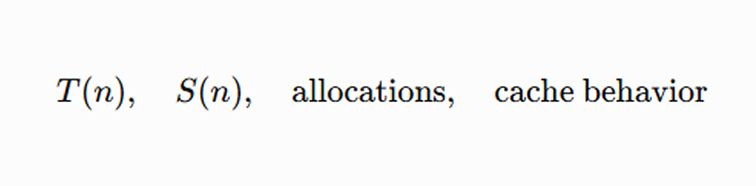
Also study:
> lock-free queues > > memory pools > > TCP vs UDP > > context switching > > cache misses > > order-book updates > > partial fills
LeetCode gets you through the generic coding screen.
Systems knowledge is what makes you look like a serious low-latency candidate.
Run one mock interview every week
Use a 45–60 minute format:
> 10 minutes - mental math or probability > > 20 minutes - role-specific technical questions > > 15 minutes - project deep dive > > 10 minutes - resume and motivation
Afterward, classify every mistake:
> knowledge gap > > speed problem > > weak explanation > > bad assumption > > panic under pressure
Then repeat the same type of problem within 48 hours.
Apply wider than the famous firms
Use:
> Northwestern FinTech’s Quant Internships GitHub repo > > company career pages > > LinkedIn alerts for “quantitative,” “quant developer,” and “quant researcher” > > QuantNet forums > > Glassdoor for interview patterns
Start with the obvious firms:
> Jane Street > > Citadel Securities > > Two Sigma > > Hudson River Trading > > DE Shaw > > Renaissance Technologies
But also apply to:
> SIG > > IMC > > Optiver > > Jump Trading > > DRW > > Virtu > > Five Rings > > Akuna Capital > > Flow Traders
Track every application in a spreadsheet:
> firm > > role > > date applied > > current stage > > interview format > > questions asked > > weakness exposed > > next action
The goal is to create enough interview volume that each rejection gives you information instead of ending the process.
By week 16, you should have one target role, one defensible project, a daily interview routine, and a live application pipeline.
That is when you stop looking like someone who is interested in quant finance and start looking like someone who trained for it deliberately.
Final Note

Quant finance rewards people who can think clearly under uncertainty, build systems from math, and explain their decisions when the answer is not obvious.
You do not need to master everything at once.
Pick one track, follow the roadmap, build something real, and let each interview show you what to improve next.
If you want to keep going, these three posts cover the ideas underneath quant thinking:
**1. Game Theory and Unpredictable Strategy**
Why the strongest strategy is sometimes to remove your own pattern entirely.
**2. Portfolio Construction and the Mutual Fund Theorem**
Why professional investors start with risk-adjusted portfolio design instead of individual stock picks.
**3. Options as Implied Probabilities**
How option prices encode the market’s expectations about future outcomes.
Read those next, then come back to the roadmap and choose which part you want to go deeper on.
Related articles

How Quants Use AI to Build Regime-Adaptive Trading Strategies (Complete Guide)
A practical framework for detecting market regimes and dynamically adjusting your strategy-before the regime changes destroy your P&L.

How to Get Paid $500,000 to Do Math
There is a small industry that pays more for mathematical ability than almost anything else on earth pays for anything. It is not a secret, it is not a scam, and the reason the money is that large is…

The 12 People Who Actually Built Quantitative Finance. Steal Their Fundamental Knowledge for $0
Lesson: The quality of brains in the room matters more than any diploma. The Medallion team is probably the smartest collection of people in any financial firm on earth. No joke