I Made the Same Video For Every Niche on YouTube (Results)
Outlier ideation is the most popular YouTube growth strategy right now...
I don't think it works.
They say you should find a video that blew up. Copy the format. Execute it in your niche.
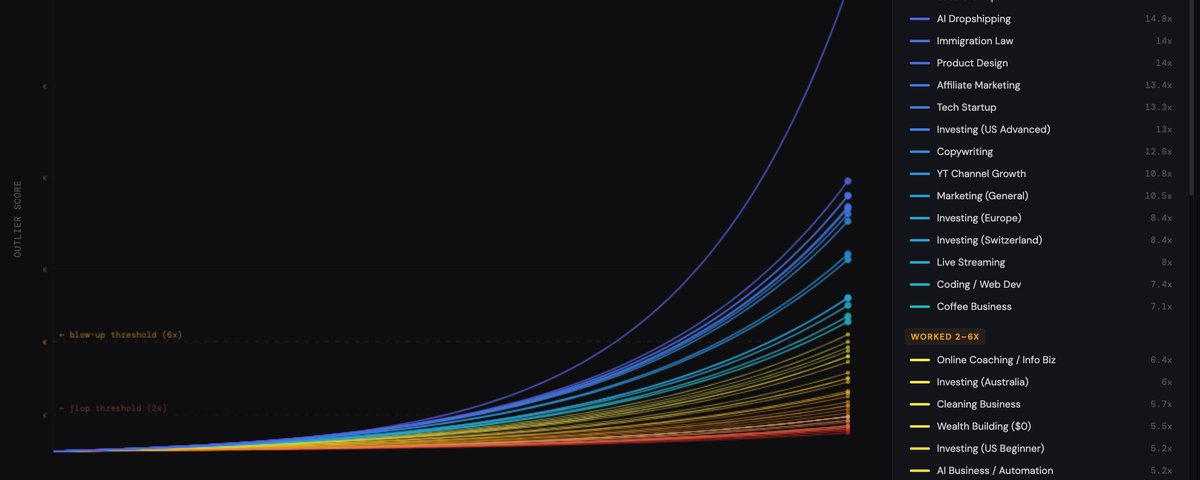
And so I ran 127 real videos across 57 niches to see if it works.
All with the same exact video title: "If I Started [Niche] in 2026, I'd Do This"
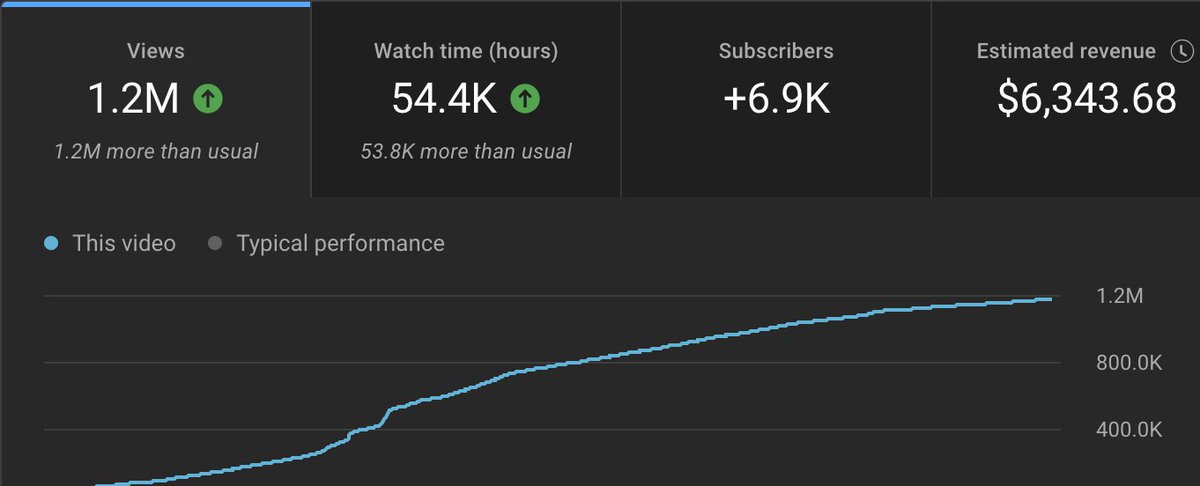
Most flopped. A few blew up. One crossed well over a million views.
And I discovered a pattern behind the ones that went viral.
Low Performers (0–1.5x): They Were Good Videos

Amazon FBA, Amazon KDP, eBay reselling, Pinterest marketing. These all sat at the bottom of the chart.
There's a copywriter named Eugene Schwartz who spent decades studying why people act - and more importantly, why they don't. What he found is that every person moves through stages before they're ready to move on anything. Problem unaware. Problem aware. Solution aware. Product aware.
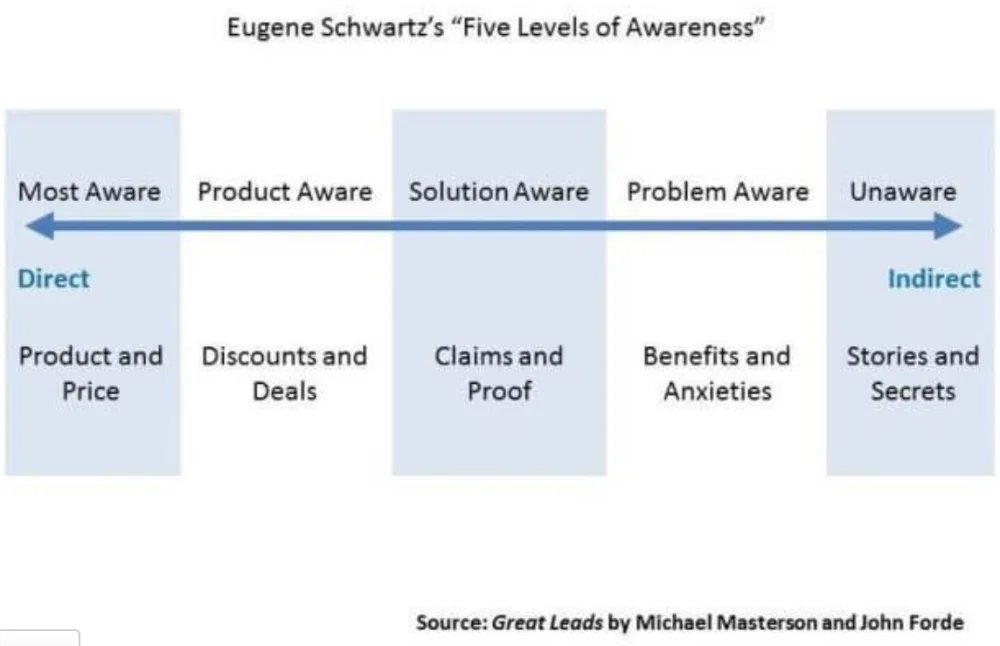
Content only works when it meets the viewer at the stage they're actually at.
Think about someone opening YouTube at 11pm after a long day, already feeling behind. That person wants something completely different from the same person sitting at their desk the next morning, motivated and ready to apply something. Same person. Same interests. Completely different viewer.
Every video at the bottom of this chart was explaining how to do something to viewers who hadn't yet decided they wanted to do it.
The content assumed they were further along than they actually were. Execution didn't matter. It was aimed at the wrong moment - which means the promise on the thumbnail and the state of the person clicking it were never aligned.
Move up the chart and you find a completely different problem...
Mid Performers (2–3.9x): The Right Promise, the Wrong Frame

Some videos cleared that first filter - right promise, right stage - but the numbers stayed flat. Just above them, creators in similar spaces are hitting 3x, 4x, 5x on the same basic promise.
Let's use this example. Two videos. Same creator. Same niche. Made in the same month.
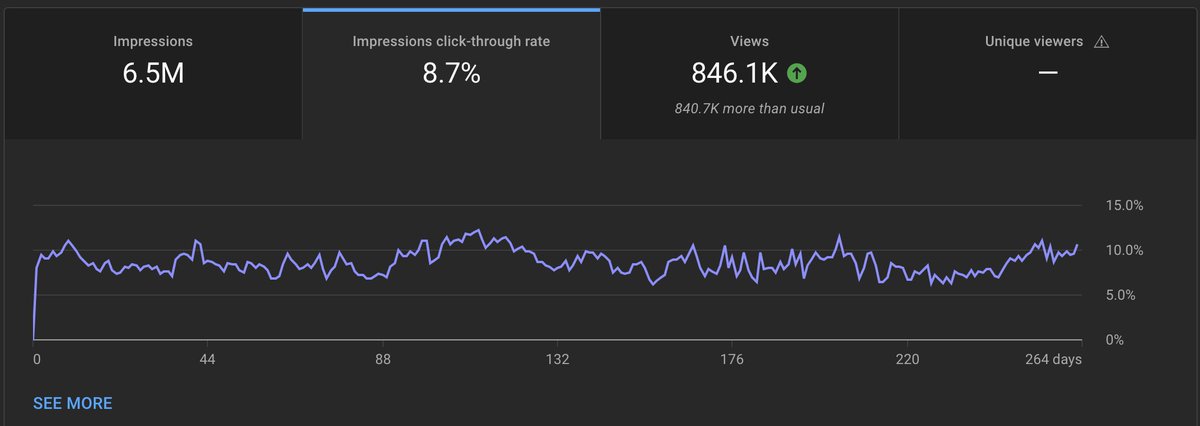
One at 2% CTR. The other at 8%. The production-quality was almost identical. The only thing that changed was how the idea was framed.
One felt like something the viewer had already seen. The other felt like the same thing they wanted, from an angle they hadn't quite encountered before.
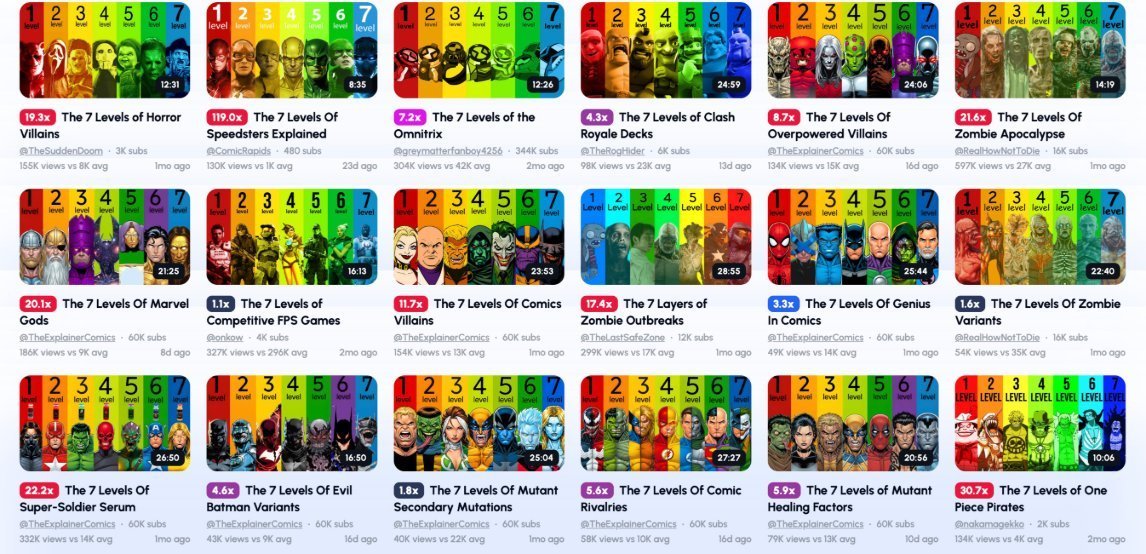
Every video lives inside a tension. Too familiar and they scroll - they've already absorbed it, already moved on. Too different and they don't click - nothing to latch onto, so they go with something safer. The sweet spot is a promise they already want, delivered through a frame they haven't seen before. Familiar enough to trust. Fresh enough to feel worth their time.
This is where most outlier ideation collapses.
Creators copy the topic. They copy the thumbnail structure. They copy the hook. But they don't ask whether their specific audience has already exhausted that angle - whether the perspective that felt fresh when the original went live has since become the default in their space.
If it has, the idea needs to move. Not to a new niche. Just to a new frame around the same desire. That shift is small. But it's the difference between 1.4x and 6x on the same channel.
Upper-Mid Performers (4–8x): They Got the Click. Here's Why They Stopped Climbing.

These videos cleared both filters. The promise is clear, the angle is fresh, they got traction. But they plateaued. The algorithm moved on.
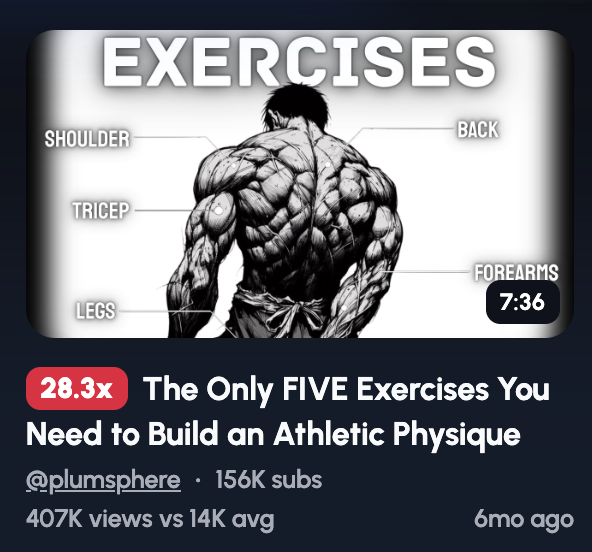
Ten years ago in fitness, "lose weight fast" built entire channels. Then audiences absorbed it and moved past it. The claim that worked had to get more specific - a particular constraint, a counter-intuitive method. Then that got absorbed too. Now the content that performs in fitness isn't really about weight loss. It's about biological age. Living to a hundred. The desire didn't go anywhere. It evolved.
This happens in every niche at the same pace.
- Stage one is the basic result. lose weight, make money, grow your channel.
- Stage two is the result with a constraint attached - without cardio, with no experience, without showing your face.
- Stage three is the named system - the specific framework, the method, the mechanism behind the result.
- Once an audience has absorbed stage two, stage two content becomes background noise to them. They've already been here.
The average performers on this chart got the promise right and the angle right - but pitched one sophistication level below where their audience actually sat.
"If I Started YouTube in 2026 I'd Do This" is a stage one claim in a stage three audience.
These viewers have heard the basic result hundreds of times. The video got traction because the promise was clear. It didn't compound because the audience felt like they'd already been here.
They had.
Look at what's performing in your niche right now - not what's getting views, but what's getting subscribers. Views confirm reach. Subscribers confirm the audience believed the promise enough to stay. If the top performers are running stage three content and you're pitching stage one, you're not competing.
You're adding to noise they've already learned to tune out.
Top Performers (9x+): The Part Outlier Ideation Never Shows You
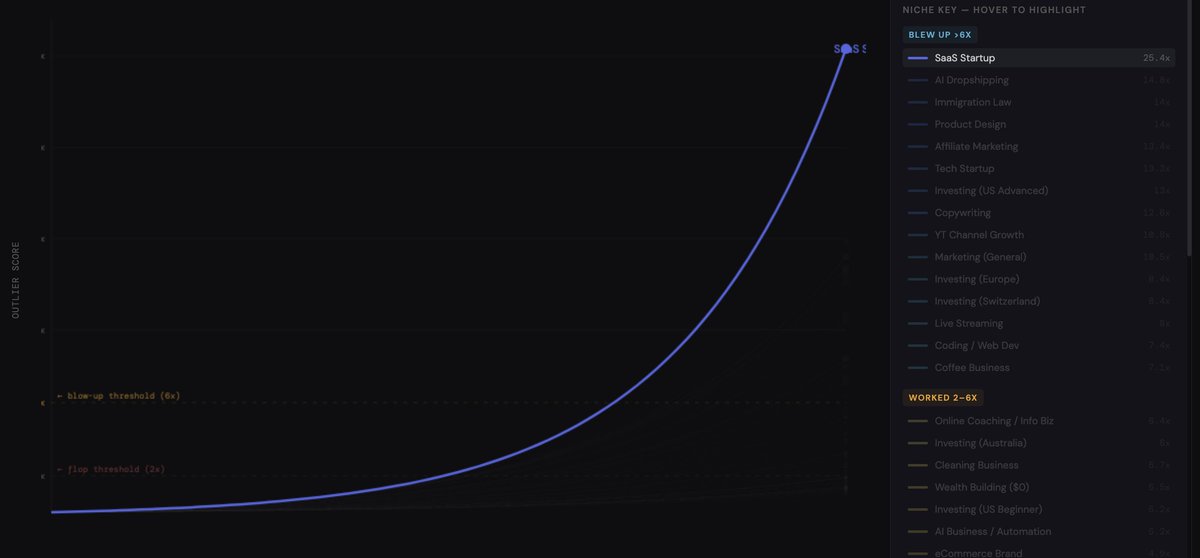
SaaS startup at 25.4x. eCommerce brand building at 14.8x. Immigration law at 14x.
These cleared all three filters. But so did some of the 6x results. Something else is happening at the top of the chart - something that has nothing to do with format.

Early 2024, a 26-year-old posts a video with an unusual title. Within months - 50,000 subscribers, a community of 42,000 people, built without mentioning it once on YouTube.
Hundreds of creators copied the format almost immediately. The lowercase titles. The POV framing. The colour grade. The vlog structure. Most of them got nothing.
Because what they copied was the surface.
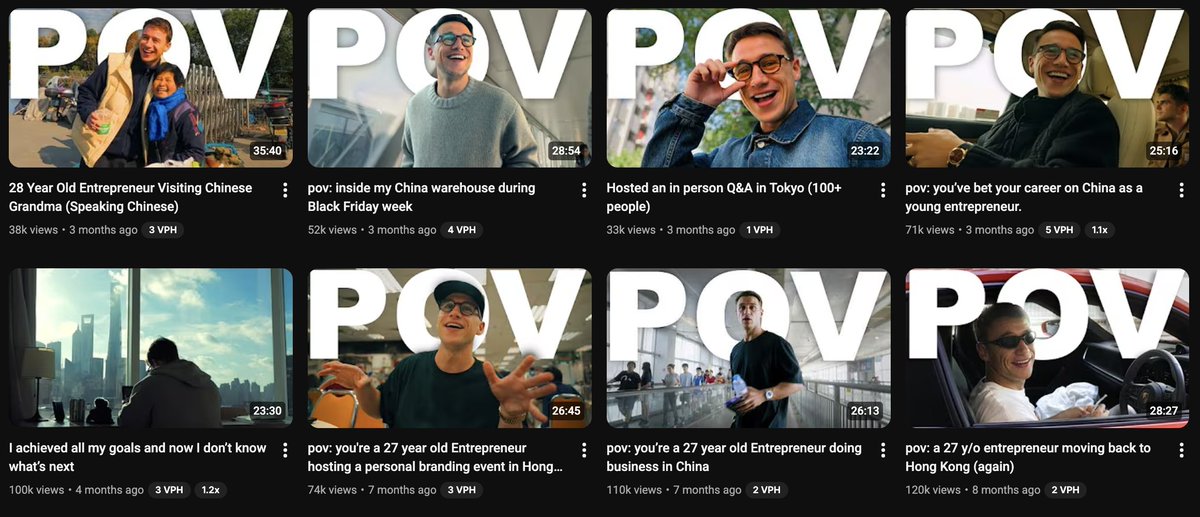
What they couldn't copy is that this creator lives a life his viewer desperately wants to be living. Working with a team across China and Dubai. Building from inside the exact world his audience wants to enter.
That's not a content strategy. That's a life advantage. And his audience trusts him - because he's shown them the bad days, the rough edits, the business that isn't perfect yet. That trust took years. You can't replicate it in a week.
Every blow-up at the top of this chart has a specific stack underneath it. Real client results - actual dashboards, proof that makes every claim feel undeniable. Or deep insider knowledge of a community where the audience feels like this person is genuinely one of them. Or a personal story the viewer can learn from, aspire toward, or see themselves inside.
Every blow-up has a strong stack of these aligned with the format.
Every flop has almost none.
The "If I Started X" format has requirements buried inside it. It needs proof that you've actually done the thing. It needs credibility that feels lived-in, not just taught. Without that, the format is a shell. Executed perfectly. Landing nowhere.
When you copy a blow-up, you copy the format. You don't copy the years of trust the creator built before that video went live. You don't copy the results that made every claim feel credible. You don't copy the life that made the audience feel like they were watching someone who had actually been there.
Every result on this chart is now fully explained. Nothing is luck. Nothing is niche.
The question was never which niche to copy this format in. It was always which formats are built for what you already have.
Related articles
How to Start a 6 Figure Faceless YouTube Channel (Full Breakdown)
I've helped over 400 people start profitable faceless youtube channels. i've ran over 50 channels myself. Generated over $4 MILLION by age 25. Worked with youtubers that have 10 million+ subscribers,…


The 90-Day E-commerce SEO Plan (Add Sales with Claude)
Most e-commerce SEO fails for one reason.