I told ChatGPT-6 Astra to do my SEO. It got me $27k MRR (full guide)

THIS IS THE PLAYBOOK I WASN'T GOING TO PUBLISH. without it, you will be using GPT-6 Astra at 10% of its actual SEO potential. these 13 prompts are the other 90%. i'm giving every single one away for free.
 — "To get similar results, just use agentic GPT-6: CONQUERORAPP.COM"
we built this system after years of growing software companies through SEO. SaaS products. WordPress sites. WooCommerce stores. content businesses. we've seen what moves rankings and what wastes time.
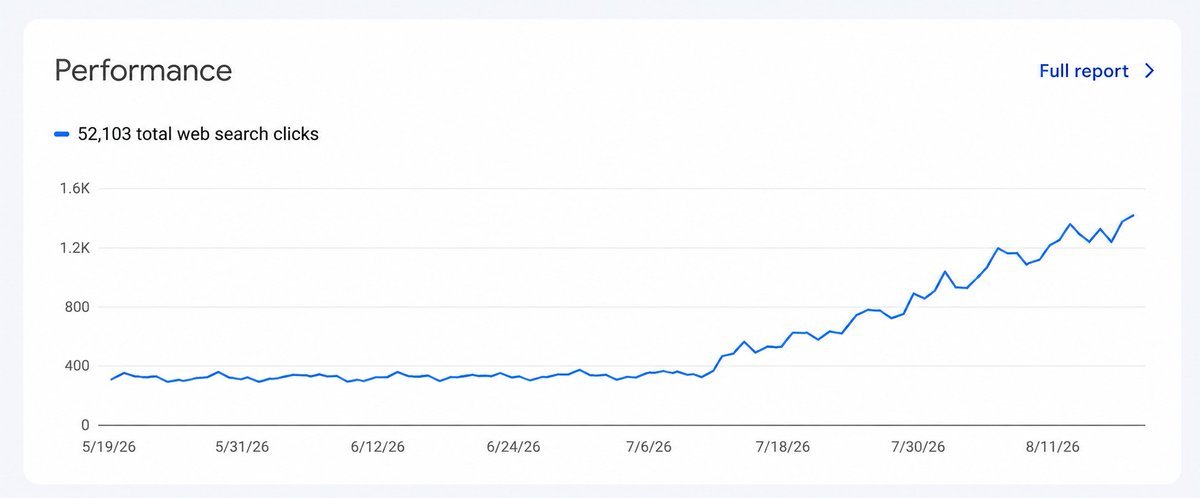
one company reached $27,508 MRR while this system was running. across 90 days, Search Console recorded 52,103 clicks. daily organic clicks sat around 300 to 350 for almost two months, then climbed to roughly 1,400.

these 13 prompts are the ones that actually move the needle. these are the actual prompts you paste into Grok Bot, Claude, ChatGPT, Codex, Cursor, OpenClaw, or Hermes after connecting Conqueror.
save this. you'll need it.
before you run a single prompt - connect Conqueror and load your business context
then connect the MCP server:
> Connect a custom MCP server named Conqueror using this URL: https://winwith.conquerorapp.com/mcp
if you manage several sites or clients, create one Conqueror project per business. keep its WordPress site, Search Console property, context, approval history, and results separate. that lets the same system move between projects without living in CSV exports and 40 browser tabs.

once WordPress and Google Search Console are connected, paste this into your agent:
> "Here is everything you need to know about my business before we start any SEO work. Reference this every time I ask you to run an audit, build a strategy, research a keyword, prepare a WordPress change, or measure a result. Never ask me for this information again.BUSINESS BASICS: > > Business name: [your business name] > > Website: [website URL] > > Conqueror project: [project name] > > WordPress site: [WordPress URL] > > Google Search Console property: [property URL] > > Google Analytics property: [property if connected] > > Primary conversion or revenue source: [Stripe / CRM / booking tool / WooCommerce / other] > > Years in business: [X years] > > Team size: [solo / small team / large team]PRODUCT + MARKET: > > Primary product or service: [what you sell] > > Secondary products or services: [offer 2], [offer 3], [offer 4] > > Important markets: [country 1], [country 2], [city 1], [industry 1] > > Target customer: [who your best customer is] > > Primary customer problem: [the expensive problem you solve] > > Average customer or order value: [$X] > > Primary customer action: [trial / demo / call / booking / purchase]SEO GOALS: > > Top 5 keywords I want to rank for: [keyword 1], [keyword 2], [keyword 3], [keyword 4], [keyword 5] > > Keywords I currently rank for: [keyword 1], [keyword 2] > > Keywords I should rank for but don't: [keyword 1], [keyword 2] > > Pages closest to revenue: [URL 1], [URL 2], [URL 3] > > GEO goal: [where I want to appear in ChatGPT / Perplexity / Google AI answers]CURRENT STANDINGS: > > Monthly organic clicks: [X if known] > > Monthly organic conversions: [X if known] > > Organic revenue: [$X if known] > > Highest-ranking commercial page: [URL and position if known] > > Biggest SEO problem right now: [one sentence - be honest]COMPETITORS: > > [competitor name] - [website] - [why they're beating you if you know] > > [competitor name] - [website] - [why they're beating you if you know] > > [competitor name] - [website] - [why they're beating you if you know]WHAT I'VE ALREADY TRIED: > > [List any SEO work already done - agency, DIY, tools used, pages created, what worked, what didn't]WORDPRESS RULES: > > CMS setup: [theme / page builder / custom post types] > > SEO plugin: [Yoast / Rank Math / other] > > Approved claims and proof: [claims, case studies, data, sources] > > Pages or topics that are off limits: [list] > > Publishing rule: prepare drafts and exact before-and-after changes, but never publish without my approvalHOW I WANT YOU TO WORK: > > Always use current Conqueror data when the task depends on rankings, keywords, competitors, backlinks, Search Console, GEO visibility, or the live WordPress page. > > If live data is unavailable, report the failure. Do not silently use old numbers or guess. > > Always prioritize credible business upside over raw traffic unless I ask otherwise. > > When you give me a recommendation, tell me the impact level (high/medium/low), why it comes first, and how long it may take to see a useful signal. > > Always output data in spreadsheet format when comparing pages, keywords, or competitors. > > Show me the attractive alternatives you rejected and why they lost. > > Make the smallest useful change first so we can learn what caused the result. > > Never publish, spend money, contact anyone, or change the live website without my approval. > > For every approved change, record the baseline, exact diff, approval date, and publication date. Recheck the same page after 7 and 28 days. > > When you're unsure about something, tell me - don't guess. > > Never ask me for this information again. Use it as the base for everything we do together."
once this is loaded, every prompt you run gets sharper. your agent stops answering a stranger's SEO question and starts answering yours.
PART 1: RESEARCH + OPPORTUNITY (prompts 1-8)
- Search Console opportunity audit
this is where i start with every single site. because if your priorities are wrong, nothing else matters.
your Search Console has pages already receiving impressions, clicks, and rankings. most business owners look at the total graph, feel good or bad, and close the tab. meanwhile pages sitting between positions 4 and 15 are one focused improvement away from becoming meaningful traffic.
wrong priority = weeks spent creating content while existing demand sits untouched. it's that simple.
> "Conqueror open the project for [PROJECT NAME]. Review the last 90 days of Google Search Console data and compare them with the previous 90 days.Group queries by the page Google already associates with them. For every page, extract total clicks, impressions, CTR, average position, the top query cluster, and the change versus the previous period.Put everything in a spreadsheet. Columns: page URL, primary query cluster, clicks, impressions, CTR, average position, previous-period clicks, previous-period impressions, trend, primary customer action, and business relevance.Highlight pages ranking around positions 4-15 with meaningful impressions, pages with high impressions but weak CTR for their position, and pages that are losing clicks or rankings.Reject queries that Google probably answers without a click, have mismatched intent or geography, or have no credible path to [PRIMARY CUSTOMER ACTION].Then give me a prioritized list of up to five pages, ranked by demand, intent, current position, business relevance, and fixability. Choose one page that should come first. Show the alternatives you rejected and why they lost.Do not edit or publish anything yet."
why this matters:
i've seen pages move from page 2 to page 1 after one title, opening, or internal-link change. fastest win in SEO. but the real power is pattern recognition.
when you map queries against pages and business outcomes you start seeing things. like every page bringing qualified trials is a comparison page, while the giant informational pages create thousands of impressions and nothing else. those patterns are invisible when you only watch the total traffic graph. Conqueror does the gathering. your agent makes the decision. you approve it.
- competitor landscape audit
most people know who their competitors are as businesses. they have no idea who their competitors are in search.
the company you hear about every day may barely rank. a smaller site you have never heard of may own the keywords, pages, and backlinks that put buyers into your category. Conqueror can uncover estimated traffic, top-ranking keywords, strongest pages, backlinks, and live search competitors.
your real search competitors are already showing you what Google rewards. guaranteed.
> "Conqueror analyze my website [YOUR DOMAIN] and these competitors: [DOMAIN 1], [DOMAIN 2], [DOMAIN 3].For each site, extract estimated monthly organic traffic, total ranking keywords, top commercial keywords, strongest pages by estimated traffic, backlink profile, and the topics or page types responsible for the largest share of visibility.Put everything in a spreadsheet. Columns: domain, estimated traffic, ranking keywords, top pages, top commercial queries, referring domains or backlinks, dominant content type, and overlap with my offer.Highlight every keyword, page type, and backlink pattern my competitors have that I'm missing.Then create three separate lists:Opportunities ALL top competitors use - these are table stakes I should investigate immediatelyOpportunities 2 out of 3 competitors use - these are strong recommendationsOpportunities only 1 competitor uses - these are differentiation opportunitiesFor each gap, tell me whether I should optimize an existing page or create a new one, the likely business impact (high/medium/low), the primary customer action it could influence, and what evidence supports the recommendation.Do not recommend copying a competitor's claims, examples, or wording."
why this matters: competitor data is a two-for-one play. it shows you where proven demand exists AND it shows you how much authority, content, and relevance may be required before you go after it.
- competitor page teardown
estimated traffic tells you almost nothing by itself. what actually matters is which pages are generating it and why those pages keep winning.
a competitor with 100,000 monthly visits built on free definition searches can be weaker than a competitor with 10,000 visits landing on pricing, alternatives, comparison, and problem-aware pages. traffic quality matters. page type matters. the path after the click matters.
> "Conqueror inspect the strongest organic pages for these competitors: [DOMAIN 1], [DOMAIN 2], [DOMAIN 3].For each competitor, analyze its top 20 pages. Extract:Estimated traffic for each pageThe main keywords and current ranking positionsSearch volume, difficulty, intent, and CPC for the main keywordThe page type (guide, comparison, alternative, product, service, integration, template, tool, or other)The searcher's likely problem and next actionThe page structure and sections that appear repeatedlyImportant internal linksThe strongest backlinks pointing to the pageWhether I already have a page covering the same intentAny obvious weakness, stale section, unsupported claim, or unanswered buyer questionPut the findings in a spreadsheet. Add a second tab containing the top 10 page opportunities for my site, ranked by commercial relevance, realistic difficulty, evidence of demand, and fit with my product.For every recommended opportunity, tell me whether to improve an existing page or create a new page. Do not draft anything yet."
why this matters:
that second tab is your entire content strategy for the next 6-12 months. and the recurring page types tell you exactly where competitors are turning search demand into customers.
"best [category] for [specific customer]" can be doing revenue work for that competitor whether they know it or not.
- search intent + revenue filter
finding keywords is half the battle. knowing which ones deserve a page is the other half. search volume is free real estate for bad decisions when nobody checks what the searcher actually wants.
> "Conqueror analyze these target keywords: [KEYWORD 1], [KEYWORD 2], [KEYWORD 3], [KEYWORD 4], [KEYWORD 5].For every keyword, inspect the live Google results and extract:Monthly search volumeKeyword difficultyIntentCPCThe dominant ranking page typeWhether Google shows an AI answer, featured snippet, video pack, local pack, shopping results, forums, or another result type that could reduce clicksThe top-ranking domains and pagesThe likely problem the searcher is trying to solveThe most credible customer action after landing on my siteWhether I have an existing page that matches the intentPut this in a spreadsheet comparing all keywords.Then build me a complete decision system:High commercial proximity - a believable path from the search to [trial / demo / call / sale]Medium commercial proximity - useful demand, but the page needs a clear bridge to the productLow commercial proximity - mostly awareness, research, or zero-click trafficReject - mismatched intent, wrong geography, unrealistic competition, or no useful connection to the offerFor each accepted keyword, tell me the exact page type required and the one metric that should prove whether it was worth targeting. Do not create or publish the page yet."
why this matters: 10,000 visits a month, each with no reason to buy, can be worth less than 500 visitors searching for an expensive problem your product solves. and the filter means your agent can reject a shiny keyword in under 60 seconds.
- organic growth queue
SEO plans are the most overbuilt part of the industry.
most businesses have a spreadsheet with 100 keywords, 40 article ideas, and no decision about what should happen first. activity signals progress. prioritized work creates progress. your competitors probably have the same giant backlog. that's your advantage right now.
> "Conqueror use my current Search Console data, saved keyword opportunities, competitor research, rankings, backlinks, and live WordPress pages.Build me a complete 8-week organic growth queue with 2-3 focused actions per week using a mix of existing-page improvements, commercial keyword pages, comparison or alternative pages, internal-link fixes, technical fixes, backlink opportunities, GEO improvements, and content refreshes.Every action must include the source evidence, target page or proposed URL, primary keyword, search intent, business outcome, exact deliverable, expected impact (high/medium/low), effort level, approval required, and measurement date.Favor pages where demand already exists, positions are close enough to improve, and the searcher has a credible path to [PRIMARY CUSTOMER ACTION].Do not schedule more work than I can review. Limit the queue to one major page action per week and use the remaining slots for smaller supporting changes.Write the full decision cards for all actions in weeks 1-4 and give me detailed outlines for weeks 5-8.Do not publish anything. Return the queue for approval."
why this matters: the competitor analysis almost always reveals the same thing: everybody's publishing.
almost nobody is choosing one constraint, changing it, and coming back to measure what happened. a focused queue immediately sets you apart. and every result makes the next decision sharper because your agent starts using your results instead of generic advice.
- keyword clustering + site architecture
Google ranks pages, not keyword lists. this is prime SEO real estate and almost nobody maps it properly. most businesses create one page per keyword or force twenty different intentions onto one page. that's like opening twenty shops at the same address and making Google guess which one the customer wanted.
> "Conqueror research and cluster these keywords: [KEYWORD LIST OR TOPIC].Use live search results, ranking-page overlap, intent, volume, difficulty, CPC, and the language used by the top pages to decide which keywords belong on the same page and which need separate pages.Then audit my current WordPress site at [URL]. Identify:Existing pages that already own a clusterMultiple pages competing for the same clusterValuable clusters with no matching pageExisting pages targeting an intent different from the live search resultsOrphan pages with no useful internal linksImportant pages buried too deep in the site structurePut everything in a comparison spreadsheet.Finally, create a complete page map. For every cluster include the primary keyword, secondary keywords, intent, recommended page type, existing or new URL, parent section, internal links that should point to it, customer action, and priority.For existing pages, prepare a short optimization brief. For missing pages, prepare a short content brief. Do not write or publish the full pages yet."
why this matters: your page map is one of the only places where you control how the whole site explains itself to Google. backlinks come from other websites. queries come from searchers. but page ownership, internal links, and information architecture? that's your structure, your priorities, your message.
the cross-reference against WordPress catches a common mistake. businesses publish a new page without checking whether an older page already ranks for the same intent. if two pages fight for "best CRM for startups," neither one gets a clean job.
- title + meta description optimization
your title and meta description are prime search-result real estate. most businesses waste them. they either leave WordPress defaults, copy the H1, or stuff every keyword into one sentence that sounds robotic.
> "Conqueror find pages on my site with meaningful impressions and below-expected CTR for their average position.For the top 10 pages, inspect the live WordPress title, meta description, H1, query cluster, Search Console performance, and current Google results.Put them in a spreadsheet with these columns: page URL, primary query, clicks, impressions, CTR, average position, current title, title character count, current meta description, description character count, dominant competitor angle, search intent, trust signal used, unique selling point used, and likely CTR problem.Then analyze what ALL top-ranking competitors mention because those are table-stakes elements, what no one mentions that I could own, and what my page currently says that competitors ignore.Finally, write me 3 versions for each priority page:Version 1 is keyword-focused and makes the page's relevance immediately clearVersion 2 is conversion-focused and gives the right searcher a specific reason to clickVersion 3 is trust-focused and uses verified proof, specificity, or credibilityKeep every title under 60 characters and every meta description under 155 characters where practical. Do not invent a claim, number, guarantee, or result.Recommend one version, show the exact before-and-after diff, and explain why it should be tested first. Prepare a WordPress draft only after I approve the recommendation. Never publish it automatically."
why this matters: having 3 versions lets you make a real decision. run one version, record the baseline, check the 7-day signal and the 28-day result, then keep, revise, or roll back.
most people write one title and forget about it forever. treating it as a testable asset gives you a compounding edge that nobody else in your market is building.
- technical site health audit
sites with great content still lose because Google cannot crawl, understand, or trust the page properly. but it's not just about collecting warnings. it's about finding the technical problems attached to pages that matter. most businesses export 500 issues, fix the easiest green checks, and call it done.
> "Conqueror crawl my WordPress site at [URL] and run a complete site-health audit.Record missing or duplicate titles, weak or missing meta descriptions, broken internal and external links, indexability problems, accidental noindex rules, canonical conflicts, redirect chains, orphan pages, slow pages, thin pages, missing headings, image issues, and any other technical problem detected.Put this in a spreadsheet. Columns: issue, affected URL, severity, indexability risk, traffic or revenue risk, current organic performance, recommended fix, estimated effort, and whether the change is reversible.Highlight every critical issue affecting a page that already receives organic demand or leads to [PRIMARY CUSTOMER ACTION].Then build me a specific 8-week technical cleanup plan with the exact number of issues to fix each week, the order they should be handled, which pages need a backup or rollback note, and which results should be checked in Search Console afterward.Prioritize critical indexability, canonical, and broken-link problems before cosmetic metadata warnings. Beat the highest-risk issue first, not the largest issue count.Prepare exact before-and-after fixes for week 1. Do not apply or publish anything without my approval."
why this matters: relevance beats volume. fixing 50 harmless warnings in one day then ignoring a noindex rule on a money page tells you nothing. fixing the few issues blocking important pages tells Google and customers that the site actually works.
the prioritization and rollback notes alone are worth the price of admission. most technical audits have no idea which warning is connected to revenue.
PART 2: WEBSITE (prompts 9-13)
- backlink gap audit
find every relevant site linking to your competitors but not to you. this is where the authority your pages should be earning is hiding.
> "Conqueror compare the backlink profiles of my domain [YOURDOMAIN.COM] and these 3 competitor domains: [COMPETITOR1.COM], [COMPETITOR2.COM], [COMPETITOR3.COM].Find referring domains and pages that link to at least one competitor but not to me. Filter the list to opportunities that are topically relevant, appear legitimate, have a credible editorial reason to link, and point to a page type I can match or improve.Remove obvious spam, irrelevant directories, paid-link footprints, sitewide links, and prospects with no believable relationship to my market.For the top 20 opportunities, tell me:The referring domain and source pageWhich competitors it links toThe competitor page receiving the linkThe likely reason the link existsWhich page on my site should earn the linkWhether that page already exists or needs to be createdThe strongest honest outreach angleThe business value of strengthening that pageOutput as a spreadsheet sorted by opportunity score, where topical relevance plus credible link reason plus strength of the target page equals highest priority.Add a final column called 'Action Required' that says 'Improve existing page,' 'Create linkable asset,' 'Draft outreach,' or 'Reject.'Draft personalized outreach for the top five prospects, but do not contact anyone."
why this matters: most businesses are missing links their competitors already proved are possible. this audit shows you exactly where the authority gap is and what to do about it. the filtered list removes all the noise and gives you only prospects with a real reason to care.
- money page audit
most websites have the wrong pages ranking. or no money pages ranking at all. this audit fixes that.
> "Conqueror open my project for [YOURDOMAIN.COM] and review the last 90 days of Google Search Console data.For each product, service, comparison, alternative, integration, pricing, or conversion page on my site, tell me what keywords it currently ranks for, the average position for each query cluster, impressions and clicks, CTR, important internal links, and whether the page is optimized for the intent it is ranking for or ranking accidentally.Then identify:Pages ranking in positions 4-15 for high-value keywords because these need one optimization push to reach the top resultsPages with high impressions but low clicks because that may be a title and meta description problemPages with traffic but no credible next step because that is a conversion-path problemPages with zero rankings because those are either dead weight or untapped opportunityKeywords ranking on the wrong page because that is a cannibalization problemImportant pages with weak internal links or a backlink gapThen build me a priority action list with quick wins being pages to optimize this week, medium effort being pages to rebuild over the next month, and long term being new pages to create over the next 90 days.For each item include the current position, target outcome, expected business action, estimated time to see a useful signal, exact on-page changes needed, and measurement date.Choose one page and return a decision card. Do not edit or publish it."
why this matters: most businesses are sitting on page 2 rankings that may be one focused change away from page 1. this audit finds them and tells you exactly what to fix first. no guesswork. no 100-page report. no wasted effort.
- service + city page builder
the fastest way for a local business to rank in multiple cities is a useful page per service and location combination where real demand exists. most businesses have one generic service page and wonder why they don't show up in cities 30 minutes away.
> "Conqueror research location-specific service opportunities for my WordPress website.My primary service is [YOUR MAIN SERVICE], the cities I serve are [CITY 1], [CITY 2], [CITY 3], [CITY 4], [CITY 5], my website is [URL], and my target keyword patterns are [service] + [city], [service] near [city], and best [service] in [city].First inspect live keyword volume, difficulty, intent, CPC, and Google results for every service plus city combination. Reject combinations with no measurable demand, mismatched intent, unrealistic competition, or no real ability for us to serve the area.Then inspect my WordPress site and tell me which city plus service pages already exist, which are missing, and which existing pages may compete with each other.For each approved missing combination, write a fully optimized page that includes:An SEO title under 60 characters that naturally includes the service and cityA meta description under 155 characters that includes the service and city and a compelling reason to clickAn H1 with the service and city written naturallyAn opening paragraph of about 100 words that addresses the specific pain point of someone in that city who needs this serviceA why-choose-us section of about 150 words specific to that city, using only verified local details and approved claimsA service-details section of about 200 words covering what the service includes, what the process looks like, and what the customer getsA social-proof section with a clearly marked placeholder for verified reviews from that cityA FAQ section with 3 questions specific to customers in that cityA CTA with [PHONE NUMBER OR BOOKING ACTION]For each page also give me the exact URL slug, 3 internal-link opportunities from existing pages on my site, the primary keyword, secondary keywords, and the metric and date for measuring the result.Use my existing theme structure, custom post types, Yoast or Rank Math setup, approved voice, links, and images. Create WordPress drafts only. Never publish without my approval."
why this matters: Google ranks pages, not websites. if there is real demand for [service] in [city] and you do not have a page that genuinely helps that searcher, you will struggle to rank for it. this prompt researches the opportunity before building the location-page stack.
the work that would take a team of writers weeks can be prepared before lunch. the approval gate makes sure thin, duplicated city pages do not get sprayed across your live site.
- Google Search Console measurement loop
most business owners log into Search Console, get overwhelmed, and close the tab. this prompt makes sense of the result and tells you whether the change should stay.
> "Conqueror open the recorded baseline for [PAGE URL] and the exact change published on [PUBLICATION DATE].Compare the page's performance before and after the change. Use the 7-day check for an early signal and the 28-day check for the main decision.Report:Impressions before and afterClicks before and afterCTR before and afterAverage position before and afterPerformance of the primary query clusterPerformance of secondary query clustersRelevant signups, demos, calls, bookings, sales, or revenue if those data are connectedPossible outside factors such as seasonality, algorithm changes, brand campaigns, new backlinks, competitor changes, or tracking problemsWhether the result should be kept, revised, or rolled backThen inspect the current live page and current Google results. Tell me whether the original hypothesis still makes sense.If the change worked, save the pattern as a rule for future organic-growth reviews.If it failed, explain the most likely reason, prepare the smallest next test or rollback, and save that lesson too.Write the exact next title, H1, meta description, section, or internal-link change if another test is justified. Do not publish it."
why this matters: page-level feedback is the lowest hanging fruit in all of SEO. someone is already searching for exactly what you offer. you are learning how your real audience and your real site respond, rather than asking AI to repeat generic best practices.
this prompt finds out whether the work actually helped and tells you exactly what to do next.
- auto-refresh + GEO audit
a page can win and still decay. examples get old. statistics change. competitors improve. the year in the title starts lying. and buyers now ask ChatGPT, Perplexity, and Google AI products which tools or services they should choose.
> "Conqueror review [PAGE URL], targeting [PRIMARY KEYWORD].First check the page's latest Search Console performance, current ranking position, live Google results, competing pages, backlinks, internal links, and WordPress content.Identify stale facts, examples, dates, claims, weak keyword coverage, thin sections, broken links, and changes in the competitive landscape.Then run a GEO pass. Check whether the page:Answers the main question directlyMakes the company, product, category, and problem entities clearSupports important claims with evidenceContains sections that can stand alone when quotedCovers the follow-up questions a serious buyer would askGives the reader a clear next stepCheck whether the brand currently appears in ChatGPT, Perplexity, or Google AI answers for the important questions Conqueror can track. Record which sources are cited where available.Prepare one focused refresh as a WordPress draft. Keep the original topic, voice, verified facts, links, images, custom post type, and site structure. Show the exact before-and-after changes and include a rollback note.Do not publish it.After I approve the draft, schedule this page for another review every three months or when the ranking drops below [THRESHOLD]. If live data is unavailable, report the failure instead of rewriting from old assumptions."
why this matters: most people publish a winning page and forget about it forever.
consistent maintenance protects the work you already paid for. and making the page easy to understand, extract, and cite builds visibility in the places where people now ask questions before they ever reach Google.
how to use all prompts
don't run all at once. here's the order:
week 1: connect Conqueror, WordPress, and Search Console. load your business context first. then run prompts 1 and 2 (Search Console opportunity and competitor landscape). fastest way to see where real demand and competitive gaps already exist.
week 2: run prompts 3, 4, and 5 (competitor pages, search intent, and growth queue). now you know which traffic is worth chasing and what deserves to happen first.
week 3: run prompts 6, 7, and 8 (site architecture, search snippets, and technical health). your existing site is now mapped, prioritized, and ready for focused changes.
week 4: run prompts 9 and 10 (backlink gap and money pages). now you know exactly which pages need authority and which pages are closest to creating customers.
week 5-6: run prompts 11, 12, and 13 (new pages, measurement, auto-refresh, and GEO). your website starts learning from its own results and important pages stop going stale.
90 days of consistent execution on this system can outperform businesses that have been publishing randomly for years. i've watched the underlying loop turn 300 to 350 daily organic clicks into roughly 1,400.
the real talk
90% of people reading this will save it and never run a single prompt. that's just how it goes.
if you want your AI agent to run this system with live keyword, ranking, competitor, backlink, Search Console, GEO, and WordPress tools, that's what we built Conqueror for.
Conqueror gives the agent the research and execution layer. the agent finds the opportunity, prepares the change, and returns later to measure it. you keep the final approval.
it works with Grok Bot, Claude, ChatGPT, Codex, Cursor, OpenClaw, and Hermes through MCP and CLI. you can research keywords, inspect competitors, create or improve WordPress pages, track rankings, prepare drafts, roll changes back, monitor AI visibility, and auto-refresh important content.
it supports multiple projects, WordPress and WooCommerce, Yoast and Rank Math, custom post types, a public API, webhooks, and automations through n8n, Make, and Zapier.
it has a 7-day trial for $0, then costs $39 per month. a card is required for the trial. starter usage is included. you can also bring your own OpenAI, Anthropic, and DataForSEO keys and pay those providers for what you actually use.
Start here: CONQUERORAPP.COM
no pressure. but if you're serious about turning organic traffic into trials, demos, calls, sales, or revenue, the system works.
now stop reading and go run prompt 1.
Related articles

Grok Bot for Business (Use These Templates Now)
Most people are talking about Grok Bot for recipes, travel, or admin work. Not enough people are talking about using it for business purposes.

I told Grok Bot to do our SEO. It got us $27k MRR (full guide)
Find the pages already closest to creating customers. Bring me one move worth approving. Learn from what happens next.

jev for seo is insane (here's why)
Jev launched on September 15 behind a waitlist. It doesn't chat. It doesn't generate text. You send it state and a typed question, it returns a probability in about 250 milliseconds, for a fraction o…