Our Entire $35M AI SEO Playbook (and how to copy it)
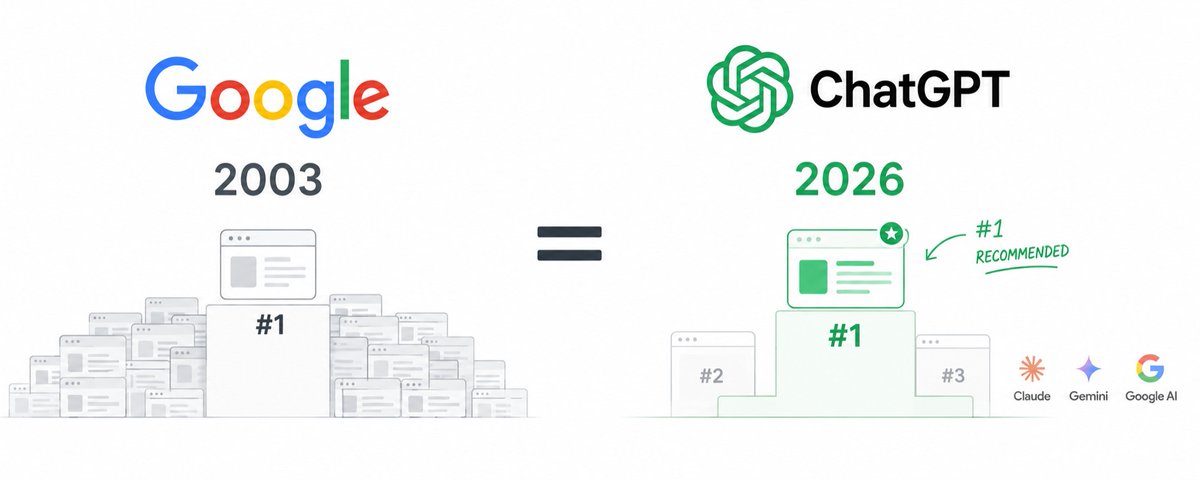
in 2003 you could publish a blog post and rank on Google in a WEEK
publish 10 pages, get 50,000 monthly visitors
LLM SEO right now is the exact same window
ChatGPT has rewired how an ENTIRE generation looks things up
we're ranking clients in ChatGPT, Claude, and Gemini in weeks
tested across 20+ niches and here are some results:
- an EdTech platform grew from 6,000 to 60,000+ monthly organic visitors
- SaaS scaled from $20k to $100k MRR in 4 months (760%+ non-branded traffic growth)
- a B2B productivity SaaS went from <10 to 250+ daily non-branded clicks in under 100 days
funny thing is, most companies can 10x their current results with only a few simple tweaks to adjust for what’s currently happening in the SEO space right now:

1. Map the Questions Buyers Ask LLMs
most SEO teams optimize for keywords, but buyers using LLMs don’t search keywords
they don’t type fragments like:
“LMS software”
they ask full questions like:
“what’s the best LMS for schools?”
“what CRM should a startup use?”
“is tool A better than tool B?”
therefore, if you’re optimizing for clicks the traditional way, you’ll often get traffic without buyers
because those searches usually come from people early in the research phase
they’re browsing, learning, or just exploring options
LLM queries are different
people usually ask them when they’re trying to decide what tool to use
so the first step is identifying these decision-stage prompts
here’s our process:
- act like your ideal buyer. ask ChatGPT the same questions buyers would
- analyze the follow-up prompts it suggests
- note which products appear repeatedly
this reveals the decision-stage prompts where buyers are DIRECTLY ready to buy, credit card in hand
once we know those prompts, you have the lock
now all you need to do is build the key
2. Collapse Your Positioning to One Core Problem
traditional SEO was all about covering as much ground as possible
so most companies would position themselves as broad as possible:
“Project management platform.”
“Marketing automation software.”
“CRM tool.”
The problem is those descriptions fit hundreds of products.
And since ChatGPT’s goal is to give accurate answers, it won’t confidently recommend something it can’t clearly understand.
for example, instead of:
“project management tool”
AI understands:
“project management tool for remote teams of 100+ people”
or
”CRM for early-stage startups”
the clearer your positioning, the easier it is for LLMs to confidently recommend you
do this:
- define one buyer + one problem
use this formula:
[tool category] for [specific user] who need to [specific outcome]
example:
- “project management for remote product teams”
- “CRM for early-stage startups”
- lead your homepage with that positioning
open with a clear sentence like:
“[product] is a [tool category] built for [specific user] who want to [specific outcome].”
this tells both users and AI exactly what you solve
- repeat that positioning across your site
use the same wording on:
- homepage
- product pages
- comparison pages
- FAQs
when the same positioning appears across multiple pages, LLMs start associating your brand with that problem
3. Structure Pages to Be Easy to Summarize
most SEO content is written like blog posts
long introductions, bloated paragraphs and buried conclusions
but LLMs need to extract information quickly, so the best-performing pages follow a simple rule:
a human should understand the page in under 20 seconds
when content is structured this way, LLMs can instantly identify the key points and summarize them inside answers
that’s why restructuring pages often drives faster results than publishing new content
here’s how we do this:
- use clear headings
- lead with conclusions
- state tradeoffs directly
- remove long introductions
if a page is easy to skim, it’s easy for AI to summarize
and if AI can summarize it, it can cite it
4. Build Pages That Help People Choose
LLMs recommendations usually appear when someone is choosing between tools
that means the most valuable pages aren’t informational blog posts
they’re decision pages
pages like:
- “Tool A vs Tool B”
- “Best tools for X”
- “Alternatives to Tool A”
these pages already contain the exact reasoning LLMs need to recommend something
so when LLMs generate an answer, your page becomes a natural source
This is one of the fastest ways to start appearing in LLM answers - especially in competitive markets where buyers are actively comparing tools
Examples of high-impact pages:
- [competitor] alternatives
- [tool] vs [competitor]
- best software for [problem]
if your content already helps buyers decide, LLMs are much more likely to use it
5. Align Language Across Your Entire Site
another common issue we see:
companies describing their product five different ways across their site
homepage says one thing
product page says another
blog says something else entirely
to a human this might seem harmless, might even capture more people since you cater to different people with each angle you take
but to LLMs, it creates uncertainty
if an LLM can’t clearly understand what category your product belongs to, it won’t recommend it
so we align the language across the entire site:
- same category
- same positioning
- same problem statement
once those signals repeat across multiple pages, LLMs start associating the brand with that problem
and once that association forms, recommendations begin to compound
6. Cover the Entire Decision Journey
buyers rarely ask just one question
they ask a sequence of questions before making a decision
things like:
- “what tool should I use?”
- “how does this compare to alternatives?”
- “how hard is it to switch?”
- “what happens after I sign up?”
LLMs prefer recommending brands that appear across multiple stages of this journey, ideally all
if your content only answers one question, you might appear occasionally
but if your content appears across many related prompts, LLMs start seeing your brand as a reliable solution
that repetition builds authority
so instead of publishing random blog posts, we map the entire decision process and build pages for each stage
Summary
our $35M SEO playbook:
1. map the questions buyers ask AI
so you capture people at the exact moment they’re deciding what tool to use
2. collapse positioning to one clear problem
so LLMs can confidently associate your brand with a specific solution
3. structure pages to be easy to summarize
so AI systems can quickly extract and cite your content in answers
4. build decision-stage pages
(comparisons, alternatives, best tools) so you appear when buyers are evaluating options
5. align language across the entire site
so AI consistently understands what category your product belongs to
6. cover the full decision journey
so your brand appears across multiple related prompts instead of just one
The Companies That Adapt Early Will Win
most companies will continue doing SEO the way they always have
- publishing more blog posts
- chasing more keywords
- building more backlinks
while that still gets results, the decision layer is shifting fast:

buyers are increasingly asking AI for recommendations before they ever click a search result
which means the companies that win won’t just be the ones that rank highest
they’ll be the ones that are easiest for LLMs to recommend
the good news is you don’t need to start from scratch
most companies already have 80% of the foundation in place
they just need to restructure it so LLMs can actually understand and cite it
that’s exactly what we’ve done across dozens of niches - turning existing SEO into a system that consistently shows up inside AI answers
and that’s how those same strategies generated $35M+ in revenue over the past two years
ChatGPT search is growing 18% per year and analysts expect AI assistants to capture a majority share of the search market by 2030
right now, this channel is still early
which means the companies that adapt now have a massive advantage before the space becomes crowded
if you want help implementing this strategy for your company, book a free discovery call with us below.
Related articles

jev for seo is insane (here's why)
Jev launched on September 15 behind a waitlist. It doesn't chat. It doesn't generate text. You send it state and a typed question, it returns a probability in about 250 milliseconds, for a fraction o…

How We Generated Millions Of Organic Clicks With Programmatic SEO
most SEO looks like this:

I told ChatGPT-6 Astra to do my SEO. It got me $27k MRR (full guide)
Connect a custom MCP server named Conqueror using this URL: [https://winwith.conquerorapp.com/mcp](https://winwith.conquerorapp.com/mcp)