The Reality of Filtering Your Circle.

We've become accustomed to hearing advice from finfluencers like:
> “STAY AWAY FROM THOSE USELESS FRIENDSHIPS.”
> “BE THE POOREST PERSON AT THE TABLE.”
> “STAY AWAY FROM EVERYTHING BAD AND GET CLOSER TO EVERYTHING GOOD.”
And honestly, I find a lot of this advice somewhat childish and simplistic. I've touched on some of these topics in previous articles, but I wanted to go deeper this time.
While I generally agree that it's often good to put yourself in environments where calmness, stability and predictability are more common, I think it's a mistake to believe that you can simply choose to keep everything bad away from your life.
You don't control everything that happens to you.
You will never know for certain what is coming next. And while there are environments where temptations, distractions and problems are much less likely to find you, you will never be able to stay away from them 100% of the time.
That's why I think there is an important point that often gets overlooked:
RESISTING TEMPTATION IS A SKILL YOU HAVE TO DEVELOP.
Temptation will eventually appear when you least expect it. You won't always be able to control where you are, who you're around, or what opportunities are put in front of you.
What you can control is how you respond when they appear.
The goal shouldn't be to build a life where temptation never reaches you.
The goal should be to become someone who is prepared to overcome it when it does.
There is a type of advice that has become popular in business and crypto.
> “Become the poorest person in the room.”
> “Your environment is everything.”
> “Cut off people who don't share your ambition.”
> “Stay away from temptation.”
> “Surround yourself only with people who are ahead of you.”
There is some truth behind these ideas. Your environment matters. The people around you influence your habits, your ambitions and, to some extent, the person you become.
But somewhere along the way, good advice started being put in a position where you’re basically escaping your problems, and that’s my point.
There is a whole generation of “finfluencers” and business gurus who seem to approach life as if every decision has to maximize your productivity, wealth or status.
Even friendships become an investment.
You are supposed to ask yourself what someone contributes to your life. Whether they are ambitious enough. Whether they know the right people. Whether they are successful enough.
And if they aren't?
You are apparently supposed to leave them behind.
I don't agree with that.
Your friendships aren't the problem.
> If saying no to a friend who invites you to go out partying on a night when you're busy is a problem for you, the problem isn't your environment. The problem is you and your lack of decisiveness/self control.
Not everyone you love needs to be useful to you.
Some of the people who were there when you had nothing may never become millionaires. They may never start a company, trade crypto or build something impressive.
That doesn't make their presence less valuable.
There is a difference between keeping people around who actively drag you down and abandoning people simply because they aren't going in the same direction as you.
If someone constantly encourages destructive behavior, doesn't respect your goals or makes it impossible for you to become the person you want to be, creating distance can be the right decision.
But that doesn't mean you should turn your social life into a ruthless filtering system.
Some of my favorite people in life might never be the people I learn business from.
And that's okay.
Not every relationship needs to provide you with knowledge, money, connections or opportunities.
Sometimes you just need someone you can sit next to without talking about your goals.
Someone who knew you before you had anything to prove.
Someone you can laugh with without thinking about networking.
Someone who doesn't care about your portfolio.
That has value too.

Success Shouldn't Cost You Your Identity.
The same problem appears with another piece of advice I hear constantly:
always be the poorest person at the table.
Again, there is a useful idea underneath it.
Being around people who are more experienced than you can expose you to different perspectives. You can learn from people who have achieved things you haven't.
You should absolutely put yourself in rooms where you can learn.
But why turn that into a rule?
What happens when you become obsessed with always being the poorest person in the room?
You can start measuring your worth by the people sitting around you.
You walk into a room and immediately look at what everyone else has.
> Their watch.
> Their car.
> Their company.
> Their portfolio.
> Their connections.
And suddenly the entire purpose of being there is comparison.
Learning becomes secondary.
There is nothing inherently wrong with being the richest person in the room either.
Sometimes you are the person who has something to teach.
Sometimes you are surrounded by people who have less money but more character, more creativity or simply a better perspective on life.
A person's bank account doesn't determine how much you can learn from them.
The same principle applies to temptation.
A lot of self-improvement advice seems to revolve around creating an environment where temptation simply doesn't exist.
Don't go there.
Don't meet those people.
Don't drink.
Don't gamble.
Don't waste time.
Delete the apps.
Remove everything that could possibly distract you.
And sometimes, yes, that's exactly what you should do.
If something is seriously damaging your life, creating distance is smart.
But there is a limit.
You cannot spend your entire life running away from everything that could potentially distract you.
At some point, you have to learn how to say no.
Because if your discipline only works when everything around you is perfectly controlled, is that really discipline?
There will always be distractions.
There will always be people doing things you shouldn't be doing.
There will always be opportunities to waste your time.
You can't build a life where temptation never appears.
You have to build one where temptation doesn't control you.
And I think that's where a lot of this advice gets misunderstood.
Self-improvement shouldn't mean turning yourself into a machine.
Business shouldn't become your entire identity.
Crypto shouldn't determine who you are allowed to be friends with.
And success shouldn't require you to abandon every version of yourself that existed before you started succeeding.
There is nothing wrong with changing.
You should change.
You should grow.
You should meet ambitious people. You should enter rooms where you feel inexperienced. You should learn from people who are ahead of you.
But don't confuse growth with rejection of your past.
Some people will grow with you.
Others won't.
Some relationships will naturally disappear.
Others will remain for decades.
That's life.
The goal shouldn't be to construct the perfect environment where every person, activity and conversation contributes to your success.
The goal should be to build a life where you can succeed without losing the people and qualities that made the success worth having in the first place.
Because eventually, you might become the richest person at the table.
The question is whether you'll still have someone you actually want to sit there with.
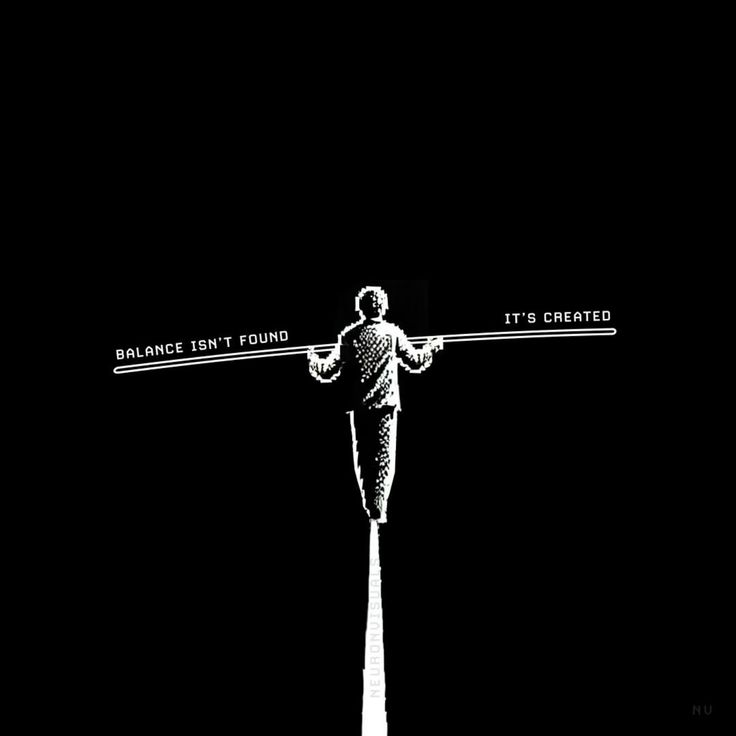
Everything is about balance.
You should absolutely try to put yourself in environments where problems and temptations are less common. There is nothing wrong with protecting your peace, choosing your surroundings carefully, or creating habits that make it easier to stay focused.
But there is a big difference between reducing your exposure to something and completely escaping from it.
You need to find a balance between the two.
Because some situations won't ask for your permission before showing up.
Life will occasionally throw something at you out of nowhere. A bad decision, a difficult situation, the wrong person, an unexpected opportunity, a moment of weakness.
And if you've spent your entire life simply running away from these things, you may not know what to do when they finally catch up with you.
That's why I don't think the goal is to eliminate every possible source of temptation or trouble.
The goal is to become capable of handling them.
Put yourself in environments that help you grow, but don't become so dependent on those environments that you fall apart the moment they change.
Because some problems won't give you a warning.
And if you don't know how to deal with them when they arrive, they can take you down before you even have time to react.
Making the most of your environment isn’t always about money.
> Maybe you have a friend with a much higher level of emotional intelligence than you do.
> A family member who has reached a level of peace and tranquility that you never seem to achieve.
> An older person who, over the years, has gained wisdom and can pass it on to you.
> A girlfriend who teaches you to discover your sensitive side and, for a moment, disconnects you from your insatiable ambition to achieve your goals.
And everything, absolutely everything, shapes who you are as a person.
The person who later makes calmer, more coherent, and wiser decisions.
Taking care of your environment means taking care of your next steps.
And that kind of personal leveling up sometimes pays off way more than reading a finance book or blindly following a guru's calls.
If you enjoyed this read, check out my profile for more articles I've been writing in my free time. Hope you like them!
Related articles

How I Make $20k/Month With Pixar Animations (and how you can too)
Every time I've made the most money in my life it came down to right time, right skill. AI Animations are exactly this to me right now
How to launch a one-person product (without destroying your life)
Over the last 5 years, I’ve helped launch products that went on to make multiple 7 figures in revenue per year.

the whop partner business model explained in 5 minutes...
every online business model is a trade between 3 things.