The Room Starts Lying Before Anyone Says a Word

Power doesn’t only change the person who has it. It changes what everyone else is willing to tell them.
> Pixar’s most important feedback meeting was built around a strange rule: the people giving notes had no authority.
They could question a character, pull apart a scene or say that an entire section of a film was not working. But they could not order the director to change anything.
Ed Catmull, Pixar’s co-founder, said this was one of the discoveries that made the Braintrust work. Once the power to command was removed, the director no longer had to enter the room ready to defend the film from people who could take it away.
That detail stayed with me.
Most organizations try to improve honesty by asking people to be candid. Pixar changed the conditions under which candor had to happen. It made criticism less dangerous to give and less threatening to receive.
The more interviews I watched about successful partnerships, the less I believed the familiar story that powerful people simply become surrounded by liars. That makes it sound as if dishonest people arrive one day and form a circle around them.
Usually, the change is quiet.
Someone learns which objection makes the boss impatient. Someone else discovers that bad news is safer on Friday afternoon than Monday morning. A weak result becomes “early data.” A serious risk becomes “something we’re monitoring.” Nobody says anything false, exactly.
But the room is already lying.
Truth has to travel through the room
I think of the problem as truth distance: the gap between what the people closest to reality know and what the person with the most power eventually hears. It is measured in edits.
The first edit softens the language. “This won’t work” becomes “there may be a challenge.”
The second edit changes the timing. The problem is raised after the decision is difficult to reverse.
The third edit removes ownership. “I think we are wrong” becomes “some people may have concerns.”
The fourth edit anticipates preference. People stop reporting what they see and start reporting what they think the leader will reward.
By the time the message reaches the top, every individual sentence may still be defensible. The picture is false because the important edges have been sanded off.

This is why asking “Does anyone disagree?” rarely works. The question arrives inside the hierarchy that created the silence. Everyone has to decide whether the invitation is real and will still feel real tomorrow.
Silence then gets mistaken for agreement.
I have become suspicious of any important room that reaches consensus too smoothly. Not because conflict is always intelligent, but because complicated decisions normally contain at least one cost that somebody can see more clearly than everybody else.
When that cost has no speaker, the absence itself is information.
Power changes both sides of the conversation
The person with less power becomes more careful. They read facial expressions, remember what happened to the last dissenter and decide how much of the truth the relationship can survive.
At the same time, the person with more power can become less aware of how much editing is happening around them.
A 2006 series of studies by Adam Galinsky and colleagues associated power with reduced perspective-taking. In one experiment, people primed to feel powerful were more likely to draw an “E” on their forehead in the direction that made sense to themselves rather than to someone looking at them. Other experiments found weaker adjustment for what another person knew and lower accuracy in reading emotions.
The forehead experiment is memorable, but I would not treat it as a universal personality test. The more useful point is narrower: power can make your own view feel like the view.
Amy Edmondson’s research on 51 work teams also found that psychological safety was associated with learning behavior: seeking feedback, discussing errors and experimenting.
Put the two findings beside each other and a dangerous loop appears.
The people below become more sensitive to the risk of speaking. The person above can become less sensitive to the fact that others are withholding.
Nobody has to wake up intending to create a dishonest culture. The room can fail without a villain.

Steve Jobs and the argument that had to survive him
Steve Jobs is a useful test because he does not fit the soft, agreeable version of this idea.
At the 2010 D8 conference, Walt Mossberg asked whether people at Apple were willing to tell him he was wrong. Jobs laughed and said they had “wonderful arguments.” He added that Apple had to be run by ideas rather than hierarchy because good people would not stay otherwise.
That line is easy to turn into a leadership poster. Catmull’s account of disagreeing with Jobs is more useful.
Jobs could shoot down an argument immediately, Catmull said. So he would wait a week, return with a counterargument and sometimes repeat the process for months. The outcomes were roughly split: Jobs changed his mind, Catmull changed his, or they never agreed but Jobs let him proceed anyway.
This is not a story about a leader who made disagreement comfortable. It is a story about a disagreement channel durable enough to remain open after the first no.
That distinction matters to me. “I welcome pushback” is a personality claim. A colleague returning for the fourth round of the same argument is evidence about the system.
The real test of an honest room is not whether someone can challenge the leader once. It is whether they can do it again after losing.

The dissenter you dislike may still be the one you need
The Cuban Missile Crisis is often compressed into a clean story about calm decision-making. The record is messier. President John F. Kennedy’s advisers debated air strikes, invasion, blockade and diplomacy while a mistake could lead to nuclear war. The Joint Chiefs favored attacking Cuba. Adlai Stevenson argued for a peaceful path and warned about escalation elsewhere.
A National Archives analysis of the crisis makes an uncomfortable point: Kennedy personally disliked Stevenson, but parts of Stevenson’s reasoning still helped pull him away from a military assault.
This is a harder form of listening than accepting criticism from a trusted friend. The useful information arrived attached to a person Kennedy did not naturally want to reward.
Many leaders overestimate their openness because they can hear hard truths from people they like. The harder test is whether an idea can survive their opinion of its messenger.
If not, the room will learn to package facts in approved personalities. Eventually, information without the right face will never reach you.
Some relationships can absorb an accurate sentence
Billie Eilish described a different version of the same mechanism when NPR asked how she and Finneas handle disagreements.
She said that conflict can be harder with a collaborator who is not family. You worry about offending them or making them unwilling to work with you again. With Finneas, she said, they do not waste time trying to be nice. They can say, “I don’t like that,” argue and continue because the relationship is not about to disappear.
The point is not that siblings are automatically better collaborators. Plenty of families make honesty more dangerous. The useful part is the cost structure.
Billie and Finneas can be direct because a single accurate sentence is unlikely to end the partnership. Their relationship has enough history, affection and mutual dependence to absorb friction.
That is what many professional teams try to imitate with slogans about candor. But candor is not a tone of voice. It is a prediction about what happens after you speak.
If the relationship survives only while everyone is pleased, the room is not honest. It is polite.
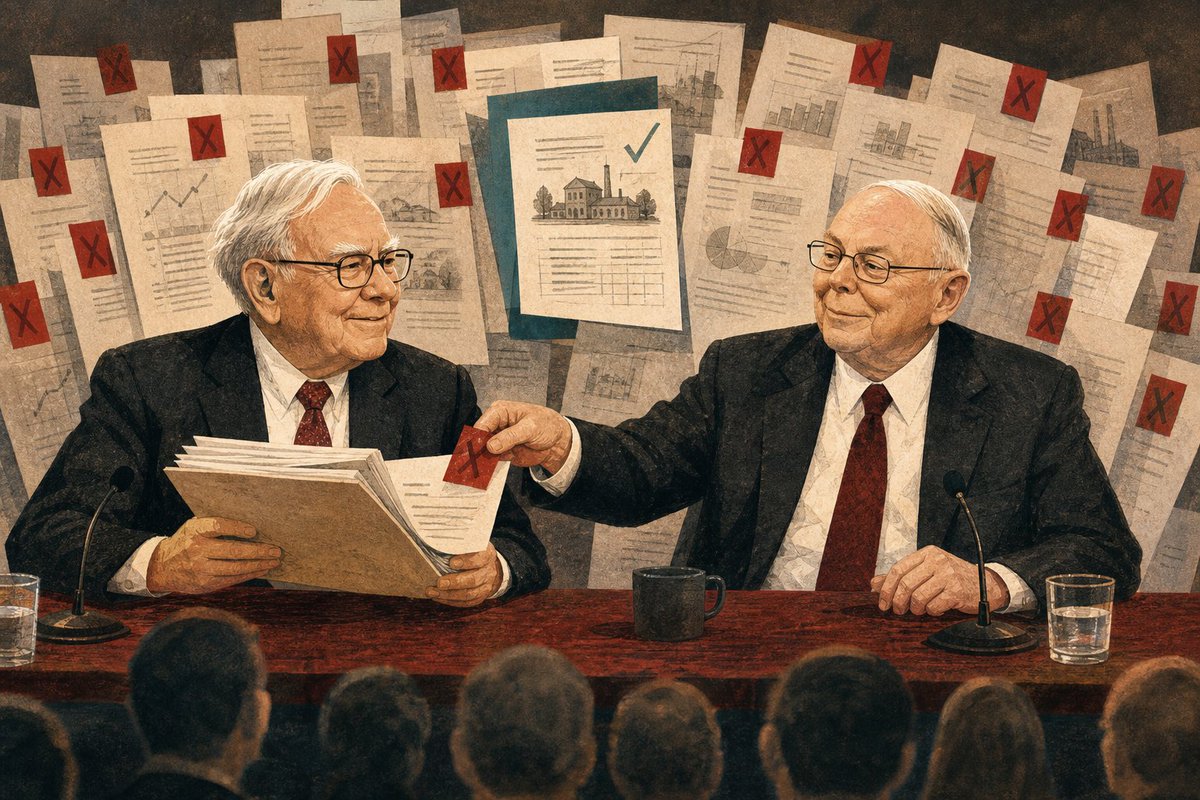
Warren Buffett’s “abominable no-man”
Warren Buffett and Charlie Munger offer another useful distinction: disagreement is not the same thing as relational damage.
At Berkshire Hathaway’s 2014 annual meeting, Munger reminded Buffett that he had once called him the “abominable no-man.” In later meetings, Buffett said they had disagreed over the years but had never become angry with each other.
The combination matters more than either claim alone.
A partner who always says yes adds comfort but very little information. A partner who turns every objection into a contest eventually makes the relationship unusable. Munger’s value was not simply that he said no. It was that his no could remain inside the partnership.
When I hear successful people talk about the person who “kept them grounded,” I hear more than sentiment. I hear information infrastructure: fame, wealth or rank did not fully rewrite the terms of the conversation.
Not every contrarian is a truth-teller
There is a lazy version of this argument that treats the loudest dissenter as the bravest person in the room.
I do not believe that.
Contrarianism can be its own performance. Some people oppose whatever has momentum because opposition gives them status. Others criticize so vaguely that they can claim foresight no matter what happens, while accepting no responsibility for a better decision.
Useful dissent usually has three qualities.
It is informed. The person understands the work closely enough to identify a real mechanism, not just a bad feeling.
It is specific. They can name the assumption, consequence or missing evidence they distrust.
It is attached to the outcome. They are trying to improve the decision, not merely separate themselves from it.
This is another reason Pixar’s Braintrust is a better model than “be brutally honest.” The group was made of peers who understood filmmaking. Their notes were supposed to diagnose problems in the film. And because they could not mandate a fix, the performance of domination had less value.
The goal was not to win the room. It was to make the work less wrong.

Honest rooms are designed before the disagreement
The strongest pattern across these cases is that honesty cannot depend on a leader feeling unusually humble that day. It needs structure.
Here are the rules I would borrow.
1. Let the highest-status person speak last
Once the leader states a preference, every later contribution has to push against an anchor. Collect initial views first, in writing if necessary.
2. Ask for missing information, not generic agreement
“What am I not seeing?” is better than “Does everyone agree?” Better still: “What would make this fail?” and “Which assumption is carrying the most weight?”
3. Separate diagnosis from command
Pixar’s rule is powerful because the person receiving feedback keeps ownership of the solution. Critics can identify the pain without pretending they know where the injury begins.
4. Reward early bad news
People notice whether the first messenger is treated as useful or disloyal. If an ugly fact arrives early, the timing should count in the messenger’s favor even when the wording is imperfect.
5. Protect at least one independent channel
Every powerful person needs someone whose income, access or identity is not completely dependent on keeping them pleased. A board member, editor, coach, old friend or partner can fill the role. Independence is not cynicism. It is redundancy.
6. Keep a record of rejected objections
After the result is known, review which concerns were dismissed and why. Otherwise, leaders remember the times they welcomed dissent and forget the times the room correctly predicted their mistake.
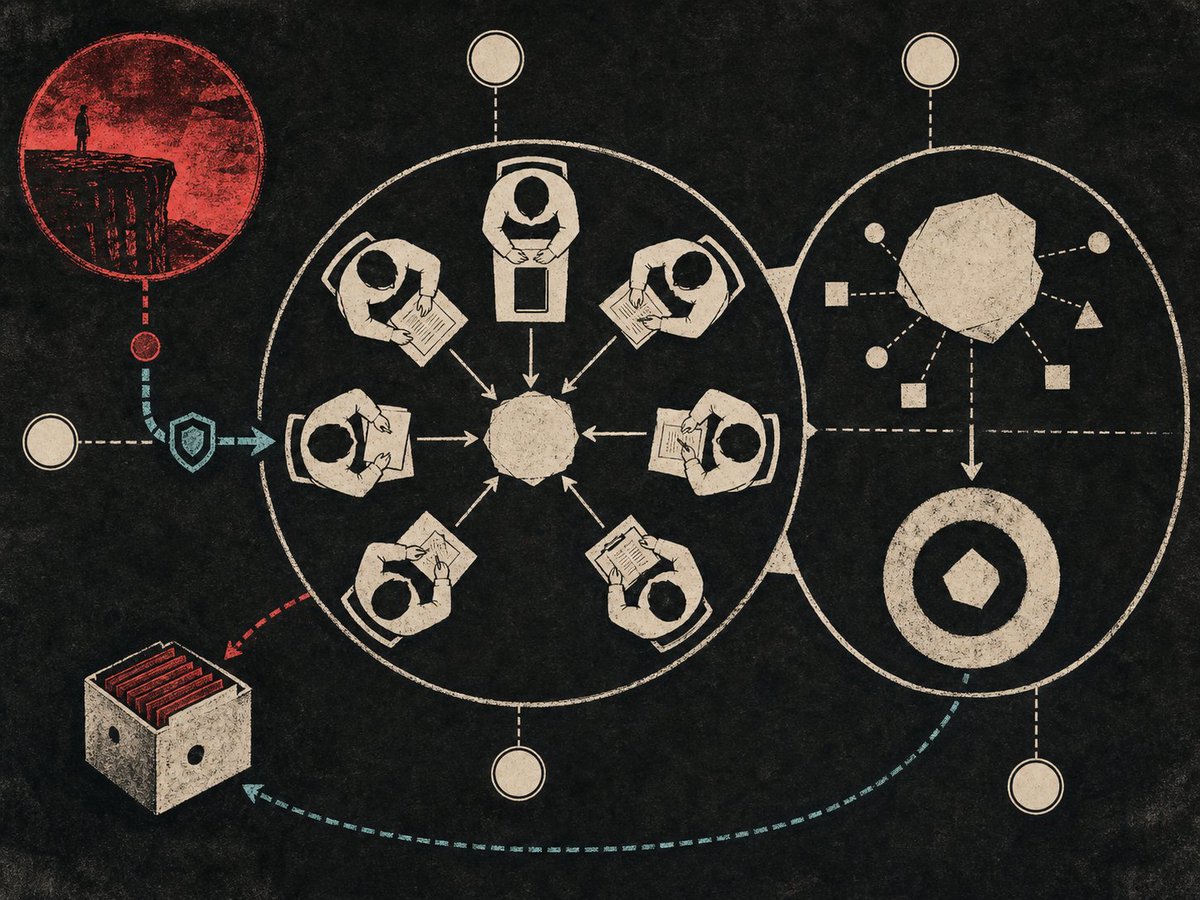
These rules do not guarantee truth. They shorten truth distance. They make reality travel with fewer edits.
The Truth Distance Test
When a team says it values honesty, I would look for behavior rather than declarations.
- Does the language change when the most powerful person enters?
- How long does bad news take to move upward?
- Can someone name a recent decision the leader got wrong?
- Are objections raised while the decision is still reversible?
- Does the leader respond to the evidence or to the status of the messenger?
- Can the same person disagree twice without losing access?
- After failure, are old warnings examined or quietly forgotten?

The question I care about most is number six.
Many rooms permit one ceremonial disagreement. It proves openness without redistributing any risk. The real culture becomes visible on the next invitation, the next promotion and the next time that person starts a difficult sentence.
The room studies you
Success does not only give a person more influence. It gives everyone around them more reasons to study their reactions.
People learn which facts produce curiosity, which produce coldness and which produce punishment disguised as a joke. They learn whether “tell me what you really think” is a request or a test. Then they adjust.
That is why I no longer think the central danger is simply believing your own hype. The more serious danger is losing access to the people who can interrupt it.
Jobs needed colleagues who could return after being dismissed. Kennedy needed reasoning he did not enjoy hearing from a man he did not enjoy. Billie and Finneas needed a relationship stronger than one ugly studio argument. Buffett needed an “abominable no-man.” Pixar needed critics with expertise but without command.
Powerful people often say they want honesty. I believe most of them mean it in the moment.
The room is deciding whether they will mean it after the answer.
The first lie around power is rarely a false sentence. It is usually a true sentence that gets softened, delayed or left unfinished.
The room starts lying before anyone says a word.
It starts when everyone learns which version of reality is easiest for you to hear.

Related articles

Mars men's full meta ads playbook (4,512 ads)
Mars Men has 4,512 ads live on Meta right now, on a Facebook page that only exists since December 2023.
How to Start a 6 Figure Faceless YouTube Channel (Full Breakdown)
I've helped over 400 people start profitable faceless youtube channels. i've ran over 50 channels myself. Generated over $4 MILLION by age 25. Worked with youtubers that have 10 million+ subscribers,…

10 UGC Hooks That Always Work (App Marketing)
your app doesn't need 100 new content ideas.