The ultimate guide to writing with AI

Learn the writing system behind Nicolas Cole's $30M+ internet empire. Sort your ideas into 3 tiers, build your unmade data set, and let AI repeat you while you think new thoughts.
Cole's Digital Brain Method

A content library that gets you customers 24/7
Nicholas Cole has written nonfiction online for 15 years. By his estimate, he has published north of 50 million words and ghostwritten for more than 300 founders, executives, and investors. His business with partner Dickie runs at multi seven figures, and writing drives all of it.
AI can now write anything, on any topic, at any volume. According to Cole, slop is commodity content. It is writing that belongs to everyone at once.
His answer is a digital brain. It is a library of your stories, opinions, lessons, and ideas.
You do the thinking and the writing. AI repeats and remixes what you already said.
This guide breaks down his method. You will learn how to sort your ideas, build what he calls the unmade data set, and judge what a piece is worth before you write it.
Sort Every Idea Into 3 Tiers
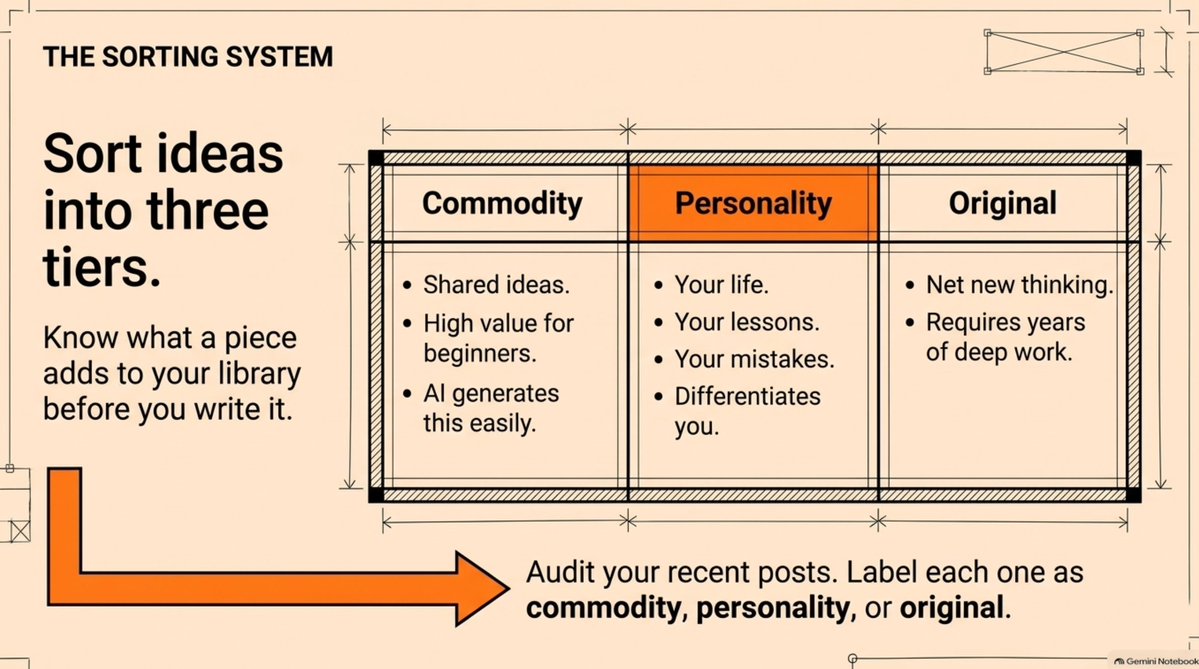
Know what each piece adds to your library before you write it.
The 3 tiers:
- Commodity content: Ideas many people share. "The key to losing weight is eating healthy" belongs to everyone.
- Personality content: Your life, your opinions, your experiences. Readers get your view of the world.
- Original content: New thinking. It comes after years of writing on a small number of topics.
The I vs. You test: "You should do this" leans commodity. "I did this" or "I think this" is personality content.
Commodity content still has value. Step one bores you by the 999th time you write it. For a beginner, it is the most helpful thing you can give.
Choose Your Side

Every topic holds near-infinite commodity ideas. Your job is to pick the ones you agree with.
Cole's personal finance example:
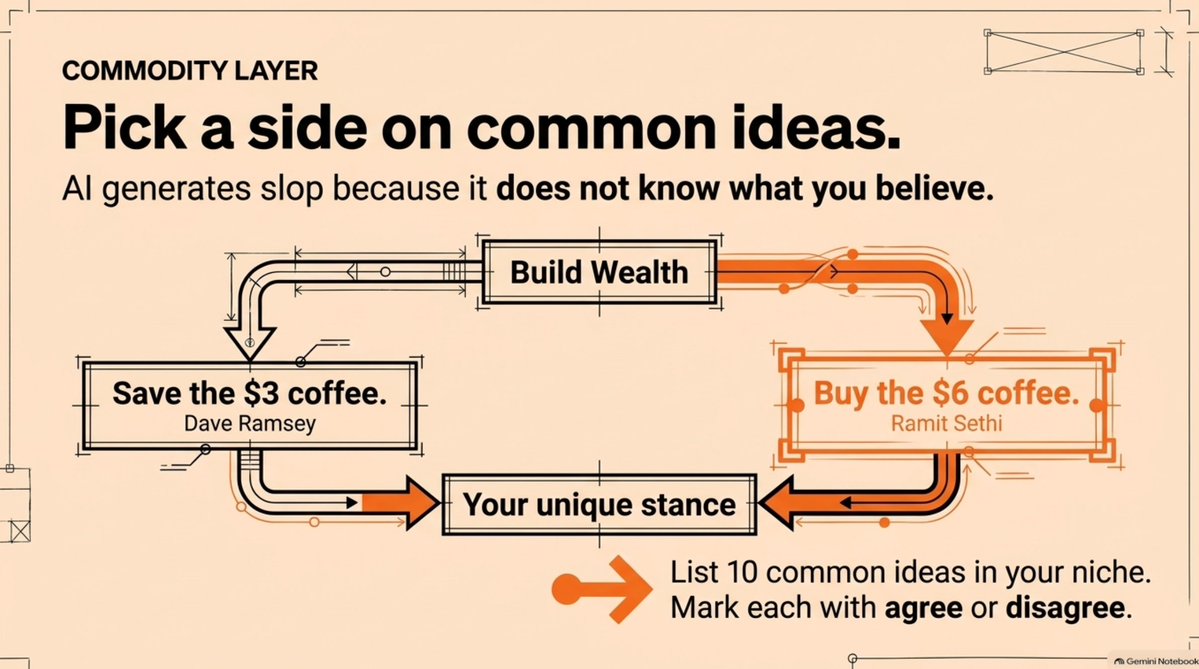
- Skip your $3 morning coffee and buy the S&P 500.
- Coffee money is the wrong thing to focus on.
Both ideas are commodity. Picking one says how you see the world. Greg added the famous versions: Dave Ramsey says save and invest, and Ramit Sethi says keep buying the coffee and live your rich life.
Slop starts here. AI guesses your side, drops in the coffee example, and you read the draft and call it slop.
How:
- List the common ideas in your niche
- Mark each one: agree or disagree
- Store the list where AI can read it (a markdown file or a tool like Obsidian)
On storage, Cole says the location matters less than access. AI needs to read your library.
Build the Unmade Data Set

Everyone uses the same LLMs. So everyone creates from the same data set.
Your personality content is the data AI lacks. A lesson you learned as a kid lives in your head until you write it down.
How: Write about how you became you.
- Formative experiences
- Lessons you learned
- Mistakes you made
- Life details: where you live, how many siblings you have, where you went to school, your hobbies

Proof: Around 2013 and 2014, Cole wrote Quora answers about playing World of Warcraft as a teen. One answer opened with this line and went viral:
> "When I was 17 years old, I was one of the highest ranked World of Warcraft players in North America."
He then used that exact sentence in hundreds of pieces over the next 5 to 10 years.
Gary Vee has said he wants to buy the New York Jets for about 15 years. Tens of millions of people now tie him to that team.
Mundane details count too. Cole moved coast to coast twice in 4 years. At a dinner party, that one fact starts a shared story with a stranger.
You already do this at every coffee meeting. Writing online is the scalable version of that meeting, and AI adds each story to your library.
Personality also beats credentials. Cole points out that finance creators with heavy personality content get more distribution than Ray Dalio, a multi-billionaire.
Let AI Repeat You
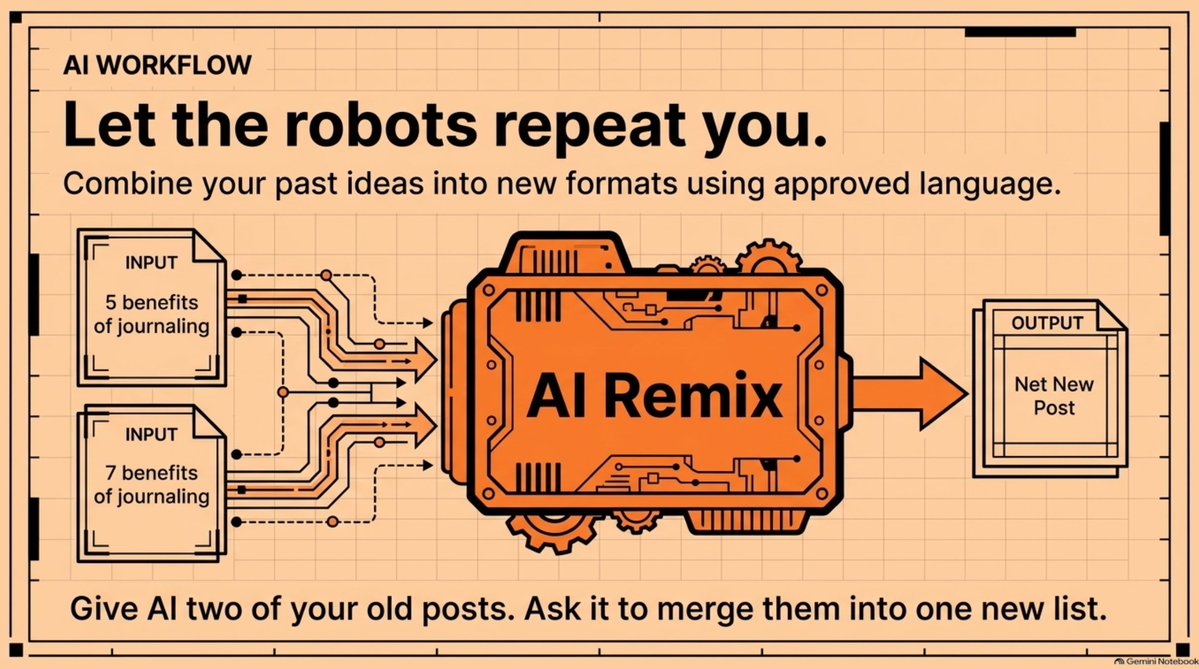
Cole ghostwrote for a decade. He pulled sentences a client had already said (in a book, a podcast, a recorded meeting) and stitched them into new pieces. He calls this approved language.
AI can do the same job with your library. The bigger the library, the more new combinations it can make.
Example: You wrote one post on 5 benefits of journaling and another on 7. AI takes a few from each list and builds a third post from your own words.
The workflow:
You write it → Library grows → AI remixes approved language → Reposts and cross-posts → Your free time goes to new ideas
Cole has tweeted around 10,000 times. Digging up his best posts and reposting them across platforms is low-value work.
That job went to a social media manager, then a VA. Now AI and agents can do it.
How:
- Write the idea yourself, once or twice
- Keep the versions you like
- Give AI the repeating: reposts, cross-platform posts, remixed lists
"What I want is the robots repeating me."
The trap is skipping the writing. Cole says everyone wants the robots to do the thinking. In his words, "the shortcut is the longer road in disguise."
Tune Your Voice
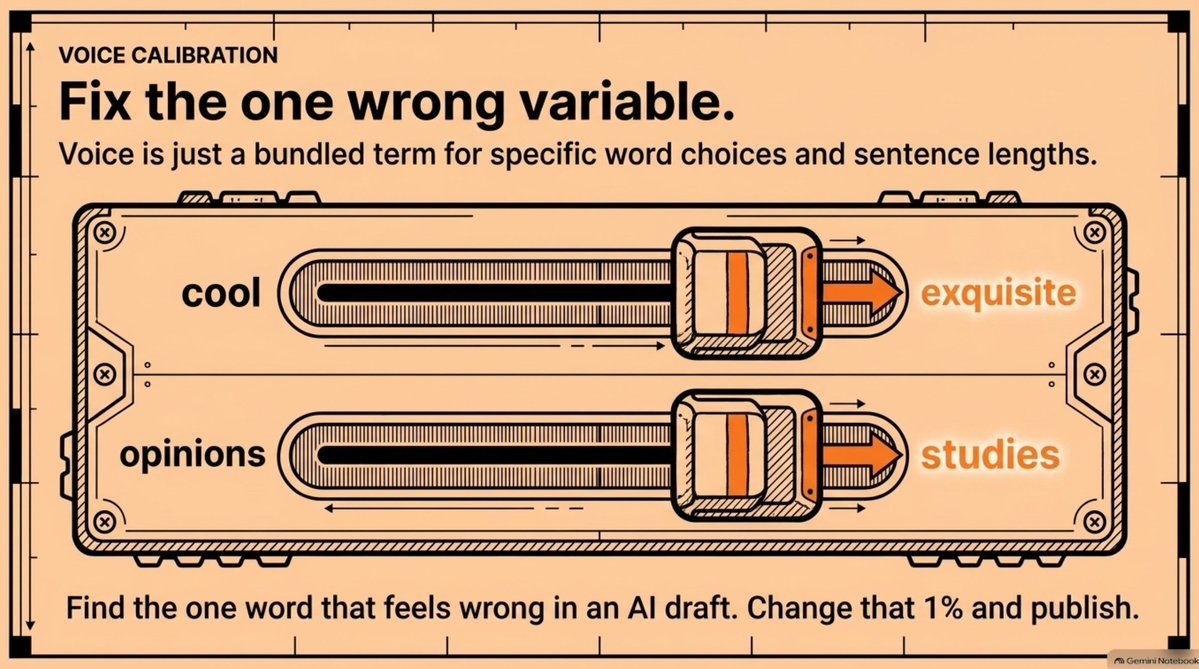
Cole calls voice a bundled term. It is a stack of choices you can see and change.
- Word choice: "cool" and "exquisite" paint two different writers
- Sentence length and structure: long semicolon chains read one way, short plain sentences read another
One ghostwriting client sent a draft back furious. He said it failed to sound like him. Cole saw the draft leaned on opinion, while the client spoke in studies and facts.
So Cole added two or three lines like "according to the New York Times." He changed 1% of the piece. The client was elated.
Use the same fix on AI drafts. Find the one variable that feels off, trade that adjective, and keep the rest.
Voice is a small slice of any piece. Cole estimates about 80% of a typical piece is commodity phrasing. You find your 20% by writing and hitting publish.
Check the Time Horizon
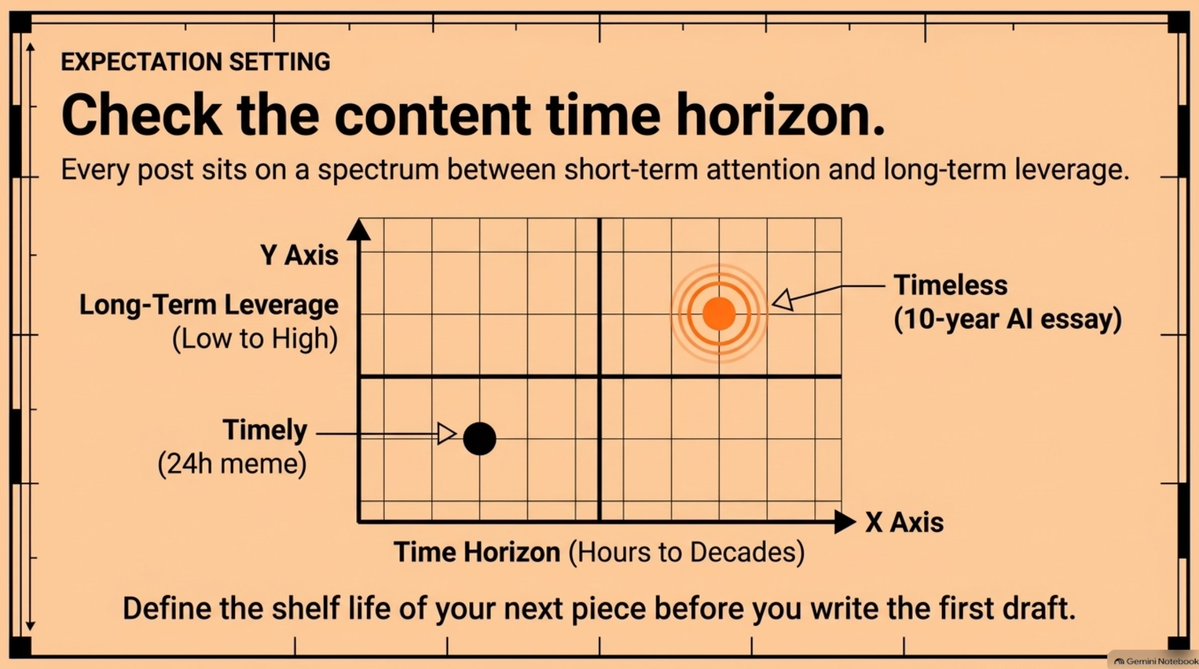
Every piece sits on a spectrum:
- Timely content: High short-term value, low long-term value
- Timeless content: Low short-term value, high long-term value
Greg's AI image meme about a foldable desktop earned about 24 hours of attention. Cole's AI essay took two weeks to write, and he plans to use it for the next 10 years.
Watch the first sentence. Cole's example hooks for a short-form video:

- "Here's how to start a newsletter on Substack." (Commodity)
- "I run a $400,000 a year paid newsletter on Substack. Here's how to start a Substack." (Adds a personality detail)
- "Substack launched this new feature... Here's how to start a Substack in 2026." (Timely. A 2030 repost needs a rewrite.)
Set expectations by position. A timeless essay gets less day-one reach than a meme and pays out for years.
For Brands and Companies

Brand accounts repeat the founder's chosen commodity ideas. The founder carries the personality details. Cole says one library gives the company double the value.
Greg's twist is to put named people behind the brand. In his example, Tiffany works at a Tulsa, Oklahoma Taco Bell. She has been a fan since age 13, and her parents met at a Taco Bell.
Cole says that personality content would outperform a rival brand posting commodity content.
The bigger play is to pay a thoughtful journalist or nonfiction writer a fat salary to think deeply about your industry and build a long-form library. Every department pulls from it, and AI handles the repeating. Greg calls it the company brain and pitched "company brains as a service" as a startup idea.
Greg's team at LCA is asking how to ship at least 5 pieces of content a day. Cole calls that the baseline now. The harder question is the input.
Action checklist
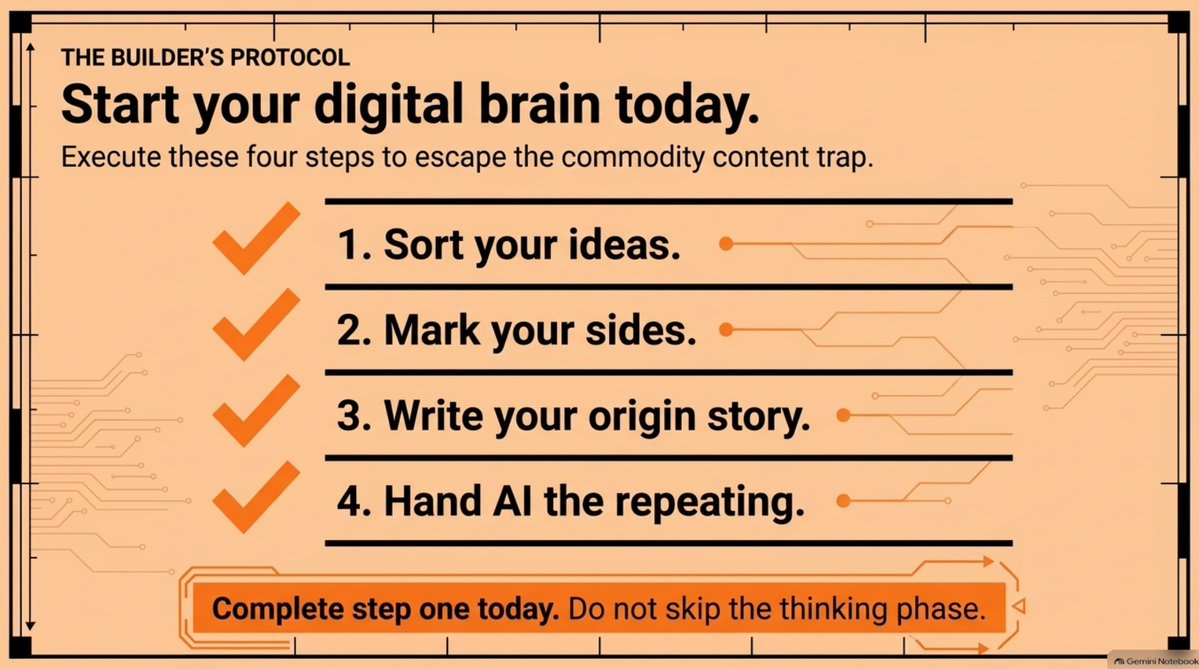
Final Thoughts
Cole built this method around one split. Humans do the thinking and the writing. Robots do the repeating.
Every piece you create adds something to your digital brain. Cole's question is how much.
"Your personality content, your library of content is the unmade data set." - Cole
Checkout the full episode
Apple: https://podcasts.apple.com/us/podcast/the-right-way-to-write-with-ai/id1593424985?i=1000790989160
Spotify: https://open.spotify.com/episode/3w83Sic61R0tPaeP1l4Rod?si=9e6f489187fd440c
Related articles

How we scaled Cal AI to $50M ARR with influencers
PLUS links to a bunch more articles and threads I've written on this subject so you can run this same playbook to scale your own consumer app.
How to Start a 6 Figure Faceless YouTube Channel (Full Breakdown)
I've helped over 400 people start profitable faceless youtube channels. i've ran over 50 channels myself. Generated over $4 MILLION by age 25. Worked with youtubers that have 10 million+ subscribers,…
$5T opportunity: AI Roll Ups
You are a sourcing analyst for a holding company buying [industry] firms in [region]. Using the attached list of licensed firms, identify businesses that likely match these criteria: 5 to 50 employee…