You're using 10% of what Claude skills can do
one iphone photo. I turned it into a full product photoshoot, editorial angle, close ups, technical drawing, catalog piece. then I did it for hundreds of products.
a mate of mine runs a furniture store. he sent through a literal iphone photo of a chair, nothing special, just a product sitting in a room. I built one skill, ran it once, and it came back with an editorial shot, a version with a human in the scene, close ups on every edge, a technical drawing, and a full catalog piece. then we ran it across his entire catalog. hundreds of products, same process, every time.

most people are using about 10% of what this actually does
everyone's talking about agents right now. fewer people are talking about the thing that actually makes an agent good at a specific job. it's not a smarter model. it's skills.
think of the different ai harnesses like cars. claude code's one kind of car. another agent's a completely different one, different dashboard, different feel. but once you actually know how to drive, you can get into any of them and figure it out fast. the driving skill transfers. the car barely matters.
same idea applies to onboarding an actual employee.
→ hire the best creative strategist in the world, give them zero context about your business, and they can't market anything, no matter how talented they are. that's context.
→ give them the context but no actual tools to work with, no ad platform access, no design software, and they're still stuck. that's tools.
→ give them both, and they'll still be inconsistent, because nobody's ever shown them exactly how you like a specific task done. that's the missing piece.
that missing piece is skills. simplest way to think about them: skills are just sops for ai. standard operating procedures, the same kind of document you'd hand a new virtual assistant so they follow your exact process instead of guessing.
what actually happens without one
picture asking claude to write a proposal with zero skill behind it. you explain the client, the deal, the price. it writes a first draft. it's not quite right, wrong logo placement, price in the wrong spot, wrong tone. you correct it. back and forth for fifteen, twenty minutes, until it's finally right.
then a week later, another proposal. new chat. it remembers none of it. every preference you taught it is gone. you're explaining the exact same thing from scratch, again.
a skill fixes that permanently. teach claude the process once, save it as a skill, and every future proposal follows the same steps automatically. no re-explaining. no drift. it just works the way you taught it, indefinitely.
not every skill is a process, either. some are just reference material claude checks against:
→ a brand guidelines skill, colors, fonts, logo links, the actual source of truth for anything on brand
→ a skill built purely to strip out writing that sounds obviously ai generated, stock phrases, over hedged sentences, the stuff that reads generic the moment you spot it
same mechanism either way. a folder claude checks before it acts, whether that's a process to follow or a reference to stay consistent with.
skills are not tools, and mixing those up costs people real time
worth being precise here, because this trips people up. giving claude a gmail connector doesn't teach it how you actually want to use gmail. that's just the tool, the access. a skill is the separate instruction layer sitting on top of that access. connect firecrawl for scraping the web, sure, but the skill is what tells claude exactly how you like a competitor site analyzed once it's there.
tool and skill are two different things stacked together. not the same thing wearing two names.
what a skill physically is, no mystery to it
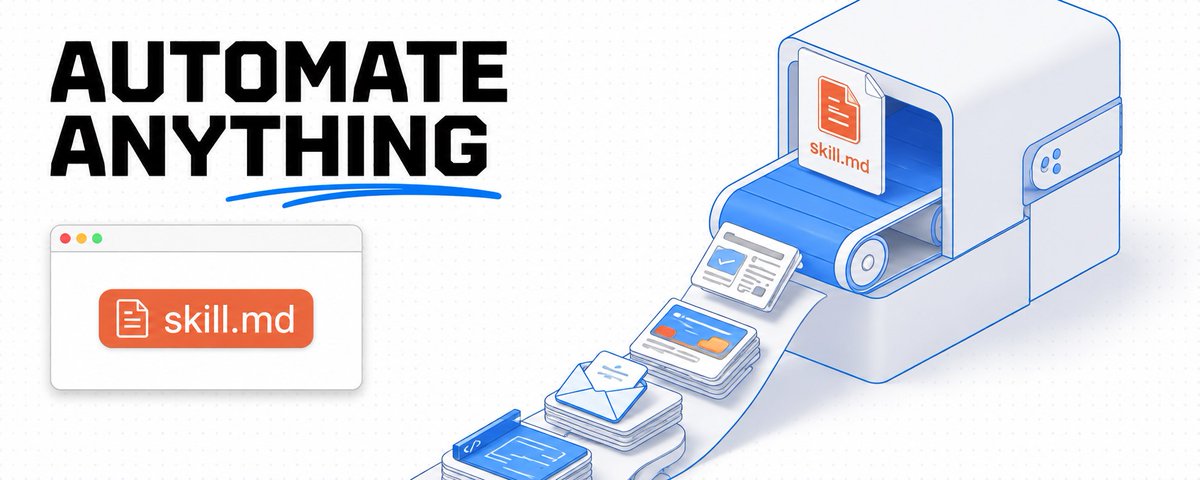
a skill is just a folder with a file called skill.md inside it. plain markdown. a nicely formatted text file, nothing more exotic than that.
at the very top, every skill has a name and a short description. think of that top section like the spine of a book on a shelf, that's the only part loaded into every session by default. claude's got potentially hundreds of these sitting on a shelf at any given time, and it only pulls the full contents off the shelf the moment a task matches what that skill's description says it handles.
that's the entire mechanism. nothing hidden. just a well labeled folder of instructions claude checks against before doing anything repeatable.
physically, they live in a hidden folder on your own computer, separate from whatever skills sit inside the claude desktop app itself, two different locations entirely, worth knowing if you ever go looking for them directly.
one more thing worth knowing. anthropic built the entire concept of skills themselves, and it took the other major labs months before anyone caught up and shipped anything comparable. this isn't a minor feature bolted onto an existing product. it's foundational to how claude's actually meant to be used.

back to the furniture store, and what actually made it work
that skill wasn't complicated to build. the instruction inside it named the exact image generation model to use, described the architecture and color grading style wanted across every shot, and laid out the angles needed:
→ an editorial shot → a version with a human in the scene → close ups on every edge → a technical drawing → a full catalog piece
one skill, built once, ran across an entire product catalog without needing to be re-explained a single time. every product came back with the same consistent shoot style, because the process never changed between runs. only the input photo did.
skills that call other skills
the real leverage shows up once skills start chaining together. take an entire youtube publish process:
→ transcribe the raw footage → write the titles → build the thumbnails → write the description → upload the finished video
five separate jobs. instead of doing them one at a time manually, one orchestrator skill sits above all of them and calls each one in sequence automatically. hand it a video file, and it works straight through the list without needing five separate instructions along the way.
a process that used to eat two to three hours of actual editing and admin time now runs in about fifteen minutes. one instruction instead of five.
how you actually build one of these
nobody sits down and writes a skill.md file by hand from scratch. there's a skill built specifically for that, literally called the skill creator skill, built by anthropic themselves.
two ways to use it:
→ open a brand new chat and say straight up, help me build a skill for writing primary text, and it walks through a few questions until it's got what it needs
→ go through the actual process manually first, build one real example with claude, correct it as you go, get it exactly right, then say build a skill for what we just did
the second method works better for anything with real nuance. claude's already got the full context of what just happened between you, correction by correction, rather than guessing at your preferences cold.
skills aren't finished the first time, and that's fine
the first version of any skill is rarely the final one. run it a second time and something will come back slightly off, a color choice, a layout preference, whatever it is. say it directly in the chat, update your skill so you never do that again, and it does.
run it enough times and eventually the skill just works. consistently. no corrections needed.
that furniture store skill, and most of the ones actually used day to day, went through multiple rounds like this before they stopped needing any adjustment at all. skills aren't a one and done build. they get sharper the more they actually get used.
one caution worth taking seriously here. don't rush to build dozens of these at once. a shelf full of half finished skills that never got refined is worse than useless, just clutter claude has to sort through, most of it unused. build one properly. use it. sharpen it until it's genuinely reliable. then move to the next.
why this actually matters beyond just convenience
skills are just text files. that's the whole reason they're worth building properly instead of treating them as throwaway one time instructions.
if claude code stopped being the best option tomorrow, every skill built inside it moves to whatever comes next in minutes, not months, because there's nothing proprietary locking it in place. the tool underneath is replaceable. the actual asset, the process itself, written down properly once, isn't.
the actual point
most people are stuck treating every claude session like day one with a brand new hire, re-explaining the same preferences over and over because nothing ever gets written down properly. build the skill once, correct it until it's right, and that specific piece of your business runs the same way every single time from then on, without you in the room re-teaching it.
that's the actual unlock. not a smarter model. a system that remembers exactly how you like things done, and never forgets it again.
p.s. if you want the exact skill creator prompt and a walkthrough of building your first skill from scratch, grab it through the newsletter at aiwithremy.com.
and if you want a full library of skills built around your entire business, that's what the AI course hands over. reserve your seat here → awr-gamut-exploration.vercel.app/self-paced#reserve
running a team of 20 or more and need this rolled out company wide instead of just for yourself? that's a different scope entirely → awr-gamut-exploration.vercel.app/enterprise
remy
Related articles
How to Start a 6 Figure Faceless YouTube Channel (Full Breakdown)
I've helped over 400 people start profitable faceless youtube channels. i've ran over 50 channels myself. Generated over $4 MILLION by age 25. Worked with youtubers that have 10 million+ subscribers,…

5 Step Video GEO Guide for SaaS (62k AI Mentions in 3 Months with Claude)
I pulled every "best ... software" keyword with real US search volume, 2,328 of them, and ran 140 through DataForSEO on Google US mobile on September 1, 2026: the 60 biggest category head terms plus…