Your UGC program isn’t failing because of creators. It’s failing because you have no system.

i run the creator campaigns for 70+ consumer products. 590 creators hired per month, 22,504 tracked videos, 2.6 billion organic views, zero ad spend.

every month i go through every viral hit, every breakout app and every strategy in our data to find what is actually moving the needle right now. what worked in the last 30 days.

if you are trying to grow an app, distribution is the bottleneck. not the product, not the design, not the pricing. and most of what you read about distribution is either 2 years old or written by someone who never ran a campaign.
i am going to fix that in the next 5 minutes.
by the end of this you’ll know:
- the 3-second rule that separates the videos that convert from the ones that just get views
- why one format beaten to death outperforms 10 formats tested once (by 4.2x in our data)
- the emotions that actually stop the scroll in september 2026, with the numbers per hook type
- why AI slideshows feel productive and convert almost nothing
- what Forbes just proved about virality, and why it matters more than any tactic in this article
- the “boring” niches printing money while everyone fights over fitness and finance
- the exact 30-day plan i would run if i launched an app tomorrow
save this. you will reference it all month.
let’s get into it.

1. the app is the last thing on screen
the single biggest change i have seen in september is this: the best performing content barely mentions the app.
i know that sounds backwards. you are spending money to promote your app and i am telling you not to talk about it. but the data is overwhelming.
across every niche we track, the videos that drove the most views AND the most downloads this month shared one pattern: the content came first and the product was slipped in later. in some cases the product was not mentioned at all. the link was just in the bio.
Pingo AI got 10.6 million views with a tongue-twister language format. the creator chose a sentence that was long and made no sense. that was the hook. the angry language-tutor delivery showed the product demo while adding to the entertainment.
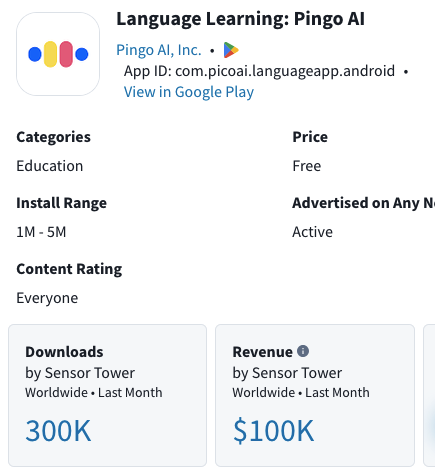
nobody clicked because they wanted to learn a language. they clicked because the video was funny.
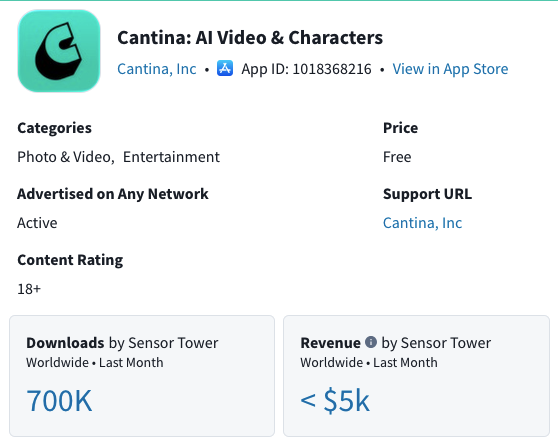
Cantina hit 4.5 million views with a fake movie-clip prank. a girl added extra scenes to Twilight while her boyfriend watched for the first time. the boyfriend reaction was the entertainment. the app was almost invisible.
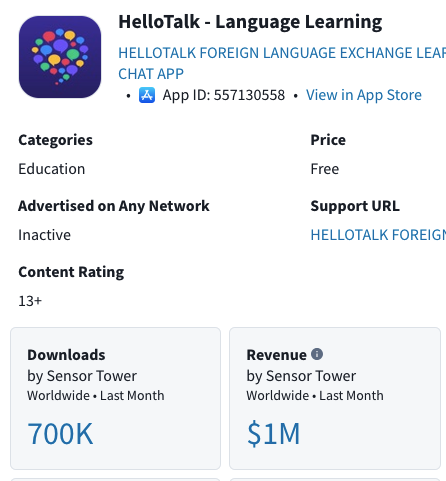
HelloTalk hit 21.8 million views without a traditional hook. just a chat screenshot that resonated.
i call this the 3-second rule: the app appears on screen for less than 3 seconds. the video is 95% entertainment, 5% product.
this is not a coincidence. this is a structural shift in how organic content works in 2026. the audience is too smart for product demos disguised as content. they scroll past anything that feels like an ad in the first 0.5 seconds. the only way through is to make something they genuinely want to watch and let the product ride along. ofc there are some exceptions, if your product is naturally funny/interesting enough to go viral just by showing it then do that.
2. get repetitive, not creative
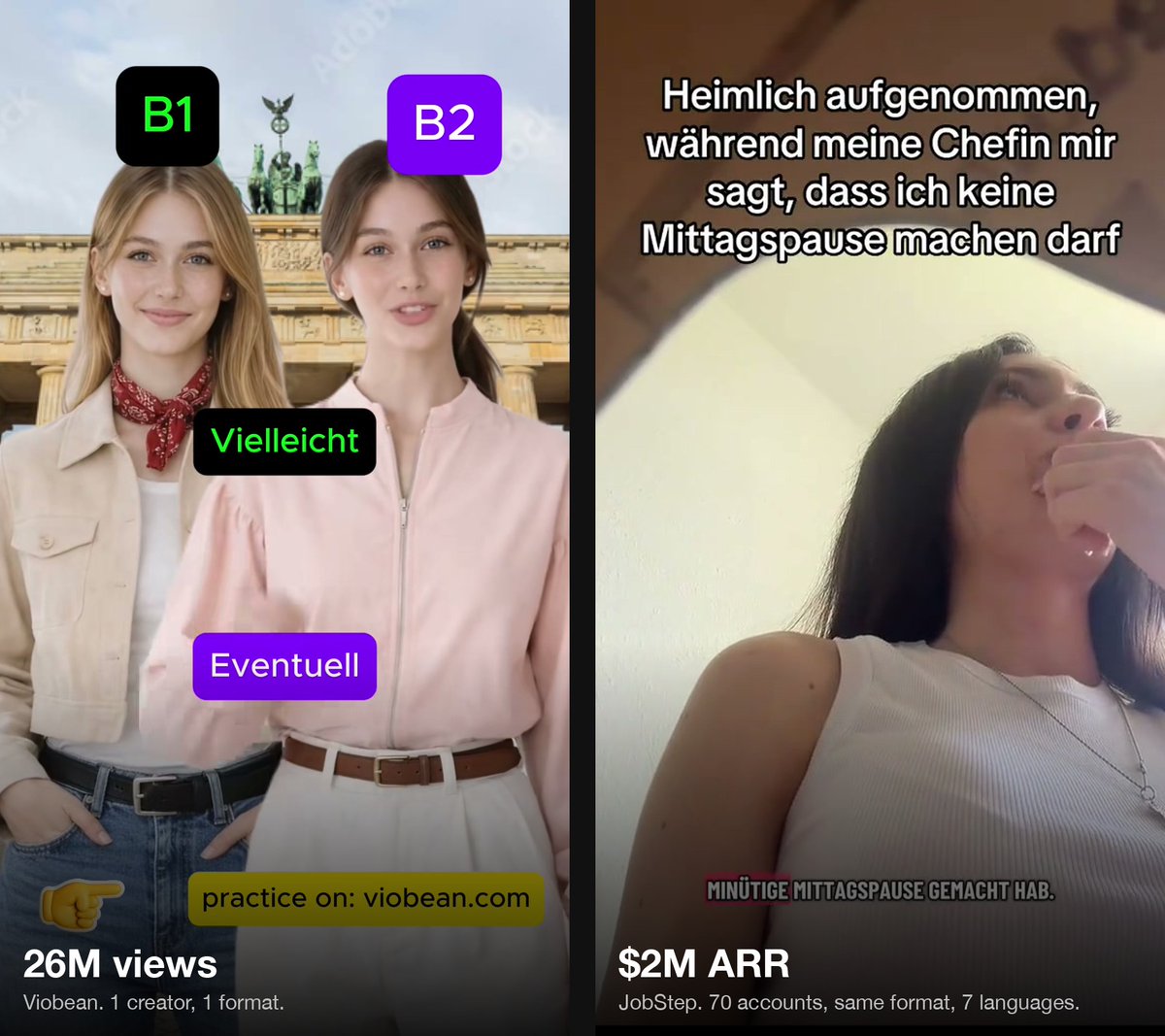
JobStep (an AI-powered job application and search platform designed to help users optimize their resumes, match with relevant jobs, and tailor application materials**)** reached $2 million ARR in 8 months. 70 TikTok accounts. 100 million+ views. zero ad spend.
their strategy: they posted the same video format in 7 different languages.
not 70 different formats. not A/B testing 15 content styles. one format. seventy accounts. seven languages. that is it.
this is what i call format arbitrage. you find one format that works, and instead of getting creative, you get repetitive. you deploy the same winning structure across every market, every language, every account.
Viobean did the same thing with one creator and hit 26 million views for a German exam prep app. the creator mixed German learning with everyday life and culture. it felt like lifestyle content, not a language lesson. one creator, one format, one approach.
the data from our 62 campaigns confirms this. the campaigns that converge on one winning format and repeat it across all creators outperform campaigns with diverse content by 4.2x on average.
most founders resist this because it feels boring. they want variety. they want creativity. they want to test new things.
the algorithm does not care about your creativity. it cares about what people watch. and if they watch the same structure 50 times, the algorithm will serve it 50 times.
one format beaten to death beats 10 formats tested once. every single time.

3. people share what makes them angry, not what makes them informed
i spent the last month tracking hook performance across every niche we cover. the results were not subtle.
controversy hooks outperformed every other category. by a lot.
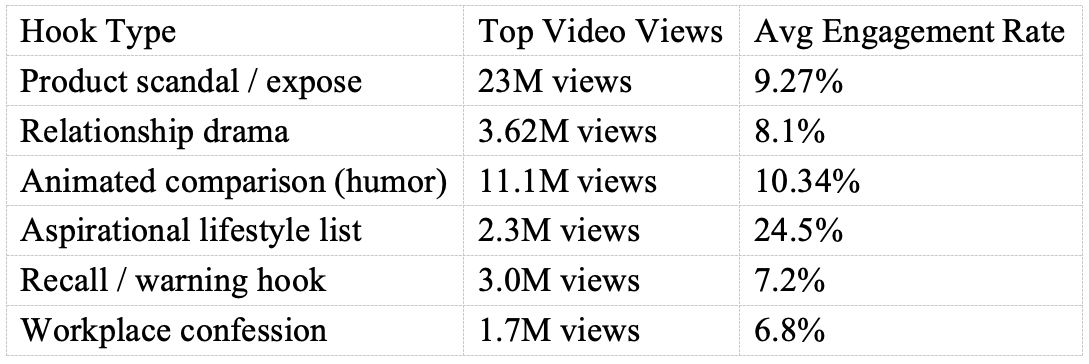
the aspirational lifestyle list had the highest engagement rate at 24.5%, but controversy drives the most raw reach.
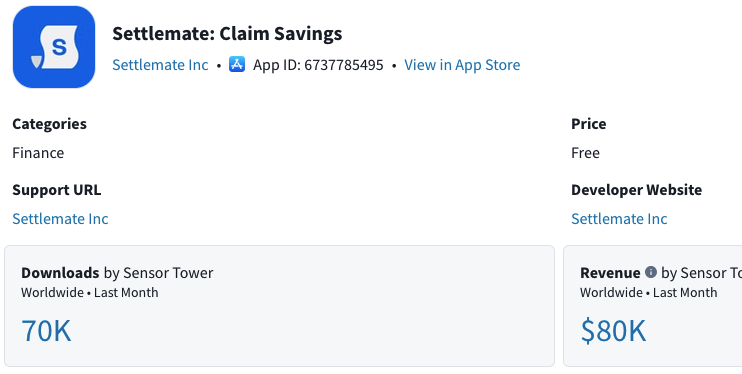
Settlemate hit 3 million views with a recall-warning hook: “3 SHAMPOOS RECALLED.” the video listed symptoms from major brand products with screenshots from the app showing settlement details. fear plus brand names plus money equals views.
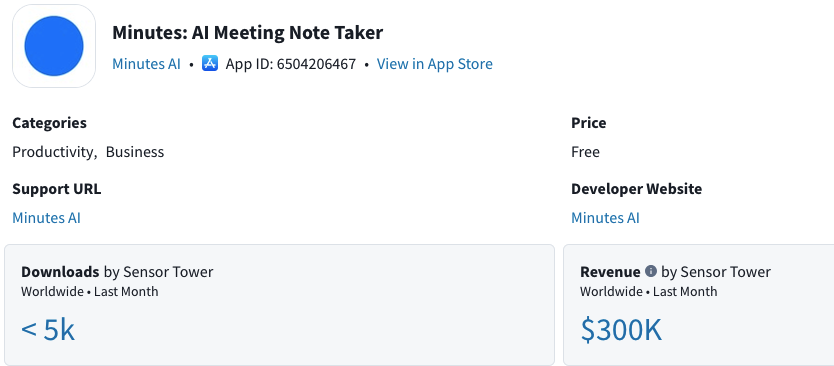
Minutes AI hit 1.7 million views with a workplace confession: “I secretly take soft off days every Monday and Friday.” remote work guilt is a goldmine for engagement because everyone relates but nobody admits it.
people share what makes them angry, afraid or guilty. they do not share what makes them informed.
if your content strategy is built around “valuable educational content,” you are optimizing for the wrong emotion.
i am not saying every video needs to be rage bait. i am saying your hook needs to trigger an emotion strong enough to stop the scroll. and in september 2026, the emotions that stop scrolls are controversy, fear, humor and relationship drama.

4. the AI slideshow trap
this is going to upset some people. i do not care.
AI slideshows are everywhere right now. Pedro Perez is talking about scaling to $10K/month with AI slideshows. Nevo David built $2.2M ARR partly on AI-generated content. the tweets are getting hundreds of thousands of views.
and i keep seeing the same pattern: massive reach, almost zero conversions.
here is the failure i see most often. a founder celebrates 500K views from AI content. i ask how many downloads it drove. the answer is 12.
the same month, a real creator with 4,400 followers produced a video that got 28 million views and actually converted.
here is why.
AI-generated content optimizes for attention, not intent. when someone watches an AI slideshow, they are watching because the visual is interesting or the hook was good. they are not watching because they have a problem your app solves.
real UGC works because a real person says “I had this problem and this app fixed it.” that creates purchase intent. an AI slideshow that shows pretty graphics and text overlays creates views. views and intent are not the same thing.
and the platforms have already picked a side. TikTok tagged 1.3 billion AI-generated videos. creators using AI labels see 73% reach suppression within 48 hours. they want real content from real people.
am i saying AI content is useless? no. AI is incredible for execution: editing, scripting, research, analytics. we use AI tools every single day across 62 campaigns. i wrote 15 prompts for exactly that last week.
but AI as the content itself? the data says it is a reach trap. you feel productive. the numbers look good. and nothing actually happens to your download count.
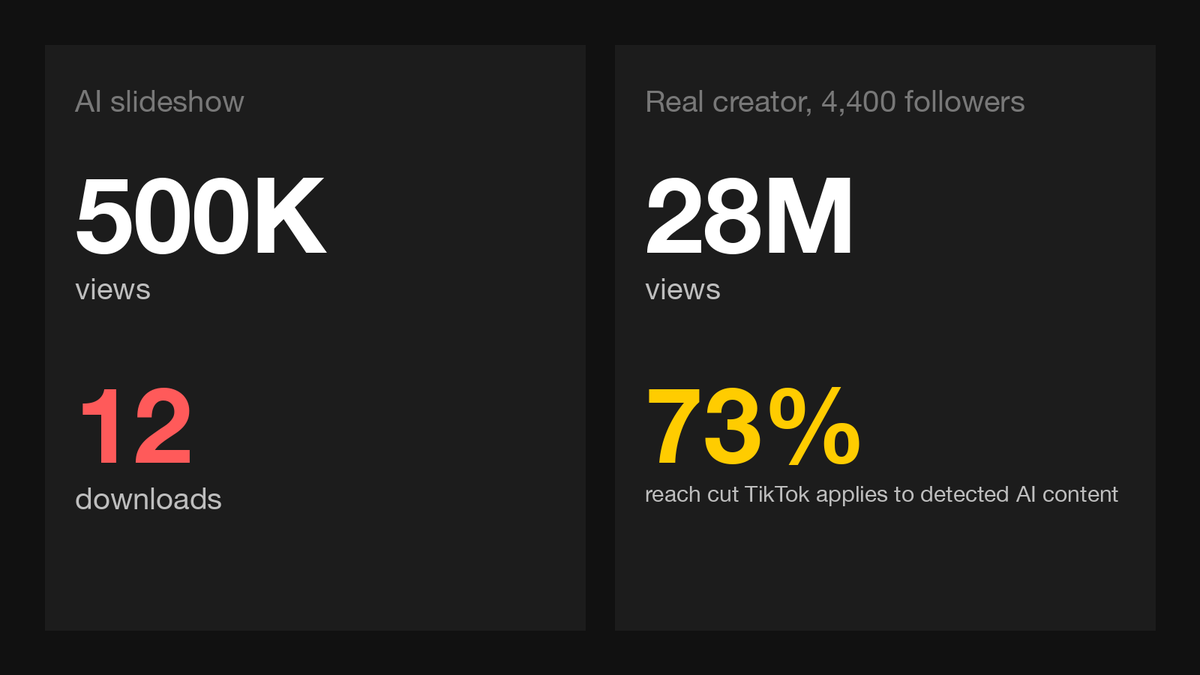
use AI to make your human creators better. do not use AI to replace them. this is a slideshow from one of our campaigns: https://www.instagram.com/p/DYrzZsQNaT-/
5. Forbes just proved what we have known for 2 years
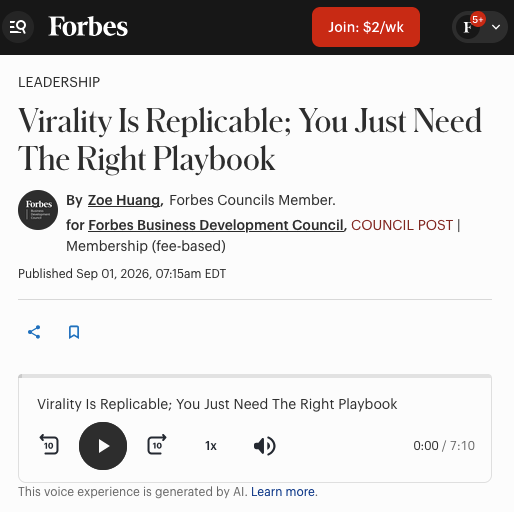
in early september, Forbes published an experiment that should have been bigger news than it was.
they took a group of people with zero experience in growth marketing. no background in content. no creator skills. no audience.
they gave them a structured process. a system. specific steps for finding topics, writing hooks, structuring content and publishing.
every single person in the experiment produced at least one viral post. the best performer hit 400,000 views.
this is the most important finding in growth marketing this year, and most people scrolled past it.
virality is not talent. it is not luck. it is not “having the right audience.” it is a system.
this is exactly what we have seen across 70+ campaigns. the campaigns that work are not the ones with the most talented creators. they are the ones with the best systems: clear briefs, consistent formats, weekly feedback loops and ruthless repetition of what works.
the creator with 10K followers who follows the system outperforms the creator with 500K followers who wings it. every single time.
the implication for app founders is massive: you do not need to find viral creators. you need to build a system that makes average creators produce above-average results. the system scales. talent does not.
 — "
— "6. the niches nobody talks about are printing money
religion and faith content has a 19% engagement rate. that is nearly 4x the engagement rate of education content (5.2%).
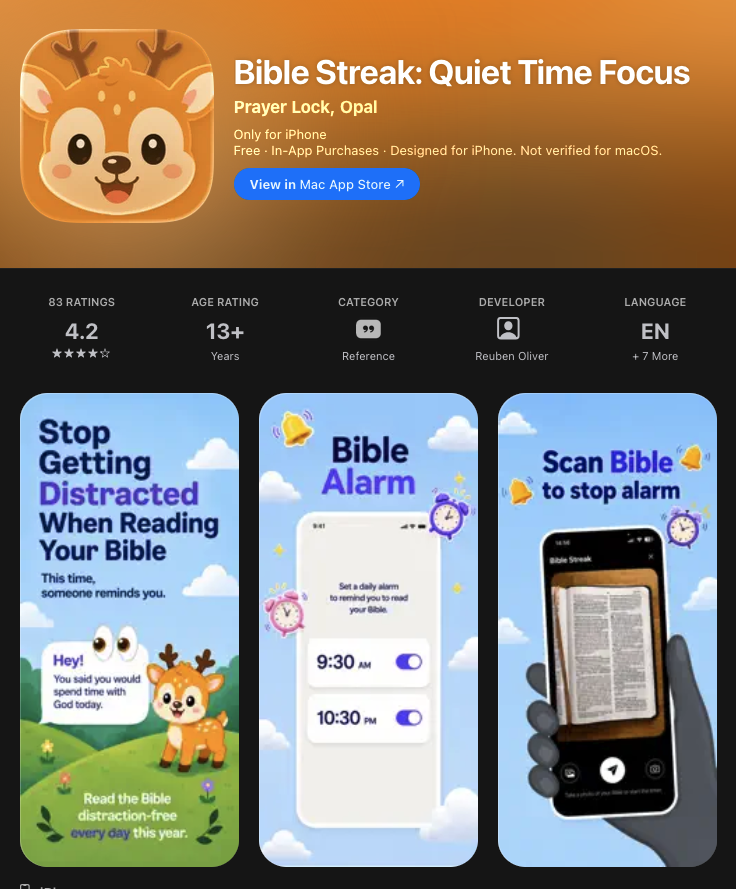
a bible app reached the Top 100 Reference charts in 7 countries with just 5 UGC accounts and 3.35 million views.
nobody on X is writing threads about bible app growth strategy. nobody is making courses about it. nobody is building agencies around it.
that is exactly why it works.
the most crowded niches (fitness, finance, AI tools) have the lowest margins and the highest competition. every creator is fighting for the same audience. every hook has been used a thousand times.
the niches that feel “boring” have audiences that are desperately underserved and massively engaged.
if you are building an app in a “boring” vertical, congratulations. you have less competition, higher engagement and an audience that actually converts because they care about the topic, not the entertainment.
the 5 niches i would build in right now, ranked by engagement against competition:
-
religion and faith. 19% engagement, the highest we track.
-
dating and relationships. 8.6% engagement on 311M views. one CheaterBuster video did 10.4M. the drama format fits any app that can live inside a story about a partner.
-
finance and investments. 6.4% engagement. two apps own 90% of the views, so the small ones run unopposed: Autopilot did 154x its usual numbers from 206.8K views.
-
travel. 6.3% engagement and fewer than 30 apps posting. JetBack got 68.5K shares on one flight-deal video.
-
mental and emotional health. Vent Now got 175K bookmarks on one 7.8M view video. people save this content. fitness next door has 130+ apps fighting and engagement dropped 30% this month.
for contrast: education has 2,000+ creator accounts posting and 5.2% engagement. the crowded rooms are the quiet ones.
7. the 5 formats working right now (september 2026)
based on everything we have tracked this month, these are the 5 formats driving the most views and conversions:
1. the product-invisible storytelling format the app appears on screen for less than 3 seconds. the video is 95% entertainment, 5% product. Pingo AI (10.6M views), Cantina (4.5M views) and Duolingo (4.6M views) all used this structure.
2. the controversy / expose format product recalls, brand scandals, shocking claims. Settlemate (3M views), Exposr (841K shares on one video). the hook creates fear or outrage. the app provides the solution or the information.
3. the relationship drama format shared calendars, chat screenshots, dating confessions. Howbout (979K views), Zenit (1.1M views). this format works in ANY niche because the drama is the hook and the app is introduced through the story.
4. the one-creator-one-format-repeat format Viobean (26M views, 1 creator), JobStep ($2M ARR, 70 accounts same format). find what works once. do it 100 times. do not get creative. get repetitive.
5. the workplace / lifestyle confession format Minutes AI (1.7M views), Turbo AI (messy study habits as entertainment). raw, unpolished, relatable. the creator admits something slightly embarrassing and the product appears as part of their actual life.

now what? the next 30 days
nothing in here requires a big team or a big budget. if i were launching an app campaign from scratch tomorrow, based on everything i have seen this month, here is exactly what i would do:
week 1: research and format selection
- study your top 3 competitors’ TikTok and IG accounts
- identify their single best-performing format (by views, not by production quality)
- pick ONE format to test. just one.
- write a one-page brief around that format
week 2: creator recruitment and first posts
- find 5 micro creators (under 50K followers) in your niche
- do a 20-minute call with each one. if they cannot explain your app in one sentence, do not move forward
- send the one-page brief. let them interpret it in their voice
- publish the first batch of 15 videos (3 per creator)
week 3: analyze and double down
- identify which creator and which hook structure performed best
- do NOT try a new format yet. take the winning structure and have all 5 creators replicate it
- publish 15 more videos, all following the winning pattern
week 4: scale what works
- add 5 more creators. give them the same brief with the winning format
- start testing one new hook variation (same format, different opening line)
- run the weekly research analysis (caption clustering, brief drift check)
what NOT to do:
- do not run AI slideshows expecting conversions
- do not test 10 formats in two weeks
- do not hire creators based on follower count
- do not write scripts. write briefs. let creators be creators
- do not optimize for views. optimize for downloads per post
one format. 5 creators. 30 days. boring on purpose. boring is what scales.

the honest conclusion...
not everything in this article will work for your app. some niches respond differently. some audiences prefer polished content over raw content. some apps genuinely benefit from product demos.
the data i shared comes from 70+ campaigns across multiple verticals. it is the strongest signal i have. but signal is not certainty.
the one thing i am certain about: the founders who win in Q4 2026 will be the ones who picked one strategy, committed to it for 90 days and iterated based on data instead of gut feelings.
the founders who lose will be the ones who read this article, saved it, tried three things from it for one week each, saw mixed results and went back to running Meta ads.
the system works. but only if you actually run it.
Related articles

How I Make $20k/Month With Pixar Animations (and how you can too)
Every time I've made the most money in my life it came down to right time, right skill. AI Animations are exactly this to me right now

How to launch a one-person product (without destroying your life)
Over the last 5 years, I’ve helped launch products that went on to make multiple 7 figures in revenue per year.
the whop partner business model explained in 5 minutes...
every online business model is a trade between 3 things.