How to scale an app to six figures MRR with organic distribution

Over the last year I've watched apps go from zero to five figures MRR, and from five figures to six, on a weekly basis
Most of them had no marketing background and no funding
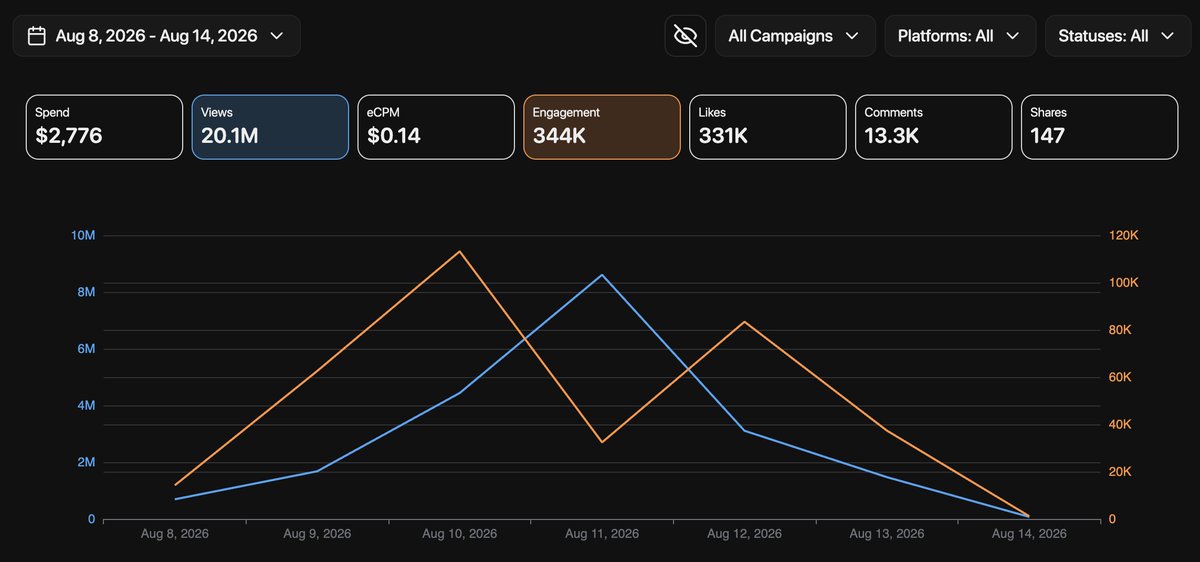
I run one of the largest clipping operations in the space with 70,000+ creators, over a billion views generated and $250,000+ paid out to creators. Our newest campaign is already doing 20 million views a week
Building isn't the hard part anymore, Claude can ship an app in a day
Getting people to see it is the entire game now
The thing everyone gets wrong
Founders treat quantity and quality as a choice
They either make a handful of polished videos and wonder why nothing moves, or they flood every platform with garbage and wonder why the views don't convert
You need both
See what's already working in your space. Implement it. Run serious volume. Kill what doesn't perform. Double down hard on what does. Learn from your wins, your losses, and everyone else's
That's distribution
And founders blame the algorithm constantly. The algorithm is simple. If it sees early engagement signals worth pushing, it pushes. If nothing is being amplified, the content isn't good enough yet
That's why the apps that scale run absurd volume. More shots means finding what works faster
Why organic is the primary channel now
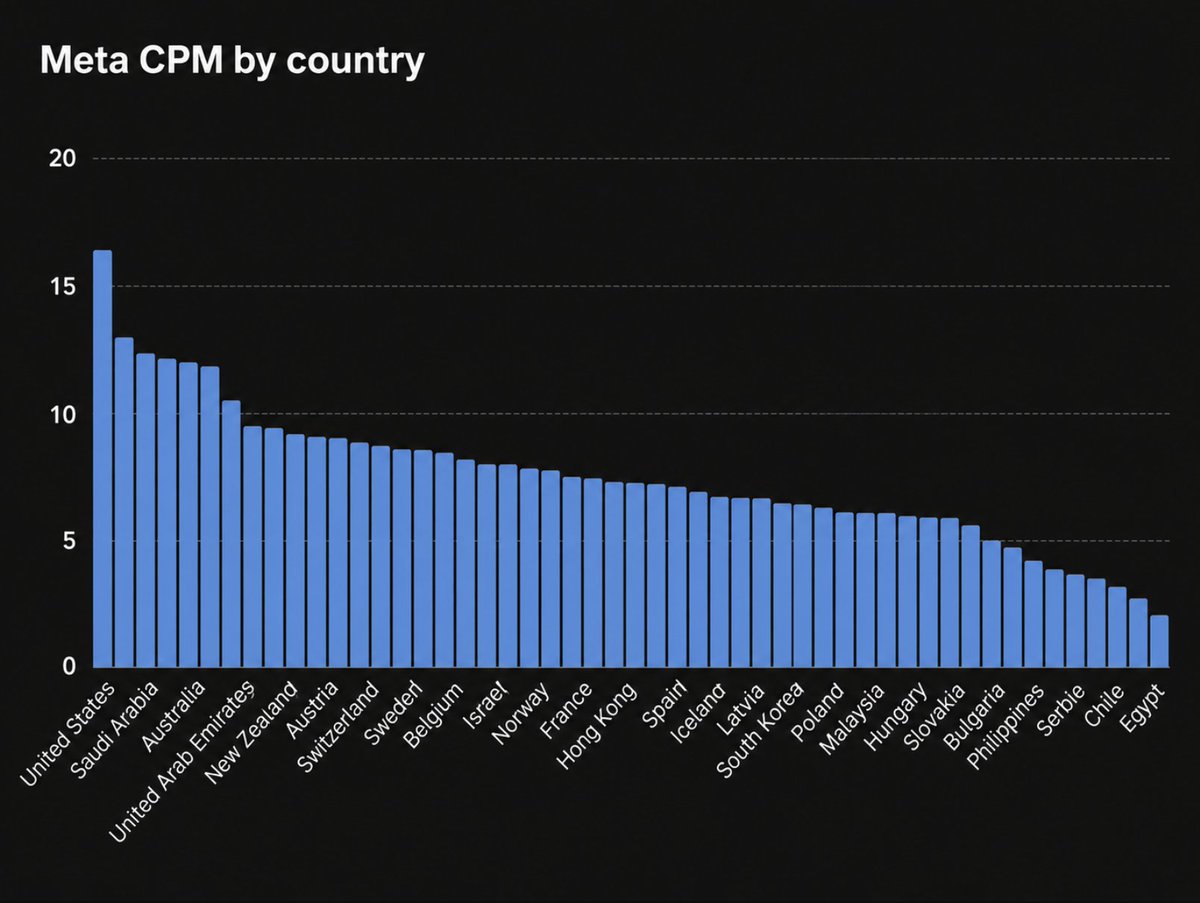
Meta CPMs sit between $10 and $20 for most consumer categories. The average app converts around 1.2% on paid traffic. For every 1,000 people you pay to reach, 988 do nothing and you paid full price for all of them
Organic short form runs at $0.10 to $2 CPM
At $0.50 CPM, 100 million views costs $50,000. The same reach on Meta costs over a million and converts worse, because people skip anything that looks like an ad before their brain registers what it was
And organic compounds, every video stays up. Two months later they're still pulling views you already paid for
A Meta campaign from two months ago is generating exactly zero
Paid ads still matter. They're just the second move
I. Your app needs a moment worth showing
This decides everything before you spend a dollar
Every app I've seen scale through organic had a moment built to be showed
The test: remove your app from the video. Does it still make sense?
If yes, you have a content problem. The video is about the creator, not the product. People watch and forget
If no, every view is a demonstration
This is a product decision, not a marketing one. If your aha moment sits on step four, move it to step one. If your output is a plain text screen, make it visual. If the result isn't worth screenshotting, redesign it until it is
I've seen apps rebuild an entire results screen purely for distribution and multiply conversion from identical content volume
Then the harder question: how badly do people want that result?
Look at what's scaling right now
Faith and prayer apps have been one of the fastest growing organic categories for over a year, the emotional weight makes them shareable in a way utility apps can't match

Alarm and routine apps are quietly printing, one legacy app in that space is at $500k+ MRR and a single alarm video recently crossed 23 million views

SleepMaxxing content is everywhere on TikTok and nobody owns it yet

Those aren't coincidences. People want the outcome, and the content proves it exists
II. Find your formats before you scale
Do not launch big
The instinct is to hire 30 creators and throw volume at it. That's how you burn $30k learning what $3k would have told you
Hire 3 to 5. Your only goal for the first few weeks is finding 10 to 20 formats that work and are easy to replicate
The best performing content in almost every campaign I've run looks like it took 30 seconds to make
Simple content doesn't look like an ad. It blends into the feed. The algorithm treats it as a natural recommendation and the viewer never gets that skip instinct
It also multiplies output. Easier format means more creators can post, more creators want in, more shots at something breaking
A two slide slideshow outconverts a two minute polished UGC video more often than not
Where to find formats
Search your niche on TikTok. Filter by most liked, last month
Anything sitting at 100k to 500k views is proof of concept. The algorithm is actively rewarding that structure right now

Before you commit, check it:
> 100k+ views > > easy to replicate at scale > > posted in the last 30 days > > multiple accounts hitting with it, not just one
If it passes, it's validated. The audience already told you they want it
Then study the hook, the pacing, the length, where the payoff lands, what the caption does. Rebuild it with your product inside it
And study your direct competitors. If someone in your category is already running organic, they paid for the testing. Take what works, execute sharper, skip the learning curve
III. The formats worth testing
Slideshows. The most underrated format in the space
Images with text overlays, viewer swipes through. No editing, no voiceover, nobody on camera
TikTok treats every swipe as active engagement, which reads stronger than passive watching. Save rates run higher than equivalent video
Six slides can name a problem, show your solution, handle an objection, and land a CTA without anyone speaking
Structures that work:
Problem realisation - slide one names a frustration so specifically the reader feels seen, each slide deepens it, your app appears as the mechanism not the pitch
Ranked list - five to seven items reversed, strongest last. Curiosity gap pulls people through
Before and after - most direct format for any visual output
Controversial take - opens by contradicting what the audience believes. Highest comment volume of any format, and comments are the best distribution signal there is
Post 4 to 5 a week minimum. The algorithm needs 2 to 3 weeks to understand what your account is
UGC. Your volume channel. Creators posting 30 to 60 videos a month each
You're not looking for one perfect video. You're looking for enough reps that a format cracks
The pattern in everything performing right now is context before commerce. Winning creators give you a reason to care, an embarrassing moment, a deadline, a transformation, before the product ever appears
The ones that lead with the product die
Screen recordings. If your app produces a visual result this is often your highest converting content. The output is the content. No creator, no script, no editing
On faceless: it outperforms creator-led for most apps and it isn't close. Scales infinitely, one person runs dozens of accounts, cheaper, and the algorithm cares about retention not faces
The exception is anything requiring trust. Health, finance, relationships. There a real face still matters
IV. Double down until it stops working
Once a format hits, stop testing and start replicating
This is where most founders lose everything they built. They find something working and immediately chase the next idea instead of running the winner into the ground
There's a creator posting the exact same alarm challenge every single day with an identical caption structure who pulled 2.9 million views from 679 followers. Another running the same skincare hook with the same close-up format has crossed a million views three separate times from 2,000 followers
Neither is doing anything clever. They found a format the algorithm rewards and refused to deviate
Find what works, don't get bored, let volume create multiple chances at pickup
When a format cracks, point every creator at that exact structure. Same hook, same pacing, different words. That's how campaigns go from 5 million views to 100 million in a month
What to measure: views per format and conversion per format are two different numbers
A format averaging 500k views at 0.1% conversion is worse than one averaging 80k at 1%
Kill formats on conversion, not view counts. Vanity metrics have ended more campaigns than bad content
V. Build the system that runs it
This is where campaigns quietly die
Founders write a one page requirements doc, send it to 50 creators, and wonder why the content comes back off-brand
Nobody follows a checklist at scale
The content bank. Every validated format documented. Name it, link three examples, link the exact audio, explain what happens in each frame, give caption examples. A creator who's never heard of your app should produce on-brand content in 20 minutes
The walkthrough. How to set up the account, warm it up, make the content with a video of you making it, post it, submit it. Halves your management time
The contract. Usage rights for future paid ads. Minimum time content stays live. Payment terms. Non-compete with direct competitors. Signed before anyone posts
Account warm up. More creator content dies here than anywhere else
Two days minimum, ninety minutes a day, genuinely engaging in your niche. By the end their feed should be showing your category and they should follow 30 to 50 relevant accounts. Then two normal niche videos before anything branded. Both clear 1,000 views, they're ready
Worth knowing: TikTok's geo signals run on device-level location, not IP. If you're targeting US audiences with international creators, this is the reason a lot of campaigns quietly underperform
Incentives. CPM gets baseline effort. Bounties get obsession
$500 for the first video to 500k, $1,000 for the first to a million, on top of base rate. Creators grind harder for a target they can win than for passive pennies per view
Post a leaderboard. When creators see other people winning, they push harder. That competition produces better content than any brief you'll write
VI. Run it yourself or bring someone in
Both work, it just depends what you're spending
1/ Run it yourself if you're at 2-10k
At that level you're testing, not scaling. You're finding your formats and learning what a good submission looks like. Nobody will care more than you or understand your product better. Recruit a few creators, write the briefs, review everything, pay them directly
Just know it's a full time job. Reviewing hundreds of videos, chasing creators who go quiet, handling payouts, constantly refreshing formats. Most founders who try end up doing it badly while their product stagnates
2/ Bring in an agency once you're past 10k
At that point you're scaling, and scaling is an operations problem. You need enough creators to actually deploy the budget, verification so you're not paying for botted views, and someone killing formats before they die instead of after
A proper agency has the creator network, the systems, and pattern recognition from running campaigns across dozens of apps. They know what converts in your category before you spend money finding out
Agencies like mine run campaigns on Affiliate Network, where apps are already spending millions on user acquisition. That's where the campaigns and the creator supply actually live right now
The sequence that works: test small yourself to find your formats, then hand a proven format to people who can run it at 50x the volume

Either bring them in immediately to skip the learning curve, or validate formats yourself first and bring them in to scale past what you can manage
Both are fine. What isn't fine is running it yourself badly for six months because you didn't want to hand over control
VII. Then layer paid ads
Most founders get this backwards
They start with paid, burn budget testing creative they never validated, and never find a winner because they were testing in the most expensive environment available
Run organic first. Within a month you have thousands of pieces of content and real data on exactly what converts
That data is worth more than the views
Then take your top organic performers and run them as paid. Spark ads work especially well since you're boosting content that already proved it performs natively
Then run both permanently. Organic builds the top of the funnel at a cost paid can't touch. Paid works the bottom, converting people already familiar with you
Different points in the same funnel. No reason to choose
A few things most people don't know
Redistribute winners in other languages. Take a clip that already went viral and rerun it in German, French, Spanish, Portuguese. Proven format, new audience, and as far as the algorithm is concerned it's brand new content
The comment section outperforms your CTA. When someone writes "what app is this" it's worth more than any link in bio, because it becomes social proof for everyone who watches after them
Post everywhere. TikTok, Instagram, YouTube Shorts, Snapchat, Facebook. Creators posting to only two platforms leave nine figures of views uncollected
Keep feeding it. Formats fatigue. Hooks stop working. Your job shifts from finding what works to continuously finding what works next
Speed is the only real moat. Every playbook here is public. AI closed the design gap, nothing is proprietary. The founder testing 100 formats this month beats the one testing 10. Every time
What this produces
An app running this properly does 100 to 400 million views a month at a blended CPM under $1
At 0.3% view to download, 200 million monthly views is 600,000 downloads. At 3% download to paid on a $7.99 weekly, that's genuine six figure MRR within two to three months
And most campaigns run a payout cap per video, so even the ones hitting tens of millions of views cost a few hundred dollars each. The viral upside is free media
The apps hitting these numbers aren't smarter than you and didn't have better funding
They understood that distribution is the product, and content is only the reason people share it
If you want me to show you exactly what an organic distribution campaign would look like for your app, send me a message or book a call here: https://calendly.com/cliptic/30min
- Aleksa
Related articles

i analyzed 27 apps that went from zero to millions of views without spending a dollar on ads. they a
$0 to $80K MRR in 70 days. $0 to $200K MRR in 9 months

how to steal viral formats and make them work for your app
every viral format you saw on TikTok this week is a copy of something that worked last month.

I went from $0 to $10K+ without spending a cent on ads (full guide)
I’m going to break down the exact process that took one of my apps from $0 to $10K+ using organic marketing.