how to steal viral formats and make them work for your app

every viral format you saw on TikTok this week is a copy of something that worked last month.
and the copies are outperforming the originals.
"things worth your money" did 10 million views. someone flipped it to "things NOT worth your money." 19 million views. almost double.
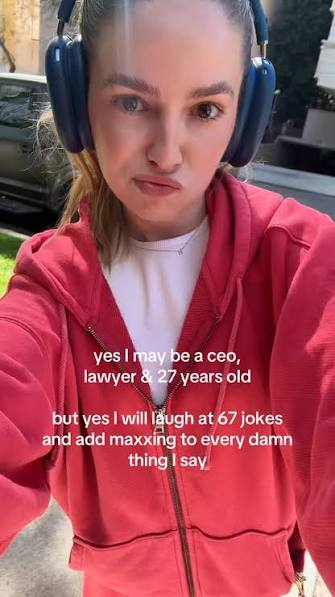
the "-maxxing" suffix started in looksmaxxing culture. now "thinkmaxxing" has 6.9 million views. "hungovermaxxing" has 3.2 million. every app category is stealing the same language trick.
a study app borrowed a manifestation format, and one video did 333x its median performance. 519,000 views. 52,600 likes. the comments are all "claim" and "free," because the audience thinks they're watching manifestation content, not an ad.
we've managed +2000 creators across 62 campaigns. the single best brief we give them? "don't invent anything. find a format that's already working and adapt it to our app." at least at the beginning
here's why format stealing works, how to do it, and the 5 formats worth stealing right now.

a study app stole a manifestation format. it outperformed everything by 333x.
AfforAi (now called Logically) is an AI research and writing platform for students. standard StudyTok app. competitive category. dozens of competitors running the same "study with me" content.

then they did something different. instead of posting study tips, they borrowed the manifestation format from wellness TikTok.
the video: a creator films herself studying while audio plays "I will pass the exam" over and over. the app appears for 2 seconds. that's it.
the hook: "all exams will feel easy after using this..."
519,000 views. 52,600 likes. 1,800 shares. 1,700 saves. 333 times the median performance of their other videos.
but here's the part nobody talks about: the comment section.
every single comment is "claim," "free," "claim without sound," "este comentario vale por todo." these are manifestation rituals. the audience isn't engaging with a study app ad. they're participating in a manifestation trend. the app just happens to be there.
the format escaped its original category. manifestation content belongs in wellness and spirituality. but when a study app borrows it, it works BETTER, because exam anxiety is the perfect emotional trigger for "claiming" good outcomes.
they ran 7 TikTok accounts with the same format. the format was so effective that the category context didn't matter. the emotion did.
that's format stealing done right. you don't copy what your competitors are doing. you copy what a completely different category figured out, and you adapt it to your audience's emotional trigger.

84 million views this week. every format is stolen : 0
84 million views across 5 formats. every single one follows the same pattern: take something that worked, twist it, repost it.
1. "things NOT worth your money" (19M views)
"things worth your money" was already a proven format at 10M+ views. someone flipped the framing. same structure, opposite angle. 19 million views.
for apps: call out the outdated alternative in your category, then position your app as the smarter choice. "screen time apps NOT worth your money: Apple Screen Time" hits differently.
2. "I finally figured out..." (8.3M views)
creators open with "I finally figured out..." making it sound like an expose or a secret. the reveal is always personal, never dramatic. the format creates a curiosity gap that forces you to watch.
for apps: "I finally figured out how to actually stick to a meal plan" (meal app). "I finally figured out why I can't focus" (productivity app). the reveal IS the product moment.
3. the "-maxxing" language trick (12.5M views)
"thinkmaxxing" (6.9M). "hungovermaxxing" (3.2M). "activitymaxxing" (2.4M). the suffix turns any habit into a movement.
for apps: rewrite your content angle through "-maxxing" while it's hot. "sleepmaxxing" for a sleep tracker. "savingsmaxxing" for a finance app. "focusmaxxing" for a productivity app. the language does the positioning for free.
4. "a win is a win" (14.5M views)
start with a relatable frustration, then reveal the unexpected upside. the emotional flip from negative to positive hooks attention and drives saves.
for apps: "I got rejected from my dream job... but it forced me to build my own app. now it makes $10K/month." the L becomes the W.
5. "it's a clock" early sound (13M views, only 1.4K videos)
this sound is EARLY. under 1,400 videos. creators with fewer than 2,000 followers are hitting 2 million views. the format: hyper-specific personal realizations you missed in the moment.
this is the window. every trending sound has a 48-hour sweet spot where early adopters get outsized reach. this one is still open.

how we "steal" formats for 62 campaigns
we don't call it stealing. we call it format adaptation. but the process is the same:
- browse OUTSIDE your category. if you're a fitness app, watch finance TikTok. if you're a study app, watch manifestation TikTok. the best formats to steal are the ones your competitors haven't seen yet.
- identify the emotional trigger, not the topic. the manifestation format works for study apps because both categories tap into anxiety about future outcomes. the topic (exams vs career vs health) is different. the emotion (fear of failure + desire for control) is identical.
- keep the structure, change the content. "things NOT worth your money" is the same structure as the original. same list format. same casual tone. only the FRAMING flipped. that's the adaptation.
- test with 5-10 videos before judging. the AfforAi team ran 7 accounts. not every video hit 333x. but the format was so strong that the average performance lifted across all accounts.
- move fast. trending sounds have a 48-hour window where early adopters get 10x the reach of late adopters. if you see a format working TODAY, brief your creators TONIGHT.

what format stealing can't fix
here's the caveat most growth marketers won't tell you: format stealing only works if the emotional trigger matches your audience.
manifestation content works for study apps because students are anxious about exams. it would NOT work for a storage cleaner app, because nobody manifests more phone storage.
the "-maxxing" suffix works for lifestyle and productivity apps because the audience already thinks in self-improvement terms. it would feel forced on a B2B tool.
before you steal a format, ask: does my audience feel the same emotion as the original audience? if yes, steal it. if no, keep looking.
we've tested over 200 format adaptations across 62 campaigns. roughly 30% work. the other 70% die quietly. but the 30% that work tend to outperform original formats by 3-5x, because you're combining a proven structure with a fresh context.
the bottom line
the most creative thing you can do in content marketing is stop being creative.
every format that's printing views this week already existed somewhere else last month. the people winning aren't inventing new formats. they're finding formats that work in other categories and adapting them faster than anyone else.
84 million views this week. zero original ideas. all format steals.
stop trying to be original. start trying to be fast.
Related articles

i analyzed 27 apps that went from zero to millions of views without spending a dollar on ads. they a
$0 to $80K MRR in 70 days. $0 to $200K MRR in 9 months

I went from $0 to $10K+ without spending a cent on ads (full guide)
I’m going to break down the exact process that took one of my apps from $0 to $10K+ using organic marketing.
