i analyzed 27 apps that went from zero to millions of views without spending a dollar on ads. they a

$0 to $80K MRR in 70 days. $0 to $200K MRR in 9 months

these aren't hypotheticals. these are real apps, real numbers, happening right now.
i spent the last 6 months tracking every consumer app that scaled through organic content. 27 deep-dive case studies. 1,800+ apps monitored. combined with our own data from running 500+ creators across 35+ apps and 2.5B organic views.
what i found: every single app that broke through used one of 3 playbooks. not 50. not 20. five.
and most founders have no idea which one fits their app.
playbook 1: the faceless network
this is the most underrated growth strategy in mobile apps right now.
- cray cray, a couples game app, built 25+ faceless tiktok accounts. zero creators. zero faces. just slideshows with text hooks and in-app screenshots. 130M views in 14 months.
their most viral account? french. not english. the main account @questionsprofondes1 averaged 6M views every single month for over a year.
the format: couple photo from pinterest in muted colors + text hook overlay ("5 uncomfortable questions to ask your other half"). followed by in-app screenshots with questions and the app logo visible.
2.8M views and 85K saves on one video. same format everyday

but cray cray is small compared to the real monsters.
- RIZZ app ran 15+ faceless tiktok accounts using b-roll footage (mostly minecraft gameplay) with text conversation overlays. 550M views. average of 450K views per video.
the accounts had names like @normal.texts, @textjungle, @convoplug. nothing branded. just content farms that happened to promote an app.

- sticker.ly did the same thing at even bigger scale. 4 main accounts + hundreds of affiliates. 500M+ views. $70K+/month revenue. the format: text hook, app name, free discount code, sticker preview, CTA. every single video. no face needed

the playbook:
-
create 5-25 accounts, each testing a slightly different visual format (colors, layout, hook style)
-
same content, different packaging
-
localize: french, spanish, portuguese accounts consistently outperform english-only
-
no faces, no voices, no personalities to manage
-
post 1-3x per day per account
who should use this:
couples apps, quiz apps, sticker/customization apps, any app where the content IS the product output. if your app generates something visual (questions, stickers, results, scores), this is your playbook.
who should NOT use this:
apps that need trust or credibility (finance, health, education). those need a face.
playbook 2: the one-format creator army
different from faceless. this is real creators, real faces, but all doing the exact same format.
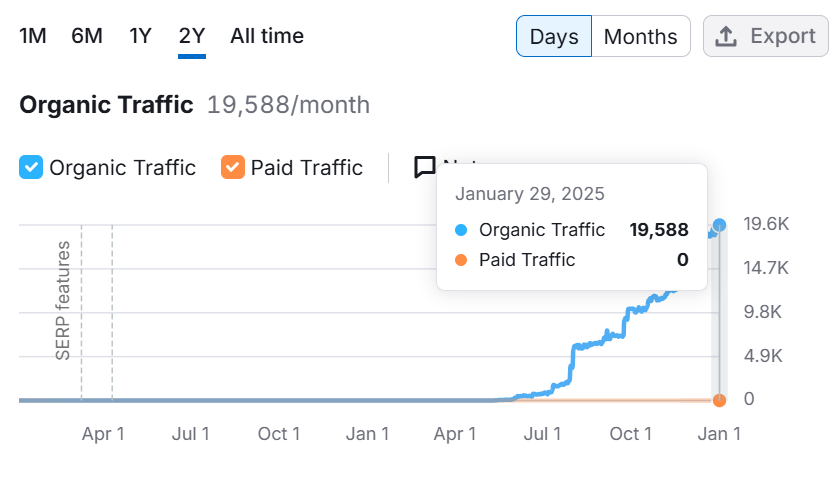
- coconote AI. the "pdf to brain rot" app. 259M views. $200K MRR. 40K downloads/month. 7 accounts, 5 run by student creators.
their biggest hit: 41M views, 4.5M likes, 535K bookmarks. one video. the creator rode the #womeninmalefields trend at exactly the right time with a study-related hook.
but here's what made coconote's strategy different from everyone else: they didn't try to be original. they literally copied the formats from turbolearn, answer AI, and chart AI. same "hot teacher hook" footage. same "lecture hall recording" angles. same playbook, different app name in the CTA.
and it worked because originality doesn't matter in UGC. distribution does.
- turbolearn did the same thing and hit $80K MRR and 100K downloads in 117 days. same formats. same angles. they proved the playbook, and then coconote proved you could copy the playbook and still win.

the playbook:
-
find 3-5 formats that work for your vertical (study tips list, gym routine, app demo with POV hook, etc.)
-
recruit 10-50 creators to execute those formats
-
don't ask for creativity. give them a brief with exact hook text, shot structure, and CTA placement
-
let the algorithm find which creator + format combination resonates
-
double down on winners, replace underperformers monthly
who should use this:
education apps, fitness apps, productivity apps, any app where a real person using the product makes sense. this is the default playbook for 80% of consumer apps.
playbook 3: the founder-led distribution machine
this is the cheapest playbook and potentially the highest ROI.
- fitdrop. fitness app. founder-led account on IG reels and tiktok. 38M views. 100K bookmarks. no creators. no agency. just the founder posting daily.
the key insight: the founder account isn't doing product demos. it's doing fitness content that happens to use the app. workout videos, nutrition tips, gym vlogs. the app is always on screen, but it's never the focus.
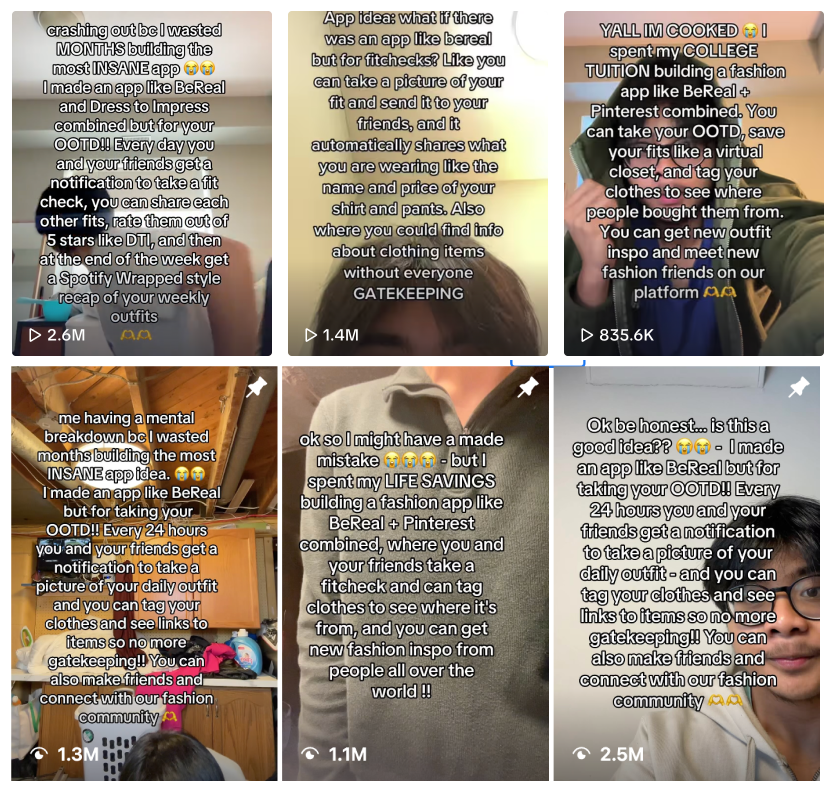
- pengu took this further. their growth manager had a personal tiktok account posting daily alongside the main brand accounts. they also had their team members create accounts. the idea: everyone in marketing, growth, and product should have a tiktok posting about the app.
they hit #1 on the app store. secured $5M in funding.
- status app used a multi-profile founder tiktok strategy to reach 50K downloads and build an 80K discord community. the founder's personal brand became the distribution channel.
we see this with our own content. my X articles have driven more inbound leads than any single ad campaign ever could. 198.5K views on one post. 390K total reach on one article + its quote tweets. zero ad spend.
the playbook:
-
founder posts daily on tiktok/reels (or X if B2B)
-
content is valuable on its own (tips, insights, vlogs, behind-the-scenes)
-
app appears naturally, never forced
-
build a personal brand that doubles as a distribution channel
-
team members create supporting accounts
who should use this:
pre-revenue apps, bootstrapped founders, apps with a strong founder story. this is the only playbook that costs $0 and requires zero external hires.
which playbook fits your app
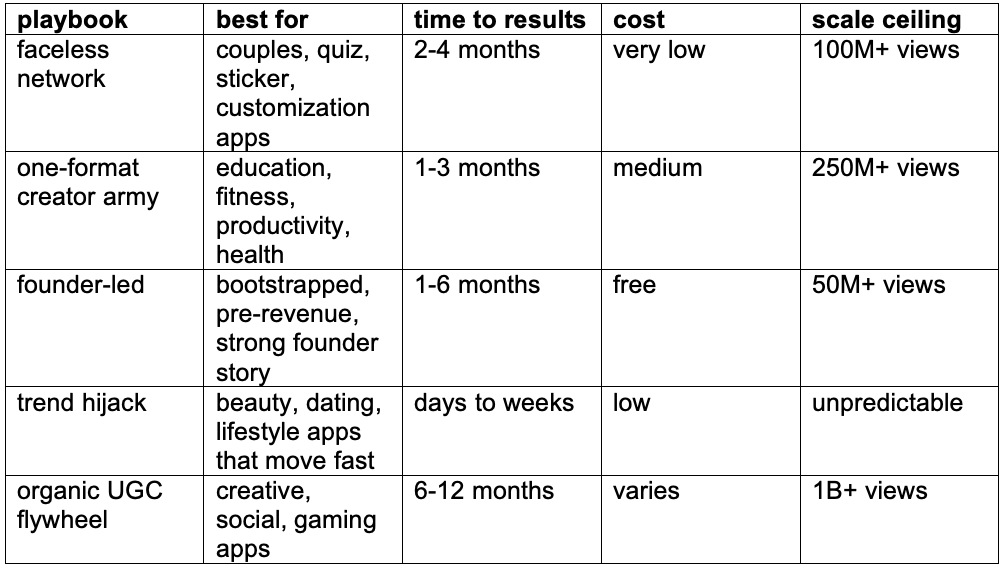
the mistake most founders make: they try to run all five at once. or they pick the wrong one for their app type.
a couples quiz app running paid creators is wasting money. they should be running 25 faceless accounts.
a fitness app running faceless slideshows is leaving money on the table. they need real people sweating in real gyms.
pick one. go deep. scale it. then, and only then, layer on a second playbook.
the apps that won in the last 6 months didn't do everything. they did one thing obsessively well. cray cray posted the same slideshow 1,000 times. coconote copied the same playbook from 3 competitors. fitdrop's founder posted every single day.
consistency beats creativity. distribution beats product. and the algorithm doesn't care how much you spent.
Related articles

how to steal viral formats and make them work for your app
every viral format you saw on TikTok this week is a copy of something that worked last month.

I went from $0 to $10K+ without spending a cent on ads (full guide)
I’m going to break down the exact process that took one of my apps from $0 to $10K+ using organic marketing.
