the $100,000,000 AI UGC ad opportunity (that'll disappear soon)
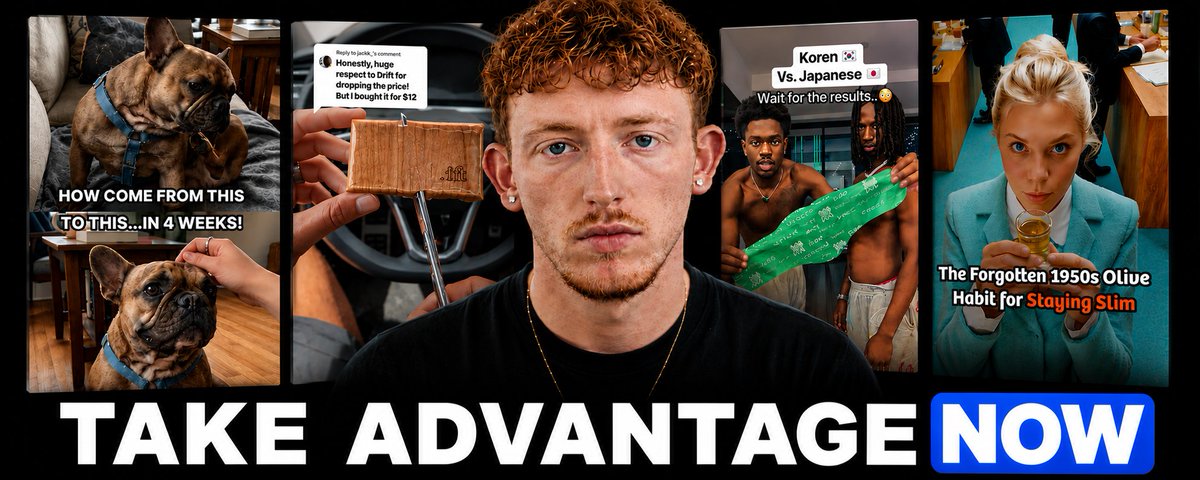
there is a window open right now in meta ads that will produce more millionaires in the next 18 months than any advertising format shift in the last decade.
AI UGC ads.
not the janky, robotic, obviously-fake AI video ads from 2024 that everyone laughed at. the current generation of AI-produced UGC-style content is so advanced that the output is functionally indistinguishable from a real person filming on their phone.
and the most profitable demographic on meta, adults 35-65+, have zero awareness that this technology exists at this level.
we are at the exact intersection of two curves that will never cross again: AI output quality is at near-human fidelity, and audience skepticism toward AI content is still near zero in the demographics with the most spending power.
this article explains why this moment is unprecedented, how long the window stays open, and what happens to the operators who move now versus the ones who wait.
why this moment is different from every other format shift
every major advertising format innovation follows the same lifecycle:
- 2015-2017: native ads were crushing. early movers printed. then the audience learned to spot them and conversion rates normalized.
- 2017-2019: long-form VSLs were printing. then the format fatigued and completion rates dropped.
- 2020-2022: quiz funnels were destroying. then everyone copied them and they commoditized.
- 2023-2025: advertorials dominated. still working well, but conversion rates are starting to normalize downward.
each window lasted 2-3 years from early adoption to market saturation. the early movers made the most. the late movers got the leftovers.
AI UGC is in the earliest phase of that cycle right now. the tools reached human-passing quality in mid-2025. we're 12-18 months into the window. the audience hasn't developed skepticism yet.
here's why this one is bigger than the others: scale.
native ads, VSLs, quiz funnels, advertorials, all of them required human production to scale. you needed copywriters, designers, video editors, creators, or a founder willing to sit in front of a camera. production capacity capped creative volume, and creative volume is the number one scaling lever on meta.
AI UGC removes the production bottleneck entirely. one operator with the right tools and prompts produces 50 genuinely different UGC-style creatives per week. no filming. no talent. no editing pipeline. no production delays.
the creative volume problem that capped every previous format shift doesn't exist with AI UGC. which means the operators who deploy this will scale faster and further than any previous format cycle produced.
the skepticism gap (why older demographics make this insane)
this is the part that makes the opportunity feel unfair.
younger demographics (18-34) have grown up seeing AI content evolve. they've played with the tools themselves. many of them spot AI-generated video within 3-5 seconds. their pattern recognition for synthetic content is trained.
older demographics (35-65+) have not had this exposure.
the average 50-year-old scrolling meta in 2026 has never opened an AI video generator. they've never seen the progression from 2023's uncanny valley output to 2026's seamless human-pass content. they don't know what to look for. the micro-tells that younger audiences spot instantly (slightly too-smooth skin, unnatural hand gestures, inconsistent lighting) are invisible to someone who has no mental model of what AI video looks like.
this matters enormously for meta ads because of who spends money.
in nearly every service business vertical we manage, the 35-65+ demographic produces the highest ROAS. they have more disposable income. they make purchasing decisions faster once trust is established. they respond better to direct-response messaging. and they convert at higher rates on mid-to-high ticket offers.
the demographic with the most spending power is the one with the least ability to distinguish AI UGC from real human content.
that's the gap. and it's closing every month as media coverage, social discussion, and personal exposure gradually raise awareness. but right now, today, the gap is wide open.
what AI UGC ads look like in 2026
the current generation of AI UGC tools produces output that matches or exceeds what most real UGC creators deliver:
video:
- real-time lip sync that matches the script word for word
- natural micro-expressions: eye blinks, slight head tilts, realistic mouth movement
- consistent character identity across multiple clips (the same "person" in different settings)
- native phone-camera aesthetic: slightly shaky, natural lighting, the visual feel of someone filming themselves at home
- background variation: kitchen, office, car, bedroom, gym. each setting generated to match the script context
the production speed advantage:
a traditional UGC production pipeline for a 20-ad creative batch:
- brief the creators (1-2 days)
- creators film (3-5 days)
- review raw footage (1 day)
- edit and polish (2-3 days)
- revisions (1-2 days)
- total: 8-13 days per batch
AI UGC production for the same 20-ad batch:
- write the scripts (2-3 hours with the buying trigger system)
- generate the videos through the higgsfield MCP + seedance 2.0 (2-4 hours)
- anti-slop visual audit (1 hour)
- total: 5-8 hours per batch
the same batch that takes a production team two weeks takes one operator with the right stack less than a day. and the operator can produce 3-4 batches in the time it takes the production team to deliver one.
if you want a look at how we structure the AI UGC production pipeline and which models we use for each format type, DM me "META" and i'll walk you through the setup.
why this window closes (and when)
the window closes for two reasons operating simultaneously:
reason 1: audience awareness rises.
every month, more media coverage, more social discussion, and more personal exposure to AI tools increases the average person's ability to recognize AI-generated content. the skepticism that 18-24 year olds have today will gradually spread to 35-45, then 45-55, then 55+.
the 50-year-old who watches an AI UGC ad today and trusts it completely will, in 18-24 months, have enough exposure to AI content that they'll start questioning whether the person on screen is real. once that skepticism kicks in, the trust advantage disappears.
reason 2: market saturation of the format.
as more advertisers adopt AI UGC, the format becomes the norm rather than the edge. when every ad in someone's feed is AI UGC, the novelty wears off. the brain starts pattern-matching "AI UGC" the same way it pattern-matches "polished studio ad" today: as an advertisement to scroll past.
the operators who deploy AI UGC now get 18-24 months of unfair advantage: maximum output quality at minimum audience skepticism. after that, the format is still viable but the economics normalize to something closer to standard performance.
the compliance question (addressed directly)
the most common objection: "is it ethical to run AI-generated content that looks like a real person?"
the compliance answer is straightforward. meta's advertising policies require ads to be truthful and not deceptive. an AI-generated UGC ad is not deceptive if:
- the claims in the ad are truthful (the product does what the ad says)
- the testimonials reflect real customer experiences (even if the delivery is AI-generated)
- the ad does not impersonate a specific real person
- the product or service is legitimate
the format of delivery (AI-generated versus human-filmed) is separate from the truthfulness of the content. a real person reading a script on camera is not "more authentic" than an AI character delivering the same truthful claims. the content is what matters for compliance, not the production method.
we run all AI UGC through the same compliance review as any other creative: no outcome guarantees, no fabricated testimonials, no misleading claims, no impersonation.
what the operators who move now will look like in 2028
the operators deploying AI UGC at scale right now will have three structural advantages that late movers won't be able to replicate:
1. creative volume advantage. 50+ genuinely different creative concepts per week instead of 20 per month. the andromeda container system rewards creative diversity. more concepts = more audience pockets discovered = faster scaling.
2. cost advantage. zero UGC creator costs, zero production pipeline overhead, zero revision cycles. the cost per creative drops from $200-$500 per UGC clip to near zero. that delta compounds every single month.
3. speed advantage. creative refresh cycles measured in hours instead of weeks. when a creative fatigues, the replacement is generated and live within the same day. the operators still running human production pipelines are operating on a 2-week refresh cycle. the AI UGC operators are refreshing in 4 hours.
these advantages compound over time. by 2028, the operators who started in 2026 will have 24 months of data on which AI UGC formats, character types, settings, and scripts produce the highest conversion rates for their specific category. the late movers will be starting from zero.
the window is open. it's closing. the math on what happens to early movers versus late movers is very clear.
if you want us to audit your service business and show you how we'd implement an AI UGC production pipeline on top of your meta ads account, DM me "META" and we'll build the plan.
($10M+ generated for service-based businesses through meta ads funnels, fully done-for-you)
zack
Related articles

the 5-minute ai song ads taking over meta
1 minute of this "ad" and no product.

how to crack the meta ads andromeda algorithm in 7 steps
if your meta ads suddenly stopped converting over the past year, got more expensive, and your proven system no longer works, nobody hacked your account.

How to Create Massive AI Influencer Content at Scale (Step by step - P2 simplest way)
Hey guys, I’m back. I was honestly shocked to see HER 75 achieve such massive success using AI UGC. They grew from $60K/month to $200K/month using only AI influencers. That’s crazy.