The 5 AI UGC Formats We Run and When to Use Each
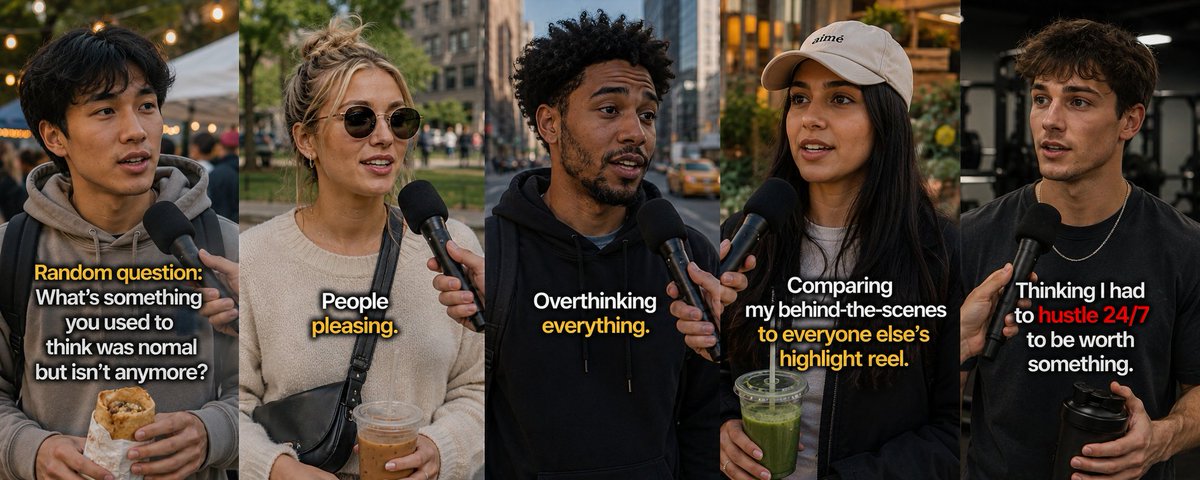
picking the wrong format is one of the best ways to waste good content.
a strong angle in the wrong shape underperforms a mediocre angle in the right one, because the format decides how the message actually reaches someone.
these are the 5 formats we run, what each one does, and exactly when to reach for it.
let's get into it.
Format Follows the Content
before the 5, the rule that governs all of them.
the format is a decision, not a default, and it gets made from the content and the audience rather than from what you feel like making.
a transformation story wants a different shape than a product explanation, and forcing either into the wrong one costs you reach you already paid to produce.
so the question is always what this specific message needs, and the 5 formats below are the answers.
Format 1: The Talking Head
a creator speaking directly to camera, no props, no demo, just a person making a point.
The Mechanic
it runs on trust and relatability.
a person talking to you like a friend bypasses ad-skepticism in a way almost nothing else does, because that's exactly what real UGC looks like.
the whole format is built on the viewer believing there's a real person on the other side.
When to Reach for It
for opinions, takes, and warnings, since a claim lands harder from a person than from a montage.
for cold audiences, because trust has to come before information, and a face builds it faster than anything.
and for building a recognizable creator, since repetition of the same person across many talking heads is what creates parasocial familiarity.
How to Build It
this is the format where realism matters most, because the viewer is looking directly at a face for the whole clip.
the full realism stack rides on every generation, the texture clause, the anti-polish language, the named lighting, the expression clause with life in the eyes.
keep the action simple, small natural head movements and hand gestures, since busy motion is where generation still struggles.
and keep the sync clean, because drift between the lips and the audio is the tell that ends the clip.
Where It Fails
a talking head with nothing to say is the weakest content there is.
the format has no visual interest carrying it, so the point has to be genuinely worth hearing, or there's nothing to hold the viewer at all.
Format 2: The Demo
the creator showing the product working, in hand, in use, in the real world.
The Mechanic
it runs on proof.
seeing a thing work is more convincing than being told it works, and the demo collapses the distance between claim and evidence.
When to Reach for It
for products with a visible result, since anything with a before and after moment inside a single clip demos beautifully.
for solution-aware audiences, the people who know they have the problem and are comparing options, because the demo answers "does it actually work."
and for anything that's hard to explain in words, where 3 seconds of showing beats 30 seconds of describing.
How to Build It
the difficulty here is hands and objects, which are still the weakest area in video generation.
keep the interaction simple, a single clear motion rather than an intricate sequence, and generate extra variants on any clip with detailed hand work.
for the tricky shots, graduate the clip to the premium tier where the fidelity is better, since a demo with distorted hands destroys the proof it exists to provide.
reference consistency matters too, because the product has to look like the same product in every shot.
Where It Fails
products with no visible action don't demo, and forcing them into the format produces a clip of someone holding a box.
when there's nothing to show, pick a different format instead of showing nothing convincingly.
Format 3: The Before and After
the transformation format, opening on a starting state and revealing the outcome.
The Mechanic
it runs on the gap.
the distance between the 2 states is the story, and the viewer stays to close it, which makes this format naturally strong on completion.
relief and aspiration are the drivers, and both are heavy enough to carry a piece to the end.
When to Reach for It
for anything with a visible outcome over time, skincare, fitness, home, finance, organization.
for problem-aware audiences, the people living in the before state who want to see the after is possible.
and when you have real proof, since the format depends entirely on the contrast being convincing.
How to Build It
generate the 2 states as separate pieces with identical references and identical lighting, because the same recognizable person in both states is what sells the journey.
the only thing that changes between them is the emotional register, tired and frustrated in the before, relieved and quietly confident in the after.
any drift in the face, the room, or the light breaks the illusion that it's the same person across time, which is the entire premise.
Where It Fails
an exaggerated transformation reads as fake instantly, and the audience punishes it hard.
the gap has to be believable, so a modest honest change outperforms a dramatic unbelievable one every time.
Format 4: The Testimonial
a person recounting their own experience with the product or the outcome.
The Mechanic
it runs on social proof.
people look to other people to decide what's safe and what's worth buying, and a testimonial borrows that confidence directly.
When to Reach for It
for product-aware audiences, the people already considering it who need a reason to commit.
for purchases people think hard about, where the risk feels real and someone else having taken it first matters.
and for niches that run on trust, health, finance, anything where the viewer is asking who to believe.
How to Build It
the tone is everything here, warm and earnest rather than energetic.
the expression clause matters more than usual, since a testimonial delivered with dead eyes is worse than no testimonial at all.
keep the language natural and specific, the details a real person would mention, because polished marketing phrasing kills the format's only advantage.
Where It Fails
a testimonial that sounds scripted is worse than nothing, because it undermines trust instead of building it.
specificity is the fix, since real people mention odd particular details and ad copy never does.
Format 5: The Slideshow
a sequence of still images with text overlays, swiped through instead of watched.
The Mechanic
it runs on the swipe.
every swipe is an engagement signal, and the format is built from open loops that pull the viewer forward slide by slide.
it's also the cheapest format to produce at volume, since stills cost less than motion and skip the motion failure modes entirely.
When to Reach for It
for list and reference content, since numbered and structured information is what people save.
for volume, because slideshows produce faster and cheaper than video, which makes wide testing affordable.
and when you want saves, since the format is the most save-friendly thing you can make.
How to Build It
pick 1 of the 5 proven structures, hear me out, non-negotiables, green flags, ranked list, or before and after.
every slide loads the same 4 references, character, aesthetic baseline, scene, and slide template, because visual drift across slides is what gives automated slideshows away.
slide 1 is the hook and slide 2 is a second hook, since the algorithm can serve the piece starting from slide 2.
1 idea per slide, phrasing that pulls forward, and the final slide carries the keyword CTA.
Where It Fails
slideshows are weak for anything needing motion or demonstration.
if the message depends on seeing something happen, stills can't carry it, and the format works against you.
What Each Format Costs to Make
the formats aren't equal on production cost, and that shapes how you use them.
slideshows are the cheapest, since stills generate faster and cheaper than motion, which is why they carry the bulk of wide testing.
talking heads sit in the middle, a single subject with simple motion, so they generate reliably at the cheap tier.
demos cost the most, because hands and object interaction need extra variants and often a premium render to look right.
before and afters cost double by definition, since you're generating 2 matched states instead of 1 clip.
and testimonials cost like talking heads, with the extra care going into the expression rather than the render.
so the cheap formats carry the volume and the expensive ones get pointed at proven angles, which is the same routing logic applied at the format level.
Matching Format to Awareness Stage
the cleanest way to choose is by where the viewer already is.
cold and unaware: the talking head or the slideshow, since both build interest before the product ever enters.
problem-aware: the before and after, because the viewer is living in the before and wants to see the after is real.
solution-aware: the demo, since they're comparing options and want proof it works.
product-aware: the testimonial, because they're deciding, and someone else's experience is what tips it.
run the mix across a batch and you're covering the whole funnel instead of hammering 1 stage.
Mixing Formats Across a Batch
no single format carries an operation, so the daily slate runs several.
the mix gets set by the brief, weighted toward whatever's performing that week, and rotated when a format shows fatigue.
a batch that's all talking heads exhausts the audience, and a batch that's all slideshows leaves the trust-building formats unused.
variety across the slate also gives you comparative data, so you learn which formats your specific niche responds to instead of guessing.
Testing Formats Against Each Other
when you're unsure which format a message wants, run it in 2.
hold the angle, the hook, and the creator steady, and change only the format across the pair.
whichever earns the better completion and save rate is the answer, and now you know for that type of message in your niche.
format testing is slower than hook testing and it's worth doing a few times, because the answer applies to every future piece of that type.
Related articles

How to create a winning-ad machine (for 7-figure brands)
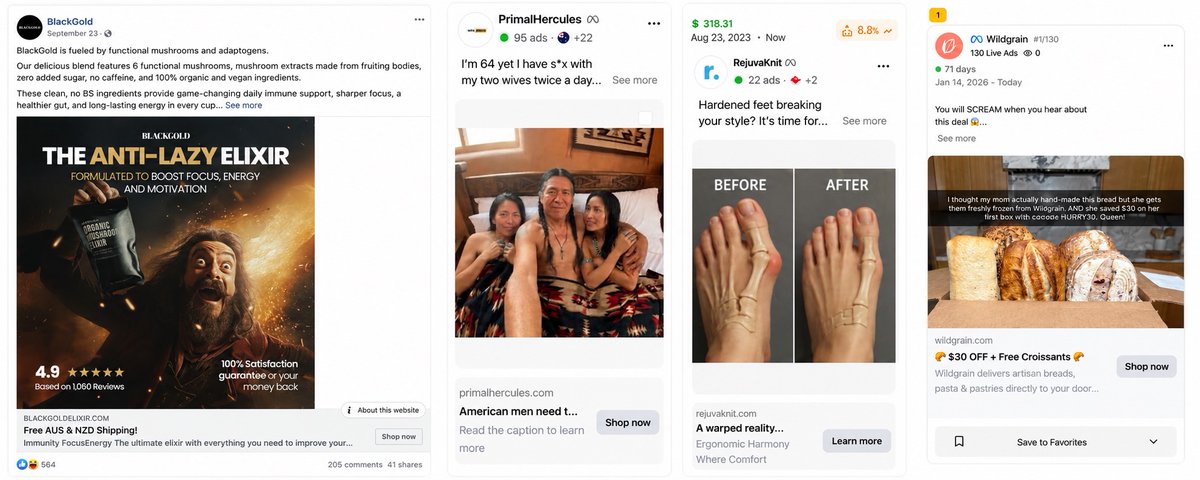
Right now there's a supplement brand running roughly 8,000 active ads on Meta.

FAKE 24-YEAR-OLD MAKES $18K/MO SELLING SKINCARE ON INSTAGRAM—NO THIRST TRAPS.
She doesn’t exist. She’s 5 text files, 1 LoRA, and about 3 hours of work a day.