The PS1 Arbitrage: Weaponizing Low-Poly for Conversions
Right now, an entire generation of media buyers is setting money on fire. They are paying $40 CPMs to serve hyper-polished, 4K cinematic UGC to a consumer base that has developed absolute, clinical blindness to anything that looks like a traditional ad.
Every organic format that hijacks the feed eventually becomes a weaponized paid format. We saw it happen with the AI Pixar aesthetic. We saw it happen with Claymation. Both printed millions, and both are now approaching total saturation (skill file given at the end).
If you want to maintain arbitrage in a market where attention is the most expensive commodity on earth, you have to engineer pattern interrupts that break the viewer's brain.
The format printing right now is PS1-Era Low-Poly 3D.
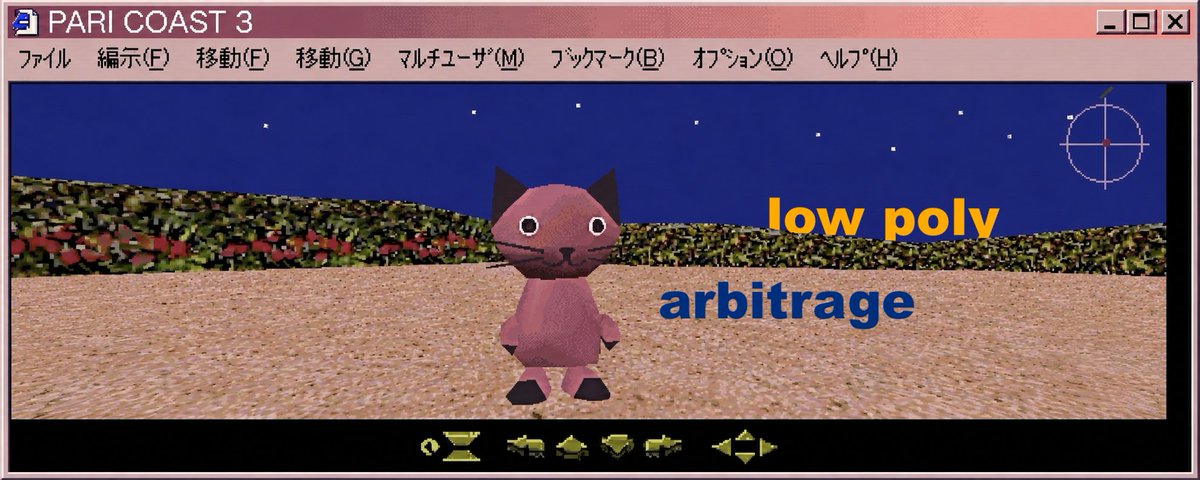
 — "mascot samples for your brand"
It works because it looks completely broken. That blocky, low-res, 1996 PlayStation aesthetic forces a scroll-stop because nobody’s subconscious expects a modern SaaS or iGaming ad to look like a corrupted Sega Saturn save file. It carries heavy, built-in 90s nostalgia, it feels liminal, and it completely bypasses the AI trust barrier.
And no, you don't need to hire a $10,000/month 3D motion design agency or open Blender. You just need a node canvas, ruthless prompt constraints, and a distribution network.
 — "best channel in the space to learn from (for ads)"
Here is the exact engineering pipeline to build the asset, break the AI, and flood the algorithm.
Phase I: The Visual Anchor (Ripping the DNA)

We don't build from scratch unless we have to. We clone what is already mathematically proven to convert, and we mutate the aesthetic.
You drop a research node onto the canvas, scrape the Meta Ad Library for your competitor's highest-converting video, and run it straight into a content analyzer. The engine deconstructs their ad frame-by-frame, capturing the exact beat structure that makes it work.
Now, you inject the Master Style Prompt to force the mutation:
> "Rendered in low-poly PS1-era 3D graphics, mid-1990s PlayStation aesthetic. Chunky low-polygon geometry, stretched and warped low-resolution textures with affine texture mapping distortion, visible vertex jitter, flat photographic textures pasted onto rough 3D models in surreal collage style. Liminal, weirdcore atmosphere. Flat ambient lighting, muted vaporwave-adjacent color palette, no antialiasing, low resolution, crunchy dithered textures. Retro pixelated blocky font. VHS-tinged, lo-fi, uncanny."
Extract the very first frame of the original ad. This becomes your visual anchor.
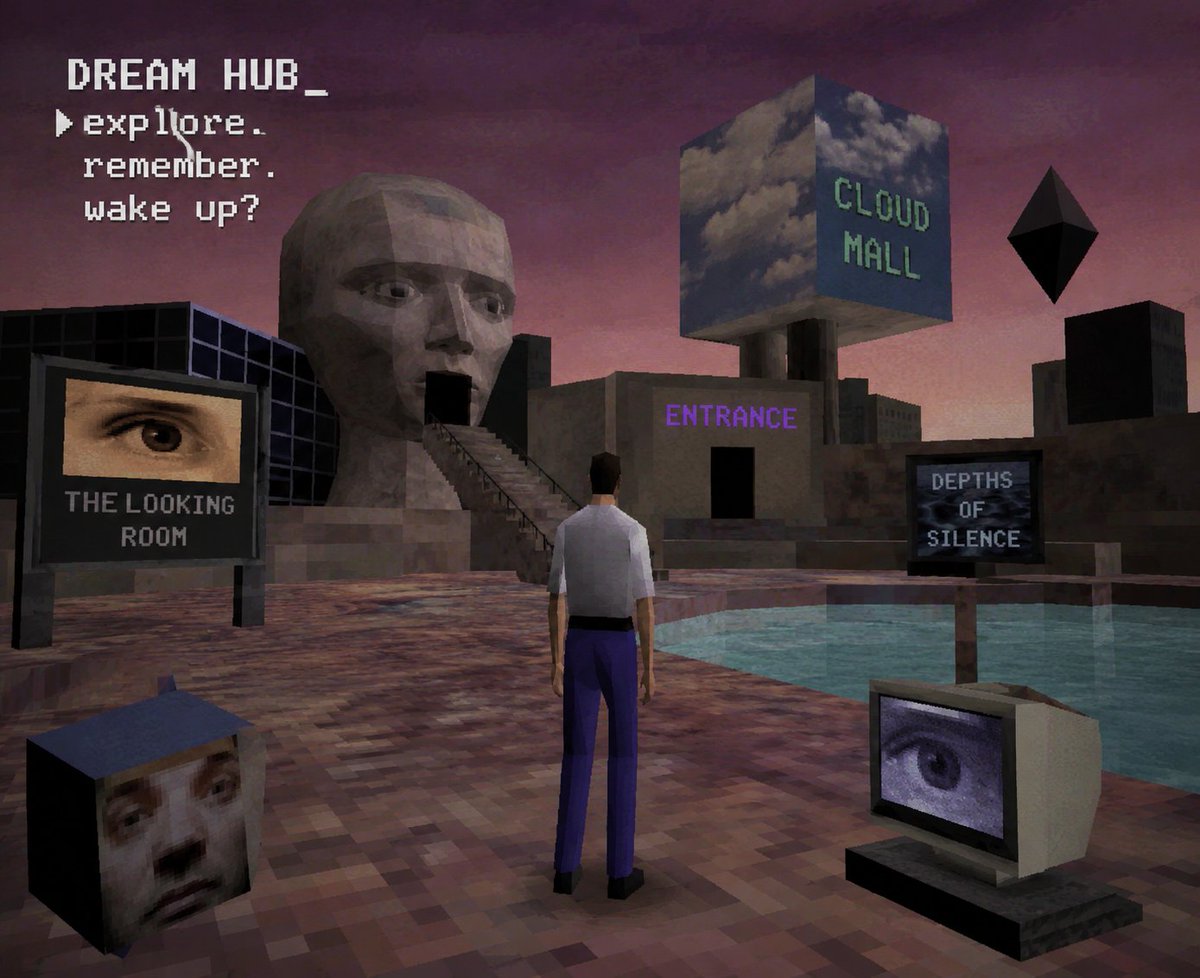 — "first frame using the prompt (one shot, and honestly i love it)"
Feed that frame into an image generator node. Execution rule: You must use GPT Image 2 and you must set it to High Quality.
I have stress-tested this specific workflow through the entire market. NanoBanana Pro, Seedream 4.5, Kling, they all try to "fix" the image. They make it too clean. GPT Image 2 on High Quality is the only engine that understands how to hold the structural integrity of that crunchy, distorted PS1 polygon style.
Phase II: The Motion Engine (Breaking the AI)
This is where 99% of people fail. AI video models are fundamentally trained to generate smooth, fluid, hyper-realistic motion.
If your PS1 character moves smoothly, the illusion is instantly destroyed. You have to aggressively prompt the engine to break its own rules.
Wire your GPT Image 2 anchor into a video generator node (currently, Seedance 2.0 is the only model that actually obeys these specific constraints; Kling 3 Pro and Veo 3.1 will hallucinate and smooth it out).
Load the script, and inject the motion constraint prompt:
> "Animate the character with stiff, robotic, low-poly PS1-era movement - NOT smooth or fluid. Use choppy, low-framerate motion (10–15 fps) so the animation looks jerky and stuttered. Keep the joints rigid and mechanical - limbs swing from fixed pivot points with no secondary motion; movements snap between poses. Add classic PS1 vertex jitter/wobble where the geometry shakes and warps slightly due to low-precision vertex calculations. Textures should swim and warp across surfaces (affine texture distortion). Prioritize crude, mechanical motion over realism."
The Resolution Hack: When you render this in Seedance 2.0, intentionally throttle the output to 480p or 720p. Do not render in 1080p or 4K. The low resolution is literally 50% of what sells the aesthetic.
Render it in 15-second chunks. Use the first generated chunk as the reference video for the second chunk to force continuity.
I personally also use google flow (Veo 3.1 Quality) and it turns out to give amazing results if you know what your doing with it.
Phase III: Acoustic Grounding
If your AI video generator mangles the voiceover, do not waste compute credits re-rolling the video. Run a parallel fix.
Extract the original transcript, drop it into an ElevenLabs node with custom emotion tags, and generate a pristine voiceover. Drop everything into CapCut. Nuke the distorted video audio, keep the original background SFX, and lay your clean ElevenLabs vocal track on top. Add some heavy bit-crushed audio effects to match the visual crunch. (This is optional if your generator produces awful quality)
Phase IV: The Swarm Distribution (AFNW)
 — "Cantina AI UGC Campaign ($43K budget)"
Now you have a 15-second asset that looks like a haunted 1996 video game, perfectly scripted to drive a modern conversion event.
If you just upload this to your brand's TikTok account or run it as a standard Meta ad, you are wasting the asset. You are playing the old game.
You take this PS1 master file and you drop it directly into AffiliateNetwork (link at end).
Think of clipping as your pure distribution layer. You set your terms; your payout per 1,000 views, your CPA, your brand safety guardrails, and you hand this hyper-optimized PS1 asset to a decentralized network of 200,000+ performance creators.
They take your master file, cut it into thousands of micro-variations, and flood the algorithm simultaneously.
That is how you manufacture omnipresence. You don't scale by raising your daily ad spend; you scale by arming a swarm with an asset that is mathematically designed to stop the scroll.
When the comments inevitably flood in asking what this weird, nostalgic video is, your clippers have the CTA locked: "Comment 'LINK' to get access." OpenClaw intercepts the webhook, handles the automated DM routing, and drops your checkout page directly into their inbox.
You pay strictly for performance. You only pay for verified, human views (because AffiliateNetwork's bot detection will nuke the fake traffic before a single cent leaves your wallet).
We are turning organic feed anomalies into automated, repeatable direct-response machines.
No 3D artists. No render farms. No $40 CPMs.
- Grab the Claude Skill (Writes the exact scenes/prompts): Google Drive Link
- Launch Your Campaign: AffiliateNetwork
Stop complaining about ad fatigue and start engineering a better system.
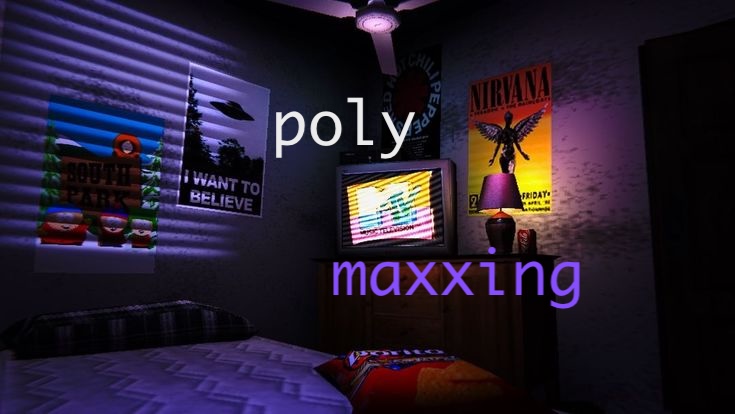 — "poly maxxing"
ARTICLE LEAD DESIGN: @cashflxws
research credits: @OriSilver
Related articles

how to build a $100k+/mo lead gen machine with AI meta ads funnels
most service businesses at $1-3M/year are running 4-5 lead gen channels simultaneously and none of them are producing consistent deal flow.
i've tested 10k+ meta ad creatives... these 7 printed $12M+
over the past 7 years, across 100+ service business clients, spending $1M+ a month on meta ads, we've tested over 10,000 individual ad creatives.
Mars men's full meta ads playbook (4,512 ads)
Mars Men has 4,512 ads live on Meta right now, on a Facebook page that only exists since December 2023.