Read this if you want to write better ad hooks in 2026
No, not the "10% off ends tonight" hooks your last agency was cranking out.
I'm talking about the hook that stops a scroll dead, fires dopamine in the buyer's brain, and turns a $200 ad into a $200,000 ad.
But those are the selfish personal benefits of writing better ad hooks.
There's something deeper.
The modern Facebook feed is breaking your brand's ability to reach new buyers, and most brand owners don't even notice. Hooks might be the last mechanism you have left to compete against a media landscape that has trained your buyer to hate every ad they see.
We are living through the largest-scale production of forgettable Facebook creative in the history of paid media.
The consequences are quite high, and only a select few brand owners actually care.
In this article I want to show you exactly how the "forgettable hook epidemic" (if it goes on as it is) will not only make your CPAs climb every month, but potentially kill your brand entirely.
Then I want to help you write the BEST ad hooks so you can fix one of the most precious resources you have as a brand owner: your buyer's attention.
Turning it into scale doesn't hurt either.
I - The Facebook feed isn't dead, but it's killing your ads
Over the last 30 days we've spent over $6 million on Facebook ads across 54 client accounts at the agency.
Ecom brands, lead gen brands and almost every category imaginable.
And what I can tell you after being inside more accounts than most media buyers will ever see in their career is,
Most ads die in the first frame.
Because 20 years of internet advertising has trained the human brain to recognize commercial intent before the viewer even consciously registers what they're looking at.
Literally two decades teaching your buyer that ads are the enemy.
And now you're launching another "Get 20% off today" hook into that feed and wondering why nothing scales.
There are 3 layers to why this is happening.
Stick with me here, because this goes deep.
The first layer is that the feed is becoming saturated with copies of copies.
Every media buyer scrolls through Ad Library, screenshots what's working for a competitor, and briefs a UGC creator to "make something similar." That creator delivers a video that looks like every other video in the category. The brand owner approves it, launches it, and it dies inside a week.
Then another brand owner does the same thing with the same competitor. Then another. Then another.
By the end of the month, the same message has been recycled 50 different ways across 50 different brands. Meta's algorithm sees it as a repeat. The buyer's brain sees it as a repeat. Both scroll past.
That's why your CPMs keep climbing, winning ads die faster than they used to and your CPA has been slowly walking up for the last 6 months even though your creative team is producing more than ever.
It might seem like you're fighting Meta but in reality, you're fighting the collective saturation of every hook that has ever worked in your category being run into the ground by every brand that saw it work first.
The takeaway here that we'll touch on later is this: does the hook you launched this week actually create novelty in your buyer's brain, or is it just another recycled version of what already worked for someone else?
That's layer one.
II – The three forces breaking your Facebook ad account
Let me introduce you to a concept most brand owners don't pay heed to but is directly killing their ability to scale.
Market sophistication.
Every category on Facebook goes through 5 stages of sophistication. And most brand owners are running stage 1 or stage 2 hooks in a stage 4 or stage 5 market. That's why nothing scales.
Stage 1: You're first to the market. You can make a basic claim ("How to get rid of acne") and it works because nobody has heard it before.
Stage 2: You're second or third to the market. You have to exaggerate the claim ("How to get rid of acne in 7 days") to stand out.
Stage 3: The market is crowded. You have to introduce a new mechanism ("Viral new laser treatment vanishes acne in 30 minutes") because the buyer has already tried the obvious solutions.
Stage 4: The mechanism itself is getting copied. Now you have to exaggerate the mechanism ("The 30-minute laser treatment already used by 10,000 women to vanish acne") to stand out again.
Stage 5: The market is completely burned. Every claim sounds like a lie. Now you have to identify with the buyer's frustration ("What nobody tells you about acne treatments when you've already tried 5 of them") because they've heard every claim under the sun and stopped believing any of them.
Almost every brand I audit is running stage 1 hooks in a stage 4 market.
And it's not because they're lazy. It's because nobody taught them that market sophistication even exists.
There are 3 threats compounding this problem:
Rivalrous dynamics. Every brand in your category is competing for the same buyer's attention with the same recycled hooks. When one brand finds a winner, every other brand copies it within 2 weeks. Everyone burns out the angle together.
Substrate consumption. The "substrate" being consumed is your buyer's attention span. Every scroll-through-scroll-through-scroll trains the buyer to swipe faster. Every recycled hook trains them to trust ads less. The attention pool is finite and shrinking.
Exponential creative production. AI-generated ads. UGC farms. TikTok-style creators pumping out 20 videos a week for every brand in your category. The volume of creative being produced is doubling faster than any brand's ability to actually think through what makes a hook work.
When those 3 things converge, you get what most brand owners are currently experiencing.
Their CPMs climb.
Their winning ads die faster.
Their new creative doesn't spend.
Their agencies blame Andromeda, iOS updates, and Meta's algorithm.
None of that is the real problem.
The real problem is that your buyer's brain has been trained to identify and ignore your entire category of ad within 400 milliseconds. And your team is still writing hooks that fit right into the pattern the buyer is trained to skip.
III – Why hooks might be the last real leverage you have
For the past decade, a certain type of Facebook creative has dominated:
Content that delivers a claim without requiring the buyer to think.
Every hook is a direct promise. Every visual is a product shot. Every CTA is "shop now." Every ad follows the same 4-second structure the buyer's brain has been trained to identify and dismiss.
We'll call this category "fast creative." Because it works the same way fast food works. Instant. Predictable. Dopamine spike followed by regret.
On the fast creative end of the spectrum you have:
- Product-on-white-background static ads
- "As seen on TV" style UGC with a scripted testimonial
- Discount codes in the first frame
- Generic before-and-afters
- "SHOP NOW" endings
The early adopters of Facebook could run "50% off today only" as a hook and get flooded with sales. But that market is dead now. The buyer's brain has been trained to filter that entire category out.
On the slow creative end of the spectrum you have hooks that require the buyer to think:
- Questions that fire curiosity ("What would happen to your acne if the oil glands feeding it were shut down for 30 minutes")
- Unexpected reframes ("I'm returning this and here's why" followed by every benefit spun as a complaint)
- Mechanism introductions ("The 3-second ritual cigar smokers do in the driveway before walking inside")
- David vs Goliath scenarios ("Sophia's cat was notoriously hard to please, so we regrouped")
- Emotional callouts ("Most cigar guys think their wife is overreacting. She's not.")
We personally want to focus on hooks like these.
Why?
Because they're the only creative asset you fully control that can create real novelty in your buyer's brain. Everything else is table stakes. Every brand has good UGC creators. Every brand has decent editors. Every brand has AI tools. The only real differentiator left is whether the first 3 seconds of your ad make the buyer's brain fire dopamine or fire the "this is an ad" reflex.
On top of that, most brand owners walk around with hook ideas they've never actually thought through. They feel like they have a good angle, but they've never tried to write it in a way that would survive Meta's auction pressure and your buyer's 400ms filter.
It also doesn't hurt that the best creative strategists in the world all built their careers by getting obsessed with hook writing. Every ad that has ever spent $500k+ starts with a hook that made the buyer stop scrolling before they consciously realized they'd stopped.
The defining factor of a scaleable hook is that generic AI cannot write one.
For understanding, it helps to distinguish a hook from a headline:
Headlines are answers. Hooks are questions the buyer needs answered.
Headlines package existing claims. Hooks create curiosity that didn't exist before.
Headlines start with the benefit. Hooks make the buyer earn the benefit by watching more.
Headlines inform. Hooks fire dopamine.
Headlines communicate what's already there. Hooks reveal something the buyer didn't know they wanted to know.
If you think about it, only a real human doing real research can write a scaleable hook. AI can generate 100 variations, but if you don't have the raw insight from customer research, YouTube comments, Reddit threads, and post-purchase surveys, every one of those 100 variations will be recycled versions of what AI has already seen a thousand times before.
More importantly, AI destroys the surprise of stumbling on a real insight. You can prompt AI to give you "10 unexpected hooks" but the moment you're anticipating the surprise, it's not a surprise anymore.
The more we use AI at the agency, the more we find it useful for scaling execution. But the actual insight, the actual angle, the actual "holy shit that would stop the scroll" moment still has to come from a human who's done the research.
IV – The creative economy and how to thrive in it
The creative economy has been shifting for the last few years.
AI has only accelerated it.
Why?
Because insight is the scarcest resource in ecom right now.
Before Facebook ads got saturated, we praised media buyers for their targeting stacks. Then we praised them for their campaign structures. Then we praised them for their creative testing frameworks. Today, none of that matters. Everyone runs one CBO. Everyone tests 10-15 new creatives a week. Everyone uses the same tools.
The only real edge left is whether your hooks are better than everyone else's.
And that means insight will be sold at a premium.
Brand owners will crave it more than they already do.
And who better to provide insight than the brands that actually get obsessed with the buyer's psychology? The brands that fight against the pattern of recycled creative.
But how is a scaleable hook actually created?
A scaleable hook is the result of ordered attention.
When your creative team is fragmented, chasing every trend, launching whatever gets briefed fastest, that's creative entropy. It feels like busy work. Volume without direction.
When your creative team is locked in on a specific buyer, a specific insight, a specific stage of market sophistication, that's creative order. It feels like a real hypothesis being tested.
So a scaleable hook isn't something you find in an Ad Library swipe file. It's what emerges when your team's attention is invested in one buyer's psychology deeply enough to spot something the buyer didn't know they wanted to know.
If you've ever watched a hook go from $200 in spend to $200k in spend, you've directly experienced this.
V – How to actually write a hook that scales (the practical part)
Let's get practical.
Here's the framework we use at the agency across every hook we launch.
Step 1: Pick your point of entry from research.
Every hook starts with one of three things:
- A desire the buyer already has
- A symptom the buyer is currently experiencing
- A problem the buyer knows they have
You get these from real research. YouTube comments. Reddit threads. Customer reviews on your product AND on your competitors' products. Post-purchase surveys where you ask the buyer why they bought.
Not from ChatGPT. Not from swipe files. From actual buyers' words.
Step 2: Apply the golden hook formula.
Every hook needs three things:
- Calls out the ideal customer (so they stop the scroll)
- Creates curiosity (so they watch more)
- Implies a benefit (so they feel like watching is worth their time)
If your hook is missing any of these three, it will not scale.
Example: "How to scale Facebook ads in 2026."
- Calls out the ideal customer: yes (people running Facebook ads)
- Creates curiosity: yes ("how to" implies a specific method)
- Implies a benefit: yes (they're going to learn something)
Passes the test.
Example: "Increase ad spend by 20% and scale in 2026."
- Calls out the ideal customer: sort of
- Creates curiosity: no (it's telling them what to do, not creating intrigue)
- Implies a benefit: no (there's nothing new to learn)
Fails the test. Would die in the feed.
Step 3: Match the hook to the sophistication stage of your market.
If you're running a stage 1 hook in a stage 4 market, no golden hook formula will save you. You have to match the stage.
Stage 1 markets: Basic claims work. ("How to get rid of acne")
Stage 2 markets: Exaggerated claims work. ("How to get rid of acne in 7 days")
Stage 3 markets: New mechanisms work. ("Viral new laser treatment vanishes acne in 30 minutes")
Stage 4 markets: Exaggerated mechanisms work. ("The 30-minute laser treatment already used by 10,000 women to vanish acne")
Stage 5 markets: Identifying with buyer frustration works. ("What nobody tells you about acne treatments when you've already tried 5 of them")
Match the stage or die.
Step 4: Check TAM size.
You can write the most beautifully crafted hook in the world, but if it appeals to 400 people, it will never scale. If it appeals to 1.2 million people, it can spend $500k in the account.
Before you launch a hook, ask yourself: how many people in the country would this hook stop the scroll for? If the answer is under 100,000, rewrite the hook to appeal to a bigger audience.
Step 5: Do something visually different in the first 3 seconds.
The hook isn't just the text. It's the whole first 3 seconds of the ad.
If your visual looks like every other ad in the category (product on white background, girl talking to camera, before-and-after split screen), the hook is dead before the copy even loads in the buyer's brain.
Do something visually different. A weird angle. A prop nobody uses in your category. An unexpected setting. An animation style your competitors haven't tried.
Step 6: Use AI to scale variation, not create the original insight.
Once you have a hook that passes the tests above, use AI to generate 10-20 variations of it. Change the phrasing. Change the emphasis. Change the emotional register. Test them.
But never use AI to create the original hook from scratch. It will always default to whatever it has seen a thousand times before. Your competitors already have that hook.
VI – The hooks that are actually scaling right now (from $4M+ in monthly spend)
Here are the hook patterns we've been using across client accounts that are scaling:
1. Call out what the buyer wants but can't have due to the current mainstream solution."If you're over 40, here's how to lose weight without needles."
2. Call out a list of failed solutions before introducing yours."Three tricks cigar smokers tried to end cigar breath that didn't work."
3. David vs Goliath (make the problem sound impossible to solve)."Four cigars later and she doesn't smell a thing after using this."
4. Show the desired state then introduce the solution."She can't stop kissing him and she doesn't know why."
5. State the problem as a question."Why does cigar breath have to smell so bad?"
6. Present the problem as a news story."A hidden crisis is spreading across the country and it starts the moment you light up a cigar."
7. Start with a customer testimonial."My husband uses this every day after the lounge and I don't smell a thing."
8. Acknowledge the problem is easy to solve with the right tool."Getting results with Facebook ads is not hard if you have the right creative system."
9. Call out the current solution and the problem with it."If you smoke cigars and still use gum to get rid of cigar breath, you need to hear this."
10. Call out speed to result."This is my cheat code for getting rid of cigar breath. 30 seconds and she can't smell a thing."
11. Introduce a new mechanism plus superiority."Our new laser treatment vanishes acne in 30 minutes."
12. Ask a question based on how the mechanism works."What would happen to your acne if the cells fueling it were shut down?"
13. Rage bait the buyer into emotion, then offer resolution."Most cigar guys think their wife is overreacting. She's not. You actually do smell worse than you think."
14. Return the product and list every benefit as a complaint."I'm returning this. I hate being a millionaire. Every morning people knock on my door begging for money."
**15. Exaggerated visual demo.**Product being used in a way nobody else in the category is showing it.
So that's all I wanted to write in today's article.
If you're doing at least $100K/month in revenue and you want us to actually run this system inside your account (research, hook writing, creative production, media buying), click below to book a call with the team.
[Book a call to have Nick Theriot run your ads → https://go.theriotsolutions.com/book-your-call**]**
If you're doing less than $100K/month and you want me on 1-on-1 calls reviewing your hooks and your account, click below to join the Inner Circle.
[Join Nick Theriot's Inner Circle mentorship → https://go.theriotsolutions.com/nicks_inner_circle**]**
Stop writing hooks that die in the first 400 milliseconds.
Start writing hooks that make the buyer's brain fire dopamine before they realize they're watching an ad.
That's the whole game.
See you at the top.
- Nick T.
Related articles

Mars men's full meta ads playbook (4,512 ads)
Mars Men has 4,512 ads live on Meta right now, on a Facebook page that only exists since December 2023.
How to Start a 6 Figure Faceless YouTube Channel (Full Breakdown)
I've helped over 400 people start profitable faceless youtube channels. i've ran over 50 channels myself. Generated over $4 MILLION by age 25. Worked with youtubers that have 10 million+ subscribers,…
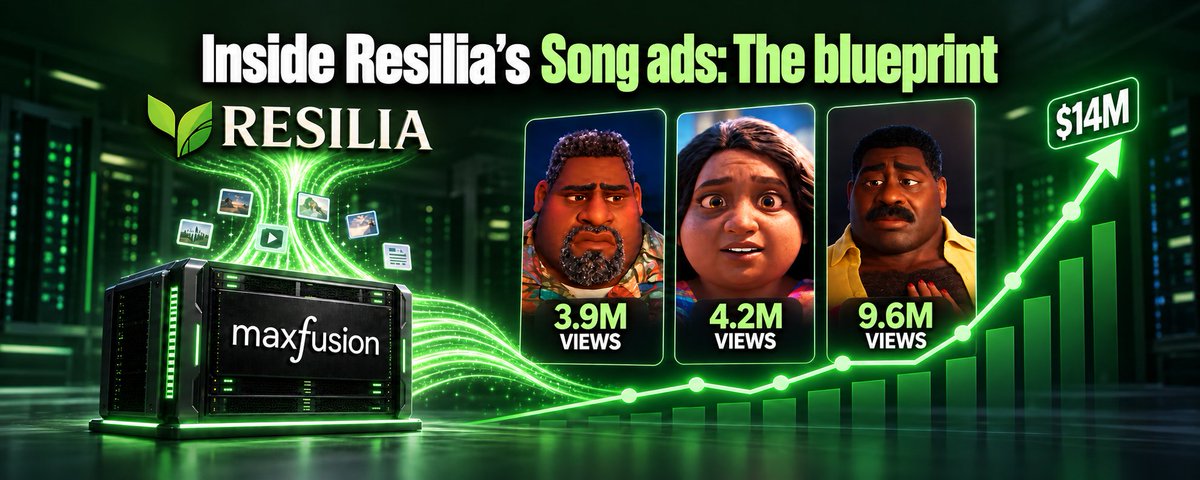
Inside Resilia's $14M Song Ads: The Blueprint Behind Their Winning VSLs
In these ads, the pain is always presented as dialogue that comes from other characters, so the hero never describes themselves this way.